
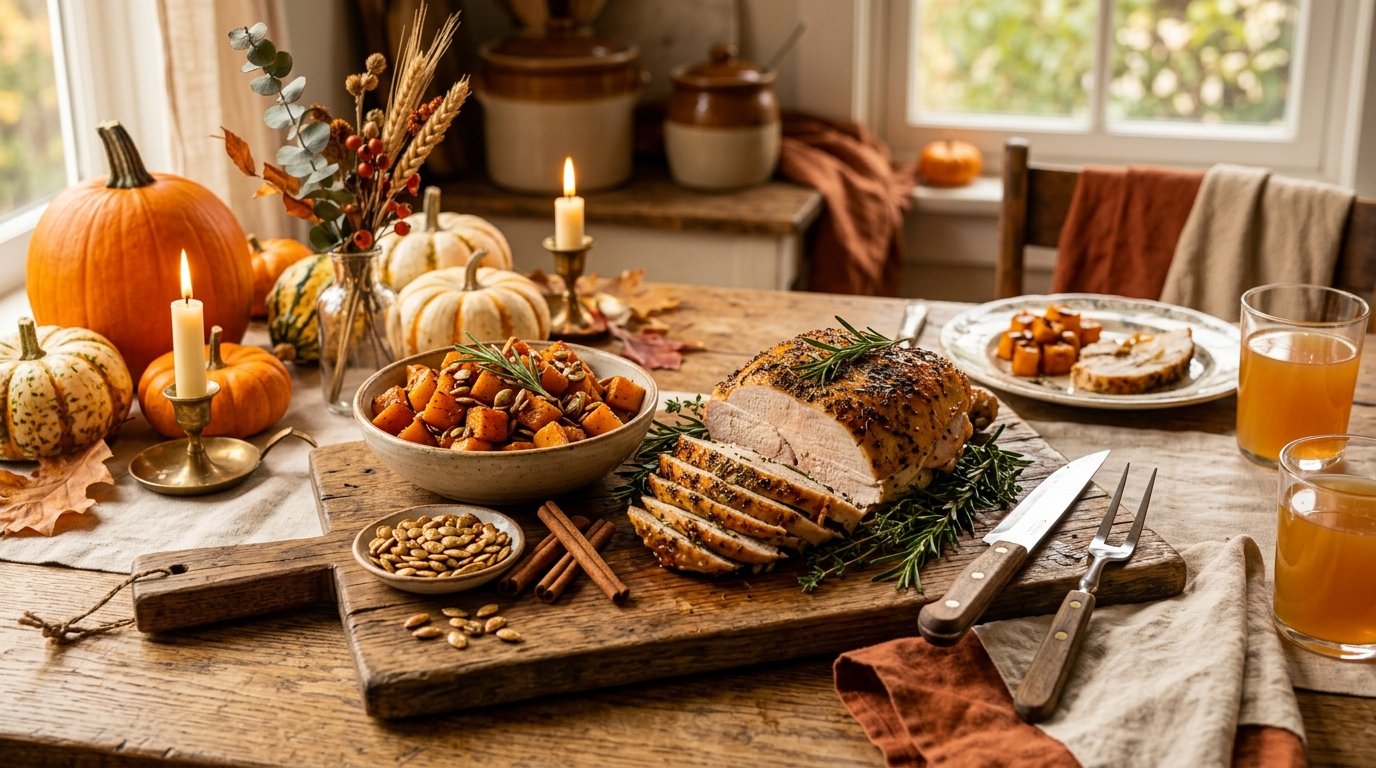
Fall food gets treated like a free pass — pumpkin spice everything, apple desserts, “cozy” carb-heavy comfort dishes — and then blood sugar or weight goals quietly slip for two straight months. I wanted to actually check whether that reputation is deserved, because some of what’s considered classically “fall” (pumpkin, squash, apples, cinnamon) has genuinely useful properties for blood sugar when you understand how to use it. The problem isn’t the season’s produce. It’s what gets added to it.
This guide walks through which fall foods actually support stable blood sugar, one nutrition-label nuance about pumpkin that most “healthy fall recipes” posts get wrong, a fall spice with real clinical research behind it, and a full set of high-protein recipe ideas that fit the season without the sugar crash that usually comes with it.
The Pumpkin Confusion: Glycemic Index vs. Glycemic Load
Here’s a detail that trips up a lot of “healthy pumpkin” content: pumpkin has a medium-to-high glycemic index of roughly 65–75. On paper, that sounds like something to avoid if you’re managing blood sugar. But glycemic index only tells part of the story — it measures how fast a food raises blood sugar, not how much sugar you’re actually getting from a normal serving. That second part is called glycemic load, and it’s the number that actually matters day to day.
According to Harvard Health, glycemic load accounts for both the glycemic index and the actual carbohydrate content of a typical portion. A half-cup of plain pumpkin has only about 10 grams of net carbs, which brings its glycemic load down to roughly 6 — solidly in the “low” category, despite the high GI number. In practice, that means plain pumpkin in a reasonable portion has a pretty gentle effect on blood sugar. What changes the math entirely is portion size and added sugar — a slice of pumpkin pie or a large pumpkin spice latte isn’t “pumpkin” nutritionally anymore, it’s a dessert with pumpkin flavoring, and the glycemic load climbs fast once sugar and refined flour get added.
The takeaway: plain pumpkin, roasted squash, and similar fall produce are genuinely fine for blood sugar in normal portions. It’s the pie crust, the added sugar, and the syrup that turn a good food into a problem — not the vegetable itself.
The Best Fall Produce for Blood Sugar, Ranked by What Actually Matters
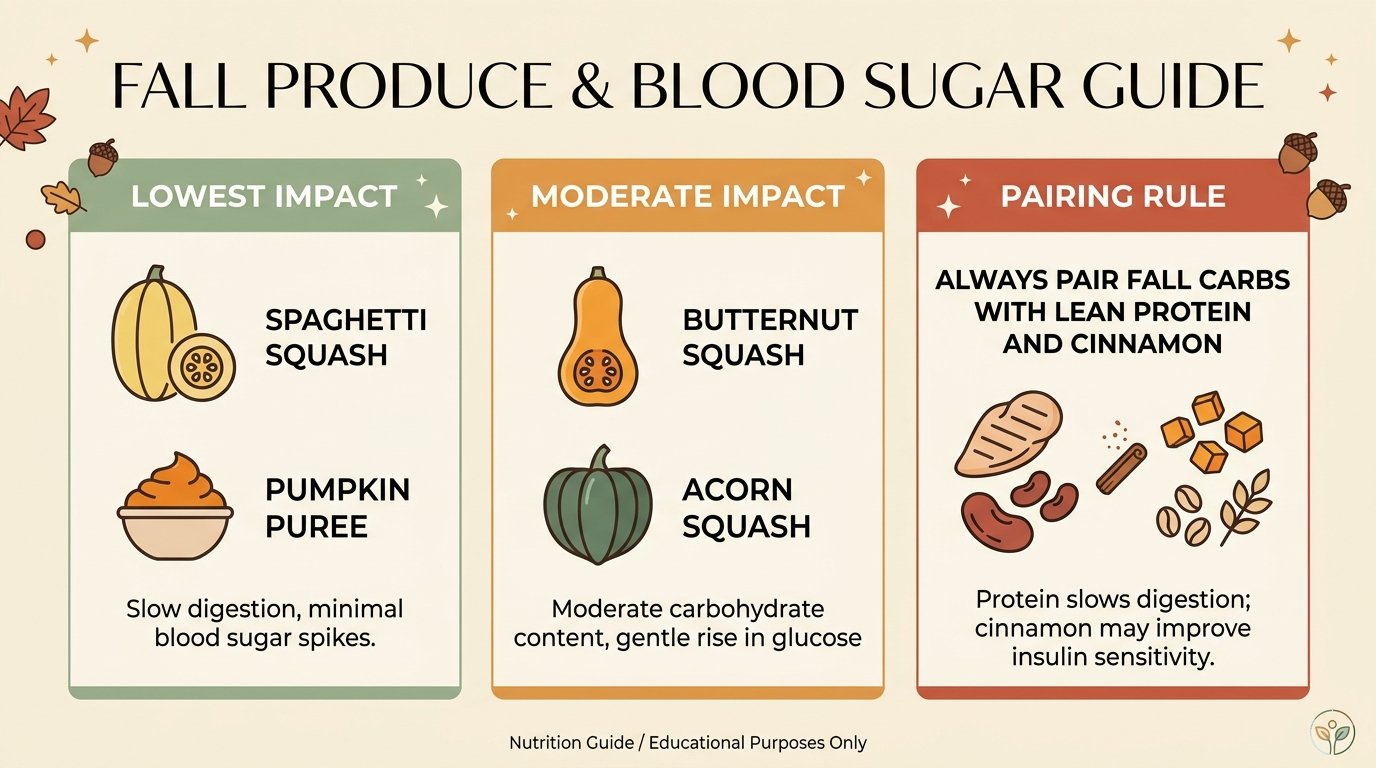
- Butternut squash – glycemic index around 51 (medium), rich in fiber and beta-carotene. A reliable base for soups and roasted sides.
- Acorn squash – similar profile to butternut, with a naturally sweet flavor that works well roasted and stuffed with a protein filling instead of brown sugar and butter.
- Sweet potatoes – lower glycemic impact than white potatoes, plus fiber and potassium; skin-on roasted wedges hold up better for blood sugar than mashed or fried versions.
- Apples (with the skin on) – the skin carries most of the fiber and polyphenols, which slow sugar absorption compared to peeled apple or apple juice.
- Brussels sprouts – low glycemic impact, high fiber, and a genuinely good source of vitamin C for the season when you actually want your immune system working.
- Pears – similar to apples: fiber-rich with skin on, best eaten whole rather than juiced.
- Cranberries (unsweetened) – naturally tart and low in sugar; the sweetened, dried, or sauce versions are a different food entirely once sugar is added.
- Pomegranate – fiber and antioxidants in the arils, best eaten as the whole fruit rather than as pomegranate juice, which concentrates the sugar without the fiber.
If blood sugar is a specific focus for you beyond fall produce, I go into a lot more detail on which everyday foods to build meals around in 6 Foods to Avoid on a Prediabetes Diet.
Why Fall Produce Also Earns Its Keep for Immune Health
There’s a reason pumpkin, squash, and sweet potatoes taste so specifically “fall” — they’re all deeply orange, which means they’re loaded with beta-carotene, a precursor your body converts into vitamin A. That’s not a coincidence worth ignoring: vitamin A supports the integrity of your skin and mucous membranes (your first line of defense against the cold and flu season that happens to overlap almost exactly with pumpkin season) and plays a direct role in immune cell function. A single cup of roasted butternut squash or canned pumpkin covers a meaningful share of a day’s vitamin A needs in one serving — which is a genuinely useful thing to lean into as the weather turns and everyone around you starts getting sick.
Brussels sprouts and pomegranate add vitamin C and additional antioxidants to the same seasonal lineup, so a fall plate built around these foods isn’t just blood-sugar-conscious — it’s doing real, overlapping work for the immune system at exactly the time of year that tends to need it.
Cinnamon: The One Fall Spice With Real Research Behind It
Cinnamon shows up in nearly every fall recipe, and unlike most “this spice boosts your metabolism” claims, this one actually has clinical research behind it. Multiple systematic reviews and meta-analyses have found that cinnamon supplementation produces a modest but measurable improvement in fasting blood glucose in people with type 2 diabetes. It’s not a dramatic effect, and it’s not a substitute for medication or an overall eating pattern — but it’s one of the few “add this spice” claims that holds up when you actually check the research.
One practical caveat worth knowing: most grocery-store cinnamon is cassia cinnamon, which contains a compound called coumarin that can strain the liver in large, regular amounts over time. Ceylon cinnamon (sometimes labeled “true cinnamon”) contains far less coumarin and is the better choice if you’re using cinnamon daily rather than occasionally in a recipe. For the amount most people sprinkle on oatmeal or into a smoothie, this isn’t something to worry about — it only becomes relevant if you’re taking concentrated cinnamon supplements or using large amounts of cassia cinnamon every day long-term.
The Rest of the Pumpkin Spice Blend: Ginger, Nutmeg & Clove
Cinnamon gets most of the credit, but it’s usually mixed with ginger, nutmeg, and clove in classic pumpkin spice blends, and they’re not just along for the flavor ride. Ginger has its own research behind it for digestion and inflammation — I cover the evidence in more detail in Anti-Inflammatory Diet for Joint Pain — and it pairs naturally with fall produce in soups and baked goods alike. Nutmeg and clove both carry antioxidant compounds too, though the research on them for blood sugar specifically is thinner than what exists for cinnamon.
The practical point: making your own pumpkin spice blend from real ground spices, rather than buying a pre-made “pumpkin spice” syrup or creamer, gets you the actual compounds doing the work instead of an artificial flavor built mostly around sugar.
High-Protein Fall Recipe Ideas
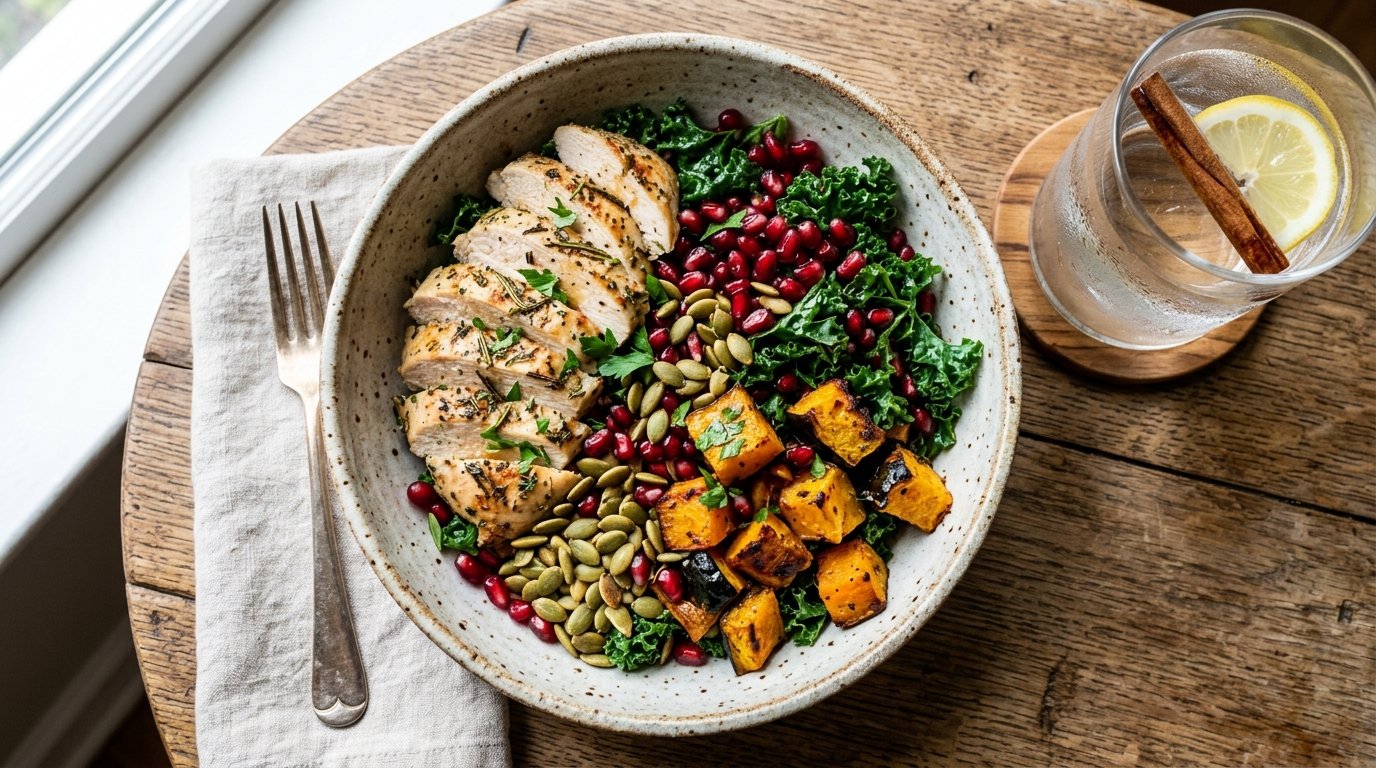
The pattern that works best for fall produce is pairing it with protein — protein slows digestion and blunts the blood sugar response even further on top of the fiber already in these foods.
- Pumpkin protein pancakes: canned pumpkin puree, eggs, protein powder or Greek yogurt, and cinnamon — no added sugar needed if the pumpkin and cinnamon are doing the flavor work.
- Butternut squash and white bean soup: roasted squash blended with white beans and broth for a soup that’s fiber and protein at once, finished with sage.
- Sheet-pan chicken and Brussels sprouts: chicken thighs and halved Brussels sprouts roasted together with olive oil and garlic — minimal prep, high protein, low glycemic load.
- Turkey-stuffed acorn squash: ground turkey, sautéed onion, and a little cinnamon and sage stuffed into a halved roasted acorn squash.
- Cottage cheese pumpkin bake: pumpkin puree blended with cottage cheese, egg, and cinnamon, baked until set — tastes closer to pumpkin pie than it has any right to, with a fraction of the sugar and a real protein count.
- Apple and almond butter with protein: sliced apple with almond butter and a side of Greek yogurt turns a simple fall snack into something that won’t spike and crash an hour later.
- Pumpkin turkey chili: ground turkey, canned pumpkin, black beans, and chili spices — a genuinely good way to use pumpkin in a savory dish instead of only sweet ones.
Fall Meal Prep: Make the Season Easier on Yourself
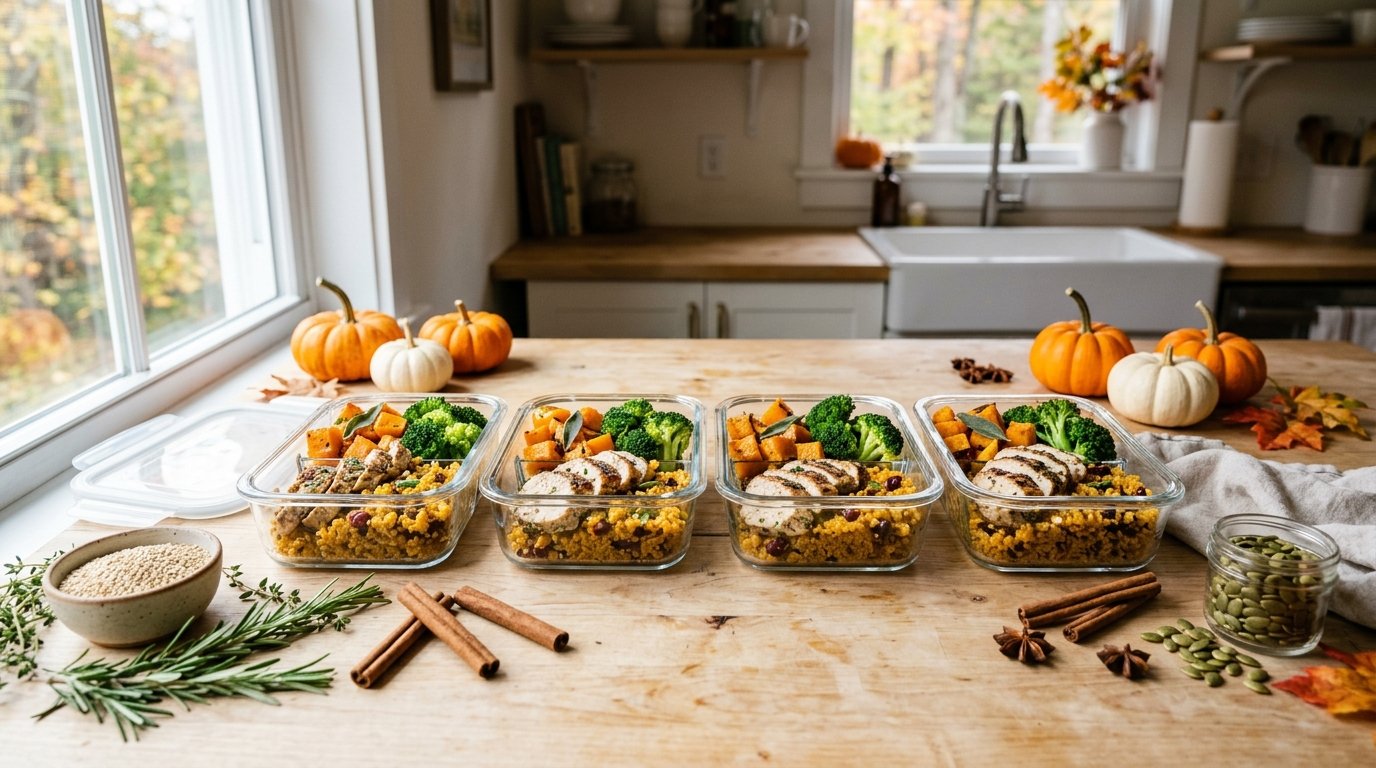
A few habits make it much easier to actually eat this way through a busy fall instead of falling back on the pumpkin spice everything aisle:
- Batch-roast squash on the weekend. A big tray of cubed butternut or acorn squash roasted once keeps well for 4-5 days and drops straight into soups, sheet-pan dinners, or a quick lunch bowl.
- Freeze extra canned pumpkin in portions. Canned pumpkin doesn’t keep long once opened, so portioning the rest into half-cup freezer bags means it’s ready for the next batch of pancakes or the cottage cheese bake without waste.
- Keep a jar of Ceylon cinnamon on the counter rather than buried in the spice cabinet — you’re far more likely to actually use it daily on oatmeal, yogurt, or coffee if it’s visible and easy to grab.
- Pre-portion trail mix and nuts yourself instead of buying pre-made fall snack mixes, so you control how much dried fruit and sugar goes in rather than a food company’s default ratio.
Building a Blood-Sugar-Friendly Fall Plate
The same ratio that works year-round still applies in fall — protein first, then fiber-rich produce, with fall’s naturally sweeter vegetables treated as a starch portion rather than an unlimited side. A plate with roasted chicken, a reasonable portion of roasted squash, and a big pile of Brussels sprouts or a green salad does far more for blood sugar than the same squash eaten alone in a larger portion with maple syrup on top.
If you support blood sugar with a supplement alongside food changes, I’ve recommended GlucoTrust before for this same purpose in my Bedtime Snacks for Blood Sugar guide — it’s meant to work alongside food choices like the ones here, not instead of them. (This is an affiliate link — full disclosure here.)
Fall Food Traps Worth Knowing About
- Pumpkin spice lattes. A large one can carry more added sugar than a candy bar — the pumpkin flavoring itself usually contains no actual pumpkin at all.
- “Pumpkin” flavored packaged snacks (granola bars, cereal, flavored coffee creamer). Most contain little to no real pumpkin and a fair amount of added sugar riding on the seasonal flavor.
- Apple cider (and cider donuts). Cider is essentially apple juice — all the sugar, none of the fiber that makes a whole apple a better choice.
- “Healthy” fall trail mixes. Dried cranberries, candied pecans, and chocolate pieces can turn a small handful into a genuinely high-sugar snack fast — check the label rather than assuming “trail mix” means healthy by default.
- Pumpkin pie and pumpkin bread. Both are dessert, not a vegetable serving — nothing wrong with having them occasionally, just worth being clear-eyed about what they actually are.
Fall Eating on a GLP-1 Medication
If you’re on Ozempic, Wegovy, or Zepbound, fall produce is genuinely useful — it’s nutrient-dense in a small volume, which matters when appetite is limited. Roasted squash and pumpkin-based dishes are also naturally soft and easy to digest, which tends to sit better than raw, fibrous vegetables while your gut is adjusting to the medication. If digestion or fiber intake is a specific concern for you right now, I cover the gut-friendly approach to fiber in more detail in High-Fiber Diet for GLP-1 Users.
A Sample Day of Blood-Sugar-Friendly Fall Eating
- Breakfast: Pumpkin protein pancakes topped with a few walnuts
- Lunch: Butternut squash and white bean soup with a side salad
- Snack: Sliced apple with almond butter
- Dinner: Sheet-pan chicken with roasted Brussels sprouts and a small portion of roasted sweet potato
- Dessert (if wanted): Cottage cheese pumpkin bake with cinnamon
Every fall flavor people actually crave this time of year — pumpkin, cinnamon, squash, apple — shows up here. Nothing is off-limits; it’s just built around protein and portion instead of pie crust and syrup.
Frequently Asked Questions
Is pumpkin actually good for blood sugar, or bad?
Plain pumpkin in a normal portion (around half a cup) has a low glycemic load and is a reasonable choice for blood sugar management, despite having a higher glycemic index on its own. The issue is almost always what’s added to it — sugar, crust, syrup — not the pumpkin itself.
Is canned pumpkin as healthy as fresh?
Yes, as long as it’s 100% pumpkin puree and not “pumpkin pie filling,” which already has added sugar and spices mixed in. Plain canned pumpkin puree has a similar nutrition profile to fresh and is a genuinely convenient way to use it in high-protein recipes.
How much cinnamon should I use for a blood sugar benefit?
Most of the research uses doses in the range of half a teaspoon to a full teaspoon daily. Ceylon cinnamon is the better choice for regular daily use given the lower coumarin content compared to cassia.
What’s the healthiest way to satisfy a pumpkin spice craving?
Make your own version with real pumpkin puree, cinnamon, and a protein source — like the pancakes or cottage cheese bake above — rather than a packaged product where “pumpkin spice” is just flavoring and sugar with no actual pumpkin in it.
Are fall vegetables anti-inflammatory too?
Many of them are — pumpkin, squash, and Brussels sprouts are rich in antioxidants and carotenoids that support the same anti-inflammatory pattern I cover in Anti-Inflammatory Diet for Joint Pain, so this season’s produce does double duty if that’s also a focus for you.
Can I still enjoy Thanksgiving with a blood-sugar-friendly approach?
Yes — the same principles apply. Roasted or mashed sweet potato without a candied sugar topping, green beans instead of a casserole loaded with fried onions and cream soup, and turkey as the protein anchor on your plate all fit naturally. Save dessert portions small and eat protein first at the meal, which slows the overall glycemic response to everything else on the table.
Is butternut squash or sweet potato the better choice for blood sugar?
They’re close. Butternut squash tends to run slightly lower in carbohydrate density per cup, while sweet potato brings a bit more fiber and potassium. Both are reasonable choices in a normal portion — preparation matters more than which one you pick, since mashing with butter and brown sugar changes the equation more than the vegetable itself does.
Final Thoughts
Fall doesn’t have to mean choosing between enjoying the season’s food and staying on track with blood sugar. The actual produce — pumpkin, squash, apples, Brussels sprouts — holds up fine under real scrutiny. What derails people is the sugar and refined flour that gets built around it every October and November. Keep the pumpkin, keep the cinnamon, add real protein, and the season takes care of itself — you don’t need to sit out fall to stay on track, you just need to know which parts of it were never really about the pumpkin in the first place.
This article is educational, not medical advice. If you’re managing diabetes or prediabetes, check with your doctor or a registered dietitian before making significant changes to how you eat, especially around a season with as many food traditions and triggers as this one.
