
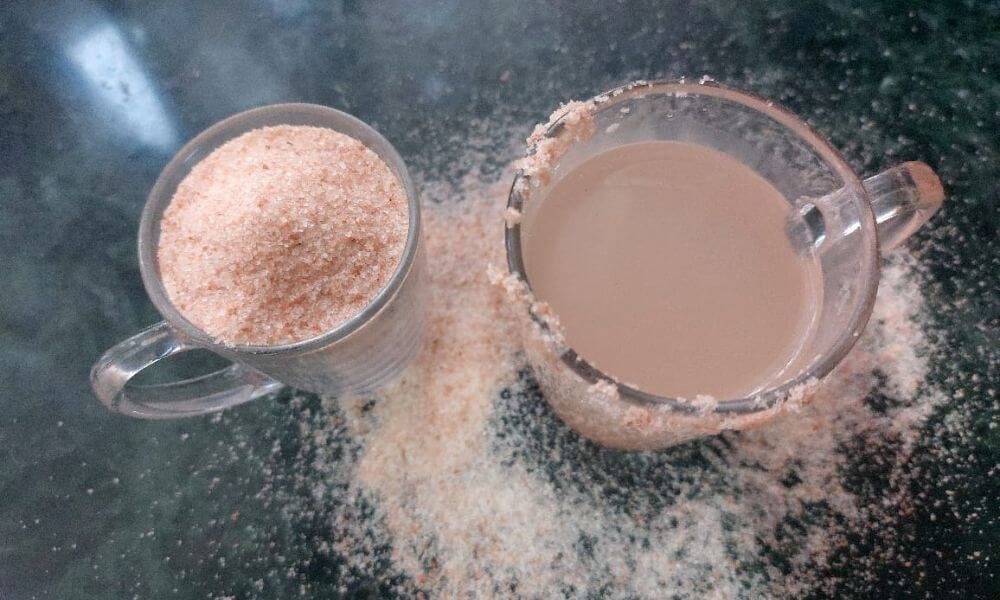
You keep seeing the pink salt and apple cider vinegar drink on your feed, and you want two answers: how do you make it, and does it actually do anything? Here is the recipe first: stir 1 tablespoon of apple cider vinegar and a small pinch (about 1/8 teaspoon) of pink salt into 12 to 16 oz of water. It takes one minute. The second answer is less exciting, and I’ll give it to you straight further down.
I’m Dr. Nada, a pharmacist (BPharm, Cairo University) certified in Nutrition Science and Obesity Management. I’m not a registered dietitian. I read the research behind wellness trends and tell you what holds up, what doesn’t, and where a drink like this can clash with medication.
The Pink Salt Diet Recipe at a Glance
| Ingredient | Amount | Why it’s there |
|---|---|---|
| Filtered water | 12 to 16 oz (350 to 475 ml) | The base; most of the benefit is simply drinking water |
| Raw apple cider vinegar | 1 tablespoon (15 ml) | The same amount used in published vinegar research |
| Pink salt | A small pinch, about 1/8 teaspoon | Adds flavour and a little sodium |
| Fresh lemon juice (optional) | 1/2 to 1 teaspoon | Softens the sharp taste |
Ingredients

You only need a few basics:
- 12 to 16 oz of filtered water. Cold or room temperature, whichever you prefer.
- 1 tablespoon of raw, unfiltered apple cider vinegar. The cloudy kind with “the mother” is popular, but vinegar research has used vinegar in general, so you don’t need the most expensive bottle.
- A pinch of Himalayan pink salt. Ordinary table salt behaves the same way in this drink.
- Optional: 1/2 to 1 teaspoon of lemon juice for flavour.

How to Make the Pink Salt and Apple Cider Vinegar Drink
- Pour the water. Fill a large glass with 12 to 16 oz of filtered or tap water.
- Add the vinegar. Measure 1 tablespoon. Don’t eyeball more, because stronger is not better and the acid is hard on teeth and stomach.
- Add the salt. A small pinch, about 1/8 teaspoon, provides roughly 290 mg of sodium. That is about an eighth of the 2,300 mg Daily Value printed on U.S. Nutrition Facts labels.
- Add lemon if you like. Half to one teaspoon is plenty.
- Stir until the salt dissolves, then sip through a straw and finish within a few minutes.
If you’d rather try a milder version without vinegar, my guide to pink salt and lemon water benefits covers it. For the plain pink salt water method on its own, see how to drink pink salt for weight loss.
When and How Often to Drink It
- Morning. Many people drink it before breakfast. It’s a habit more than a requirement.
- Before a meal. Some people sip it 20 to 30 minutes before eating. There’s no strong evidence on the best timing, so choose the time you’ll stick with.
- Frequency. Once a day is plenty. If you’re new to vinegar, try every other day first and see how your stomach reacts.
- Stop if it hurts. Burning, nausea or reflux means dilute it more or skip it.
I’d rather you not drink it several times a day. The vinegar is acidic and the salt adds up across a day that probably already contains plenty of sodium.
Does It Actually Help You Lose Weight?
This is the question that matters, and the honest answer is: slightly at best, and not because of the salt.
The vinegar evidence. A Japanese randomised trial in obese adults found that people who drank a beverage containing 15 or 30 ml of vinegar daily for 12 weeks had lower body weight, body fat and triglycerides than a placebo group (Kondo et al., 2009). The effect was modest, in a single population, and not a reason to expect dramatic change.
A cautionary tale. In 2024 a widely shared trial reported much bigger apple cider vinegar weight loss. BMJ Group later retracted that study after statisticians could not replicate the results and found irregularities in the data. If a headline promises big numbers from a spoonful of vinegar, be sceptical.
The pink salt part. Harvard Health notes that pink salt has only trace amounts of minerals, far too little to replace minerals from whole foods. It is mostly sodium chloride, like table salt, and it doesn’t burn fat or speed up your metabolism.
Detox claims. Your liver and kidneys already do the detoxing. A glass of salty vinegar water doesn’t add to that, although drinking water is a healthy habit in itself.
What it can honestly do. It may help you drink more water, give you a small ritual before meals and make you a little more mindful about eating. Those are small wins. If you’re hoping for something that works like a prescription weight loss medicine, my piece on the pink salt Mounjaro trend explains why it doesn’t.
📋 Want results that actually move the scale?
A drink won’t do it, but a plan will. My 4-Week Weight Loss Planner helps you set a calorie target, plan meals and track your weekly progress on a few simple pages.
Get the 4-Week Weight Loss Planner – $5 →Pink Salt vs Table Salt in This Drink
| Question | Pink salt | Table salt |
|---|---|---|
| Main mineral | Sodium chloride | Sodium chloride |
| Other minerals | Trace amounts only | Usually none, unless iodised |
| Iodine | Little or none | Often added (iodised salt) |
| Effect on weight | None | None |
| Price | Higher | Lower |
One practical point people miss: if you replace all your iodised table salt with pink salt, you may also lose a reliable source of iodine. For this one drink it makes no difference, so use whichever you have.
Possible Side Effects and Who Should Skip It
- Reflux and stomach upset. Vinegar is acidic and can irritate a sensitive stomach or worsen heartburn.
- Tooth enamel. In a laboratory study, every type of vinegar tested caused measurable erosion of tooth enamel (Willershausen et al., 2014). Dilute it, use a straw and rinse with plain water afterward. Wait about 30 minutes before brushing.
- Too much sodium. If you have high blood pressure, kidney disease or heart failure, or you’ve been told to limit salt, skip the added salt and ask your doctor first. The NIDDK’s overview of kidney failure explains why sodium and fluid matter so much when kidneys are struggling.
- Medication interactions. Vinegar may lower blood sugar after meals, so ask your doctor or pharmacist before using it daily if you take insulin or other diabetes medicines. Take extra care with diuretics and digoxin too, since large amounts of vinegar have been linked with low potassium.
- Pregnancy, breastfeeding and children. Check with a healthcare provider first.
Talk to your doctor before making this a daily habit if you have a medical condition or take prescription medication.
Pink Salt Under the Tongue at Night

This is a separate trend, and I’d leave it alone. Claims that it improves sleep, “balances cortisol” or enters the bloodstream faster than swallowed salt don’t have good human research behind them. Sodium is absorbed perfectly well when you swallow it, and extra salt can raise blood pressure in people who are sensitive to it. If night cramps or poor sleep are a problem, mention it to your doctor instead of experimenting with salt.
Tips to Get the Most Out of It

- Measure. One tablespoon of vinegar and a small pinch of salt. More isn’t better.
- Pair it with real habits. A plate with plenty of vegetables and protein does far more than any drink. My TDEE calculator shows how many calories you burn before you start cutting.
- Drink plenty of plain water too. Use the hydration calculator to find your target.
- Move daily. A short walk after meals is simple and well supported.
- Track how you feel. Note digestion, appetite and energy for two weeks. If nothing changes, you know it isn’t worth the effort.
Looking for drinks with a better track record for bloating? See my list of drinks for bloating that actually help, or try these ways to get unbloated in 5 minutes.
Make It Taste Better and Easier on Your Teeth
The most common complaint about this drink is the taste. Start with about 1 teaspoon of vinegar and work up to 1 tablespoon over a week, or pour it over ice, where the cold dulls the sting. Warm water works too if cold water feels harsh in the morning. A squeeze of lemon, a slice of cucumber or a few mint leaves rounds off the flavour without adding meaningful calories.
Skip honey, juice and sweeteners, because they turn a near-zero-calorie drink into a sugary one and defeat the point. Drink it within a few minutes rather than sipping for an hour, then follow with a glass of plain water to rinse acid off your teeth. If it still tastes harsh after two weeks, that’s a sign this isn’t your drink, and that’s perfectly fine.
Three Variations Worth Trying
- Cucumber mint: the base recipe plus three cucumber slices and a few mint leaves, poured over ice.
- Ginger: the base recipe plus a thin slice of fresh ginger, steeped in warm water for five minutes first.
- Sparkling: use cold sparkling water instead of still water for a soda-like drink with no sugar.
All three keep the same 1 tablespoon of vinegar and small pinch of salt, so the safety notes above still apply.
Frequently Asked Questions
Does the pink salt and apple cider vinegar drink break a fast?
It contains very few calories, so for most people doing intermittent fasting for weight loss it won’t matter. If you fast for religious or medical reasons, follow your own rules or ask your doctor.
Can I make a bigger batch?
Yes. Mix a jug and keep it covered in the fridge for a day. Stir before pouring and keep the ratio the same per glass.
Is it safe to drink every day?
For many healthy adults, a single serving a day is fine, but it isn’t necessary. Take breaks, protect your teeth and check with your doctor if you have a medical condition or take medication.
Can I use table salt instead of pink salt?
Yes. Pink salt differs from table salt only slightly in minerals, so in this drink the difference is mostly taste and price.
Will this drink help with weight loss on its own?
No. It may nudge hydration and appetite a little. Weight loss comes from eating fewer calories than you burn, consistently, over time.
The Bottom Line
The pink salt and apple cider vinegar drink is a cheap, quick habit that is safe for many healthy adults in small amounts. It isn’t a fat burner and it isn’t a detox. Make it if you enjoy it, skip it if it bothers your stomach or your blood pressure, and spend your real effort on food, sleep and movement.
References
- Kondo T, et al. Vinegar intake reduces body weight, body fat mass, and serum triglyceride levels in obese Japanese subjects. Bioscience, Biotechnology, and Biochemistry, 2009.
- BMJ Group. BMJ Group retracts trial on apple cider vinegar and weight loss.
- Harvard Health Publishing. The salts of the earth.
- Willershausen I, et al. In vitro study on dental erosion caused by different vinegar varieties using an electron microprobe. Clinical Laboratory, 2014.
- National Institute of Diabetes and Digestive and Kidney Diseases. What is kidney failure?
Last reviewed: November 2026.
Written by Dr. Nada Ahmed El Gazaar, BPharm — a pharmacist certified in Nutrition Science (Zewail International Academy) and Obesity Management (EPSN Academy), who works with nutrition clients online. This article is educational and not a substitute for personal medical advice.
