
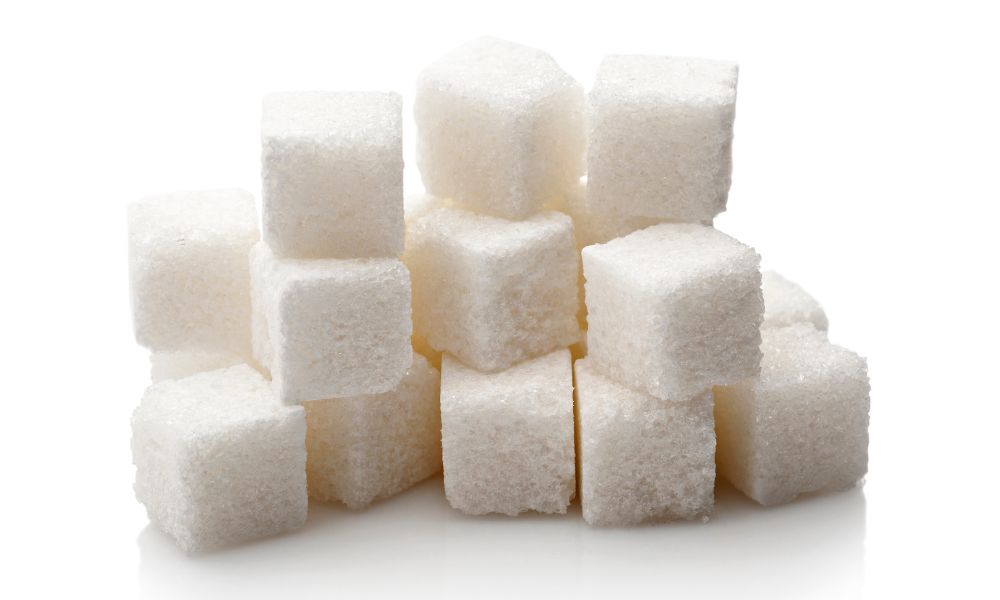
You read labels. You buy the plain-looking yogurt, the “whole grain” bread, the granola that costs more than the sugary one. And your added sugar for the day is still well over the limit before lunch — because most of it never looked like sugar in the first place.
Here’s the gap in one line. The CDC puts average intake at 19 teaspoons of added sugar a day for men and 15 for women. The American Heart Association’s ceiling is 9 teaspoons for men and 6 for women. So the typical adult is running at roughly double to triple the recommendation — and almost nobody is doing it with a sugar bowl.
I have a background in medicine and a certification in Nutrition Science from Zewail International Academy, and this is the single topic where reading the actual numbers changed my own shopping the fastest. Below is where the sugar hides, how to catch it on a label in about ten seconds, and what to swap in — plus the label change coming to the front of your packages that will make a lot of this easier.
👇 Take the quiz below and see your sugar score. 👇
You need to be registered and logged in to take this quiz. Log in or Register
The four numbers worth memorising
Everything else in this article is easier once these are in your head:
- 25g (6 teaspoons) — the AHA’s daily added-sugar ceiling for women, which works out to about 100 calories.
- 36g (9 teaspoons) — the same ceiling for men, about 150 calories.
- 50g — the FDA’s Daily Value for added sugars, which is what the %DV column on every Nutrition Facts panel is measured against. Note that it’s twice the AHA figure for women, so 40% DV on a label can still be a full day’s worth by the stricter standard.
- 10g — the CDC’s suggestion for a single meal.
One 12-ounce can of cola is about 39 grams — near 10 teaspoons, so a man’s entire daily allowance and a woman’s day and a half, from one can. A 20-ounce bottle of the same drink runs to 65 grams. That’s the scale we’re working with before a single “healthy” food enters the picture.
Food With Hidden Sugar
Sugar-sweetened drinks, desserts and sweet snacks are the biggest sources in the American diet, and nobody is surprised by those. The list below is the second tier — the foods people eat because they believe they’re the sensible choice. Sweeping through your own kitchen against these seven categories takes about ten minutes and is more useful than any diet you could start tomorrow.
🥣 Breakfast Foods
- Flavored yogurts
- Granola and cereal (even “whole grain” ones)
- Instant oatmeal packets
- Protein bars and meal replacement shakes
- Pancake and waffle mixes
Harvard’s Nutrition Source uses one ordinary cereal as its example: 18 grams of added sugar — four and a half teaspoons — in a single small bowl. That is most of a woman’s day, eaten standing up at 7 a.m. Granola bars look tamer at around 6 grams a bar, until you notice the pack holds two and you have never once eaten just one. If you want breakfasts that hold without the sugar, start with high-fibre breakfast foods.
🍞 Breads & Grains
- Whole wheat bread
- Hamburger buns and bagels
- Wraps and tortillas
- Pre-packaged rice and pasta dishes
- Crackers (especially “multi-grain” or “low-fat”)
Bread is the quiet one. Any single slice contributes a small amount, but you eat bread every day, often twice, and it never registers as a sweet food — so it never gets counted. Check the added sugars line on the loaf you buy habitually rather than the one you’re deciding about.
🥫 Sauces, Dressings & Condiments
- Ketchup
- BBQ sauce
- Teriyaki sauce
- Salad dressings (especially “fat-free”)
- Marinades and glazes
- Pasta sauce and canned tomato products
“Fat-free” is the word to watch here. Take the fat out of a dressing and you take out most of what made it taste like anything, so sugar goes in to replace it. This is the reason a fat-free vinaigrette can carry more added sugar than the full-fat version sitting beside it on the shelf.
🍲 Savory Packaged & Frozen Foods
- Canned soups and broths
- Frozen dinners and pizzas
- Baked beans
- Flavored rice or noodle packs
- Instant noodles
Nobody tastes sugar in a tin of soup, which is exactly why it’s there — it rounds off acidity and salt rather than reading as sweet. Baked beans are the standout offender in this group and they’re usually filed mentally as a vegetable.
🍹 Beverages
- Flavored water
- Sports and energy drinks
- Bottled iced tea
- Fruit juice (even 100% natural juice)
- Plant-based milks (almond, oat, etc., if sweetened)
Drinks are where the serving-size trick does the most damage. A 20-ounce bottle of lemonade may declare 27 grams per serving — and then quietly note that the bottle holds two and a half servings, which is about 68 grams if you drink it the way bottles are actually drunk. Read the servings-per-container line before the grams line, always.
🍪 Snacks & “Health” Foods
- Trail mix with dried fruit or chocolate
- Flavored popcorn
- Fruit-flavored snacks or “fruit leather”
- Nut butters with added sugar
- Rice cakes (especially caramel or flavored ones)
Protein bars deserve their own warning. A bar can carry as much added sugar as a chocolate bar while being shelved, priced and photographed as fitness food. Turn it over and check the added sugars line against the 25g or 36g ceiling — one bar should never be eating a third of your day.
🍬 Surprising Sweet Offenders
- Coleslaw
- Balsamic glaze
- Peanut butter (non-natural brands)
- Instant coffee mixes or flavored creamers
- Sliced deli meats with glazes or honey
Flavored coffee creamer is the one I’d check first if you drink coffee more than once a day. The serving size on the bottle is a tablespoon. Watch what you actually pour.
How to read any label in ten seconds
You don’t need to study the panel. You need three glances, in this order.
Glance 1: servings per container
Top line of the panel, and the one that quietly invalidates everything below it. If the container holds 2.5 servings and you’re going to finish it, every number underneath needs multiplying by 2.5. Do this before you look at anything else.
Glance 2: the %DV on the Added Sugars line
The FDA gives a rule of thumb that works on any nutrient: 5% DV or less is low, 20% DV or more is high. So a food showing 20% or more on added sugars is a high-sugar food, whatever the front of the box says. Remember the Daily Value behind that percentage is 50 grams — generous next to the AHA’s 25 for women — so treat 20% as your warning line, not your budget.
Glance 3: the first five ingredients
Ingredients are listed by weight, so anything in the top five is a main component. Sugar appears under dozens of names, and splitting it across three of them is how a product keeps any single one out of the top spot. Look for:
- Sucrose, glucose, dextrose, fructose, maltose — anything ending in “-ose”
- Corn syrup, high-fructose corn syrup, brown rice syrup, malt syrup, tapioca syrup
- Cane sugar, cane juice, evaporated cane juice, beet sugar, coconut sugar
- Agave nectar, honey, molasses, fruit juice concentrate, maple syrup
That last group matters. Honey, agave and fruit juice concentrate are marketed as the natural alternative and they count as added sugar on the label exactly like white sugar does — because your body treats them the same way. “Naturally sweetened” is a claim about sourcing, not about grams.
And be sceptical of the front of the pack generally: “natural,” “organic,” “low-fat” and “diet” tell you nothing about added sugar, and several of them predict more of it rather than less.
The label change coming to the front of the box
This gets easier soon. In 2025 the FDA proposed a “Nutrition Info” box for the front of packages — a small panel showing just three things, saturated fat, sodium and added sugar, each rated Low, Med or High alongside its %DV (FDA). No turning the box over, no arithmetic: a granola with “Added Sugar — High” printed on the front is a different shopping experience entirely.
The comment period closed in July 2025 and the rule has not been finalised as of 2026, with the agency still working through responses. Once it does land, larger manufacturers get three years to comply and smaller ones four — so the honest summary is that this is coming, slowly, and the back-of-pack skill above is what you need in the meantime.
One more piece of context worth knowing while you wait. In a month-long NIH study where 20 adults ate freely from matched menus, people on the ultra-processed menu — the aisle where nearly all of this hidden sugar lives — ate about 500 calories more per day and gained 2 pounds in two weeks, then lost it on the unprocessed menu (NIH). Cutting hidden sugar tends to pull you out of that aisle as a side effect, which is where a lot of the benefit actually comes from.
Healthy Swaps for Hidden Sugar Foods
Swapping beats banning. Every line below keeps the food in your week and takes the sugar out of it:
| Hidden Sugar Food | Healthier Alternative |
|---|---|
| Flavored yogurt | Plain Greek yogurt + fresh berries or cinnamon |
| Sugary cereal or granola | Homemade granola or steel-cut oats |
| Ketchup or BBQ sauce | No-sugar-added versions or homemade sauces |
| Bottled iced tea | Unsweetened iced tea with lemon or mint |
| Fruit juice | Infused water or a splash of juice in sparkling water |
| Salad dressing (fat-free) | Olive oil + balsamic vinegar or lemon juice |
| Instant oatmeal packets | Plain oats + chia seeds and banana slices |
| Flavored coffee creamers | Unsweetened almond milk or coconut milk |
| Peanut butter (with sugar) | Natural peanut or almond butter (just nuts & salt) |
| Snack bars or trail mix | DIY trail mix with nuts, seeds & dark chocolate |
| Flavored sparkling or “vitamin” water | Plain sparkling water with frozen berries or citrus |
| Jarred pasta sauce | Tinned tomatoes, garlic, olive oil, herbs — five minutes |
The swap most people underrate is plain yogurt plus fruit. It removes one of the largest daily sources on the list, costs nothing extra, and takes about four seconds. If sweet snacks are the sticking point, these low-carb no-bake desserts cover the craving without the sugar load, and for evenings specifically there’s bedtime snacks that keep morning blood sugar steadier.
The place this usually stalls isn’t knowledge — it’s the 6 p.m. “so what do I actually eat, then.” If that’s where you get stuck, my 4-Week Weight Loss Planner lays out four weeks of meals so the swap is already decided before you open the fridge.
🥣 Know What to Eat Instead — Without Rethinking It Daily
Spotting hidden sugar is the easy half. The 4-Week Weight Loss Planner gives you four weeks of meals, mindset prompts and movement already mapped out, so the low-sugar choice is the default rather than a decision.
Get the Weight Loss Planner — $5 →A 7-day plan to cut added sugar without going cold turkey
Quitting sugar in one move is how most people end up eating more of it by Friday. One change a day works better because each one becomes automatic before the next arrives.
| Day | One change | Roughly what it saves |
|---|---|---|
| 1 | Swap one sweetened drink for water or unsweetened tea | Often the single biggest cut of the week |
| 2 | Move to plain yogurt and add your own fruit | Several teaspoons, daily, permanently |
| 3 | Read the added sugars line on three things you buy every week | Nothing yet — this is the audit |
| 4 | Replace flavored creamer with milk or unsweetened plant milk | Multiplies by however many coffees you drink |
| 5 | Swap the shop-bought dressing for olive oil and lemon | Small daily, meaningful weekly |
| 6 | Add protein to breakfast so mid-morning sugar stops calling | Prevents the 11 a.m. purchase entirely |
| 7 | Pick one sweet you genuinely love and keep it, deliberately | Nothing — this is what stops day 12 collapsing |
Day 7 is not padding. Plans that leave no room for anything sweet have a predictable failure date. If you’d rather do a sharper reset than a gradual one, I’ve laid out a structured version in the 5-day sugar cleanse, and the craving side has its own methods in how to control junk food cravings.
Mistakes people make when cutting sugar
- Counting total sugars instead of added sugars. Plain milk and whole fruit show grams of sugar and contain no added sugar at all. The added sugars line is the one that matters — the total sugars line will make you avoid the wrong foods.
- Treating honey and agave as exempt. They’re counted as added sugars on the label for a reason.
- Cutting fruit. Whole fruit brings fibre and water along with its sugar, which is precisely what a biscuit doesn’t. Fruit juice is a different question — it’s the sugar without the fibre.
- Replacing every sweet food with a “sugar-free” version. Some people do well on sweeteners, others find they keep the taste for sweetness fully switched on. Worth testing on yourself rather than assuming.
- Fixing food and ignoring drinks. Sugar-sweetened beverages are the leading source of added sugar in the American diet. If you only change one category, change that one.
Questions people actually ask
How much added sugar is actually OK in a day?
The AHA says up to 25 grams (6 teaspoons) for women and 36 grams (9 teaspoons) for men. The CDC’s position is stricter — it states that no amount of added sugar is required in a healthy diet — and suggests keeping a single meal under about 10 grams. Treat 25g/36g as the ceiling rather than the target.
Is the sugar in fruit a problem?
Whole fruit isn’t the issue these numbers are about. The fibre and water in an apple slow everything down, and the added sugars line on a label excludes naturally occurring sugar entirely. Dried fruit and juice behave much more like sweets, because the fibre is either concentrated away or removed.
Why do I feel tired an hour after a “healthy” breakfast?
Usually because it was mostly refined carbohydrate and added sugar with little protein, fat or fibre attached — a granola bar, an instant oatmeal packet, a flavored yogurt. It digests fast, and the dip that follows lands right about mid-morning. Adding protein to the same meal is the fix, not eating less of it.
Do sugar cravings really fade?
For most people the intensity drops noticeably within a couple of weeks of eating less of it, and things you used to like start tasting too sweet — the clearest sign it’s working. It isn’t instant, and the first three or four days are the hardest.
Are natural sweeteners better than sugar?
Honey, maple syrup and coconut sugar bring trace minerals and a nicer story. On the label and in your body they’re added sugar, and they count toward the same daily number. Choose them because you prefer the taste, not because you think they’re free.
Your Sugar Score Results Are In… Now What?
Whether your score came out low, moderate or high, the useful part isn’t the number — it’s knowing which of the seven categories above your sugar is actually coming from. Almost everyone has one dominant source, and it’s rarely the one they’d have guessed. Find yours, change that one thing, and you’ll have done more than any week of general good intentions.
A closing note: this is general information rather than medical advice. If you’re managing diabetes or prediabetes, are pregnant, or take medication that affects blood sugar, talk to your doctor before making significant changes to how you eat — and don’t adjust any medication on your own.
References
- CDC — Be Smart About Sugar
- American Heart Association — How Much Sugar Is Too Much?
- FDA — How to Understand and Use the Nutrition Facts Label
- FDA — Front-of-Package Nutrition Labeling
- Harvard T.H. Chan School of Public Health — Added Sugar in the Diet
