
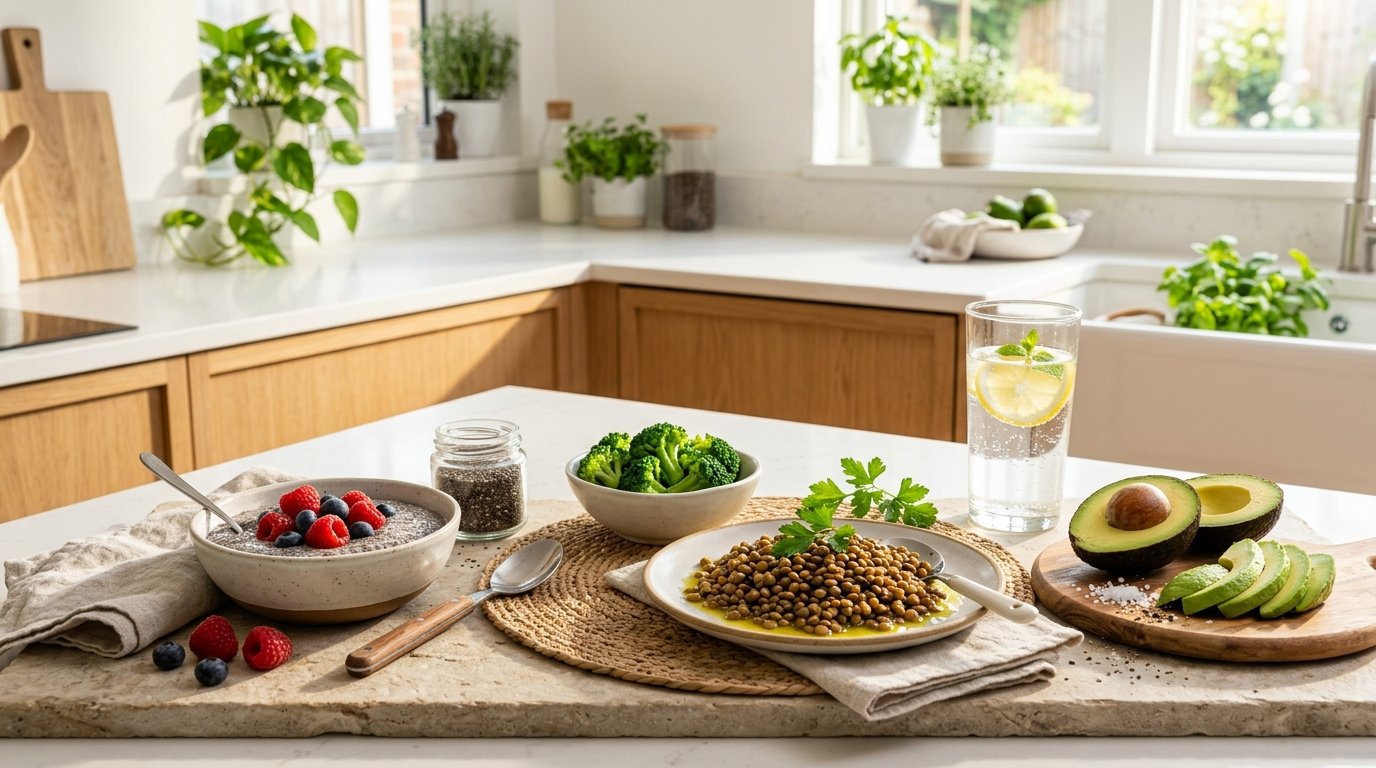
If you’ve been on Ozempic, Wegovy, or Zepbound for more than a few weeks, there’s a decent chance constipation has come up — either in your own experience or in every GLP-1 Facebook group and subreddit you’ve stumbled into. The advice you’ll see everywhere is some version of “just eat more fiber,” and while that’s not wrong, it’s incomplete in a way that can actually backfire. Your gut on a GLP-1 isn’t working the same way it did before, and fiber needs to be added with that in mind, not just piled on the way generic advice suggests.
I already covered general Zepbound constipation relief in this guide, but this article goes deeper specifically on fiber — how much you need, which sources are gentler on a slowed-down gut, and an important safety nuance almost nothing else on this topic mentions: research on bezoar formation in GLP-1 users, and why “more fiber, fast” isn’t automatically the safe answer it sounds like.
Why GLP-1 Medications Cause Constipation in the First Place
GLP-1 receptor agonists work partly by slowing gastric emptying — food sits in your stomach longer, which is a big part of why you feel full on smaller portions. That same mechanism slows movement through your intestines, which is the direct cause of the constipation so many people report. On top of that, appetite suppression means you’re simply eating less food overall, which often means less fiber and less water by default, even without trying to cut back on either.
According to a clinical review in Mayo Clinic Proceedings, GI side effects — including constipation, nausea, and delayed gastric emptying — are among the most common reasons people reduce their dose or discontinue GLP-1 therapy altogether, which is exactly why getting the diet side right matters as much as the medication itself.
How Common Is This, Really?
The numbers vary by drug and dose, but they’re not rare. Clinical trial data compiled from FDA prescribing information shows constipation reported in up to 24% of participants on the highest dose of Wegovy (semaglutide 2.4mg), and around 11% of participants on Zepbound (tirzepatide 15mg). Rates are notably lower at diabetes-treatment doses of the same drugs, which lines up with the dose-dependent nature of the gastric-slowing effect — the more the medication slows your gut, the more likely constipation becomes.
Why Fiber Helps — But Only If You Do It Right
Fiber is genuinely one of the most effective tools for GLP-1-related constipation, for the same reason it helps constipation generally: soluble fiber adds bulk and softness to stool, and both fiber types stimulate the muscle contractions that move things through your gut. The problem is that most generic “eat more fiber” advice was written for a normal digestive system, not one that’s already moving slower than usual because of medication. Adding a large amount of fiber — especially concentrated fiber, and especially without enough water — onto a gut that’s already running behind can make things worse before it makes them better.
The Bezoar Risk: Why “More Fiber, Fast” Isn’t Automatically Safe
This is the part most GLP-1 diet content skips, and it’s worth understanding even though it’s uncommon. A study published in BJS Open examined 100 patients undergoing pre-surgical gastroscopy and found that 17.4% of patients on GLP-1 receptor agonists had developed moderately large gastric bezoars — hardened masses of undigested material, often fibrous plant matter — compared to 0% in patients not on the medication. One patient in the study showed 76% retention of a solid meal still in the stomach four hours after eating, which fully resolved within two weeks of stopping the medication.
This doesn’t mean fiber is dangerous or that you should avoid it — it means the delayed gastric emptying GLP-1s cause is real and measurable, and it’s exactly why fiber needs to be added gradually, chewed thoroughly, paired with adequate fluid, and not relied on in mega-dose supplement form without medical guidance. The study’s authors also noted something worth remembering: only 3 of the 4 patients with bezoars actually had nausea, meaning you can’t assume everything is fine just because you feel okay.
Warning Signs Worth Calling Your Doctor About
Most GLP-1 constipation is manageable with the strategies below. But it’s worth knowing when something is more than routine constipation and deserves a call to your prescriber:
- Persistent nausea or vomiting that doesn’t improve
- Feeling uncomfortably full very quickly after eating only a small amount (early satiety)
- Abdominal pain or bloating that’s severe or getting worse, not better
- No bowel movement for several days despite fiber and fluid increases
- Constipation that isn’t improving after a couple of weeks of consistent effort
These can be signs of significant delayed gastric emptying (gastroparesis) that needs medical evaluation rather than more fiber at home.
How Much Fiber You Actually Need
The general targets don’t change on a GLP-1 — still roughly 25 grams a day for women and 38 grams for men, per standard nutrition guidelines. What changes is the path to get there. With a smaller appetite and a slower gut, you’re working with less room and less margin for error, so gradual increases matter even more than they do for the general population. I go into the full mechanics of building up fiber intake safely in my fibermaxxing guide — the core rule (add about 5 grams at a time, every few days, with more water alongside it) applies here too, just with a bit more caution given how GLP-1s already affect gut motility.
The Best Fiber Sources for a Slowed-Down Gut
Not all fiber behaves the same way in a gut that’s already moving slowly. A few practical adjustments make a real difference:
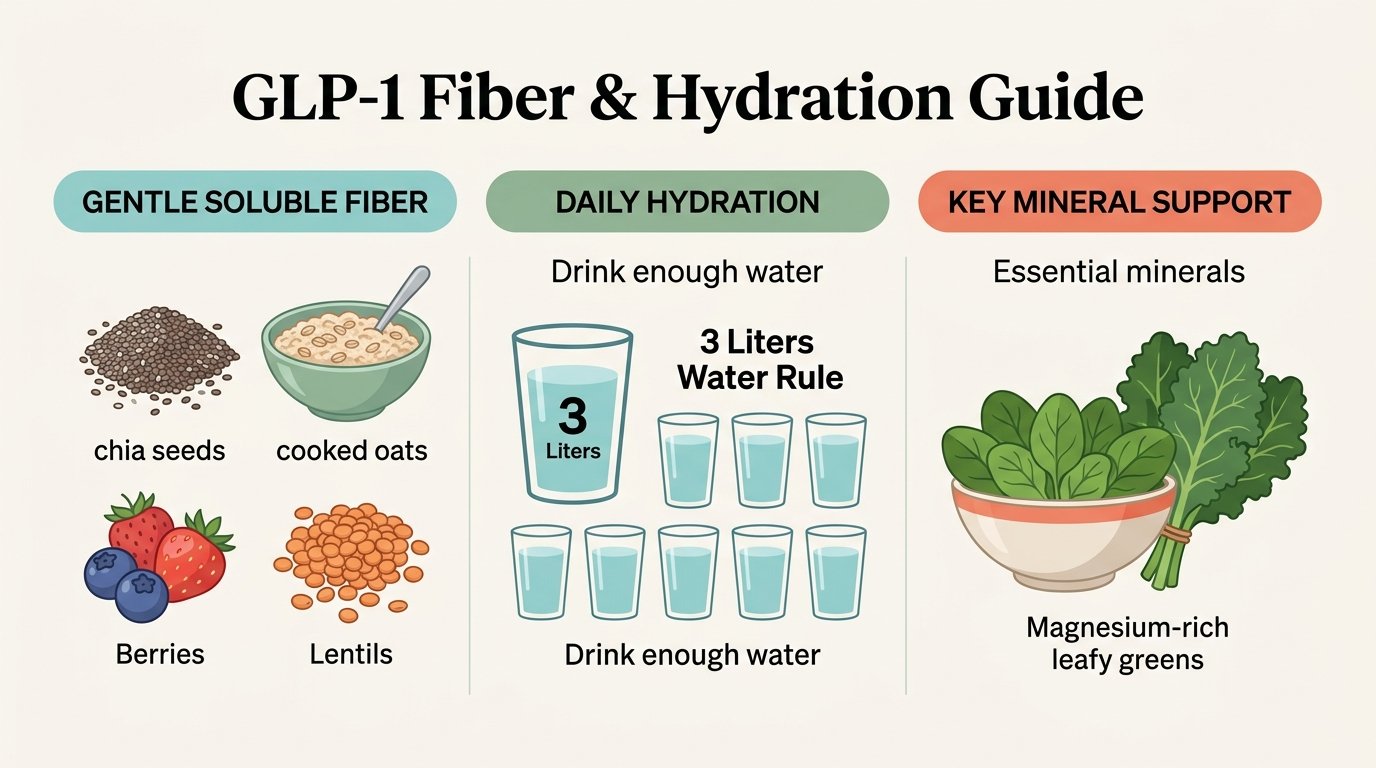
- Lean toward soluble fiber first — oats, chia seeds (soaked, not dry), cooked beans and lentils, ripe fruit like bananas and pears. Soluble fiber forms a gel and tends to be gentler than large amounts of tough insoluble fiber.
- Cook your vegetables instead of eating them raw, at least while your gut is adjusting. Cooking breaks down some of the plant structure that’s harder to move through a slowed digestive tract.
- Chew thoroughly and eat slowly. This matters more than usual on a GLP-1 — large, poorly chewed pieces of fibrous food are part of what contributes to bezoar risk in a stomach that’s already emptying slowly.
- Blend or puree when appetite is very limited. A pureed lentil soup or a smoothie with chia and spinach delivers real fiber without requiring you to physically chew and move a large volume of solid food through a slower system.
- Go easy on concentrated fiber supplements (psyllium husk capsules, fiber gummies) unless your doctor has specifically recommended them. Food-based fiber, taken gradually with water, is the safer starting point.
A Gut-Friendly Grocery List for GLP-1 Users
A shortlist to keep on hand, weighted toward the soluble, gentler sources covered above:
- Soluble fiber staples: rolled oats, chia seeds, ground flaxseed, ripe bananas, pears, canned or dried lentils
- Cooked vegetables: sweet potato, carrots, zucchini, spinach, butternut squash — easier to tolerate than raw, fibrous vegetables while your gut adjusts
- Protein that pairs well with fiber: Greek yogurt, cottage cheese, eggs, canned salmon, tofu
- Gentle legumes: canned black beans, chickpeas, or lentils — well-cooked and, if needed, blended into soup for easier digestion
- Hydration helpers: herbal tea, low-sodium broth, sparkling water if plain water is hard to get down
Keep a few of these on hand rather than trying to overhaul your pantry all at once — the same gradual approach that applies to how much fiber you eat applies to how you shop for it, too.
The Hydration Math People Skip
Fiber without enough water is one of the most common reasons it backfires — soluble fiber needs fluid to form the gel that makes it effective, and insoluble fiber without enough water can bulk up stool without being able to move it along, making constipation worse. As a practical target, aim for at least 8 to 10 cups of fluid a day while you’re increasing fiber, more if you’re active or in a hot climate. Water, herbal tea, and broths all count. If plain water is hard to get down on a GLP-1 (a common complaint, since appetite and thirst cues both shift), sipping consistently throughout the day works better than trying to drink large amounts at once.
Magnesium: The Other Half of the Equation
Fiber isn’t the only tool worth knowing about here. Magnesium — specifically forms like magnesium citrate — draws water into the intestines and has a genuine, well-established laxative effect, which is exactly why it’s used clinically for constipation relief. It works through a different mechanism than fiber, which is part of why the two are often recommended together rather than as alternatives to each other. I’ve mentioned Magnesium Breakthrough before in my Zepbound constipation guide for this same reason — it’s a blend of multiple magnesium forms rather than just one. (This is an affiliate link — full disclosure here.) As with fiber, start low and increase gradually, since too much magnesium too fast can cause loose stools rather than the gentle relief you’re after.
How This Is Different From Regular, Everyday Constipation
It’s worth being specific about why generic constipation advice doesn’t fully apply here. Ordinary constipation is usually caused by too little fiber, too little water, or too little movement — and the fix is simply adding more of all three. GLP-1 constipation has an added layer: the medication itself is actively slowing gastric and intestinal motility as part of how it works, which means you’re not just filling a gap, you’re working against a mechanism that isn’t going away until you stop the medication or your body adjusts to it. That’s exactly why the usual “just eat more fiber” advice needs the extra caution around pacing, hydration, and food texture covered above — it’s solving a similar problem with an added mechanical constraint that most general constipation advice was never written to account for.
This is also why patience matters more here than with ordinary constipation. Where a typical fiber increase might show results in a few days, GLP-1 constipation often takes closer to one to two full weeks of consistent fiber, fluid, magnesium, and movement before you notice a real difference — and dose increases can temporarily undo progress until your body adjusts again.
Balancing Fiber With Protein
With a much smaller appetite, every bite needs to work harder nutritionally, and protein still needs to come first — it protects muscle mass during weight loss, which matters more on a GLP-1 than almost any other factor. Fiber and protein aren’t competing for space on your plate; the goal is fitting both into a smaller volume of food. Legumes are useful here because they quietly deliver both. I’ve written more specifically about protein needs on GLP-1s in 7 Best Protein Shakes for GLP-1 and Natural GLP-1 Foods, both worth pairing with the fiber strategy here rather than treating as separate concerns.
Want Your Fiber and Protein Planned for You?
The GLP-1 Kickstart Kit is a 28-day, protein-first meal plan for people on Zepbound, Ozempic, Mounjaro and Wegovy, with 21 quick recipes, a side-effect playbook (constipation included) and printable trackers.
Get the Kickstart Kit: $27A Sample Day: Fiber and Protein Together, in Small Portions
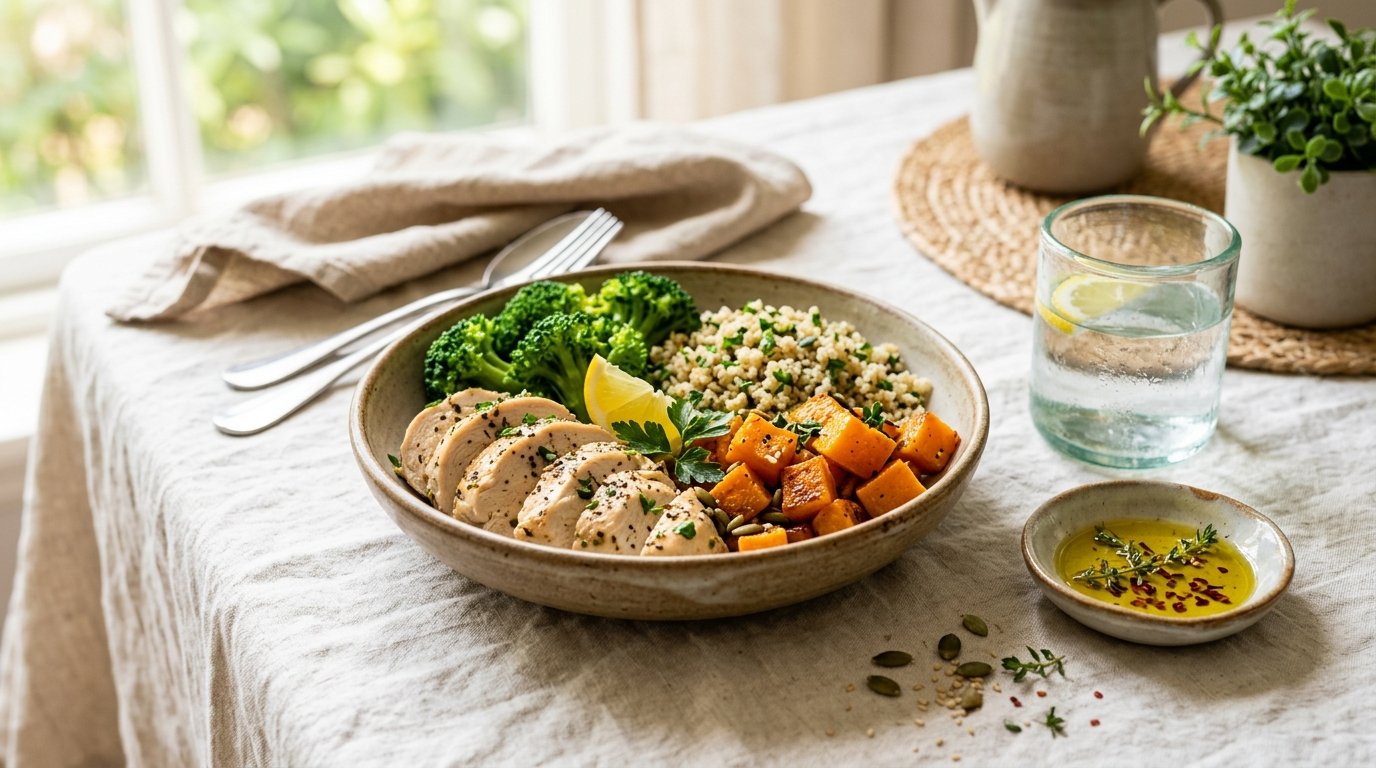
- Breakfast: Greek yogurt with a tablespoon of chia seeds (soaked overnight) and a few sliced strawberries
- Lunch: Small bowl of pureed lentil and vegetable soup with a soft whole-grain roll
- Snack: Half a ripe pear with a spoonful of nut butter
- Dinner: Baked fish with mashed sweet potato (skin on) and well-cooked green beans
- Throughout the day: Steady sipping of water — aiming for small, consistent amounts rather than large servings at once
Notice this isn’t a huge volume of food — it doesn’t need to be. The point is fiber and protein woven through small, manageable portions, not maximizing grams at the expense of what your appetite can actually handle.
Common Mistakes on GLP-1s and Fiber
- Reaching for a fiber supplement before trying food. Whole-food fiber comes with water content and is easier to introduce gradually than a concentrated capsule or powder.
- Increasing fiber without increasing water. This is the single most common reason fiber makes constipation worse instead of better on a GLP-1.
- Eating fibrous food too fast or not chewing enough. Given the documented bezoar risk, this matters more here than it would without the medication.
- Ignoring early-satiety or nausea symptoms and pushing through with more fiber anyway, instead of checking in with your prescriber.
- Treating fiber as the only fix. Movement — even a short daily walk — supports gut motility independently of diet and is worth pairing with any fiber strategy.
Frequently Asked Questions
Is it safe to take a fiber supplement on Ozempic or Zepbound?
It can be, but food-based fiber is the safer starting point given the documented link between GLP-1s and delayed gastric emptying. If you want to add a supplement, start with a small dose, increase gradually, drink plenty of water with it, and check with your prescriber first — especially if you’ve had any nausea, early fullness, or bloating.
How long does GLP-1 constipation usually last?
For most people, it’s most noticeable during dose increases and tends to ease somewhat as the body adjusts, though some degree of slower digestion can persist throughout treatment. Consistent fiber and fluid intake typically improves symptoms within one to two weeks.
Should I stop increasing fiber if I feel bloated?
Mild, temporary bloating during a gradual fiber increase is common and usually resolves. Significant or worsening bloating, especially with nausea or early fullness, is a signal to pause the increase, focus on hydration, and check in with your doctor rather than pushing forward.
Can fiber help with GLP-1 nausea too, or just constipation?
Fiber is specifically aimed at constipation, not nausea. For nausea, smaller and more frequent meals, avoiding very fatty or greasy foods, and eating slowly tend to help more than fiber does.
Does this apply to all GLP-1 medications, or just some?
The mechanism — delayed gastric emptying leading to constipation — applies across semaglutide (Ozempic, Wegovy), tirzepatide (Zepbound, Mounjaro), and other GLP-1 or dual GLP-1/GIP medications, though the exact rates vary by drug and dose, generally tracking with how strongly each one slows gastric emptying.
Can too much fiber interfere with how well my GLP-1 medication works?
There’s no strong evidence that reasonable fiber intake reduces how well injectable GLP-1 medications work, since they’re absorbed subcutaneously rather than through the digestive tract. Oral GLP-1 medications like Rybelsus are more sensitive to what’s in your stomach and are typically taken on an empty stomach with specific timing instructions — if you’re on an oral form, follow your prescriber’s timing guidance around food and fiber rather than general advice like this.
Final Thoughts
Fiber is genuinely one of the best tools you have for GLP-1-related constipation — I don’t want the bezoar research above to scare you off it. The point isn’t to avoid fiber, it’s to add it the way your slower-moving gut actually needs: gradually, with real water intake, leaning on cooked and soluble sources first, and paying attention to how your body responds rather than assuming more is automatically better. Combined with the protein-first approach that GLP-1s generally call for, this becomes pretty manageable once you know the specifics.
This article is educational, not medical advice, and it isn’t a substitute for guidance from the doctor who prescribed your medication. If constipation is severe, persistent, or paired with nausea, vomiting, or pain, please reach out to your prescriber — they can rule out more significant delayed gastric emptying and adjust your plan accordingly.
