
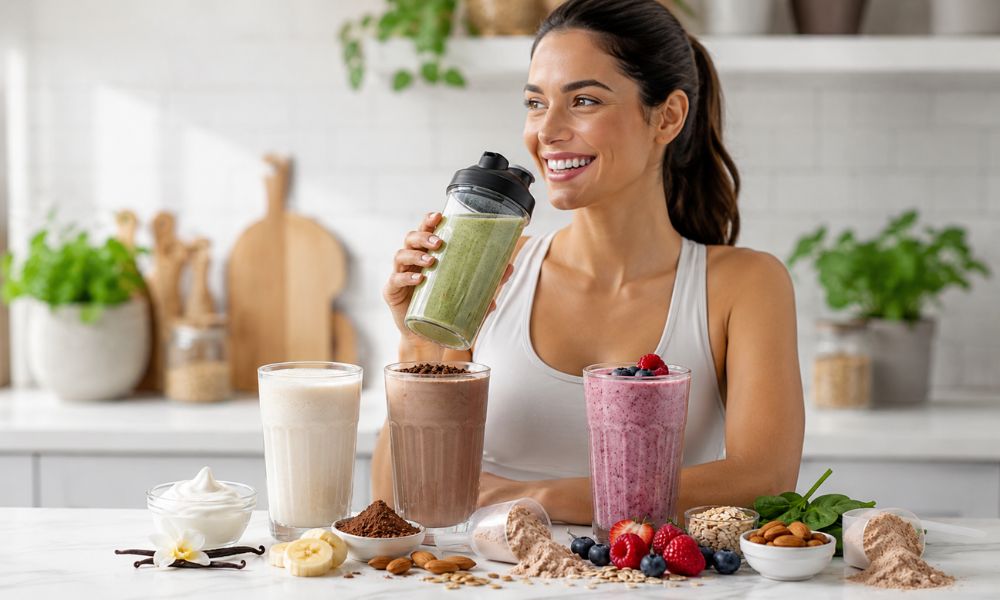
Finding the best protein shakes for GLP-1 treatment is not simply about choosing the powder with the biggest number on the label.
It is about finding something you can actually tolerate, enjoy, and use consistently when your appetite feels completely different from how it used to feel.
You may be taking semaglutide, tirzepatide, Wegovy, Zepbound, Ozempic, or another medication that affects the GLP-1 pathway. Perhaps the medication is helping you feel full sooner, quieting constant thoughts about food, or making weight management feel possible for the first time in years.
But there may be another side to the experience.
You might sit down to eat and lose interest after three bites. Meat may suddenly feel too heavy. A large breakfast may make you nauseated. You may know that you need protein, yet the thought of chewing through a full chicken breast, omelet, or bowl of beans feels exhausting.
This is where a carefully chosen protein shake can make a meaningful difference.
A shake will not replace a balanced diet, resistance exercise, medical monitoring, or the healthy habits that help you maintain your results. What it can do is make good nutrition easier on the days when eating enough feels difficult.
The right shake can help you:
- Get meaningful protein from a smaller volume of food.
- Reduce the stress of planning every meal perfectly.
- Support your strength while you are losing weight.
- Avoid reaching the end of the day having eaten almost nothing nutritious.
- Create a repeatable routine that can continue beyond the medication.
As a nutrition enthusiast, I believe the real goal is not to survive on powders or chase extreme weight loss. The goal is to use convenient tools while building habits that protect your health, mobility, confidence, and quality of life.
Affiliate disclosure: This article contains an affiliate link. If you purchase through that link, we may earn a commission at no additional cost to you. Recommendations are based on relevance, ingredient transparency, practicality, and responsible use—not commission size.
Medical note: This article is for general education and is not a replacement for personalized advice from your doctor or registered dietitian. GLP-1 medications can affect appetite, digestion, blood glucose, hydration, and medication absorption. Speak with your healthcare professional before changing your diet substantially or adding supplements.
Quick Answer: What Is the Best Protein Shake for Someone Taking a GLP-1?
For many people, the best starting option is a small whey protein isolate shake providing approximately 20 to 30 grams of protein, limited added sugar, and a short ingredient list.
Whey isolate is often lower in lactose than whey concentrate and mixes into a relatively small drink. However, it is not automatically the best option for everyone.
A clear whey drink may feel easier when you are nauseated. Soy protein may be better if you avoid dairy. A pea-and-rice blend may suit a vegan or soy-free diet. A Greek yogurt smoothie can provide protein from recognizable foods rather than relying entirely on powder.
Your best choice depends on:
- Your personal protein target.
- Your tolerance for dairy, sweetness, and texture.
- Whether you have nausea, reflux, constipation, or diarrhea.
- Your blood sugar needs.
- Your kidney, liver, or digestive health.
- How much solid food you are eating during the rest of the day.
You can use our protein calculator as a general starting point, but a clinician who knows your health history should set your final target.
Why Protein Becomes So Important on GLP-1 Treatment
GLP-1-based medications can reduce hunger, increase feelings of fullness, and change how quickly food moves through your digestive system. That can be extremely helpful for managing obesity and blood glucose, but it also means you may eat considerably less food than before.
Eating less is not automatically a problem. Eating too little nutrition for an extended period can be.
When total food intake falls, your intake of protein, vitamins, minerals, essential fats, and fiber may fall with it. This is why the conversation should not only be about how quickly the number on the scale changes.
It should also be about what you are losing, how you feel, and whether your new routine can support your body over time.
The 2025 joint advisory from the American College of Lifestyle Medicine, American Society for Nutrition, Obesity Medicine Association, and The Obesity Society highlights adequate protein intake and strength training as important parts of preserving lean mass during GLP-1 treatment. You can read the joint GLP-1 nutrition advisory here.
This does not mean that everyone taking a GLP-1 will experience dangerous muscle loss. It does mean that rapid weight loss, low food intake, inactivity, older age, and inadequate protein can create an environment where maintaining strength becomes more difficult.
Your goal should not be to prevent every change in lean body mass. Some change may occur during significant weight loss. Your goal is to give your body a strong reason to keep the muscle you use.
That means combining:
- Adequate protein.
- Strength or resistance exercise appropriate for your ability.
- Enough total nutrition to function well.
- Regular medical follow-up.
- Good sleep and recovery.
How Protein Shakes Can Change Your Day-to-Day GLP-1 Experience
A protein shake is not magic, but convenience can be life-changing when it removes a barrier you face every day.
Imagine that breakfast has become difficult since starting treatment. You skip it, drink coffee, become weak by early afternoon, and then grab whatever is easiest. By evening, you are tired, constipated, and frustrated because you know your diet is not supporting your goals.
Now imagine having a simple five-minute routine: a small shake, a glass of water, and a piece of fruit you tolerate well. You no longer need to negotiate with yourself about cooking a large meal first thing in the morning.
That one routine may help you:
- Start the day with protein instead of running on caffeine alone.
- Feel steadier during work or exercise.
- Reduce panic around reaching your nutrition goals.
- Make more intentional food choices later in the day.
- Turn your medication-assisted weight loss into a healthier lifestyle.
For additional breakfast inspiration, explore these calorie-deficit breakfast ideas and high-fiber breakfast foods.
How We Chose the Best Protein Shakes for GLP-1 Users
I did not base this guide on dramatic before-and-after promises or the phrase “GLP-1 friendly” printed on a package. That phrase does not automatically tell you whether a product fits your individual needs.
Instead, the options below were selected using practical criteria that matter when appetite and digestion have changed.
| What to look for | Why it matters |
|---|---|
| Approximately 20–30 grams of protein | This is a practical amount for many adults to include in a snack or small meal, although your target may differ. |
| Low or moderate added sugar | Large amounts of added sugar may be unnecessary, especially if you are managing diabetes or insulin resistance. |
| Manageable serving size | A very large shake may feel uncomfortable when fullness or delayed digestion is an issue. |
| Simple ingredient list | Fewer gums, sugar alcohols, stimulants, and extras may make it easier to identify what is upsetting your stomach. |
| Complete or complementary protein | Your shake should provide a useful amino acid profile rather than a small amount of collagen marketed as a full protein meal. |
| Independent quality verification | Third-party testing can add confidence that the contents more closely match the label. |
| A flavor you genuinely like | The “perfect” powder is useless if it sits untouched in your cupboard. |
The FDA does not approve dietary supplements for safety and effectiveness before they reach the market in the same way it approves medications. Read more in the FDA dietary supplement guide.
When possible, look for products carrying recognized third-party verification. The NSF Certified for Sport program is particularly useful for athletes and people concerned about undeclared substances.
7 Best Protein Shakes for GLP-1 Users
1. Whey Protein Isolate Shake: Best Overall for a Small, High-Protein Serving
Whey protein isolate is a strong all-around choice if you tolerate dairy. It provides complete protein, mixes easily, and can deliver a useful amount of protein without requiring a huge drink.
Because much of the lactose is removed during processing, whey isolate may be easier to tolerate than whey concentrate for some people with mild lactose sensitivity. It is still derived from milk, so it is not appropriate for a milk allergy.
Simple recipe:
- One serving unflavored or lightly flavored whey isolate.
- 6 to 8 ounces of water or unsweetened milk.
- Ice, if cold drinks feel comfortable.
- A pinch of cinnamon or a few drops of vanilla, if desired.
Why it may work well: It is quick, relatively low-volume, and easy to adjust. On a low-appetite morning, you can begin with half a serving and drink it slowly instead of forcing a large meal.
Be cautious if: You have a milk allergy, significant lactose intolerance, or find creamy drinks worsen nausea or reflux.
2. Clear Whey Protein Drink: Best for Nausea or “Heavy Shake” Fatigue
Traditional creamy protein shakes can feel thick, sweet, and almost impossible to finish when you are nauseated. Clear whey is mixed more like flavored water than a milkshake.
It can be useful on days when you want protein but cannot tolerate a dense texture.
Simple preparation:
- Mix one serving of clear whey isolate with the amount of water listed on the label.
- Shake thoroughly.
- Let the foam settle before drinking.
- Sip it over 20 to 40 minutes rather than drinking it quickly.
Why it may work well: The lighter texture may be more appealing when your stomach feels sensitive.
What to check: Some clear protein products contain strong acids, artificial sweeteners, or intense flavoring. These may irritate reflux or cause bloating in sensitive people.
If nausea, vomiting, constipation, or abdominal discomfort has become persistent, do not simply cover the problem with liquid meals. Review possible medication-related symptoms with your prescriber. Our guides to Ozempic side effects and Zepbound side effects can help you prepare questions for that conversation.
3. Greek Yogurt Protein Smoothie: Best Food-First Choice
Not everyone wants protein powder every day. A Greek yogurt smoothie offers a food-first alternative with protein, calcium, and a satisfying creamy texture.
Gentle berry yogurt smoothie:
- 3/4 to 1 cup plain Greek yogurt.
- 1/3 to 1/2 cup berries.
- A small amount of water or milk to thin it.
- Optional: one tablespoon of ground flaxseed if you tolerate fiber well.
Blend until smooth. Avoid turning it into a giant smoothie with several bananas, nut butter, oats, seeds, sweeteners, and a full scoop of protein powder all at once. That “healthy” shake can become large, calorie-dense, and difficult to digest.
Why it may work well: It gives you real-food nutrition and can be eaten with a spoon if drinking quickly makes you uncomfortable.
Be cautious if: Dairy causes symptoms, berries worsen reflux, or extra fiber increases bloating during a medication dose increase.
4. Soy Protein Shake: Best Complete Dairy-Free Option
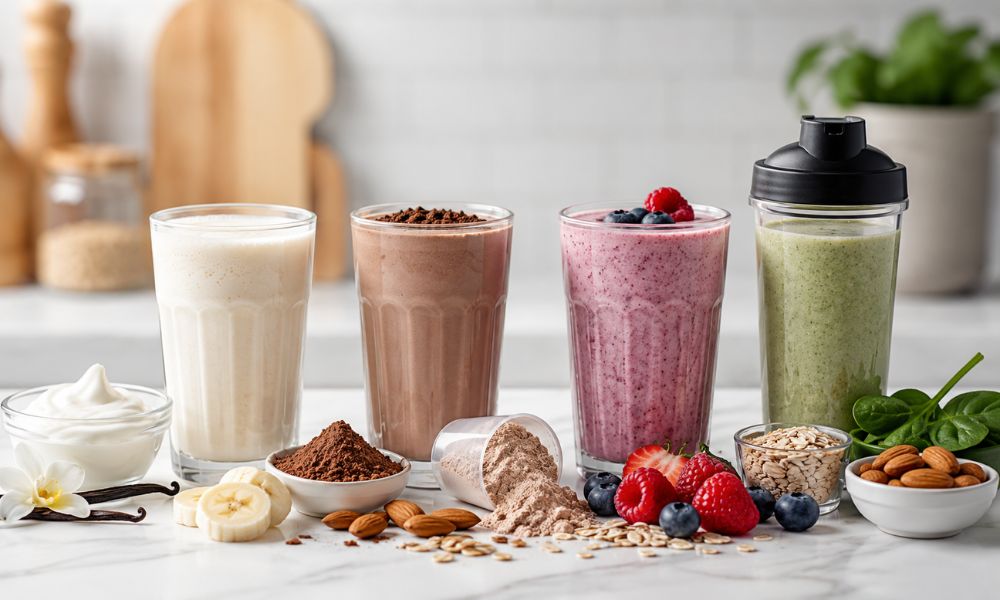
Soy protein is one of the most practical plant-based choices because it provides a complete amino acid profile. It can work well for vegans, people avoiding dairy, or anyone who simply prefers plant protein.
Simple soy shake:
- One serving soy protein isolate.
- 6 to 8 ounces of unsweetened soy milk or water.
- One or two ice cubes.
- Optional: a small spoonful of unsweetened cocoa powder.
Why it may work well: Using soy protein with soy milk can create a protein-rich shake without dairy.
Be cautious if: You have a soy allergy or have been instructed to separate certain medications from high-protein or high-fiber meals.
5. Pea-and-Rice Protein Shake: Best Vegan and Soy-Free Option
Pea protein is popular, but some people dislike its earthy taste or gritty texture. Combining pea and rice proteins can improve the overall amino acid balance and often produces a more rounded plant-based option.
Simple vanilla plant shake:
- One serving of a pea-and-rice protein blend.
- Unsweetened almond milk or water.
- A small amount of vanilla.
- Optional: half a soft banana if you need more energy and tolerate it well.
Why it may work well: It is dairy-free, soy-free, and suitable for many plant-based diets.
Be cautious if: The product contains large amounts of chicory root, inulin, erythritol, or other ingredients that give you gas, diarrhea, or cramping.
If plant-based eating is part of your long-term plan, our guides to vegan protein sources and starting a plant-based diet for weight loss can help you build meals beyond shakes.
6. Kefir or Drinkable Yogurt Shake: Best for People Who Prefer Real Food and a Thinner Texture
Kefir and drinkable yogurt can provide protein in a thinner format than a spoonable Greek yogurt smoothie. Some products also contain live cultures, although the strains and amounts vary.
Easy kefir shake:
- One cup plain, unsweetened kefir.
- A small portion of fruit.
- Optional: half a scoop of whey isolate if your daily protein intake is low.
- Water or ice to adjust the texture.
Why it may work well: It can feel lighter than a thick smoothie while still helping you add food-based nutrition.
Be cautious if: Fermented dairy worsens reflux, lactose causes symptoms, or the product contains a large amount of added sugar.
7. Low-Sugar Ready-to-Drink Protein Shake: Best for Work, Travel, and Busy Days
The best nutrition plan is not always the one that looks perfect on paper. It is the one you can follow on a stressful Tuesday when you are late, your appetite is low, and you have no time to clean a blender.
A ready-to-drink protein shake can prevent an unplanned day of coffee, crackers, and almost no protein.
Look for:
- Approximately 20 to 30 grams of protein.
- A serving size you can comfortably finish.
- Limited added sugar.
- No stimulant blend.
- No huge list of herbal “fat burners.”
- Third-party quality testing where available.
Why it may work well: You can keep one in your office, bag, or refrigerator for days when your routine falls apart.
Be cautious if: You start using bottled shakes for several meals every day. They are a backup or supportive tool, not a complete long-term eating pattern.
Best GLP-1 Protein Shake by Common Problem
| Your main concern | Option to consider | Helpful adjustment |
|---|---|---|
| Nausea | Clear whey or a very small whey isolate shake | Use cold water, reduce serving size, and sip slowly. |
| Constipation | Greek yogurt smoothie with tolerated fruit | Add fiber gradually and prioritize fluids throughout the day. |
| Lactose intolerance | Soy isolate or pea-rice blend | Check for milk-derived ingredients and sugar alcohols. |
| Very low appetite | Small whey isolate shake | Keep the drink concentrated rather than blending a huge smoothie. |
| Diabetes or insulin resistance | Unsweetened or low-added-sugar protein shake | Review carbohydrate content and glucose response with your care team. |
| Vegan diet | Soy or pea-rice blend | Include varied plant proteins throughout the rest of the day. |
| Busy schedule | Ready-to-drink shake | Keep one available for emergencies instead of skipping nutrition. |
How Much Protein Should Your Shake Contain?
There is no single protein number that is perfect for every GLP-1 user.
Your needs can change according to your body size, age, activity level, health conditions, total calorie intake, rate of weight loss, and whether you are trying to maintain or build muscle.
For many adults, a shake containing around 20 to 30 grams of protein is a practical option. A smaller person with a low appetite may prefer 15 to 20 grams at a time. Someone with higher needs may require more protein across the day, but making one enormous shake is not always the most comfortable solution.
Try spreading protein across several eating opportunities rather than waiting until dinner to consume nearly all of it.
For example:
- Breakfast: Greek yogurt or a small protein shake.
- Lunch: Chicken, fish, tofu, eggs, beans, or lentils.
- Snack: Cottage cheese, edamame, or half a shake.
- Dinner: A protein-centered meal with vegetables and a tolerated carbohydrate.
If you have chronic kidney disease, advanced liver disease, a history of kidney stones, or another condition requiring protein management, do not increase your intake without medical guidance.
When Should You Drink a Protein Shake on GLP-1 Medication?
The best time is the time that solves a genuine problem in your routine.
At breakfast
This can help if you regularly skip breakfast because you are not hungry but later feel weak, unfocused, or excessively tired.
After resistance training
A shake can be a convenient source of protein when you have trained but do not feel ready for a full meal.
As an afternoon bridge
A smaller shake may prevent you from reaching dinner having consumed very little nutrition all day.
During a low-appetite period
Some people notice appetite changes around their injection day or after a dose increase. A small, simple shake may be more manageable than a large meal.
Not immediately before lying down
If you experience reflux, fullness, or burping, avoid drinking a large shake and going straight to bed.
Should a Protein Shake Replace a Meal?
Occasionally, it can function as a small meal when you genuinely cannot manage solid food. However, protein powder mixed with water alone does not provide everything found in a balanced meal.
A more complete shake may include:
- A high-quality protein source.
- A small portion of fruit.
- A little healthy fat, if tolerated.
- A source of calcium or another fortified nutrient.
- Enough fluid to support hydration without creating an uncomfortably large serving.
Even then, try to maintain variety across the day. Whole foods provide different combinations of fiber, vitamins, minerals, healthy fats, and beneficial plant compounds.
For balanced meal inspiration, see our meals to eat while on Ozempic, Zepbound diet guide, and Wegovy diet guide.
Ingredients That May Make a Protein Shake Harder to Tolerate
A protein shake can look excellent on the front of the bottle while hiding a digestive obstacle in the ingredient list.
Watch for these potential troublemakers:
Large amounts of sugar alcohols
Erythritol, maltitol, sorbitol, and similar sweeteners may cause gas, diarrhea, or abdominal discomfort in some people.
Added inulin or chicory-root fiber
These ingredients can increase fiber, but they may also cause considerable bloating when introduced too quickly.
Very high fat content
Fat is an important part of a healthy diet, but a large amount in one shake may feel heavy when digestion is already slow.
Stimulant or “thermogenic” blends
Your protein powder does not need a hidden energy formula. Stimulants may contribute to jitteriness, sleep problems, increased heart rate, or medication interactions.
Huge amounts of added vitamins and minerals
More is not automatically better. A fortified shake combined with several other supplements can push your total intake unnecessarily high.
Collagen as the only protein
Collagen can be useful in some diets, but it does not provide the same complete amino acid profile as whey, soy, egg, or thoughtfully combined plant proteins. Do not automatically count a collagen drink as your main muscle-supporting protein source.
A Responsible Note About Lean Bliss and Other Weight-Management Supplements
A protein shake and a weight-management supplement serve different purposes. Protein provides amino acids and can help you close a nutrition gap. An herbal supplement should not be treated as a substitute for protein, a balanced meal, prescribed medication, or medical care.
Some readers are also interested in products designed to complement a broader healthy-habit routine. You can review the Lean Bliss ingredient list and current offer here before deciding whether it deserves a place in your routine.
The seller lists ingredients including Ceylon cinnamon, banaba-derived corosolic acid, saffron extract, seaweed-derived compounds, olive leaf extract, and berberine. Lean Bliss is not a protein shake, and the product should not be assumed to produce the same results as a GLP-1 medication.
This distinction is especially important because botanicals such as berberine may affect blood glucose or interact with medications. If you are taking a GLP-1, insulin, a sulfonylurea, metformin, blood-pressure medication, anticoagulants, or other prescriptions, show the complete ingredient label to your doctor or pharmacist before using it.
A supplement should be an optional decision made after reviewing the evidence, ingredients, cost, and possible interactions—not something you feel pressured to buy because you are afraid of regaining weight.
How to Build a GLP-1 Protein Shake Without Accidentally Making It Too Heavy
The internet is filled with smoothie recipes containing ten or more ingredients. They may be nutritious, but they are not always comfortable for someone experiencing early fullness.
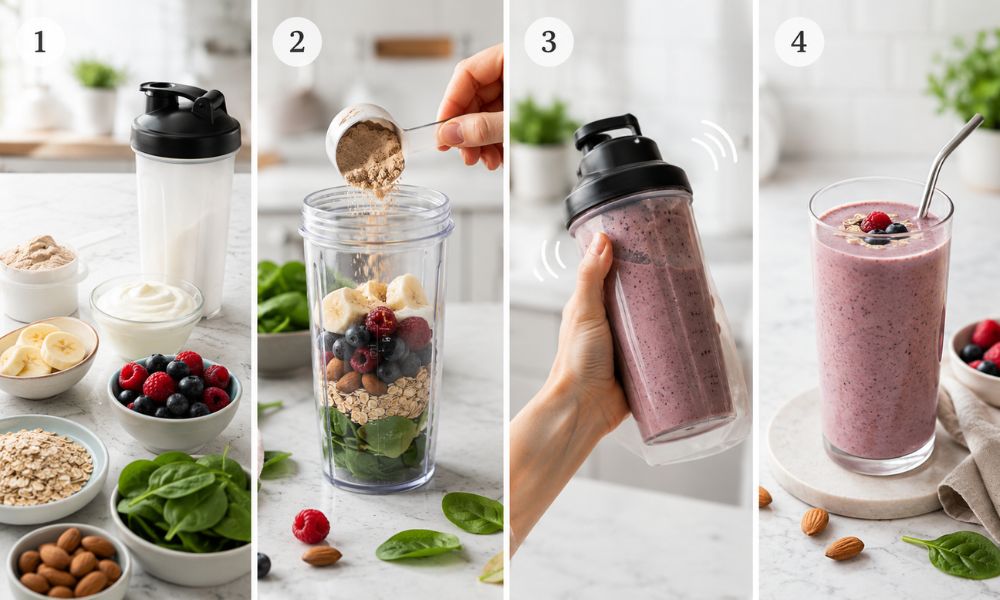
Use this simple formula:
- Choose one protein: whey isolate, soy, pea-rice blend, Greek yogurt, cottage cheese, or kefir.
- Choose one liquid: water, unsweetened soy milk, lactose-free milk, or another tolerated option.
- Add one flavor: berries, cocoa, cinnamon, vanilla, or a small amount of banana.
- Add one optional extra: flaxseed, chia, oats, or nut butter—but not all of them at once.
- Keep the portion manageable: begin with 6 to 10 ounces rather than a giant blender bottle.
Drink slowly and stop when you feel comfortably satisfied. Do not force yourself to finish a shake simply because the nutrition app says you should.
Three Easy GLP-1 Protein Shake Recipes
Gentle Vanilla Shake
- One serving vanilla whey isolate.
- 6 to 8 ounces cold water or lactose-free milk.
- A pinch of cinnamon.
- Two ice cubes.
Blend or shake until smooth. This is a simple starting option when you want minimal ingredients.
Berry Yogurt Mini Smoothie
- 3/4 cup plain Greek yogurt.
- 1/3 cup berries.
- Water to thin.
- Optional: one teaspoon of ground flaxseed.
Blend into a small serving. Add fiber cautiously if you are already bloated.
Chocolate Plant Protein Shake
- One serving soy protein or pea-rice protein.
- Unsweetened soy or almond milk.
- One teaspoon unsweetened cocoa.
- A few drops of vanilla.
Choose a powder with limited added sugar and no stimulant blend.
Do Not Forget Hydration
When appetite decreases, thirst habits may change too. Nausea, vomiting, or diarrhea can further increase dehydration risk, while low fluid intake can make constipation worse.
A protein shake contributes some fluid, but it should not become your only drink.
Keep water available throughout the day and sip regularly. Your needs depend on climate, exercise, health conditions, body size, and medications. Our hydration calculator based on weight can provide a general estimate, but follow any fluid limits set by your healthcare professional.
For medication-related constipation, see our guide to Zepbound constipation relief.
A Simple Seven-Day Protein-Shake Habit Plan
You do not need to transform your entire diet overnight. Use one week to learn what your body tolerates.
Day 1: Check your current intake
Write down what you normally eat without judging yourself. Look for the meal where protein is consistently missing.
Day 2: Choose one simple shake
Buy or prepare a shake with a short ingredient list. Do not purchase six different powders yet.
Day 3: Test half a serving
Drink it slowly and notice fullness, nausea, reflux, bloating, and energy.
Day 4: Adjust the texture
Use more water if it feels too thick or less liquid if the volume is uncomfortable.
Day 5: Pair it with a small whole food
Try tolerated fruit, a few whole-grain crackers, or a small serving of vegetables later in the meal.
Day 6: Add gentle strength activity
With medical clearance, include resistance bands, body-weight movements, or your normal strength-training routine.
Day 7: Review what worked
Ask yourself whether the shake reduced stress, improved consistency, and helped you eat better overall. Keep it only if it supports your routine.
When to Contact Your Healthcare Professional
Protein shakes should make nutrition easier. They should not be used to hide a serious side effect or replace medical care.
Contact your healthcare professional if you experience:
- Repeated vomiting or an inability to keep fluids down.
- Signs of dehydration, including dizziness, very dark urine, or minimal urination.
- Severe or persistent abdominal pain.
- Persistent constipation with significant pain or swelling.
- Symptoms of low blood sugar, especially if you use insulin or certain diabetes medications.
- Rapid weakness or a major decline in physical function.
- Difficulty eating enough for several consecutive days.
- Symptoms of an allergic reaction.
Current FDA prescribing information for GLP-1-based medications includes important warnings, contraindications, and gastrointestinal side-effect information. Review the official Wegovy prescribing information or Zepbound prescribing information, and discuss questions with your prescriber.
Frequently Asked Questions
Can I drink protein shakes while taking Ozempic, Wegovy, or Zepbound?
Many people can include protein shakes while taking these medications. The best formula, serving size, and timing depend on your medical history, digestive tolerance, blood sugar treatment, and overall diet. Ask your care team for personalized advice.
What is the best protein powder for semaglutide?
Whey isolate is a practical starting choice if you tolerate dairy. Soy isolate is a strong dairy-free option, while a pea-and-rice blend can work well for vegan or soy-free diets. The best powder is one with adequate protein, limited added sugar, a manageable ingredient list, and a texture you tolerate.
Are protein shakes good when GLP-1 medication causes nausea?
A small or clear protein drink may be easier than solid food for some people, but others find sweet or creamy shakes worsen nausea. Start with a small amount, sip slowly, and contact your prescriber if nausea is severe or persistent.
Can I live on protein shakes while using a GLP-1?
No. Protein shakes do not provide the full variety of nutrients, fibers, textures, and beneficial compounds found in a balanced diet. They should support whole-food meals rather than permanently replace all of them.
Will protein shakes prevent muscle loss?
Protein can support muscle maintenance, but a shake alone cannot guarantee that you will preserve all lean mass. Resistance training, adequate total nutrition, sleep, physical activity, and individualized healthcare are also important.
Can protein shakes worsen constipation?
They can if they displace fiber-rich foods, contain ingredients that upset your digestion, or are consumed without enough fluid. Choose a simple formula, drink water throughout the day, and include tolerated fruits, vegetables, legumes, or whole grains.
Should I choose a meal-replacement shake or a protein shake?
A protein shake focuses mainly on protein. A meal replacement usually contains protein, carbohydrate, fat, and added vitamins and minerals. Meal replacements may be useful occasionally, but check the sugar, calories, serving size, and ingredient list carefully.
Is a 50-gram protein shake better than a 25-gram shake?
Not automatically. A very large serving may be uncomfortable and unnecessary. Many people find it easier to spread protein across the day. Your personal needs should guide the amount rather than marketing language.
Can I add fruit to my GLP-1 protein shake?
Yes, if you tolerate it. Begin with a small portion. Fruit can add flavor, fiber, vitamins, and carbohydrates, but an oversized smoothie containing several servings of fruit may be more than you need at one time.
Can I take Lean Bliss with a GLP-1 medication?
Do not combine them without discussing the full ingredient list with your doctor or pharmacist. Lean Bliss contains multiple botanical ingredients and is not a replacement for a GLP-1, protein shake, or prescribed diabetes treatment.
The Bottom Line
🥗 Got the Protein Down? Here’s the Rest of the Plan.
A great shake solves one meal — but most days you still need breakfast, lunch, and dinner ideas that work with a smaller appetite and less tolerance for heavy food. The GLP-1 Kickstart Kit is a full 28-day meal plan built specifically for people on GLP-1 medications, so protein, portions, and timing are already worked out for you.
Get the GLP-1 Kickstart Kit — $27 →Already Stopped, or Planning To?
The After Plan is the step-by-step system for the 6–24 months after your last dose — people who stop GLP-1 medication regain weight roughly 4x faster without one. Appetite-rebound tools, muscle preservation, and a regain early-warning tracker included.
Get The After Plan — $27The best protein shakes for GLP-1 users are not necessarily the most expensive, the most heavily marketed, or the ones with the highest protein number.
The best shake is the one that helps you meet your nutrition needs without making you feel worse.
For many people, that may be a small whey isolate shake. For others, it may be clear whey, soy protein, a pea-rice blend, Greek yogurt, kefir, or a convenient ready-to-drink product.
Use protein shakes to remove friction from your routine—not to avoid learning how to eat well.
Your long-term success will come from habits you can carry forward: prioritizing nutrient-dense foods, protecting your strength, staying hydrated, sleeping well, moving regularly, and getting support when something does not feel right.
GLP-1 medication may open the door by reducing hunger and making weight loss more achievable. Healthy habits are what help you build a life on the other side of that door.
“`
