

Carnivore diet results for 30 Days is a topic many people search for after seeing dramatic stories on TikTok, podcasts, or from well-known carnivore dieters like Mikhaila Peterson. Maybe you’ve wondered what would actually happen if you cut out plant foods, whole grains, sweet potatoes, and even small amounts of carbs—and ate only animal products like ground beef, red meat, rotisserie chickens, cheddar cheese, and heavy cream. For a lot of folks, this new diet feels tempting when weight loss stalls, energy levels crash, or food cravings won’t go away.
This style of eating is often described as a zero-carb diet or extreme low-carb diet, similar to but more restrictive than the ketogenic diet or paleo diets. Supporters claim great results in body weight, waist circumference, joint pain, brain fog, and even autoimmune conditions like rheumatoid arthritis. Critics warn about lack of fiber, nutrient deficiencies, LDL cholesterol changes, gut microbiome disruption, and long-term risk of heart disease. Both sides point to different things, which is why real-world 30-day results matter.
In this article, we look at what happens during the first time trying a carnivore meal plan over 30 days—covering weight loss, energy needs, mental health, menstrual cycles, blood pressure, bloodwork changes, insulin resistance, muscle mass, and common side effects. This is not about fad diets or eating Pop Tarts one day and hot sauce-covered steak the next, but about understanding how a meat diet affects the body when animal-based foods become the only thing on your plate.
Contents
- 1 What Changes in Your Body During the First 30 Days on the Carnivore Diet
- 2 Download Free PDF
- 3 How Weight Loss and Waist Circumference Shift Without Plant Foods On Carnivore Diet
- 4 Quick Tips to Track and Tweak
- 5 Energy Levels, Brain Fog, and Mental Health: What People Don’t Talk About
- 6 Carnivore Diet Bloodwork, Cholesterol, and Other Health Markers After 30 Days
- 7 Download Free PDF
- 8 How a Carnivore Diet Affects Digestion, Fiber Absence, and the Gut Microbiome
- 9 Who the Carnivore Diet May Help and Who Should Avoid It
- 10 30 Day Carnivore Diet Transformation Timeline
- 11 Week 1: Carb Detox (“Carnivore Flu”)
- 12 Week 2: Energy Rebound & Adaptation
- 13 Week 3: Fat-Burn Groove
- 14 Week 4 (Day 30): Locked In & Transformed
- 15 Frequently Asked Questions
- 15.1 Can you build or maintain muscle on a carnivore diet in 30 days
- 15.2 Does the carnivore diet affect menstrual cycles within the first month
- 15.3 Is diarrhea normal when starting a carnivore diet
- 15.4 Can you caffeinated beverages or use hot sauce on a carnivore diet
- 15.5 Does eating only meat increase the risk of heart disease in 30 days
- 15.6 Is it okay to eat dairy products on a carnivore diet
- 15.7 Can the carnivore diet help with autoimmune symptoms quickly
- 15.8 What happens if you stop the carnivore diet after 30 days
- 16 Conclusion
- 17 Before Starting Hard Diets
- 18 Struggling with unsustainable diets and frustrated by the lack of results?
What Changes in Your Body During the First 30 Days on the Carnivore Diet
Starting a carnivore diet for the first time can feel like a shock to the system because it removes entire food groups at once. When animal products become the only thing you eat, your body begins adapting in noticeable ways—some expected, some surprising. Here’s what commonly changes during the first 30 days, based on physiology, clinical nutrition research, and real-world reports from carnivore dieters.
The First Week: Rapid Shifts in Energy Source
In the early days, your body transitions from using carbs as its main energy source to relying mostly on fat and protein. This shift is similar to what happens on a ketogenic diet or very low-carb diet. During this period, some people experience fatigue, brain fog, headaches, or low energy levels as insulin levels drop and glycogen stores empty.
This adjustment phase is temporary for most people but can feel intense, especially if your normal diet included whole grains, sweet potatoes, or other plant-based foods.
Changes in Weight and Water Retention
Many people notice weight loss early on, but much of this initial drop is related to water weight rather than fat loss. Lower carb intake reduces insulin, which causes the body to release stored water. Over the Carnivore diet course of 30 days, body weight and waist circumference may continue to change depending on calorie intake, number of meals, and whether enough fats are consumed to meet energy needs. This is why some people see great results while others plateau quickly.
Appetite, Cravings, and Relationship With Food
One of the most talked-about changes is appetite control. High intake of animal foods—especially red meat, ground beef, eggs, and other protein-rich options—often leads to increased satiety. Many people report fewer sugar cravings and less interest in snacks like Pop Tarts or sweet treats by the second or third week. However, food cravings can still appear, especially if fat intake is too low or meals feel repetitive. The good news is that their are Carnivore friendly sweet snacks that can help on sugar cravings.
Digestive Changes and Lack of Fiber
Removing plant foods also removes fiber, which can affect digestion. Some people experience constipation or loose stools early on as the gut adapts. Research suggests the gut microbiome shifts when fiber is removed, favoring bacteria that thrive on animal-based diets. For most people, digestion stabilizes within a few weeks, but those with sensitive digestion may notice ongoing changes.
Energy Levels and Mental Clarity
By the third or fourth week, many people report steadier energy levels and reduced brain fog compared to the first week. Once fat adaptation improves, energy can feel more consistent throughout the day without the highs and lows linked to carb intake. That said, responses vary widely—mental health and focus may improve for some, while others feel flat or low if nutrient needs aren’t met.
Hormones and Individual Responses
Hormonal responses can differ, especially for women. Changes in menstrual cycles have been reported anecdotally during restrictive diets, particularly when calorie intake is too low. The carnivore diet is not a one-size-fits-all approach, and factors like medical condition, insulin resistance, muscle mass, and baseline diet influence how the body responds over 30 days.
How Weight Loss and Waist Circumference Shift Without Plant Foods On Carnivore Diet
If you’re wondering what happens to your weight and waistline on a strict carnivore diet—no plants, just animal foods—many folks see solid drops, especially early on, thanks to sky-high protein keeping you full and ditching carbs. But results vary wildly person to person, and long-term data is thin, so let’s break it down.
Your Weight Drop Expectations
You’ll likely shed pounds fast at first—think water and glycogen flushing out in week one or two, making the scale love you quick.
High-protein, zero-carb setups like this often cut calories naturally, leading to real fat loss if you’re overweight or insulin-resistant.
The DIETFITS study by Stanford researchers (led by Christopher Gardner), a 2018 randomized trial with 609 overweight adults (BMI 28-40, no diabetes). They pitted a healthy low-fat diet (48% carbs, 29% fat) against a healthy low-carb one (30% carbs, 45% fat) over 12 months—low-carb edged out with -6.0 kg loss vs -5.3 kg (not statistically huge, but consistent trend favoring low-carb).
Note: Not pure carnivore (veggies allowed), and mostly self-reports for actual carnivore.
Waistline Wins (or Not)
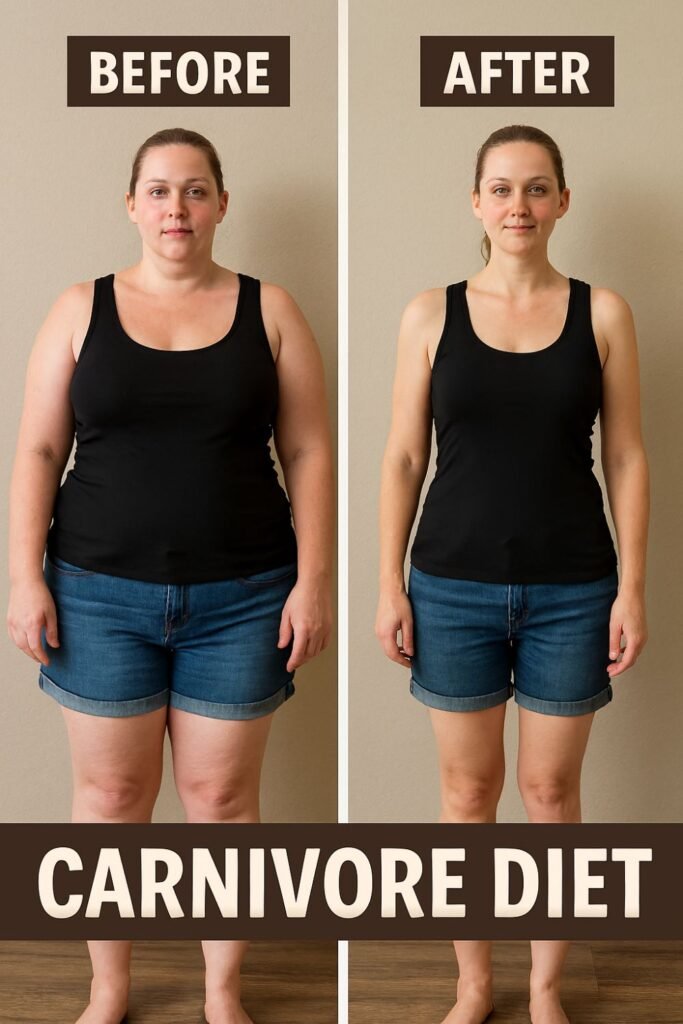
Carnivore fans often report slimmer waists and lower BMI, especially if you started with belly fat.
Low-carb styles shrink waist measurements more than low-fat in short trials, targeting that stubborn abdominal fat.
Watch out though—some low-carb research links poor food quality (like processed meats) to waist creep over time.
Heads up: Some low-carb data ties junky meats to waist gain long-term, so quality counts.
Why No Plants Matters Here
Ditching plants cuts fiber and plant compounds, which might hit gut health and heart risks down the road, even if you slim up initially.
Most solid keto/low-carb studies sneak in veggies, so zero-plant carnivore is more experimental—stick to surveys and stories for now.
If you’re losing weight and inches, great, but get blood test to track the full picture.
What Makes It Work (or Flop) for You
You drop more if protein curbs your appetite and you don’t overdo fatty cuts—calories still count, even on steak.
Your starting point rules: insulin issues or low activity? Bigger wins likely. Stress, sleep, or meds? Could stall you.
Across diets, trimming waist by even a bit slashes health risks—carnivore might deliver if you nail consistency.
Quick Tips to Track and Tweak
Measure your waist weekly, note how pants fit—scale lies sometimes with muscle gains.
Team up with a doc for labs on cholesterol, kidneys, and sugar; carnivore shifts these unpredictably.
No change? Cut snacks, dial back fat bombs, add walks—often fixes it faster than tweaking “plants or no.”
Also, you can replace ordinary snacks with Store bought Carnivore Crisps and Snax, or these other 23 Carnivore snacks options.
Why Results Vary So Much Between People
Weight loss results depend on many factors, including starting body weight, metabolic health, insulin resistance, activity level, number of meals per day, and previous diet history. For some, removing plant foods creates a clear calorie deficit and steady fat loss. For others, the lack of variety or fiber may make the approach harder to sustain beyond 30 days.
Energy Levels, Brain Fog, and Mental Health: What People Don’t Talk About
One of the most confusing parts of the first 30 days on the carnivore diet isn’t weight loss at all—it’s how your energy levels and mental state change. This is also where experiences vary the most, and where many online stories oversimplify what’s really happening.
Why Energy Can Drop Before It Improves
In the early phase, many people feel unusually tired, weak, or mentally slow. This happens because the body is switching its primary energy source. When carb intake drops sharply, the brain and muscles must adapt to using fat and ketones instead of glucose. Research on low-carb and ketogenic diets shows this transition can temporarily reduce energy levels, especially during the first one to two weeks. For people coming from a normal diet high in carbs, this shift can feel abrupt and uncomfortable.
Brain Fog Is Often a Transition Symptom
Brain fog is commonly reported during the first days or weeks. Difficulty concentrating, forgetfulness, or feeling mentally “flat” can occur while the brain adapts to lower glucose availability. Studies on carbohydrate restriction suggest this is usually temporary and improves once fat adaptation stabilizes. However, if brain fog persists, it may signal insufficient calorie intake, low electrolyte levels, or unmet nutrient needs rather than the diet itself.
When Mental Clarity Improves for Some People
By the third or fourth week, some carnivore dieters report more stable focus and fewer mental crashes throughout the day. Without blood sugar spikes and drops from carb-heavy meals, energy can feel more even. This effect has also been observed in people following ketogenic and other low-carb diets, particularly those with insulin resistance. For these individuals, fewer fluctuations in blood sugar may support steadier mental performance.
Mental Health Responses Are Highly Individual
Mental health reactions to a restrictive diet vary widely. Some people describe reduced anxiety or improved mood, while others feel irritable, low, or emotionally flat. Diets that remove multiple food groups can affect neurotransmitter balance, stress hormones, and overall psychological well-being. Research emphasizes that mental health responses depend on factors like previous eating patterns, stress levels, sleep quality, and overall energy intake.
The Role of Nutrient Intake and Meal Structure
Low energy or mood changes are more likely when the diet lacks enough calories, fats, or key micronutrients. Eating too lean, skipping meals, or underestimating energy needs can leave the brain under-fueled. Studies on restrictive diets consistently show that adequate energy intake matters as much as macronutrient composition for mental function and emotional stability.
Why These Experiences Aren’t Talked About Enough
Online discussions often focus on dramatic success stories or extreme claims, while quieter struggles go unmentioned. Brain fog, low motivation, or emotional changes don’t mean the diet is failing—but they do mean it may not suit everyone long term. Recognizing these effects early helps you make informed decisions instead of pushing through symptoms that affect daily life.
Carnivore Diet Bloodwork, Cholesterol, and Other Health Markers After 30 Days
Blood work is where the carnivore diet often becomes controversial. After 30 days of eating mostly animal-based foods, many people are surprised by what shows up on a blood test. Some markers improve, others shift in unexpected ways, and a few changes depend heavily on individual metabolism and medical history.
What Happens to Cholesterol Levels
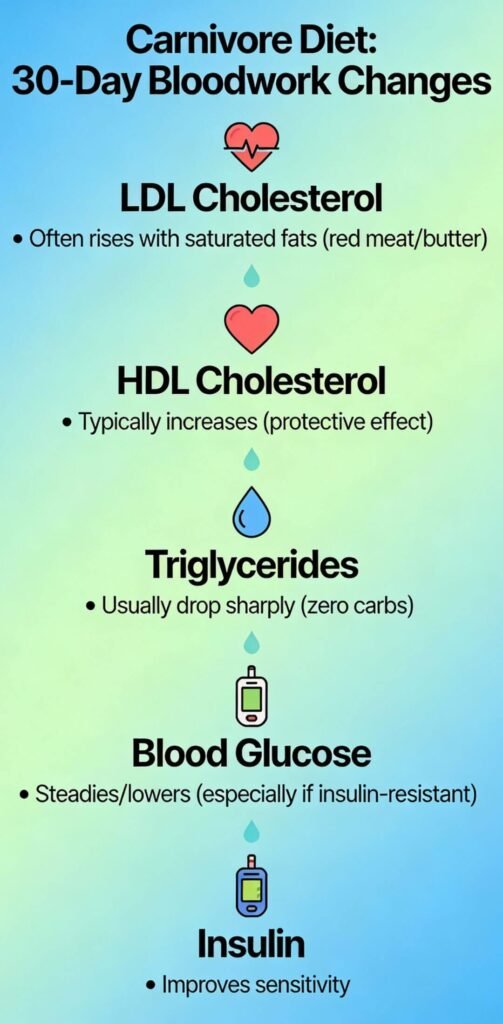
On a carnivore diet, LDL cholesterol often rises after 30 days—especially with red meat, butter, cream, and cheese—but HDL climbs and triglycerides drop, mirroring low-carb patterns. These mixed shifts complicate simple “good/bad” labels.
Key Lipid Changes
- LDL uptick: Common in first month, tied to high saturated fat intake like fatty meats and dairy.
- HDL boost: Frequently rises, seen as protective in low-carb research.
- Triglycerides down: Typical drop from carb elimination, improving ratios.
Why It Happens
Saturated fats and zero carbs trigger these patterns, per keto/carnivore surveys. Interpretation varies—some thrive, others need monitoring.
Blood Sugar, Insulin, and Metabolic Markers
On a carnivore diet, blood sugar and insulin often stabilize or improve in 30 days—especially if you had insulin resistance—thanks to slashing carbs from plants, refined foods, and sugars. This mirrors low-carb benefits, giving a metabolic health boost for many.
Key Glucose/Insulin Shifts
- Blood sugar steadies: Dramatic carb drop prevents spikes, leading to even levels.
- Fasting glucose down: Common improvement, particularly in insulin-resistant folks.
- Insulin sensitivity up: Lower demand from zero carbs enhances response.
Why It Helps
No plants means no hidden sugars/fructose, mimicking keto’s metabolic wins—great starter for prediabetes or energy crashes, but track with labs.
Inflammation, Joint Pain, and Autoimmune Signals
Some people report reduced joint pain and inflammation during the first month, especially those with autoimmune conditions like rheumatoid arthritis. Blood markers of inflammation may decrease for certain individuals, possibly due to the elimination of processed foods or specific plant compounds that trigger symptoms. However, this effect is highly individual and not guaranteed across all carnivore dieters.
Blood Pressure and Electrolyte Changes
Blood pressure may drop slightly for some people, particularly if insulin levels fall and water retention decreases. Others experience dizziness or fatigue if electrolytes like sodium are not replaced adequately. Animal foods alone may not supply enough electrolytes during the transition, which is why symptoms sometimes appear even when calorie intake seems sufficient.
Why One Blood Test Isn’t the Full Story
A single blood test after 30 days provides a snapshot, not a diagnosis. Some markers fluctuate temporarily during dietary transitions and may stabilize later. Medical professionals often recommend tracking trends over time rather than reacting to one set of numbers. For anyone with a medical condition or a family history of heart disease, discussing blood test results with a healthcare provider is essential before continuing long term.
How a Carnivore Diet Affects Digestion, Fiber Absence, and the Gut Microbiome
Carnivore diet digestion flips in the first 30 days without fiber or plants—many adapt well, but expect mixed gut signals as your body shifts to animal-only fuel.
Fiber Removal Effects
- Stool shrinks and firms up (less bulk), slowing frequency for some; others see looser stools initially.
- Bowel habits now hinge more on fat intake, hydration, electrolytes—not fiber alone.
Gut Microbiome Shift
- Fiber-fermenting bacteria decline; meat-metabolizing ones thrive, dropping overall diversity short-term.
- Low-carb studies confirm adaptation over time, not total shutdown—long-term impacts vary by person.
Bloating Down, Stress Up for Some
- Ditching fermentable carbs cuts gas, IBS flares, and sensitivities fast—huge relief for many.
- High-fat meals or heavy red meat can spark nausea, cramps early; eases with adaptation.
Fat Digestion Demands
- Needs more bile and enzymes to break down fats; gallbladder problems make it tougher (nausea post-meal).
- Tip: Start slow, stay hydrated—many normalize over weeks.
Why Results Differ
- Track pain, constipation; persistent issues? Adjust or see a doc.
- Baseline gut health, prior diet, enzyme output, and calories shape if it’s smooth sailing or bumpy.
Who the Carnivore Diet May Help and Who Should Avoid It
The carnivore diet can produce very different results depending on the person. While some people report great results during the first 30 days, others experience side effects or health concerns that make the diet hard to maintain. Understanding who this style of eating may support—and who should approach it with caution—can help you decide whether it’s a good idea for your body and health goals.
Who the carnivore diet may help
- People with insulin resistance or blood sugar instability who respond well to very low carb intake
- Individuals who notice reduced joint pain or inflammation when plant foods are removed
- Those following animal-based diets who struggle with food cravings on a normal diet
- People using it as a short-term starting point to reset eating habits under medical guidance
- Individuals who tolerate red meat, dairy products, and other animal foods without digestive distress
Who should avoid or be cautious with the carnivore diet
- Anyone with a history of heart disease, high LDL cholesterol, or strong family risk factors
- People with gallbladder issues or difficulty digesting high-fat meals
- Individuals prone to nutrient deficiencies, especially with long-term restrictive diets
- Women experiencing menstrual cycle disruption or hormonal imbalance during low-carb diets
- People with gut conditions that worsen without fiber or plant foods
- Anyone managing a medical condition that requires dietary variety or balanced nutrition
- Those with a history of disordered eating or difficulty maintaining restrictive eating patterns
30 Day Carnivore Diet Transformation Timeline
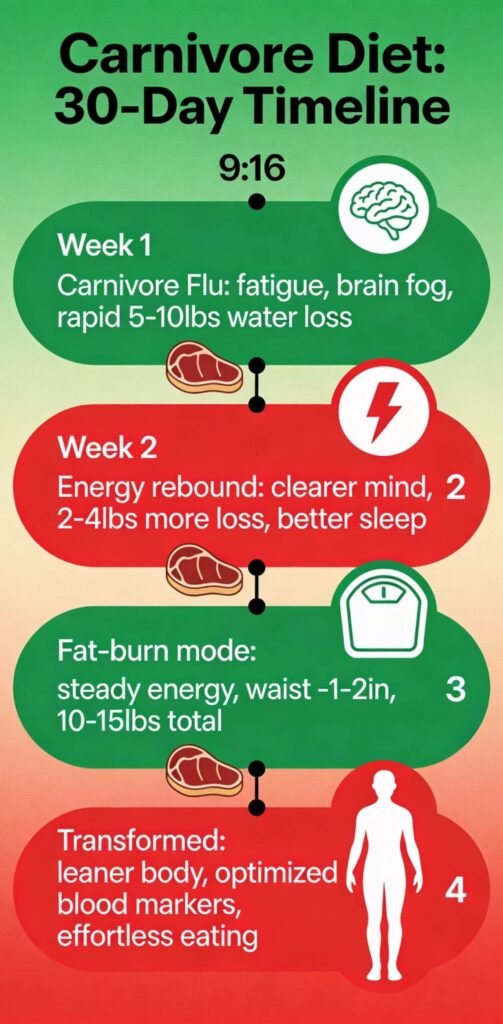
Here’s a detailed 30-day carnivore diet timeline drawn from common experiences, surveys, and reports—early “flu” hits hard but fades, leading to weight/waist drops, steady energy, and metabolic tweaks for many, though your mileage varies by starting health and adherence.
Week 1: Carb Detox (“Carnivore Flu”)
- Symptoms: Intense fatigue, brain fog, headaches, irritability, muscle cramps, wild cravings, nausea, and bowel chaos (constipation from no fiber or loose stools from fat adjustment).
- Body changes: Rapid 5-10 lbs water/glycogen loss (not all fat), reduced bloating, initial waist trim as inflammation dips. Blood sugar starts stabilizing if you had spikes.
- Why: Body shifts from carb-burning to fat-adapted; electrolyte crash common. Tips: Salt everything (5g+ sodium/day), drink 3-4L water/bone broth, add magnesium/potassium, skip workouts—sleep it off.
Week 2: Energy Rebound & Adaptation
- Symptoms: Flu eases—clearer head, better mood/sleep, fewer cravings; digestion improves (less gas for IBS folks), but stools may stay irregular.
- Body changes: 2-4 more lbs down (mix of fat/water), skin clears, joints feel less achy; fasting glucose often drops, insulin sensitivity rises early.
- Why: Ketones ramp up for brain fuel; gut bugs start shifting to meat-digesters. Tips: Ease into walks, track electrolytes, eat fatty meats for satiety—hunger should normalize.
Week 3: Fat-Burn Groove
- Symptoms: High steady energy, sharp focus, no post-meal crashes; inflammation fades (allergies, arthritis ease); libido/mood often surges.
- Body changes: Waist drops 1-2 inches, total loss 10-15 lbs possible; muscle holds better than on carbs; HDL climbs, triglycerides plunge in bloodwork.
- Why: Full keto-adaptation; high protein curbs appetite naturally. Tips: Measure waist weekly, experiment with cuts (ribeye vs lean beef), stay hydrated as fat intake rises.
Week 4 (Day 30): Locked In & Transformed
- Symptoms: Effortless no-hunger eating, deep sleep, mental resilience; digestion solid (normalized bowels with fat focus), many report vivid dreams or allergy wipeout.
- Body changes: Leaner recomp (looser clothes), 15-25 lbs total loss common; lipids mixed (LDL may rise, but ratios improve); glucose/insulin optimized for most.
- Why: Microbiome adapts, sustained fat-loss mode. Harvard survey: 93% felt healthier overall.
Tips: Get baseline bloodwork repeat, assess if sustainable—add variety like organs if bored.
Frequently Asked Questions
Can you build or maintain muscle on a carnivore diet in 30 days
Yes, many people maintain or even increase muscle mass in the first 30 days because the diet provides much protein from animal foods. Muscle outcomes depend on total calorie intake, training, and eating enough fats to meet energy needs, not protein alone.
Does the carnivore diet affect menstrual cycles within the first month
It can. Some women notice delayed or skipped menstrual cycles during the first month, especially if calorie intake is too low or the diet is very restrictive. Hormonal changes are more likely during the first time trying low-carb or zero-carb diets.
Is diarrhea normal when starting a carnivore diet
Yes, temporary diarrhea is common early on. The digestive system is adjusting to higher fat intake and the absence of fiber. For most people, this improves within a few weeks as bile production and digestion adapt.
Can you caffeinated beverages or use hot sauce on a carnivore diet
Many carnivore dieters allow coffee, hot sauce, and spices even though they are not animal-based. Tolerance varies. Some people notice digestive irritation or cravings, while others experience no issues at all.
Does eating only meat increase the risk of heart disease in 30 days
Short-term risk changes are unlikely to be measurable in 30 days. However, blood markers like LDL cholesterol may rise quickly in some individuals. Long-term risk depends on genetics, overall health, and how long the diet is maintained.
Is it okay to eat dairy products on a carnivore diet
Some people include dairy products like cheddar cheese and heavy cream, while others avoid them due to inflammation, digestive symptoms, or stalled weight loss. Dairy tolerance is highly individual.
Can the carnivore diet help with autoimmune symptoms quickly
Some people with autoimmune conditions report symptom relief within weeks, possibly due to eliminating trigger foods. However, responses vary, and symptom improvement does not replace medical treatment.
What happens if you stop the carnivore diet after 30 days
Most people transition back to a normal diet by slowly reintroducing plant foods and small amounts of carbs. Rapid reintroduction can cause bloating or digestive upset, so gradual changes tend to feel better.
Conclusion
Looking at Carnivore Diet Results for 30 Days, it’s clear that this way of eating can lead to noticeable changes—but those changes aren’t the same for everyone. Some people experience weight loss, steadier energy levels, reduced cravings, or less joint pain, while others deal with side effects like digestive issues, shifts in cholesterol, or low energy during the adjustment period. Much of what happens depends on calorie intake, food choices, and individual health factors.
What stands out most is that the carnivore diet is a highly restrictive approach. Removing entire food groups may help certain people short term, especially those experimenting with low-carb or animal-based diets for the first time, but it also increases the risk of nutrient gaps if followed without careful planning. Blood tests, digestion, and overall well-being provide more meaningful feedback than the scale alone.
Ultimately, Carnivore Diet Results for 30 Days should be viewed as a starting point rather than a long-term solution. Paying attention to how your body responds, seeking medical guidance when needed, and staying flexible with your approach can help you decide whether this style of eating supports your health—or if a more balanced plan makes better sense moving forward.
