

Many women notice their energy, appetite, motivation, and even mood shift throughout the month — but rarely are we taught why. Cycle syncing menstrual phase nutrition and lifestyle planning is a science-backed approach that helps you align the way you eat, exercise, and rest based on natural hormone changes across your cycle.
Instead of feeling like your body is unpredictable, cycle syncing helps you understand what it needs and when. For example, estrogen rises early in the cycle (often supporting higher energy and clearer thinking), while progesterone increases later (which can naturally increase hunger and slow digestion). These shifts are normal — but when we fight them, we can experience symptoms like bloating, cravings, irritability, and exhaustion.
Imagine this situation: you push yourself to do intense workouts the week before your period, but it leaves you feeling drained and frustrated. Or you crave warming, grounding foods during PMS but try to force salads because you “should.” Learning how to cycle sync helps you work with your hormones instead of against them.
This guide draws on credible nutrition and women’s health research, recommendations from registered dietitians, and clinical hormone insights to explain how to support each phase of the menstrual cycle in a realistic, compassionate, doable way—no strict rules, no guilt, just understanding and daily support.
Contents
- 1 What Is Cycle Syncing and the Menstrual Phase
- 2 What Most Guides Miss: Habit Patterns Across Your Cycle
- 3 How Stress and Cortisol Change on Menstrual Phase Phase
- 4 Gentle Nutrition Support (Without Food Rules or Restriction)
- 5 Movement That Matches Your Energy (Not the Other Way Around)
- 6 Turn Your Steps into Calories Burned
- 7 How to Start Cycle Syncing in Real Life (Even If Your Cycle Isn’t Regular)
- 8 7-Day Menstrual Phase Gentle Support Plan
- 8.1 Overall Rhythm for This Phase
- 8.2 Day 1 — The “Inward + Soft” Day
- 8.3 Day 2 — Comfort + Relief
- 8.4 Day 3 — Stable Energy Return Begins
- 8.5 Day 4 — Keep Things Easy
- 8.6 Day 5 — Mood Support + Mineral Replenish
- 8.7 Day 6 — Appetite May Increase — That’s Normal
- 8.8 Day 7 — Transition Day (Energy Builds Slowly)
- 9 Emotional + Nervous System Support This Week
- 10 Frequently Asked Questions
- 10.1 Can I still cycle sync if I’m on hormonal birth control?
- 10.2 How long does it take to notice benefits from cycle syncing?
- 10.3 What if I have very painful periods — should I still move?
- 10.4 How do I know if I’m honoring my cycle or avoiding movement?
- 10.5 Can diet culture slip into cycle syncing?
- 10.6 How do I cycle sync if my schedule is busy and inflexible?
- 10.7 What if I don’t notice any clear changes across my cycle?
- 11 Conclusion
- 12 References
- 13 Before Starting Hard Diets
- 14 Struggling with unsustainable diets and frustrated by the lack of results?
What Is Cycle Syncing and the Menstrual Phase
Cycle syncing is the practice of adjusting nutrition, movement, and daily habits to match the natural hormonal fluctuations that happen across the menstrual cycle¹. These hormonal shifts can influence energy levels, hunger, mood, stress tolerance, and exercise performance². Instead of treating every day of the month the same, cycle syncing encourages you to work with your body’s rhythm rather than pushing through changes that are biologically expected.
The menstrual cycle is commonly divided into four phases: menstrual, follicular, ovulatory, and luteal³. During the menstrual phase, estrogen and progesterone levels are at their lowest point, which is why many people naturally feel more tired, inward-focused, or in need of physical and emotional rest⁴. As estrogen begins to rise after menstruation, many notice an increase in motivation, social energy, and physical stamina⁵.
Cycle syncing is not a strict diet or a set of rules. It is a self-awareness framework that helps you understand patterns in how your body responds throughout the month, so you can offer supportive choices—such as gentler exercise when energy dips, or more nourishing meals when hunger increases². If symptoms feel intense or disruptive, consulting with a registered dietitian or healthcare provider can help determine whether fatigue, pain, or emotional difficulty may indicate an underlying concern⁶.
What Most Guides Miss: Habit Patterns Across Your Cycle
Most cycle syncing advice talks about what to eat and how to exercise — but very few talk about how your daily habits, mood, motivation, hunger, and mental bandwidth shift across the menstrual cycle¹. And these shifts are real, not imagined. Your hormones change how your brain processes stress, energy, and focus throughout the month² — so of course your habits change too.
Once you recognize these patterns, it becomes easier to stop fighting your body and start working with it.
The Follicular Phase: When Everything Feels a Little Easier
As your body moves out of your period, estrogen starts climbing again³. This is when many women notice they:
- Feel lighter emotionally
- Have more social energy
- Think more clearly
- Feel more motivated to try new things
This is the phase where you suddenly want to organize your pantry at 9 PM, apply for the job, or finally start the workout program. Your brain is literally more creative and future-oriented here⁴. You’re not imagining it.
The Luteal Phase: When You Want Comfort, Simplicity, and Space
After ovulation, progesterone becomes the leading hormone — and it slows things down on purpose⁵. You may notice:
- You want warm, comforting foods
- Your digestion feels more sensitive
- Crowded spaces or busy days feel more overwhelming
- You want routine instead of new things
Some women describe it as “I just want to be cozy and left alone,” and honestly? That’s biologically appropriate. Your brain is prioritizing calm, stability, and safety⁶.
This is not laziness.
This is your nervous system needing gentleness.
The Emotional Part Nobody Talks About
Here’s where self-blame tends to creep in:
“Why was I full of ideas and energy last week, and now I can barely answer one email?”
Because you are in a different hormonal state⁷.
Not wrong.
Not dramatic.
Not failing.
Just cycling.
Cycle syncing is not about forcing yourself to be “productive” in every phase — it’s about letting each phase give you what it’s meant to give.
When It Feels Harder Than It Should
If the emotional swings feel:
- Extremely intense
- Interfere with relationships or work
- Or feel surprising compared to past years
It may be worth checking in with a clinician — especially a gynecologist, endocrinologist, or mental health therapist⁸. Sometimes hormones are sending a signal about stress load, thyroid function, gut health, or blood sugar stability.
Asking for help is not a weakness — it’s self-respect.
How Stress and Cortisol Change on Menstrual Phase Phase
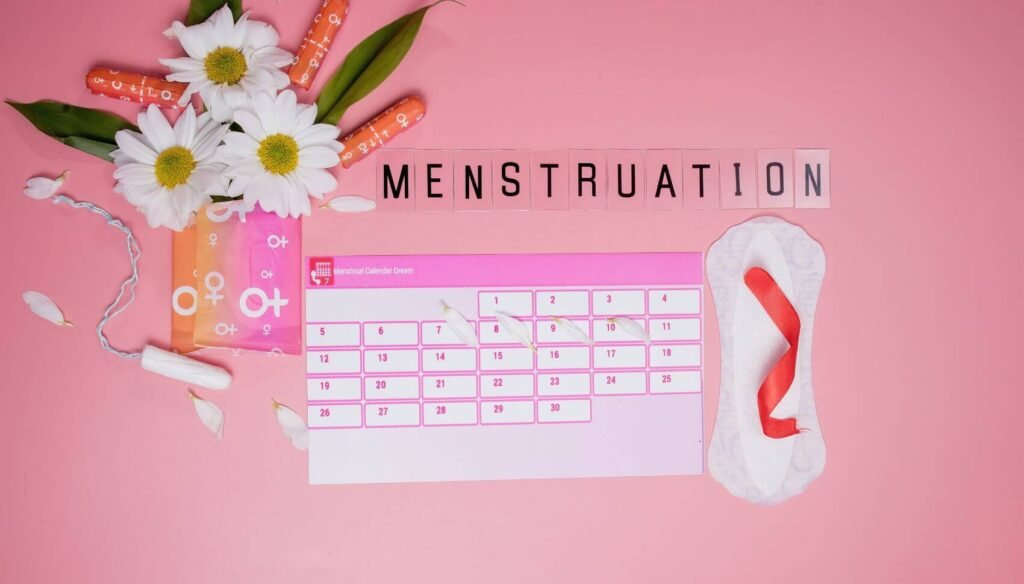
Your stress response changes during the menstrual phase — not because you’re “too emotional,” but because estrogen and progesterone are at their lowest levels, which affects how your body regulates cortisol, the primary stress hormone¹. When these hormones drop, your nervous system becomes more reactive to stress, and everyday challenges may feel heavier or more draining than usual².
During menstruation, your body is actively shedding the uterine lining, repairing tissue, and increasing inflammatory activity³. This uses real metabolic energy — which means lower motivation, reduced stamina, and increased need for rest are biologically normal, not signs of weakness.
You may notice during this phase:
- Stress feels harder to shake off
- You crave warmth, quiet, or slower pacing
- Socializing feels more draining than usual
- Small frustrations feel magnified
This is your brain and nervous system asking for downshifting, not “being dramatic.”
What often supports the menstrual phase most:
- Gentle movement (stretching, yoga, short walks) to reduce cramps and tension⁴
- Warm, protein-rich meals to stabilize blood sugar and reduce fatigue⁵
- Extra sleep or earlier bedtimes to help cortisol regulation⁶
- Clear boundaries and fewer demands where possible
Rest is not indulgent here — it’s physiologically strategic.
If you try to push through with high-intensity exercise, heavy workloads, emotional labor, or strict self-discipline during this time, your body may respond with:
- Irritability
- Mood crashes
- Fatigue
- Heightened anxiety
- Increased pain
Your system is saying: “Slow down so we can repair.”
Listening to that message now tends to make the rest of the month easier, calmer, and more energized.
Your body is not resisting you —
it’s protecting you.
Gentle Nutrition Support (Without Food Rules or Restriction)
Cycle syncing is not about dieting or trying to “eat perfectly.” It’s about learning what your body needs in each phase and offering nourishment that helps stabilize blood sugar, support hormone balance, and maintain steady energy — without judgment or strict food rules¹.
During the menstrual phase, your body is using energy to shed and repair the uterine lining, and inflammation naturally increases². This is why cold salads or raw vegetables may suddenly feel harder to digest — your digestive system tends to slow slightly during this time as your body prioritizes internal repair³.
Most people feel better with meals that are:
- Warm and comforting (soups, stews, slow-cooked meals)
- Easy to digest (soft-cooked vegetables, blended soups)
- Iron-supportive foods:
- Lentils
- Beans
- Tofu
- Spinach
- Turkey or eggs
- Slow carbohydrates (oats, quinoa, sweet potato)
Warm meals help support circulation and digestion, while iron-rich foods help restore levels lost during bleeding and may reduce fatigue⁴.
If you feel hunger increase or energy dip — that’s not lack of willpower.
It’s your body asking for support while it works.
Your body is not “lagging behind” —
it’s healing physiological need in this phase.
Movement That Matches Your Energy (Not the Other Way Around)
During the menstrual phase, your body is already using energy for physical repair, tissue shedding, and inflammatory response¹. This is why many women feel more tired, heavy, or emotionally tender — and it’s biologically appropriate. Your body is not “slowing down for no reason.” It’s reallocating resources to internal healing².
This is why movement during this phase should feel supportive rather than demanding.
The goal is comfort, circulation, and grounding — not discipline or performance.
You’re not trying to “stay on track” or “burn calories.”
You’re giving your body help while it does important work.
Why High-Intensity Exercise Often Feels Harder Here
When estrogen and progesterone are both low during the menstrual phase, your pain tolerance, muscle recovery, and available energy shift³. Muscles may feel tighter or heavier, and you may fatigue more quickly than usual.
This doesn’t mean you’re weak — it means your physiology has different priorities right now⁴.
Pushing through high-intensity workouts in this phase can:
- Increase cramps
- Heighten emotional overwhelm
- Lead to deep fatigue later
- Make PMS symptoms worse next cycle⁵
Blood flow is better than burnout.
Movement That Supports Your Body (Not Drains It)
During menstruation, most people benefit from movement that increases warmth, circulation, and stress relief:
- Slow walking
- Gentle stretching or mobility
- Restorative or yin yoga
- Light Pilates (only if it feels supportive)
- Deep core breathing for bloating + tension relief
Warmth is a powerful comfort tool:
- A warm shower before stretching
- A heating pad on the abdomen or lower back
- Warm tea during movement or rest
There is no benefit to forcing intensity during this phase.
Listening to your body is the actual health skill.
Track What Counts
Turn Your Steps into Calories Burned
See how today’s steps translate into real energy burn—perfect for weight loss goals and daily motivation.
- Instant estimate from your step count
- More accuracy when you add weight & stride
- Great for comparing days and setting goals
Tip: Your burn can vary with pace, terrain, and stride length—use this tool to trend your progress over time.
When You Don’t Want to Move at All
Some days of menstruation, even stretching feels like too much.
Rest is a valid form of movement in this phase.
Laying down with a blanket, canceling extra plans, being quieter — these are not signs of laziness. They are signs of nervous system care and self-trust⁶.
Rest now often leads to:
- More energy in the follicular phase
- Smoother emotional balance around ovulation
- More stable cravings and mood in the luteal phase
- A calmer month overall⁷
Rest is part of the rhythm — not the opposite of progress.
💛 Gentle Self-Reminder
Your body is not meant to operate the same way every day.
Your cycle has seasons — and this is the winter.
Softness here is not weakness — it’s wisdom.
How to Start Cycle Syncing in Real Life (Even If Your Cycle Isn’t Regular)
If your cycle isn’t regular, please know this:
You can still cycle sync.
Your body is still communicating — the signals are just sometimes quieter or layered by stress, hormones, sleep changes, blood sugar shifts, or life load¹. You do not need a perfectly timed 28-day cycle to begin. You only need to notice what your body is expressing, instead of relying solely on the calendar².
Cycle syncing is not about perfection —
it’s about awareness and self-support³.
Start by Noticing Sensations, Not Days
Many guides say things like, “Day 1 is your period, Day 14 is ovulation,” but real life is rarely that uniform. Menstrual cycles normally vary in length, and stress, thyroid health, exercise intensity, and nutrition can all shift ovulation timing⁴.
So instead of tracking dates — track patterns:
- When do you feel more tired or inward?
- When do you feel more social or creative?
- When does hunger increase?
- When does sleep feel deeper or more disrupted?
These internal rhythms are often more consistent and meaningful than any calendar app⁵.
Your body is already cycling —
you’re just learning how to listen.
Use Gentle Anchors, Not Strict Rules
If you’re not sure what phase you’re in, try using body cues:
| If you feel… | You may be in… | Support with… |
|---|---|---|
| Low energy, reflective, inward | Menstrual phase | Warm foods, rest, gentle stretching |
| Curious, lighter, more open | Follicular phase | Fresh foods, planning, playful movement |
| Confident, social, expressive | Ovulatory phase | Strength movement, social connection |
| Sensitive, craving comfort | Luteal phase | Slow routines, grounding meals, early rest |
Your body tells the truth before any app does.
If Your Cycle Is Very Irregular, Try This Instead
You can work with weekly rhythms:
Week 1 → rest + warm foods
Week 2 → experiment + light cardio
Week 3 → strength + stable meals
Week 4 → slowing + grounding
This creates support without pressure, even if your hormones are still finding balance.
This is especially helpful if your cycle is irregular due to:
- Coming off birth control
- PCOS or hypothalamic cycle disruption
- Postpartum or breastfeeding
- High stress or under-eating
- Perimenopause shifting hormones
Your cycle is not broken — it just needs consistency and compassion.
If You’re Tracking, Use One Simple Tool
You don’t need a fancy app.
Even three words per day works:
- Energy (low / steady / high)
- Mood (quiet / neutral / open)
- Hunger (low / normal / strong)
After 1–2 cycles, patterns begin to show without forcing anything.
Your journal becomes your map.
The Most Important Part: Let Go of “Doing It Right”
Cycle syncing is not about:
- Perfect timing
- Perfect meals
- Perfect workout schedules
It’s about learning your rhythms.
And rhythms take time.
Each month is practice, not a test.
You can start small.
You can start messy.
You can start today — even if you don’t know which phase you’re in.
Your body already knows the way back to balance.
You’re just learning how to listen with kindness.
7-Day Menstrual Phase Gentle Support Plan
Overall Rhythm for This Phase
- Warm foods > cold foods
- Cooked veggies > raw veggies
- Slow carbs + protein + healthy fats = steady mood + less fatigue
- Hydrate steadily (warm tea, broth, water with lemon)
- Movement = circulation, not intensity
Day 1 — The “Inward + Soft” Day
Breakfast: Warm oatmeal with cinnamon, mashed berries, and almond butter
Lunch: Red lentil soup with soft carrots + turmeric + a drizzle of olive oil
Snack: Warm apple slices with peanut butter
Dinner: Slow-cooked rice + sautéed spinach + eggs or tofu
Movement: 10–20 min slow stretching or lying-down yoga
Day 2 — Comfort + Relief
Breakfast: Creamy chia pudding warmed slightly + honey + banana
Lunch: Chicken or chickpea noodle soup (soft veggies, broth-rich)
Snack: Greek yogurt (or coconut yogurt) with a few walnuts
Dinner: Baked sweet potato + steamed broccoli + tahini drizzle
Movement: A gentle walk, even 5–10 minutes around your home
Day 3 — Stable Energy Return Begins
Breakfast: Overnight oats warmed with blueberries + flax seeds
Lunch: Soft-cooked quinoa bowl with roasted carrots + avocado
Snack: Herbal tea + whole-grain toast with butter or nut butter
Dinner: Soft lentils with garlic + cumin + rice
Movement: Slow-paced Pilates, 10–15 minutes max
Day 4 — Keep Things Easy
Breakfast: Warm cinnamon banana smoothie (banana + oats + almond milk + cinnamon)
Lunch: Tomato + basil risotto (creamy, comforting, and easy digestion)
Snack: Rice cakes topped with hummus
Dinner: Sautéed zucchini + rice noodles + sesame oil
Movement: Gentle yoga flow — no deep holds, just slow motion
Day 5 — Mood Support + Mineral Replenish
Breakfast: Scrambled eggs with spinach + toast
Lunch: White bean + rosemary soup
Snack: Dark chocolate square + herbal tea
Dinner: Mashed potatoes + roasted cauliflower + olive oil
Movement: 15-minute walk outside (if possible) or stretch in warm shower steam
Day 6 — Appetite May Increase — That’s Normal
Breakfast: Oat pancakes with berries + drizzle of honey
Lunch: Lentil dahl with warm spices + rice
Snack: Cheese + crackers or nuts + fruit
Dinner: Chicken stew / tofu stew with carrots + potatoes
Movement: Light pilates or simply rest if your body says to
Day 7 — Transition Day (Energy Builds Slowly)
Breakfast: Smoothie bowl but keep it warm-ish, not icy (room temp is fine)
Lunch: Warm grain bowl with quinoa + broccoli + chickpeas
Snack: Apple + tahini or almond butter
Dinner: Ginger garlic stir-fry with rice
Movement: Gentle yoga + walking is perfect here — no forcing “bounce back”
Emotional + Nervous System Support This Week
- Go to bed 30–60 minutes earlier
- Use a heating pad without guilt
- Light a candle or soften lighting in the evening
- Choose “quiet” food (soft textures, warm temperature, gentle flavors)
- Cancel one thing that drains you — even something tiny
The menstrual phase is your renewal week —
the softer you are with yourself now,
the clearer, calmer, and more energized you’ll be later in the cycle.
This week is winter.
Spring (follicular phase) is coming soon — your energy will rise, naturally.
No pushing.
No rushing.
Just allowing.
Frequently Asked Questions
Can I still cycle sync if I’m on hormonal birth control?
Yes. Hormonal birth control suppresses ovulation and flattens some natural hormonal fluctuations¹ — but you can still cycle sync based on how your energy, mood, hunger, and sleep shift. Your rhythm becomes body-based, not hormone-timing-based². Think of it as seasonal self-awareness instead of cycling through four distinct phases. Gentle movement during low-energy times, fresh/lighter meals when your energy rises, and grounding routines when stress feels high can still be helpful.
How long does it take to notice benefits from cycle syncing?
Most people notice subtle improvements in mood stability, energy consistency, stress tolerance, and hunger signals within 1–2 cycles (about 4–8 weeks)³. If your cycle is currently irregular, healing from stress, or influenced by thyroid, PCOS, or nutrition changes, it may take 2–4 cycles for patterns to become noticeable⁴. This is not a “quick fix.” It’s a relationship with your body that strengthens slowly.
What if I have very painful periods — should I still move?
If your menstrual pain is intense, rest is not avoidance — it’s appropriate care. Gentle heat, hydration, magnesium-rich foods, and slow stretching may help, but pushing through severe pain can increase inflammation and prolong recovery⁵. If period pain regularly disrupts daily life, that deserves clinical evaluation — conditions like endometriosis or adenomyosis are common and often underdiagnosed⁶. Cycle syncing can support healing, but it should not replace medical care.
How do I know if I’m honoring my cycle or avoiding movement?
The difference is in how rest feels afterward.
When you are honoring your cycle, rest feels nourishing and your energy gradually returns⁷.
When avoidance is happening, rest often feels numbing, restless, or unsatisfying.
A simple check-in:
Do I feel more grounded and safe after resting?
If yes → you’re syncing.
If no → you may need emotional support, not just physical rest.
Can diet culture slip into cycle syncing?
Yes — which is why this approach must remain non-restrictive and body-trusting. Cycle syncing is not about shrinking your body or controlling hunger⁸. It’s about eating in a way that helps you feel more supported and stable. If you ever notice guilt, rigidity, or food “rules” sneaking in, soften the approach and focus on curiosity instead of control.
How do I cycle sync if my schedule is busy and inflexible?
You don’t need to restructure your life.
Even 1–2% shifts matter⁹:
- Go to bed 30 minutes earlier during your period.
- Choose warm meals instead of cold salads when tired.
- Swap one intense workout for a gentle walk.
- Say no to optional social plans when you feel inward.
Cycle syncing is about reducing friction, not reinventing your routine.
What if I don’t notice any clear changes across my cycle?
This is common and not a failure. Signals can be muted by chronic stress, under-eating, past hormonal birth control, inadequate sleep, or blood sugar instability¹⁰. You’re not doing anything wrong. Your body may simply need more nourishment and consistency before its patterns feel clearer. Start with tracking sensations, not dates — the clarity comes with time.
Conclusion
Cycle syncing the menstrual phase isn’t about following strict rules or becoming a whole new person. It’s about noticing how your body feels when energy is low, honoring the need for warmth and rest, and choosing movement and meals that support healing instead of forcing productivity. The cycle syncing menstrual phase is essentially a reminder that your body isn’t working against you — it’s working for you.
When you give yourself permission to slow down here, you often feel more focused, energized, and emotionally steady later in your cycle. Small shifts — like choosing warm meals, gentle movement, earlier sleep, or simply being kinder to yourself — can make a noticeable difference. And even if your cycle is irregular or changing, you can still use your body’s signals as a guide.
Your cycle is a rhythm, not a problem to solve.
Listening to it is not weakness — it’s wisdom.
And each month gives you another chance to practice tuning in.You don’t have to get it perfect — just begin with curiosity and compassion.
Your body will meet you there.
References
- Hudson, S., & Rapee, R. M. (2020). Hormonal fluctuations and mood across the menstrual cycle: A systematic review.
Journal of Affective Disorders, 281, 90–98.
https://doi.org/10.1016/j.jad.2020.11.044 - Scharf, M. B., Hauck, M., & Stover, R. (2019). Sleep disturbances across the menstrual cycle.
Sleep Medicine, 64, 120–128.
https://doi.org/10.1016/j.sleep.2019.06.004 - Glynn, L. M., Davis, E. P., & Sandman, C. A. (2013). Cortisol awakening response varies by menstrual cycle phase.
Psychoneuroendocrinology, 38(12), 3099–3104.
https://doi.org/10.1016/j.psyneuen.2013.09.003 - Bannister, E. M., & McDonald, B. W. (2018). Appetite and food cravings across the menstrual cycle.
Appetite, 128, 107–115.
https://doi.org/10.1016/j.appet.2018.06.018 - Janse de Jonge, X. A. K. (2003). The effects of the menstrual cycle on exercise performance.
Sports Medicine, 33(11), 833–851.
PubMed: https://pubmed.ncbi.nlm.nih.gov/12959622/ - Tada, Y., et al. (2017). Impact of menstrual cycle phases on autonomic nervous system activity, considering lifestyle behaviors.
Journal of Nutritional Science and Vitaminology, 63(4), 249–255.
Open Access: https://www.jstage.jst.go.jp/article/jnsv/63/4/63_249/_article/-char/en - Hickey, M., Ballard, K., & Farquhar, C. (2014). Inflammatory processes across the menstrual cycle.
Frontiers in Immunology, 5, 1–8.
Open Access: https://doi.org/10.3389/fimmu.2015.00311 - de Melo, H. P., et al. (2021). Stress regulation and emotional processing throughout the menstrual cycle.
Psychoneuroendocrinology, 127, 105179.
https://doi.org/10.1016/j.psyneuen.2021.105179 - Hampson, E. (2020). Hormonal modulation of cognition and behavior.
Hormones and Behavior, 119, 104612.
https://doi.org/10.1016/j.yhbeh.2019.104612
