

If you’re exploring ways to support metabolic health and healthy aging, you’ve probably heard of the Fasting Mimicking Diet (FMD). Developed by longevity researcher Dr. Valter Longo, the FMD is a short-term, plant-based dietary protocol designed to mimic the biological effects of fasting while still allowing limited food intake.
The FMD is strictly plant-based, very low in protein, low in sugar, and focused on healthy fats. This approach helps reduce activation of nutrient-sensing pathways such as IGF-1 and mTOR, which are linked to aging and metabolic dysfunction when overstimulated.
In this guide, you’ll find Fasting Mimicking Diet–compliant recipes designed to align with the nutritional principles used in peer-reviewed FMD research, adapted for home use. These meals are simple, nutrient-dense, and portion-controlled to support a fasting-like metabolic state over a 5-day FMD cycle.
This article is for educational purposes only and does not replace medical advice. Always consult a healthcare professional before starting a fasting mimicking diet.
Contents
- 1 5 Fasting Mimicking Diet–Compliant Recipes
- 2 1- Spicy Cauliflower & Spinach Soup
- 3 2- Simple Greens & Olive Oil Salad
- 4 3- Zucchini & Mushroom Sauté
- 5 4- Portobello Mushroom Stack
- 6 5- Vegetable Stir-Fry
- 7 Recipe Preparation Tips for the Fasting Mimicking Diet
- 8 Fasting Mimicking Diet Recipe FAQs
- 9 Final Notes
- 10 FREE CHEAT SHEET!
5 Fasting Mimicking Diet–Compliant Recipes
Below you’ll find five Fasting Mimicking Diet–compliant recipes created to keep things simple, practical, and approachable. Each recipe is plant-based, low in protein, and made with whole ingredients, focusing on vegetables and healthy fats to support a fasting-like state without overcomplicating your meals.
These recipes are meant for short-term use as part of an FMD approach and are easy to prepare at home. As always, listen to your body and check with a healthcare professional before starting a fasting mimicking diet.
1- Spicy Cauliflower & Spinach Soup

This light, comforting soup is plant-based, low in protein, and easy on digestion, making it well suited for a short-term Fasting Mimicking Diet approach. The spices add warmth and flavor without the need for heavy ingredients.
Ingredients
- 1 tablespoon extra-virgin olive oil
- ½ head cauliflower, roughly chopped
- ½ medium onion, chopped
- 1 clove garlic, minced
- ½ teaspoon ground cumin
- ½ teaspoon ground coriander
- ½ teaspoon paprika
- ¼ teaspoon cayenne pepper (optional, adjust to taste)
- 3 cups vegetable broth (low sodium)
- 1 cup fresh spinach, chopped
- Sea salt and black pepper, to taste
Instructions
- Heat the olive oil in a medium pot over medium heat. Add the chopped onion and garlic and sauté for 2–3 minutes, until soft and fragrant.
- Add the cauliflower, cumin, coriander, paprika, and cayenne pepper. Stir well and cook for another 2–3 minutes to lightly toast the spices.
- Pour in the vegetable broth and bring the soup to a gentle boil. Reduce the heat, cover, and let it simmer for 20–25 minutes, or until the cauliflower is very tender.
- Remove from heat and use an immersion blender to blend the soup until smooth.
- Return the pot to low heat, stir in the chopped spinach, and cook for 2–3 minutes until just wilted.
- Season with sea salt and black pepper to taste, then serve warm.
Serving Notes
- Best enjoyed fresh
- Keep portions moderate to stay within FMD guidelines
- Avoid adding high-protein toppings or grains
2- Simple Greens & Olive Oil Salad

This simple salad keeps things light and fresh while staying aligned with Fasting Mimicking Diet principles. It relies on leafy greens and healthy fats for flavor, without added sugars or protein-heavy ingredients, making it an easy, no-cook option.
Ingredients
- 2 cups mixed leafy greens (such as arugula, romaine, or baby spinach)
- ¼ cup sliced cucumber
- 1 tablespoon extra-virgin olive oil
- 1 tablespoon fresh lemon juice
- Sea salt and freshly ground black pepper, to taste
Instructions
- Place the leafy greens and sliced cucumber in a medium bowl.
- In a small bowl, whisk together the olive oil and lemon juice.
- Drizzle the dressing over the salad and gently toss to coat.
- Season lightly with sea salt and black pepper. Serve immediately.
Serving Notes
- Keep the portion modest to stay within FMD guidelines
- Avoid adding cheese, nuts, seeds, or legumes
- Best enjoyed fresh without additional toppings
3- Zucchini & Mushroom Sauté

This simple sauté is light, savory, and easy to digest, making it a good fit for a Fasting Mimicking Diet approach. Zucchini and mushrooms provide volume and flavor without adding excess protein or calories, while olive oil helps keep the dish satisfying.
Ingredients
- 1 tablespoon extra-virgin olive oil
- 2 medium zucchinis, thinly sliced
- 2 cups sliced mushrooms
- ¼ small red onion, thinly sliced
- Sea salt and freshly ground black pepper, to taste
Instructions
- Heat the olive oil in a large skillet over medium heat.
- Add the sliced onion and cook for 2–3 minutes until softened.
- Add the zucchini and mushrooms to the skillet and sauté for 6–8 minutes, stirring occasionally, until the vegetables are tender and lightly browned.
- Season with sea salt and black pepper to taste.
- Remove from heat and serve warm.
Serving Notes
- Keep portions moderate to stay within FMD guidelines
- Avoid adding protein-rich ingredients such as legumes or tofu
- Best enjoyed freshly cooked
4- Portobello Mushroom Stack
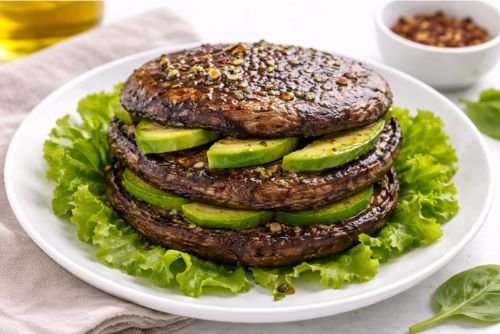
This savory mushroom dish is a satisfying, plant-based option that fits well into a Fasting Mimicking Diet approach. Portobello mushrooms provide a hearty texture, while olive oil and balsamic vinegar add flavor without relying on heavy or protein-rich ingredients.
Ingredients
- 2 large portobello mushroom caps
- 1 tablespoon extra-virgin olive oil
- 1 teaspoon balsamic vinegar
- ½ teaspoon garlic powder
- Sea salt and freshly ground black pepper, to taste
- Lettuce leaves, for serving
- A few slices of avocado (optional, keep portions small)
Instructions
- Gently clean the mushroom caps and remove the stems.
- In a small bowl, whisk together the olive oil, balsamic vinegar, garlic powder, salt, and black pepper.
- Brush the mixture evenly over both sides of the mushroom caps.
- Heat a grill pan or skillet over medium heat. Cook the mushrooms for 5–7 minutes per side, until tender and lightly browned.
- Remove from heat and stack the mushrooms on lettuce leaves. Add a few avocado slices if using, keeping portions modest.
- Serve warm.
Serving Notes
- Serve wrapped in lettuce instead of bread or buns
- Keep avocado portions small to avoid excess calories
- Do not add cheese or high-protein toppings
5- Vegetable Stir-Fry
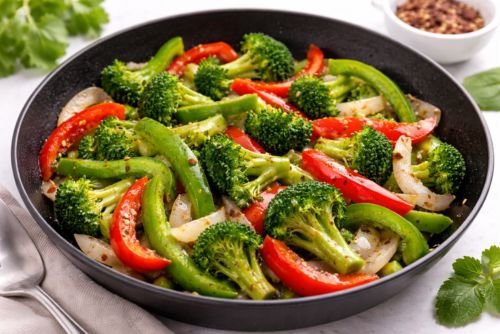
This light vegetable stir-fry is colorful, flavorful, and easy to customize while staying within Fasting Mimicking Diet guidelines. It focuses on non-starchy vegetables and healthy fats, keeping protein and sugars low while still feeling satisfying.
Ingredients
- 1 tablespoon extra-virgin olive oil
- 1 red bell pepper, sliced
- 1 green bell pepper, sliced
- 1 small head broccoli, chopped into florets
- 1 small onion, thinly sliced
- 2 cloves garlic, minced
- ¼ cup vegetable broth (low sodium)
- ¼ teaspoon red pepper flakes (optional)
- Sea salt and freshly ground black pepper, to taste
Instructions
- Heat the olive oil in a large skillet over medium-high heat.
- Add the onion and garlic and sauté for 1–2 minutes, until fragrant.
- Add the bell peppers and broccoli to the skillet and stir-fry for 3–5 minutes, stirring frequently.
- Pour in the vegetable broth and sprinkle in the red pepper flakes, if using. Continue cooking for another 2–3 minutes, until the vegetables are tender but still crisp.
- Season lightly with sea salt and black pepper. Remove from heat and serve warm.
Serving Notes
- Keep portions moderate to stay within FMD guidelines
- Avoid soy sauce, tamari, or added sugars
- Best enjoyed freshly prepared
Recipe Preparation Tips for the Fasting Mimicking Diet
When preparing recipes for a Fasting Mimicking Diet, simplicity matters more than variety. Stick to whole, plant-based ingredients and avoid the urge to “upgrade” meals with extras that can push calories or protein too high.
- Keep portions modest. Even FMD-friendly foods can disrupt the fasting-like effect if portions are too large.
- Use healthy fats carefully. Olive oil and small amounts of avocado add satiety, but more isn’t better.
- Avoid hidden proteins and sugars. Skip legumes, tofu, nuts, seeds, sweeteners, and processed sauces.
- Choose low-sodium vegetable broth. This helps reduce bloating and supports hydration during the FMD.
- Listen to your body. Light hunger is expected, but dizziness, weakness, or discomfort are signs to stop and reassess.
These recipes are intended for short-term use within a fasting mimicking framework and should not be treated as an everyday eating pattern.
Fasting Mimicking Diet Recipe FAQs
Can I add protein-rich foods to these recipes?
No. To stay aligned with FMD principles, it’s important to avoid animal products, legumes, tofu, nuts, and seeds. These foods increase protein intake and may interfere with the fasting-like metabolic response.
Can I adjust portion sizes if I feel very hungry?
Portion control is a key part of the Fasting Mimicking Diet. Mild hunger is normal, but portions should remain modest. If you feel unwell or overly weak, it’s best to stop and consult a healthcare professional.
Are these recipes meant for everyday eating?
No. These recipes are designed for short-term use as part of a fasting mimicking approach, typically followed for several consecutive days, not as a long-term daily diet.
Can I drink beverages while following these recipes?
Yes. Water, herbal teas, and black coffee (without sweeteners or creamers) are commonly consumed during an FMD. Staying well hydrated is important.
Can I substitute ingredients?
Simple vegetable substitutions are usually fine, as long as they remain low in protein and sugar. Avoid adding grains, legumes, or processed foods, and keep healthy fats limited.
Who should avoid the Fasting Mimicking Diet?
The FMD may not be appropriate for pregnant or breastfeeding individuals, people with eating disorders, diabetes without medical supervision, or those with chronic medical conditions. Always consult a qualified healthcare professional before starting.
Final Notes
These fasting mimicking diet recipes are designed to keep things simple, plant-based, and aligned with the core principles of FMD—low protein, moderate healthy fats, and controlled calories. They’re not meant to be everyday meals, but short-term tools to support metabolic rest while still providing nourishment.
As with any fasting or restrictive protocol, individual responses can vary. If you have a medical condition, take medication, or are unsure whether FMD is appropriate for you, it’s best to consult a healthcare professional before starting.
Used thoughtfully and for a limited duration, FMD-compliant meals can help you stay consistent, reduce decision fatigue, and focus on the reset this approach is intended to provide—without feeling deprived.
