

Digestion doesn’t always feel smooth or predictable. After eating, some people notice bloating, heaviness, or the sense that food is just “sitting” in the stomach longer than it should. When this happens often, it’s natural to look for simple, safe ways to help food digest faster — without turning to harsh supplements or extreme remedies.
Digestion speed can vary from person to person and even from day to day. Factors like meal size, food choices, hydration, activity level, stress, and sleep all influence how quickly food moves through your digestive system. In most cases, slow digestion is related to everyday habits rather than a serious medical condition.
In this guide, you’ll learn practical, natural ways to support digestion after eating, including small habit changes that can improve comfort, reduce bloating, and support regular bowel movements. These tips focus on gentle movement, balanced meals, hydration, and lifestyle choices that work with your body — not against it.
This article is meant for general wellness and digestive support. If you experience persistent or severe digestive symptoms, it’s always best to consult a qualified healthcare professional.
Contents
- 1 How Long Digestion Normally Takes
- 2 Common Causes of Slow Digestion
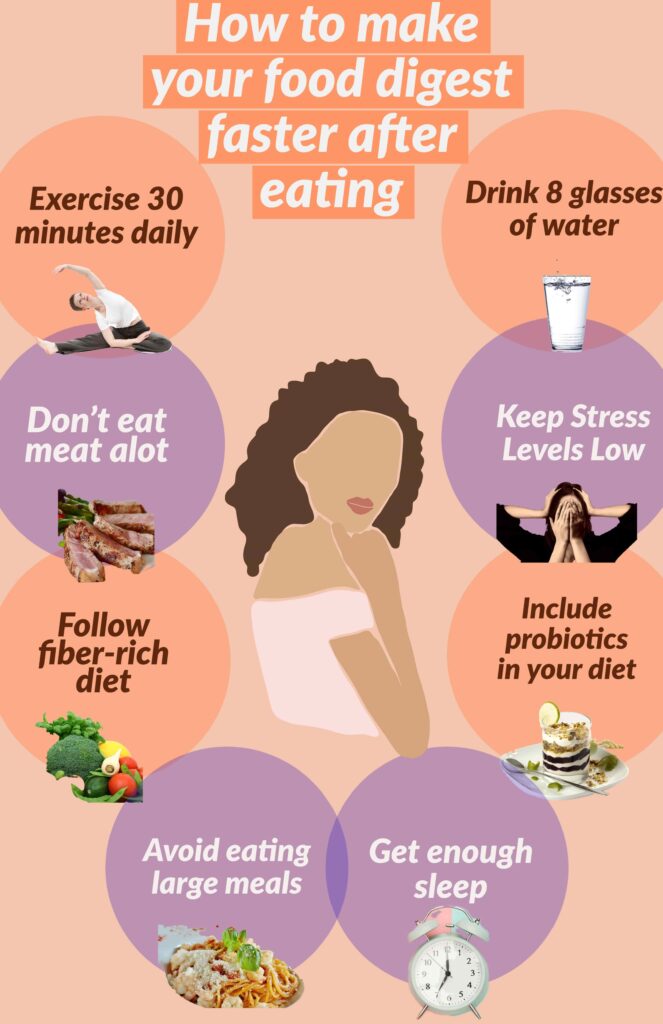
- 3 Simple, Natural Ways to Help Food Digest Faster After Eating
- 4 1- Take a Short Walk After Meals
- 5 2- Eat Smaller, Balanced Portions
- 6 3- Chew Food Thoroughly and Eat Slowly
- 7 4- Stay Hydrated Throughout the Day
- 8 5- Include Enough Fiber — Gradually
- 9 6- Manage Stress Around Mealtimes
- 10 7- Prioritize Quality Sleep
- 11 8- Eat healthy fats and avoid Fast Food
- 12 Habits That May Slow Digestion
- 13 How can I speed up digestion before bed?
- 14 When Slow Digestion Needs Medical Attention
- 15 Key Takeaways for Improving Digestion
- 16 References
- 17 Before Starting Hard Diets
- 18 Struggling with unsustainable diets and frustrated by the lack of results?
How Long Digestion Normally Takes
Digestion doesn’t follow a fixed clock. For most people, the time it takes food to move through the digestive system can vary widely depending on the meal and the person.
On average:
- Food usually leaves the stomach within 2 to 4 hours
- It passes through the small intestine over the next 6 to 8 hours
- The remaining waste may spend 12 to 48 hours (or sometimes longer) in the large intestine before elimination
This means total digestion time can range from about 24 hours to several days, and still be considered normal.
It’s also important to know that digestion speed can change from day to day. A heavier meal, low fiber intake, dehydration, stress, or lack of movement can slow things down temporarily. Feeling full for longer than usual after eating doesn’t automatically mean something is wrong — it often reflects recent habits rather than a digestive problem.
Common Causes of Slow Digestion
If digestion feels sluggish more often than not, it’s usually linked to everyday factors rather than a serious condition. Some of the most common contributors include:
- Large or heavy meals, especially those high in fat or refined carbohydrates
- Low fiber intake, which can reduce stool bulk and slow movement through the intestines
- Inadequate hydration, making stools harder and more difficult to pass
- Sedentary habits, as regular movement helps stimulate gut motility
- Eating too quickly or not chewing well, which increases digestive workload
- High stress levels, which can temporarily slow digestive processes
- Poor or irregular sleep, which may affect gut function the next day
In some cases, ongoing slow digestion may be related to underlying digestive conditions or medications. If symptoms like persistent constipation, pain, unexplained weight changes, or severe bloating continue, it’s important to seek medical advice.
For most people, though, supporting digestion starts with small, consistent habit changes rather than drastic interventions.
Simple, Natural Ways to Help Food Digest Faster After Eating
If digestion often feels slow or uncomfortable after meals, small habit changes can make a noticeable difference. These strategies focus on working with your digestive system rather than forcing it, and they’re safe for most people to try as part of everyday routines.
1- Take a Short Walk After Meals
Light movement helps stimulate gut motility, which supports the natural movement of food through the digestive tract. A gentle 10–15 minute walk after eating is often enough to support digestion without causing discomfort.
Avoid intense workouts immediately after meals, as your body needs blood flow to the digestive organs during this time.
2- Eat Smaller, Balanced Portions
Large meals can overwhelm the digestive system and slow stomach emptying. Eating moderate portions more regularly may feel easier on digestion than one or two very large meals.
Balancing meals with protein, fiber, and healthy fats can also help digestion feel smoother and more predictable.
3- Chew Food Thoroughly and Eat Slowly
Digestion begins in the mouth. Chewing food well breaks it down into smaller pieces, making it easier for digestive enzymes to do their job later on.
Slowing down while eating can also reduce bloating, gas, and the feeling of heaviness after meals.
4- Stay Hydrated Throughout the Day
Adequate hydration supports digestion by helping soften stool and supporting regular bowel movements. Drinking water consistently throughout the day is generally more helpful than consuming large amounts all at once.
Some people find it more comfortable to avoid large amounts of fluid immediately during meals and instead hydrate between them.
5- Include Enough Fiber — Gradually
Fiber helps move food through the digestive system, but increasing it too quickly can cause bloating or discomfort. Gradually adding fiber-rich foods like vegetables, fruits, and whole grains allows your gut to adjust.
Pay attention to how your body responds and increase intake slowly if needed.
6- Manage Stress Around Mealtimes
Stress can temporarily slow digestion by shifting the body into a “fight or flight” response. Eating while feeling rushed or anxious may contribute to bloating or discomfort.
Simple habits like taking a few deep breaths before eating or sitting down without distractions can support better digestion.
7- Prioritize Quality Sleep
Sleep plays a role in overall digestive health. Poor or irregular sleep may affect gut function the following day, including bowel regularity and appetite.
Supporting consistent, restorative sleep can indirectly help digestion feel more balanced over time.
8- Eat healthy fats and avoid Fast Food
There are two kinds of fats, and both have different effects on how fast you digest:
1- Healthy fats: present in avocados, nuts, olive oil, and fatty fish. They have many health benefits including making food slip faster through the digestive system.
2- Unhealthy fats: present in fast food like chips, and burgers, which contain large amounts of trans and saturated fats, which are harder to digest and take longer to be eliminated. Also, junk food contains high salt content that absorbs water from feces and makes it harder to get rid of.
Habits That May Slow Digestion
Even with generally healthy eating habits, certain everyday behaviors can make digestion feel slower or more uncomfortable. Identifying and adjusting these habits can often improve digestion without major changes.
Eating Very Large or Heavy Meals
Large portions, especially meals high in fat or refined carbohydrates, can take longer to leave the stomach. This may lead to bloating, heaviness, or discomfort after eating.
Spacing meals more evenly and keeping portions moderate can help digestion feel smoother.
Eating Too Quickly or While Distracted
Rushing through meals or eating while distracted can lead to inadequate chewing and increased air swallowing. This places extra strain on the digestive system and may contribute to gas or bloating.
Slowing down and paying attention to meals often improves comfort after eating.
Lying Down Immediately After Eating
Resting flat too soon after meals can interfere with gravity’s role in digestion and may worsen symptoms like reflux or fullness.
Remaining upright for at least 30–60 minutes after eating supports normal digestion.
Chronic Stress and Tension
Ongoing stress can affect digestion by diverting blood flow away from the gut. Over time, this may contribute to irregular bowel movements or discomfort.
Finding simple ways to reduce stress — especially around mealtimes — can support better digestive function.
Inadequate Hydration
Not drinking enough fluids can make stools harder and slow their movement through the intestines. Dehydration is a common and often overlooked contributor to sluggish digestion.
Consistent hydration throughout the day is generally more helpful than drinking large amounts all at once.
Irregular Sleep Patterns
Poor or inconsistent sleep may affect digestion the following day, including appetite regulation and bowel regularity.
Supporting regular sleep routines can have a positive effect on overall digestive health.
How can I speed up digestion before bed?
Here are some tips to digest food faster before bed:
Avoid eating large heavy meals before going to bed to leave a chance for your digestive system to rest. So, instead of eating right before bed,
- Have your last meal 3 hours before sleeping.
- Drink daily one or 2 cups of water before bedtime.
When Slow Digestion Needs Medical Attention
Occasional slow digestion is common and often related to diet, stress, or routine changes. However, there are times when digestive symptoms shouldn’t be ignored and may require evaluation by a healthcare professional.
Symptoms That Shouldn’t Be Dismissed
You should consider seeking medical advice if slow digestion is accompanied by:
- Persistent or worsening abdominal pain
- Ongoing constipation that doesn’t improve with lifestyle changes
- Unexplained weight loss or weight gain
- Frequent nausea or vomiting
- Difficulty swallowing
- Blood in the stool or very dark stools
- Severe bloating that interferes with daily activities
These symptoms may indicate conditions that need medical assessment rather than self-care alone.
When Symptoms Are Ongoing or Disrupt Daily Life
If digestive discomfort lasts for several weeks, keeps returning, or begins to interfere with sleep, work, or normal routines, it’s a good idea to speak with a healthcare provider.
Chronic digestive symptoms can sometimes be linked to conditions such as food intolerances, functional gastrointestinal disorders, medication side effects, or other underlying health issues.
Digestive Conditions That Require Professional Care
Some digestive disorders should always be managed with medical guidance, including:
- Gastroparesis
- Inflammatory bowel disease (IBD)
- Irritable bowel syndrome (IBS) with severe symptoms
- Gastroesophageal reflux disease (GERD) that doesn’t respond to lifestyle changes
- Celiac disease or suspected gluten intolerance
A healthcare professional can help determine whether testing, treatment, or dietary adjustments are appropriate.
Why Early Evaluation Matters
Getting the right diagnosis early can prevent unnecessary discomfort and help avoid complications. It also ensures that lifestyle or dietary changes are safe and appropriate for your individual situation.
If something about your digestion feels unusual, persistent, or concerning, trusting that instinct and seeking professional advice is always a sensible step.
Key Takeaways for Improving Digestion
Digestive comfort is influenced by everyday habits more than quick fixes. For most people, supporting digestion starts with small, consistent changes rather than drastic interventions.
Here are the most important points to remember:
- Digestion speed varies naturally. Feeling full or sluggish after meals occasionally is common and often related to meal size, food choices, hydration, or stress.
- Gentle movement helps. Light activity, such as a short walk after eating, can support the natural movement of food through the digestive system.
- Portion size and eating pace matter. Eating moderate portions and chewing food thoroughly can make digestion feel easier and reduce bloating.
- Hydration and fiber work together. Drinking enough fluids and gradually increasing fiber intake support regular bowel movements and digestive comfort.
- Stress and sleep affect digestion. Managing stress around meals and prioritizing consistent, quality sleep can improve how digestion feels day to day.
- Food choices can make a difference. Simple, minimally processed foods often feel easier to digest than heavy, greasy, or highly refined meals.
- Know when to seek help. Persistent, worsening, or unusual digestive symptoms should be evaluated by a healthcare professional.
References
- Leiper, J. B., Broad, E. M., & Maughan, R. J. (2001).
Effect of physical activity on the gastrointestinal tract. Proceedings of the Nutrition Society, 60(4), 495–503.
https://doi.org/10.1079/PNS2001133 - Slavin, J. L. (2013).
Dietary fiber and body weight. Nutrition, 29(4), 532–538.
https://doi.org/10.1016/j.nut.2012.10.016 - Pereira, G., & Gibson, P. R. (2002).
Effects of lifestyle and dietary factors on intestinal transit time. Alimentary Pharmacology & Therapeutics, 16(8), 1347–1353.
https://doi.org/10.1046/j.1365-2036.2002.01343.x - Mayer, E. A., & Tillisch, K. (2011).
The brain–gut axis in abdominal pain syndromes. Annual Review of Medicine, 62, 381–396.
https://doi.org/10.1146/annurev-med-100710-102839 - Benedict, C., Vogel, H., Jonas, W., Woting, A., Blaut, M., Schürmann, A., & Cedernaes, J. (2016).
Sleep alterations affect gut microbiome composition and promote intestinal inflammation. Nature Communications, 7, 11928.
https://doi.org/10.1038/ncomms11928 - Camilleri, M., Bharucha, A. E., Farrugia, G., & Rao, S. S. (2008).
Functional gastrointestinal disorders: Mechanisms and management. Gastroenterology, 135(6), 1978–1991.
https://doi.org/10.1053/j.gastro.2008.09.047 - De Vries, J., & De Vries, J. (2015).
Role of the gut microbiota in health and disease. British Journal of Nutrition, 114(S2), S1–S4.
https://doi.org/10.1017/S0007114515001589
