
How to stop period cravings becomes a pressing question when PMS hits and suddenly you’re craving chocolate, salty snacks, or carbs even after a full meal.
If you’ve ever felt hungrier a few days before your period, you’re not imagining it. Research shows that most women experience premenstrual symptoms, and food cravings are among the most common. During the luteal phase (about 3–7 days before menstruation), shifts in estrogen and progesterone can affect serotonin levels, blood sugar control, and appetite hormones. Some studies suggest energy needs may rise slightly during this phase, which can increase hunger and carbohydrate cravings.
From a nutrition science perspective, this isn’t about weak willpower. Hormonal fluctuations can influence mood, insulin sensitivity, and satiety signals—making quick-energy foods more appealing.
As a nutritionist, I focus on supporting hormonal balance and blood sugar stability rather than strict restriction. In this article, you’ll learn why period cravings happen and practical, evidence-informed strategies to manage them in a balanced, sustainable way.
Contents
- 1 How to Manage PMS Cravings Without Restriction, Food Shame, or Hormone Disruption
- 2 Why Period Cravings Happen (It’s More Than Just Hormones)
- 3 The Luteal Phase Metabolism Shift Most Women Don’t Know About
- 4 Micronutrient Deficiencies That Can Make Period Cravings Worse
- 5 How Blood Sugar Imbalance Triggers PMS Sugar Cravings
- 6 Foods to Eat on Your Period to Reduce Cravings and Support Hormone Balance
- 7 Are Period Cravings Emotional or Biological?
- 8 Final Thoughts
- 9 References
How to Manage PMS Cravings Without Restriction, Food Shame, or Hormone Disruption
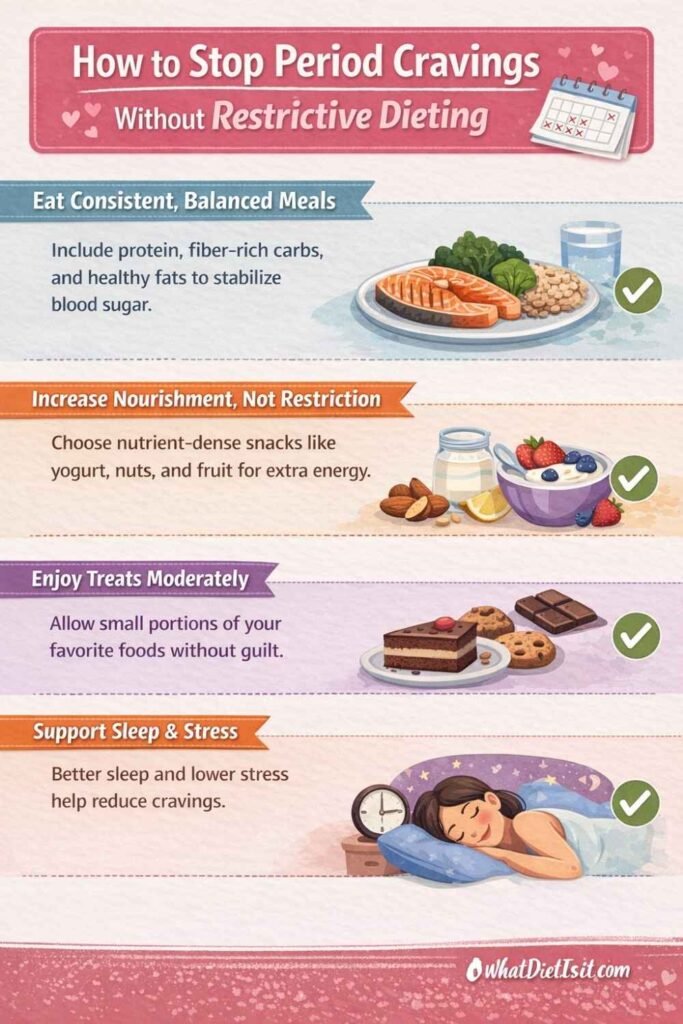
If you want to know how to stop period cravings, the answer isn’t strict dieting or cutting out all sugar. In fact, aggressive restriction often makes cravings worse.
The goal isn’t to eliminate hunger — it’s to manage it strategically.
Eat Balanced, Regular Meals
Skipping meals or undereating during the day can destabilize blood sugar and intensify evening cravings.
Aim to include:
- Protein
- Fiber-rich carbohydrates
- Healthy fats
at each meal to stay satisfied and prevent spikes and crashes.
Increase Nourishment, Not Restriction
During the luteal phase, your body may need slightly more energy. Instead of cutting calories, consider adding nutrient-dense foods like yogurt, nuts, fruit, or whole grains.
Supporting your body reduces the urgency behind cravings.
Allow, Don’t Forbid
Labeling foods as “off-limits” increases psychological desire. Allowing moderate portions of foods you crave can prevent binge–restrict cycles.
A small portion of dark chocolate, for example, is often more effective than complete avoidance.
Prioritize Sleep and Stress Management
Poor sleep and high stress elevate cortisol, which can increase hunger and sugar cravings. Even small improvements in sleep quality and stress regulation can reduce PMS-related cravings.
Stopping period cravings isn’t about fighting your body. It’s about stabilizing blood sugar, supporting hormones, and removing guilt from the equation. When your body feels supported, cravings naturally become easier to manage.
Why Period Cravings Happen (It’s More Than Just Hormones)
If you’ve ever wondered why your cravings feel stronger right before your period, you’re not alone. Many women notice a shift in appetite, mood, and food preferences during the days leading up to menstruation. While hormones play a major role, they’re not the only factor.
Let’s break down what’s really happening in your body — in a way that makes sense.
Hormonal Fluctuations and Serotonin Changes
In the luteal phase (the 3–7 days before your period), estrogen levels drop while progesterone rises and then falls. These shifts don’t just affect your cycle — they also influence brain chemistry.
Research in peer-reviewed journals has shown that estrogen interacts with serotonin, a neurotransmitter involved in mood, appetite, and carbohydrate cravings. When estrogen declines, serotonin activity may decrease as well.
And what does low serotonin often trigger?
A stronger desire for carbohydrate-rich foods like chocolate, bread, and sweets — because carbohydrates temporarily help increase serotonin production.
So if you feel pulled toward comfort foods before your period, it’s not about lack of discipline. It’s a biological response.
For a deeper look at how your body changes during each phase of your cycle — especially the menstrual phase — check out our detailed guide on cycle syncing the menstrual phase.
Blood Sugar Sensitivity During the Luteal Phase
Hormonal changes can also influence insulin sensitivity. Some studies suggest that during the luteal phase, the body may respond slightly less efficiently to insulin.
This can lead to:
- Faster blood sugar fluctuations
- Increased hunger
- Stronger cravings for quick-energy foods
If you notice you get hungrier sooner or feel “shaky” without snacks before your period, blood sugar variability could be contributing.
Stabilizing meals with protein, fiber, and healthy fats can make a noticeable difference.
A Slight Increase in Energy Needs
Here’s something many women don’t hear enough about: your metabolism may increase slightly in the second half of your cycle.
Research suggests energy expenditure can rise modestly during the luteal phase. While the increase isn’t dramatic, it may partly explain why your appetite feels stronger.
In other words, your body might genuinely need a bit more fuel.
Instead of fighting that hunger, the goal is to respond with nourishing choices rather than extreme restriction.
Stress, Cortisol, and Emotional Load
Period cravings aren’t only biochemical. Stress hormones like cortisol can amplify hunger signals, especially for high-sugar and high-fat foods.
If PMS also brings:
- Irritability
- Low mood
- Fatigue
- Poor sleep
Cravings can intensify further.
This is where emotional regulation and physiological regulation overlap. Your body isn’t “sabotaging” you — it’s asking for support.
The Luteal Phase Metabolism Shift Most Women Don’t Know About
If you feel noticeably hungrier in the days before your period, it’s not random — and it’s not a lack of control. During the luteal phase (after ovulation and before menstruation), your body goes through subtle metabolic changes that can influence appetite and cravings.
Let’s break it down simply.
A Slight Increase in Metabolism
Research suggests that resting metabolic rate may rise modestly during the luteal phase due to higher progesterone levels. While the increase isn’t dramatic, your body may burn slightly more energy compared to the first half of your cycle.
That small shift can naturally increase hunger signals.
In other words, your body may genuinely need a bit more fuel.
Progesterone and Appetite Signals
Progesterone doesn’t just regulate your cycle — it also affects appetite regulation. During the luteal phase, some women experience:
- Stronger hunger cues
- Reduced satiety
- Increased desire for carbohydrate-rich foods
These changes are linked to hormonal effects on brain chemistry and blood sugar regulation, not simply emotional eating.
Body Temperature and Energy Use
After ovulation, basal body temperature rises slightly. This thermogenic effect requires energy, contributing to subtle increases in calorie needs.
You may not consciously notice this — but your appetite often does.
Why Restriction Can Make Cravings Worse
If you respond to increased luteal hunger by cutting calories or skipping carbs, it can destabilize blood sugar and intensify cravings later.
From a nutrition perspective, it’s more effective to support your body with balanced meals including protein, fiber, and complex carbohydrates, rather than fighting your physiology.
Micronutrient Deficiencies That Can Make Period Cravings Worse
If your period cravings feel unusually strong, your body may be signaling more than just hormonal shifts. Certain micronutrients play a role in mood regulation, blood sugar balance, and appetite control — and low intake can make PMS symptoms more intense.
Here are a few key nutrients to pay attention to:
Magnesium and Chocolate Cravings
Magnesium supports nerve function, glucose metabolism, and serotonin production. Some research links low magnesium levels to increased PMS symptoms.
This may partly explain why chocolate cravings are common before your period. Instead of resisting completely, consider magnesium-rich foods like:
- Pumpkin seeds
- Almonds
- Spinach
- Dark chocolate (in moderation)
Vitamin B6 and Mood Regulation
Vitamin B6 helps produce serotonin and dopamine — neurotransmitters involved in mood and appetite.
Lower intake has been associated with more pronounced PMS symptoms in some studies. Supporting B6 intake through foods like chickpeas, salmon, potatoes, and bananas may help stabilize mood and reduce cravings.
Calcium and PMS Severity
Calcium influences nervous system signaling and muscle function. Research suggests adequate calcium intake may help reduce overall PMS symptoms, which can indirectly ease cravings.
Sources include yogurt, fortified plant milks, tofu, and sardines.
Iron and Fatigue-Related Cravings
Heavy menstrual bleeding can increase the risk of low iron levels. Fatigue from low iron may drive cravings for quick-energy foods like sugar.
Iron-rich options include lean meat, lentils, beans, and leafy greens.
Cravings aren’t just about willpower. In some cases, they reflect subtle nutritional gaps. Supporting your body with balanced, nutrient-dense foods can help reduce period cravings in a more sustainable way than strict restriction.
How Blood Sugar Imbalance Triggers PMS Sugar Cravings
If sugar cravings hit hardest before your period, blood sugar fluctuations may be a key reason why.
During the luteal phase, hormonal shifts — especially changes in estrogen and progesterone — can slightly reduce insulin sensitivity. This means your body may process carbohydrates less efficiently, making blood sugar levels rise and fall more quickly.
And when blood sugar drops, your brain asks for fast energy.
That usually means sugar.
Hormones and Glucose Control
Research suggests that in the second half of the cycle, some women experience greater blood sugar variability. Rapid spikes followed by crashes can trigger:
- Sudden hunger
- Irritability
- Strong cravings for sweets
This isn’t about weak willpower — it’s your body trying to restore stable energy.
The Spike-and-Crash Cycle
When you eat refined carbs alone:
- Blood sugar rises quickly.
- Insulin brings it down fast.
- Energy dips.
- Cravings return.
During PMS, this cycle can feel more intense due to hormonal influence on appetite and metabolism.
How to Reduce PMS Sugar Cravings
To stabilize blood sugar:
- Include protein with every meal
- Pair carbs with fiber and healthy fats
- Avoid skipping meals
- Choose complex carbohydrates over refined sugar
Supporting steady blood sugar levels is one of the most effective ways to reduce period-related sugar cravings — without extreme restriction.
Foods to Eat on Your Period to Reduce Cravings and Support Hormone Balance
When your period starts, your body is working harder than you may realize. Hormone levels shift, iron is lost through bleeding, and energy can dip. The right foods won’t “cure” cravings overnight, but they can help stabilize blood sugar, support mood, and reduce intense hunger signals.
Instead of focusing on what to avoid, let’s talk about what to include.
Protein-Rich Foods to Stay Fuller Longer
Protein helps regulate appetite hormones and keeps blood sugar steady. During your period, this can reduce sudden cravings for sweets.
Include:
- Eggs
- Greek yogurt
- Chicken or turkey
- Tofu or lentils
- Salmon
Aim to add a source of protein to each meal to prevent energy crashes.
Iron-Rich Foods to Support Energy
Menstrual bleeding increases iron needs. Low iron can contribute to fatigue, which often drives sugar cravings.
Support iron intake with:
- Lean red meat
- Lentils and beans
- Spinach
- Pumpkin seeds
Pair plant-based iron with vitamin C (like citrus or bell peppers) to improve absorption.
Complex Carbohydrates for Steady Energy
Carbohydrates aren’t the enemy — the type matters. Complex carbs provide fiber and slow glucose release, helping reduce blood sugar spikes.
Choose:
- Oats
- Quinoa
- Brown rice
- Sweet potatoes
- Whole-grain bread
These can also support serotonin production, which may help with mood regulation.
Magnesium- and B6-Rich Foods for PMS Support
Magnesium and vitamin B6 are involved in mood and neurotransmitter function. Including them may help ease PMS-related cravings.
Good sources include:
- Dark leafy greens
- Almonds
- Chickpeas
- Bananas
- Dark chocolate (in moderate amounts)
Anti-Inflammatory Fats for Hormonal Support
Healthy fats help with hormone production and satiety.
Add:
- Avocado
- Olive oil
- Nuts and seeds
- Fatty fish like salmon
These fats can help you feel satisfied and reduce the urge to snack constantly.
If you’re curious about how to tailor your meals to each phase of your cycle — not just during your period — our complete cycle syncing diet guide offers practical food strategies for every week of your menstrual cycle.
Are Period Cravings Emotional or Biological?
If you’ve ever asked yourself whether period cravings are emotional or physical, the answer is: mostly biological, with emotions sometimes amplifying them.
Cravings before your period are strongly influenced by hormonal shifts, brain chemistry, and blood sugar changes. They’re not simply about willpower.
The Biological Driver:
During the luteal phase, estrogen drops and progesterone fluctuates. These changes can lower serotonin levels and affect insulin sensitivity.
Lower serotonin may increase the desire for carbohydrate-rich foods, while blood sugar variability can trigger sugar cravings. This is a physiological response — not a lack of control.
The Emotional Amplifier:
PMS can also bring mood swings, irritability, and stress. Elevated cortisol may increase appetite and preference for comfort foods.
Emotions don’t usually create cravings on their own, but they intensify what hormones have already triggered.
Final Thoughts
Period cravings are not a sign of weak willpower — they’re a reflection of hormonal shifts, brain chemistry changes, and metabolic adjustments that naturally occur during your cycle.
Understanding the role of the luteal phase, blood sugar balance, serotonin fluctuations, and key micronutrients can help you respond with strategy instead of restriction. As a nutrition-focused approach, the goal isn’t to eliminate cravings entirely, but to reduce their intensity by supporting your body with balanced meals, adequate nutrients, stress management, and realistic flexibility.
When you stop fighting your physiology and start working with it, period cravings become more manageable — and far less emotionally charged.
References
- Dye, L., & Blundell, J. E. (1997). Menstrual cycle and appetite control: Implications for weight regulation. Human Reproduction, 12(6), 1142–1151.
- Barr, S. I., Janelle, K. C., & Prior, J. C. (1995). Energy intakes are higher during the luteal phase of ovulatory menstrual cycles. The American Journal of Clinical Nutrition, 61(1), 39–43.
- Bryant, M., Truesdale, K. P., & Dye, L. (2006). Modest changes in dietary intake across the menstrual cycle: A meta-analysis. The American Journal of Clinical Nutrition, 83(4), 1011–1019.
- Wurtman, R. J., & Wurtman, J. J. (1995). Brain serotonin, carbohydrate-craving, obesity and depression. Obesity Research, 3(S4), 477S–480S.
- Thys-Jacobs, S., Starkey, P., Bernstein, D., & Tian, J. (1998). Calcium carbonate and the premenstrual syndrome: Effects on premenstrual and menstrual symptoms. American Journal of Obstetrics and Gynecology, 179(2), 444–452.
