

If you’re considering the 18:6 intermittent fasting schedule, you’re probably wondering one simple thing: what actually happens after one month? As a nutritionist, this is one of the most common questions I get — especially from women who want realistic results, not hype or extremes.
Intermittent fasting doesn’t work like a quick fix, and the results after one month are often more subtle than social media before-and-after photos suggest. Changes in weight, energy levels, hunger cues, and digestion can happen, but they depend heavily on how consistently the plan is followed, what you eat during your eating window, and how your body responds to fasting.
The 18:6 method — eating within a 6-hour window and fasting for 18 hours — is slightly more restrictive than the popular 16:8 approach. For some people, this can lead to noticeable shifts in appetite control and daily energy within a month. For others, the results are more about metabolic adaptation rather than dramatic weight loss.
In this article, I’ll walk you through what most people can realistically expect after one month of 18:6 intermittent fasting, including changes in weight, energy, hunger, and overall well-being. I’ll also explain who this approach may work well for, who should be cautious, and how to tell whether 18:6 is actually supporting your health — not working against it.
Nutritionist Note:
This article is based on evidence-informed nutrition practice. Intermittent fasting affects everyone differently, so use this as general guidance—not a substitute for personalized care. If you’re pregnant, breastfeeding, managing a medical condition, or have a history of disordered eating, speak with a qualified professional before trying 18:6 fasting.
Contents
- 1 Weight Changes After 1 Month of 18:6 Intermittent Fasting
- 2 Energy Levels and Daily Focus After One Month on 18:6
- 3 Hunger, Cravings, and Appetite Regulation After 30 Days
- 4 Hormonal Responses to 18:6 Intermittent Fasting in the First Month
- 5 Digestion, Bloating, and Gut Comfort After 1 Month of Fasting
- 6 What to Expect After One Month of 18:6 Intermittent Fasting
- 7 Who 18:6 Intermittent Fasting May Work Well For
- 8 Who Should Be Cautious With 18:6 Fasting
- 9 The Bottom Line After 30 Days
- 10 References
- 11 FREE CHEAT SHEET!
Weight Changes After 1 Month of 18:6 Intermittent Fasting
If you’re about a month into 18:6 intermittent fasting, you’re probably checking the scale—and then questioning what it’s telling you. From what I see in practice, the first month rarely brings dramatic weight loss, but it does bring clear physical signals that your body is responding to the new eating rhythm.
Let’s talk about what those weight-related changes usually look like in real life.
What the Scale Commonly Shows After 30 Days
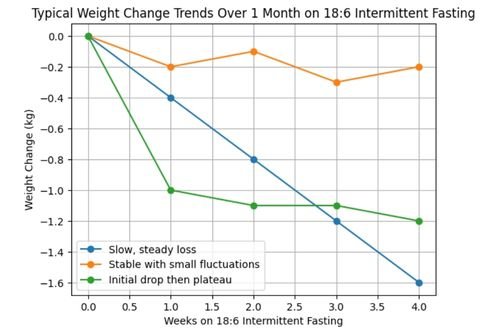
After one month of 18:6 fasting, many people fall into one of these patterns:
- A slow, steady drop of around 1–2 kg
- Weight staying almost the same, but fluctuating less day to day
- An initial drop in week one, followed by a plateau
For example, it’s common to lose 1 kg in the first 7–10 days, see no movement for two weeks, and then notice another small drop toward the end of the month. This isn’t stagnation—it’s your body recalibrating energy use.
If your weight hasn’t changed much, that alone doesn’t mean fat loss isn’t happening.
Changes You May Notice Even If the Scale Barely Moves
One of the most frequent things people tell me after a month on 18:6 is:
“The scale hasn’t changed much, but my body feels different.”
You may notice:
- Your waistband feels looser, especially in the morning
- Less lower-abdominal bloating by the end of the day
- Weight fluctuations shrinking from ±1.5 kg to ±0.5 kg
- Clothes fitting more comfortably around the midsection
These changes often happen because longer fasting periods improve insulin regulation, which can reduce water retention and abdominal bloating before visible fat loss shows up.
When Early Weight Loss Is Mostly Water (and How to Tell)
If you lost weight quickly in the first one to two weeks, part of that change is often water weight, especially if your carbohydrate intake dropped naturally when you reduced snacking.
Signs your early loss was mostly water:
- The scale dropped fast, then stalled
- You’re eating similarly now but not losing further
- Bloating improved rapidly
This doesn’t mean the fasting “stopped working.” It usually means your body has moved past the initial adjustment phase and is now relying more on fat oxidation—which happens more slowly but more sustainably.
Eating Window Mistakes That Stall Weight Loss
Here’s where I see many people unintentionally limit their results.
Even with an 18-hour fast, weight loss may stall if:
- Most calories are consumed late in the eating window
- Protein intake is low, leading to muscle loss or overeating
- Meals are skipped, followed by one very large meal
- Liquid calories (sweetened coffee, juices) creep in
For example, someone eating one large evening meal may technically “fast,” but still struggle with weight because insulin remains elevated for long stretches. But eating junk food on intermittent fasting isn’t totally forbidden, as it can be allowed on certain conditions.
Structure matters—but what happens inside the 6-hour window matters just as much.
What’s a Realistic Outcome After One Month?
From a nutrition perspective, a realistic and healthy outcome after 30 days of 18:6 intermittent fasting looks like this:
- Mild weight loss or body recomposition
- Fewer cravings between meals
- More predictable hunger patterns
- Better awareness of fullness
If those are happening, you’re on the right track—even if the scale hasn’t dramatically changed yet.
The first month is about teaching your body when to eat again. Once that rhythm is established, weight changes tend to follow more consistently.
Energy Levels and Daily Focus After One Month on 18:6
By the one-month mark of 18:6 intermittent fasting, energy levels often become more predictable—but not necessarily higher all day long. What most people experience is a shift in when and how energy shows up, rather than a constant boost from morning to night.
Here’s what that usually looks like in real life.
The First Thing Many People Notice: Fewer Energy Crashes
One of the most common changes after a month on 18:6 is fewer mid-day energy crashes.
You might notice:
- Less need for a nap or sugary snack in the afternoon
- More stable energy between meals
- Feeling mentally “clearer” before your first meal
This often happens because longer fasting periods reduce frequent blood sugar spikes and drops. When meals are more spaced out, energy tends to feel steadier instead of peaking and crashing every few hours.
Morning Energy Can Go Either Way (And That’s Normal)
Morning energy is where experiences differ the most.
Some people report:
- Feeling more alert and focused during the fasting hours
- Being productive before their first meal
- Less “food noise” early in the day
Others feel:
- Slight fatigue or sluggishness in the morning
- Better energy only after the first meal
- A need to adjust caffeine timing
Both responses are normal during the first month. In practice, morning fatigue often improves once:
- Sleep quality stabilizes
- Protein intake during the eating window increases
- The body becomes more efficient at using stored energy
Mental Focus and Concentration After 30 Days
After one month, many people describe a noticeable change in mental clarity, especially during fasting hours.
Common experiences include:
- Easier concentration during work or study
- Fewer distractions related to hunger
- Feeling more “switched on” between meals
This doesn’t mean fasting automatically boosts productivity for everyone. But when hunger signals become quieter and meals are predictable, cognitive load around food decreases—leaving more mental space for focus.
When Low Energy Is a Sign to Adjust (Not Push Harder)
If, after a full month, you’re still experiencing:
- Persistent fatigue
- Dizziness or weakness
- Brain fog that doesn’t improve after eating
That’s usually a sign that something needs adjusting.
In my experience, low energy at this stage is often linked to:
- Undereating overall
- Insufficient carbohydrates
- Low iron or inadequate micronutrients
- Too much caffeine replacing meals
18:6 fasting should feel supportive, not draining. Ongoing low energy isn’t something to ignore or “push through.”

Hunger, Cravings, and Appetite Regulation After 30 Days
By the time you reach 30 days of 18:6 intermittent fasting, hunger usually feels different, not necessarily gone. Most people don’t stop feeling hungry—but they stop feeling constantly hungry. From a nutrition perspective, this shift is one of the clearest signs that appetite regulation is improving.
Here’s what that typically looks like in real life.
Hunger Becomes More Predictable (Not Random)
One of the biggest changes after a month is that hunger starts to follow a pattern.
Instead of:
- Feeling hungry every 2–3 hours
- Snacking “just in case”
- Eating because it’s a habit or the clock says so
You may notice:
- Hunger showing up closer to your usual eating window
- Clear physical cues (stomach hunger) instead of mental urges
- Longer stretches where food simply isn’t on your mind
This happens as hunger hormones, particularly ghrelin, begin to align with your new meal timing.
Cravings Often Decrease—but Not Always Disappear
Many people report fewer cravings after a month of 18:6 fasting, especially for:
- Sugary snacks
- Late-night desserts
- Constant grazing foods
For example, someone who used to crave something sweet every evening may find that those urges feel weaker or less urgent. That doesn’t mean cravings never show up—it means they’re less intense and easier to manage.
However, persistent cravings can still happen if:
- Meals are too low in protein
- Carbohydrates are overly restricted
- Meals are rushed or eaten distractedly
Cravings are information, not a failure of fasting.
The Difference Between True Hunger and “Fasting Hunger”
Around the one-month mark, many people start recognizing the difference between:
- True hunger (physical need for food)
- Fasting hunger (temporary waves that pass)
You might notice that hunger comes in waves:
- You feel hungry for 10–20 minutes
- Then it fades without eating
- Especially during fasting hours
This doesn’t mean you should ignore hunger indefinitely. It simply means your body is becoming more flexible in how it accesses energy, rather than demanding food immediately.
Appetite Can Swing If Meals Aren’t Balanced
If appetite feels out of control after 30 days, that’s usually not because of fasting itself.
Common reasons include:
- Breaking the fast with very low-protein meals
- Eating too quickly after fasting
- Skipping meals within the eating window
- Not eating enough overall
For example, breaking a fast with only coffee and a small snack often leads to intense hunger later, even within the same eating window. Appetite regulation improves when meals are structured and nourishing.
What Healthy Appetite Regulation Looks Like After One Month
A realistic and healthy outcome after 30 days of 18:6 fasting looks like:
- Hunger feels clearer, not louder
- Cravings are less frequent or less intense
- You can delay eating slightly without distress
- You feel satisfied after meals, not driven to keep eating
If that’s your experience, your appetite hormones are likely adapting well, even if fasting still feels challenging at times.
Appetite regulation is one of the most valuable benefits of intermittent fasting, but it works best when paired with enough food, not less food.
Hormonal Responses to 18:6 Intermittent Fasting in the First Month
After one month of 18:6 intermittent fasting, your hormones aren’t dramatically “reset,” but they are starting to respond to the new rhythm. Most of these changes are subtle, and many people only notice them indirectly—through appetite, mood, or how their body reacts to stress.
Let’s talk about what’s actually happening.
Insulin: The Quiet Shift Most People Miss
One of the earliest hormonal adaptations is improved insulin regulation, even if you don’t feel it right away.
You might notice things like:
- Meals keeping you full for longer
- Fewer sudden energy dips after eating
- Less urgency to snack “just in case”
This doesn’t always translate to fast weight loss in month one. More often, it shows up as stability—your body getting better at switching between fed and fasted states.
Hunger Hormones Start Following Your Schedule
By week three or four, hunger often becomes more predictable.
For example, someone who used to feel hungry all evening may realize:
- Hunger now shows up closer to their eating window
- Late-night cravings feel quieter or shorter-lived
- Hunger feels physical instead of urgent or emotional
This happens because hormones like ghrelin adapt to routine. Your body learns when food is coming—and stops sounding the alarm all day long.
Cortisol: Where Some People Feel Better—and Others Feel Worse
Stress hormones are where experiences diverge.
Some people feel calmer around food and less reactive to hunger. Others notice the opposite—feeling tense, wired, or easily irritated, especially during fasting hours.
In practice, higher cortisol responses often show up when:
- Fasting is combined with undereating
- Sleep quality drops
- Caffeine replaces meals instead of supporting them
If fasting makes you feel constantly on edge, that’s not discipline—it’s feedback.
Female Hormones: Subtle Signals, Not Drastic Changes
After one month, most women won’t see major shifts in estrogen or progesterone levels. What does change is sensitivity.
You may notice:
- Fasting feels easier during the first half of your cycle
- Hunger is stronger in the luteal phase
- A need for flexibility rather than strict daily fasting
This is why a rigid, “never break the fast” mindset often backfires hormonally. Adaptation works best when fasting supports—not overrides—your physiology.
Digestion, Bloating, and Gut Comfort After 1 Month of Fasting
Digestive changes are often one of the clearest signs that your body is adjusting to 18:6 fasting. For many people, the gut feels calmer simply because it’s no longer processing food all day long.
That said, how digestion responds depends a lot on how you eat when you do eat.
Bloating Often Improves—Especially by the End of the Day
A common comment I hear after 3–4 weeks is:
“I don’t feel as bloated at night anymore.”
You may notice:
- A flatter-feeling abdomen in the morning
- Less pressure or tightness after meals
- Bloating that resolves faster instead of lingering
Longer breaks between meals give the digestive system time to reset, which can reduce gas and fermentation—especially if snacking used to be frequent.
Fewer Meals, More Digestive Awareness
Eating within a shorter window often makes people more aware of how food affects them.
For example:
- You might realize certain foods cause bloating more than you thought
- Large meals after a long fast may feel heavy
- Eating too quickly becomes more noticeable
This isn’t a digestive problem—it’s feedback. The gut becomes more responsive when it’s not constantly stimulated.
When Digestion Feels Worse Instead of Better
Not everyone feels immediate digestive relief.
Digestive discomfort after a month is often linked to:
- Breaking the fast with very large meals
- Low fiber intake
- Inadequate hydration
- Rushing meals after fasting
For instance, breaking a fast with a heavy, high-fat meal can feel uncomfortable, even if the food itself is “healthy.”
Bowel Habits May Shift Temporarily
Changes in bowel movements are common during the adjustment phase.
Some people notice:
- Fewer bowel movements
- More predictable timing
- Temporary constipation early on
These changes are usually related to meal timing and fluid intake, not harm. Most normalize once hydration, fiber, and meal structure are dialed in.
What Healthy Gut Adaptation Looks Like After One Month
A supportive digestive response after 30 days usually feels like:
- Less bloating across the day
- Comfortable fullness after meals
- Fewer digestive surprises
If digestion feels worse rather than better, it’s almost always a sign to adjust meal composition or pacing, not to abandon the approach altogether.
What to Expect After One Month of 18:6 Intermittent Fasting
After one month of 18:6 intermittent fasting, most people don’t walk away with dramatic transformations—but they do walk away with information. You learn how your body responds to longer fasting periods, how your hunger behaves, and whether this eating rhythm feels supportive or stressful.
From a nutrition standpoint, that feedback is valuable.
You may notice:
- Subtle weight changes or body recomposition
- More stable energy during parts of the day
- Clearer hunger signals and fewer cravings
- Less bloating and more predictable digestion
These changes don’t mean 18:6 is “the best” approach for everyone. They simply mean your body is adapting to structure. What matters most after the first month is whether this structure fits into your life without increasing stress or obsession around food.
Intermittent fasting works best when it supports consistency—not when it becomes something you have to fight through daily.
Who 18:6 Intermittent Fasting May Work Well For
Based on both research and real-world experience, the 18:6 approach tends to work best for people who:
- Prefer fewer, more intentional meals
- Struggle with constant snacking or grazing
- Feel better with clear eating boundaries
- Have relatively stable sleep and stress levels
- Can eat balanced meals within the eating window
For these individuals, 18:6 often feels surprisingly sustainable after the adjustment phase. Hunger becomes clearer, energy steadies, and food decisions feel simpler.
Who Should Be Cautious With 18:6 Fasting
18:6 fasting isn’t inherently harmful, but it isn’t appropriate for everyone—especially when flexibility is removed.
You may want to approach this method cautiously if you:
- Feel fatigued, anxious, or irritable while fasting
- Have a history of disordered eating
- Are pregnant or breastfeeding
- Are managing a medical condition that affects blood sugar
- Notice worsening sleep, mood, or cycle symptoms
In these cases, shorter fasting windows—or no fasting at all—may be more supportive. Health isn’t about tolerating discomfort; it’s about choosing patterns your body can thrive on.
The Bottom Line After 30 Days
After one month of 18:6 intermittent fasting, the most important question isn’t “Did I lose weight?”
It’s “Does this way of eating support my health, energy, and relationship with food?”
If the answer is yes, you can continue refining it.
If the answer is no, that’s not failure—it’s information.
Nutrition is not one-size-fits-all, and intermittent fasting is just one tool. Used thoughtfully, it can be helpful. Used rigidly, it can backfire.
Listening to your body is always the most evidence-based approach.
References
- Patterson, R. E., & Sears, D. D. (2017). Metabolic effects of intermittent fasting. Annual Review of Nutrition, 37, 371–393. https://doi.org/10.1146/annurev-nutr-071816-064634
- Tinsley, G. M., & La Bounty, P. M. (2015). Effects of intermittent fasting on body composition and clinical health markers in humans. Nutrition Reviews, 73(10), 661–674. https://doi.org/10.1093/nutrit/nuv041
- Sutton, E. F., Beyl, R., Early, K. S., Cefalu, W. T., Ravussin, E., & Peterson, C. M. (2018). Early time-restricted feeding improves insulin sensitivity, blood pressure, and oxidative stress even without weight loss in men with prediabetes. Cell Metabolism, 27(6), 1212–1221. https://doi.org/10.1016/j.cmet.2018.04.010
- Gabel, K., Hoddy, K. K., Haggerty, N., Song, J., Kroeger, C. M., Trepanowski, J. F., Panda, S., & Varady, K. A. (2018). Effects of 8-hour time-restricted feeding on body weight and metabolic disease risk factors in obese adults: A pilot study. Nutrition and Healthy Aging, 4(4), 345–353. https://doi.org/10.3233/NHA-170036
- Longo, V. D., & Panda, S. (2016). Fasting, circadian rhythms, and time-restricted feeding in healthy lifespan. Cell Metabolism, 23(6), 1048–1059. https://doi.org/10.1016/j.cmet.2016.06.001
