
Quick answer
No single soup heals every gut. The best gut healing soup is the one that matches your symptom:
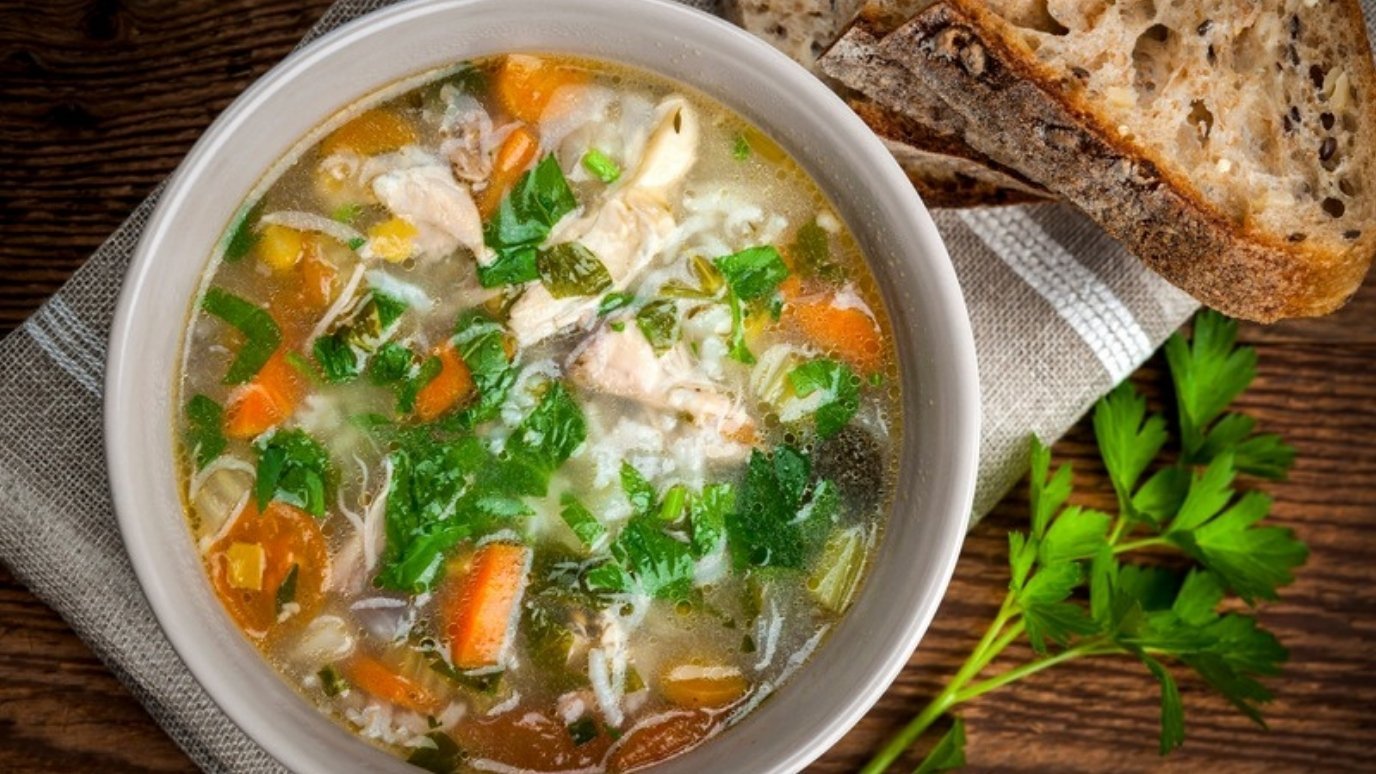
- Bloating or IBS: a low-FODMAP ginger chicken and rice soup made with garlic-infused oil instead of garlic and onion.
- Nausea or a sensitive stomach: a light egg-ribbon broth.
- A healthier microbiome: a 12-plant minestrone, since eating more plant variety is linked with a more diverse gut.
- A fermented-food boost: miso and greens soup, with the miso stirred in off the heat.
Soup can calm symptoms and feed good bacteria, but it can’t repair an ulcer, celiac damage or IBD. Those need a diagnosis.
“Gut healing soup” pins usually show one golden bowl that claims to fix everything: bloating, leaky gut, inflammation, constipation. Your gut doesn’t work that way. A soup that soothes an IBS flare can be the wrong choice when you’re trying to feed your gut bacteria. And the “healing” bone broth everyone swears by turns out to carry far less collagen than you’d think.
So instead of one recipe, this guide gives you four, each matched to a different problem. Start with the picker below, go straight to your soup, and skip the rest if you like.
Which soup is best for gut health? Pick by symptom
| Your main problem | Soup to make | Why it fits | Avoid for now |
|---|---|---|---|
| Bloating, gas, IBS flare | Soup 1: low-FODMAP ginger chicken and rice | Keeps out the fermentable carbs that trigger gas, but keeps the flavor | Onion, garlic, beans, lentils, cauliflower |
| Nausea, low appetite, after a stomach bug, GLP-1 queasiness | Soup 2: gentle egg-ribbon broth | Light, warm, easy protein, low in fat and fiber | Creamy, spicy or very fibrous soups |
| Want a more diverse microbiome (no active symptoms) | Soup 3: 12-plant minestrone | One bowl counts 12 plant types toward your weekly total | Skip this one during a low-FODMAP elimination phase |
| Want more fermented foods | Soup 4: miso, ginger and greens | Miso is fermented, and adding it off the heat protects its live microbes | Boiling the miso |
| Constipation | See my best soup for constipation guide | Needs a fiber-and-fluid plan, covered in detail there | — |
Soup 1: Low-FODMAP ginger chicken and rice soup (for bloating and IBS)
Here’s something most chicken soup recipes get wrong if you have IBS. People often simmer onion and garlic in the pot and then fish them out, thinking that makes the soup safe. It doesn’t. The fructans in onion and garlic, the carbs that cause gas and bloating in sensitive guts, dissolve in water. Monash University, the team that developed the low-FODMAP diet, explains that by the time you remove the onion, its fructans have already leached into the broth.
Oil works differently. Fructans don’t dissolve in fat, so garlic-infused oil gives you garlic flavor without the fructans. That one swap is what makes this soup work.
Ingredients (4 bowls)
- 2 tbsp garlic-infused olive oil (store-bought, with no garlic pieces in the bottle)
- 2 medium carrots, sliced
- 1 medium potato, diced
- 1 thumb fresh ginger, finely grated
- 2 boneless chicken breasts or 4 thighs (about 500 g)
- 1.5 liters water or low-FODMAP stock (see the stock note below)
- ½ cup white rice, rinsed
- A handful of green beans, chopped, or 2 heads baby bok choy
- Green tops of 3 spring onions (scallions), sliced, with the white bulbs left out
- Salt, black pepper, a squeeze of lemon, fresh parsley
Method
- Warm the garlic-infused oil in a large pot over medium heat. Add the carrots, potato and ginger and stir for 3–4 minutes.
- Add the chicken and the water or stock. Bring to a boil, then lower to a gentle simmer for 20 minutes, until the chicken is cooked through.
- Lift out the chicken, shred it with two forks, and return it to the pot with the rice. Simmer 15 minutes, until the rice is soft.
- Add the green beans or bok choy for the last 4 minutes. Season with salt and pepper.
- Serve with the spring onion greens, parsley and lemon on top.
The stock trap: most stock cubes and boxed broths list onion or garlic powder in their ingredients, which brings back the very fructans you’re avoiding. Read the label, look for a certified low-FODMAP stock, or simply use water with extra ginger, salt and herbs. The chicken makes its own light broth as it simmers.
New to FODMAPs? My step-by-step low-FODMAP diet guide explains the elimination and reintroduction phases. The diet is meant to be temporary, not a forever plan.
Soup 2: Gentle egg-ribbon broth (for nausea and a sensitive stomach)
When your stomach is unsettled after a bug, during a bad day on Ozempic or Mounjaro, or when you can’t face food, a big bowl of vegetables and beans is the wrong move. Fat and fiber both slow stomach emptying, and that’s the last thing you need when you already feel full or queasy. This soup is light, warm and quick, and the eggs give you protein without a heavy meal.
Ingredients (2 bowls)
- 750 ml chicken or vegetable broth (low-sodium if you can find it)
- 3 thin slices fresh ginger
- 2 large eggs, beaten
- ½ cup cooked white rice or a small handful of fine noodles (optional)
- A few drops of lemon juice, salt to taste
Method
- Simmer the broth with the ginger slices for 5 minutes, then remove the ginger.
- Add the rice or noodles if using and heat through.
- Stir the broth in a slow circle and pour in the beaten eggs in a thin stream. They’ll set into soft ribbons in about 30 seconds.
- Turn off the heat, add lemon and salt, and sip slowly.
Two large eggs give you about 12–13 grams of protein, based on USDA values of roughly 6.3 g per large egg. That’s a meaningful amount for a bowl you can finish even with almost no appetite. If you’re on a GLP-1 and struggling to eat enough protein, my GLP-1 Kickstart Kit ($27) has small-portion meal plans built for exactly this. Once the nausea passes, move on to Soup 3 to bring fiber back.
When it’s more than an upset stomach: if you can’t keep fluids down for a day, see blood in vomit or stool, have a high fever, or have severe stomach pain, call a doctor. Soup isn’t the answer then.
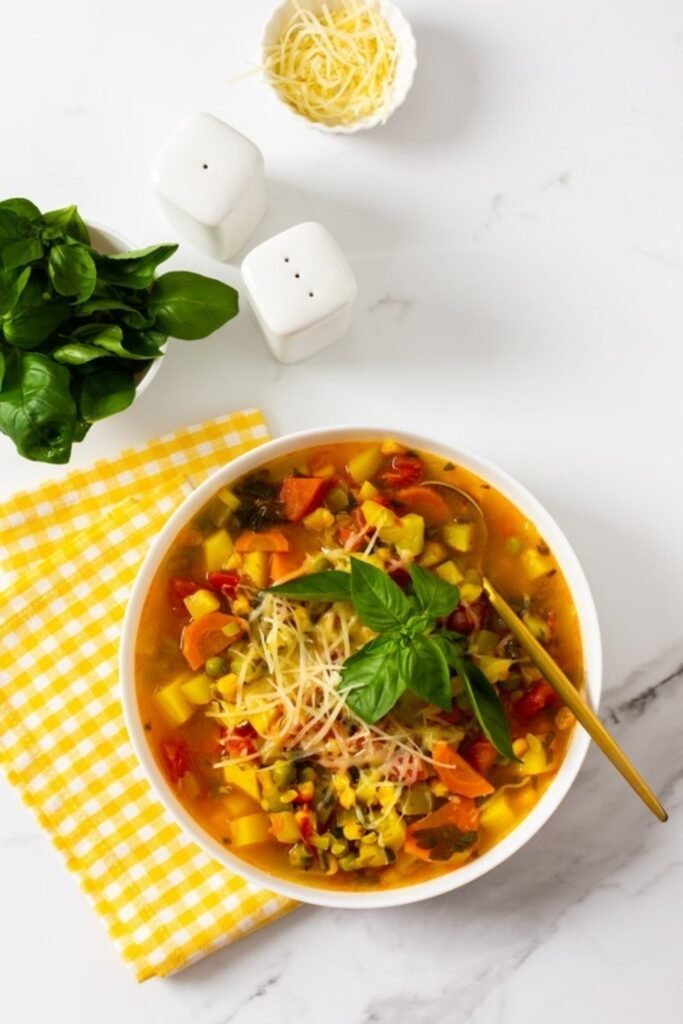
Soup 3: 12-plant minestrone (to feed your gut bacteria)
This is the soup to make when your gut feels fine and you want to keep it that way. The idea comes from the American Gut Project, one of the largest citizen-science studies of the gut microbiome. Its 2018 results found that people who ate more than 30 different plant types a week had more diverse gut microbiomes than people who ate 10 or fewer, whatever diet they followed (McDonald et al., 2018). That comparison involved only 41 people in the top group and 44 in the bottom group, so treat it as an association, not proof. Still, plant variety is an easy habit, and soup is the easiest place to pile it on.
Every ingredient marked with a number below counts as a plant type. One pot gets you 12 toward your 30, which is 40% of the weekly goal from a single recipe. Herbs and spices count too, which is why I keep both in.
Ingredients (6 bowls)
- 2 tbsp extra-virgin olive oil (1)
- 1 onion, diced (2)
- 3 garlic cloves, minced (3)
- 2 carrots, diced (4)
- 2 celery sticks, diced (5)
- 1 can (400 g) chopped tomatoes (6)
- 1.5 liters vegetable or chicken stock
- ⅓ cup pearl barley, rinsed (7)
- 1 can (400 g) cannellini beans, drained and rinsed (8)
- 1 zucchini, diced (9)
- 2 big handfuls kale or spinach, chopped (10)
- 1 tsp dried oregano (11)
- A handful of fresh parsley or basil (12)
- Salt, black pepper, grated Parmesan to serve (optional)
Method
- Warm the olive oil and soften the onion, carrot and celery for 8 minutes. Add the garlic for 1 minute.
- Add the tomatoes, stock, barley and oregano. Simmer, covered, for 30 minutes, until the barley is tender.
- Add the beans and zucchini and simmer 10 minutes more.
- Stir in the kale or spinach until it wilts. Season, then finish with the fresh herbs.
Want to push past 12? Swap half the beans for chickpeas, add a handful of red lentils with the barley, or top each bowl with toasted pumpkin seeds. Each new one counts as another plant. If you’re not used to beans and barley, start with a small bowl. A sudden jump in fiber is a classic cause of temporary gas. My gut health superfoods post has more easy ways to rack up plant points.
Soup 4: Miso, ginger and greens soup (for a fermented-food boost)
Fermented foods have some of the most interesting gut research behind them. In a 2021 Stanford trial published in Cell, healthy adults who gradually ate more fermented foods over several weeks saw their gut microbiome diversity rise steadily and several inflammation markers fall. A matched high-fiber group didn’t see the same diversity change in that time frame (Wastyk et al., 2021). It was a small study, about 18 people per group, but the results were striking.
Miso is a fermented soybean paste, and many miso products carry live microbes. Heat kills microbes, though, so the classic mistake is boiling miso in with everything else. Make the soup first, take it off the heat, then stir in the miso.
Ingredients (2 bowls)
- 750 ml water
- 1 thumb fresh ginger, thinly sliced
- 100 g mushrooms, sliced (shiitake or button)
- 150 g firm tofu, cubed
- 2 handfuls spinach or sliced bok choy
- 2 tbsp miso paste (look for “unpasteurized” or “live” on the label)
- 2 spring onions, sliced, and a few drops of toasted sesame oil
Method
- Simmer the water, ginger and mushrooms for 8 minutes.
- Add the tofu and greens and heat for 2 minutes, until the greens wilt.
- Turn off the heat and let it sit for a minute or two so it’s no longer boiling.
- Ladle a little broth into a bowl, whisk the miso into it until smooth, then stir it back into the pot. Don’t boil it again. Top with spring onions and sesame oil.
Watch the salt: miso is high in sodium. Two tablespoons spread across two bowls is a reasonable amount, but skip the extra salt and use low-sodium soy sauce if you add any. If you’ve been told to limit sodium for blood pressure or kidney reasons, use half the miso. And if you follow a low-FODMAP diet, use the green spring onion tops only, and check with your dietitian about mushrooms, since some types are high FODMAP.
Is bone broth really a gut healing soup?
Bone broth is the star of almost every gut healing soup pin, usually because of its collagen, gelatin and the amino acid glutamine. The idea is that these “seal” the gut lining. The evidence that drinking broth does this in people is thin.
A 2019 study in the International Journal of Sport Nutrition and Exercise Metabolism tested homemade, lab-made and store-bought bone broths for the amino acids that make up collagen. Broth made to a standard recipe contained significantly less of these amino acids than a 20-gram dose of a collagen supplement, and the amounts varied hugely from batch to batch (Alcock et al., 2019). In other words, you can’t count on a mug of broth to deliver a meaningful dose.
That doesn’t make bone broth useless. It’s warm, hydrating, savory and easy on a sore stomach, which is why I use broth as the base of Soup 2. Just think of it as comfort food, not medicine. If you’re curious about broth and digestion, I covered that in does bone broth make you poop.
What type of soup is good for gut inflammation?
It depends on what’s inflamed. For everyday “my gut feels off” inflammation, the research points to two things: plant variety and fiber (Soup 3) and fermented foods (Soup 4). In the Stanford trial, fermented foods were the ones linked with lower inflammatory markers over the study period.
Diagnosed inflammatory bowel disease (Crohn’s disease or ulcerative colitis) is a different situation. During a flare, high-fiber, chunky soups like minestrone can make things worse, and many people do better with smooth, low-residue soups for a while. That’s a decision for your gastroenterologist or IBD dietitian, not a Pinterest chart.
What heals the gut the fastest?
Honestly, the fastest fix is finding the cause, because “gut healing” means very different things depending on what’s wrong:
- IBS bloating: a short low-FODMAP elimination often brings relief within weeks. My guide on how long FODMAP symptoms last explains the timing.
- After antibiotics or a stomach bug: a gentle diet first, then gradually more plants and fermented foods.
- Celiac disease: strict, lifelong gluten avoidance. Nothing else heals the damage.
- “Leaky gut”: increased intestinal permeability is real and measurable in research, but it isn’t a stand-alone diagnosis. My post on what heals leaky gut goes deeper.
- Ulcers, IBD, persistent pain or bleeding: these need medical treatment. Soup is supportive at most.
See a doctor promptly if you have unexplained weight loss, blood in your stool, black stools, trouble swallowing, ongoing vomiting, symptoms that wake you at night, or a change in bowel habits after age 50.
How to store and batch these soups
- Cool and refrigerate within 2 hours of cooking, and eat within 3–4 days. That’s the USDA Food Safety and Inspection Service guidance for leftovers. Divide big batches into shallow containers so they cool faster.
- Freeze for 3–4 months for best quality. Soups 1 and 3 freeze well. Rice and barley soften on thawing, so you may want to add fresh rice when you reheat.
- Don’t freeze Soup 2 or 4. Egg ribbons turn rubbery, and reheating miso to a boil defeats the point. Both take under 15 minutes to make fresh.
- Reheat until steaming hot all the way through.
Gut healing soup FAQs
What is the most healing soup for the gut?
There isn’t one. For bloating and IBS, a low-FODMAP chicken and rice soup is usually best. For nausea, a light egg broth. For long-term gut health, a vegetable-and-bean soup with lots of plant variety, or a miso soup with the miso added off the heat.
Is chicken soup good for your gut?
It can be. It’s gentle, hydrating and a good source of protein. To make it gut friendly for IBS, flavor it with garlic-infused oil, ginger and spring onion greens instead of onion and garlic, and check your stock for onion and garlic powder.
Does removing the onion make soup low FODMAP?
No. Onion and garlic fructans dissolve in water, so they’re already in the broth by the time you remove the pieces. Use garlic-infused oil and the green tops of spring onions instead, since fructans don’t dissolve in oil.
Does bone broth heal leaky gut?
There’s no good human evidence that it does. A 2019 analysis found bone broth delivers far fewer collagen building blocks than a standard collagen supplement dose, with big variation between batches. It’s a comforting base for soup, not a treatment.
Does boiling miso kill the probiotics?
High heat kills live microbes, so boiling miso destroys most of them. Take the soup off the heat first, then whisk the miso into a little broth and stir it in. Pasteurized miso has no live microbes to begin with, so check the label.
How often should I eat gut healing soup?
As often as you enjoy it. A bowl a day of a plant-rich or miso soup is an easy habit. For IBS, stick to the low-FODMAP version until you’ve finished reintroductions with your dietitian.
Can soup help with constipation?
Yes, soups with lentils, beans, oats or vegetables add both fiber and fluid. My separate guide to the best soup for constipation covers four options and the daily fiber and fluid targets to aim for.
