
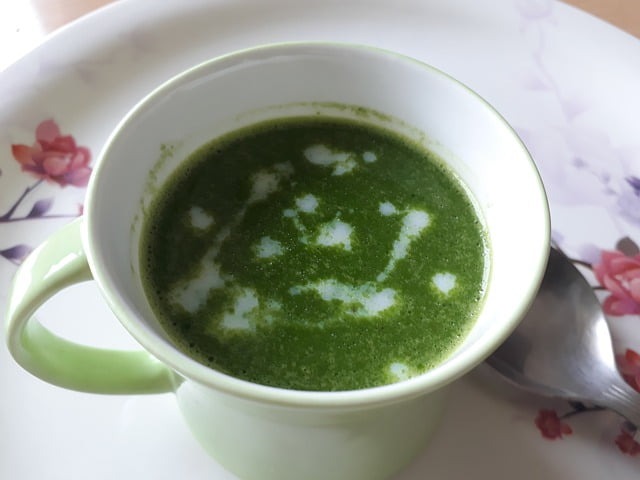
If you’ve ever watched someone ladle a thick, dark-green soup over rice and wondered whether you were about to eat a vegetable or a swamp, I get it — molokhia looks like nothing else on an Egyptian table. I’ve made this soup more times than I can count, and the texture still throws first-timers off before the flavor wins them over. Here’s what’s actually in your bowl, what current research does and doesn’t support, and how to cook it so that silky texture works for you instead of against you.
What Molokhia Actually Is
Molokhia is the Egyptian name for jute mallow (Corchorus olitorius), a leafy green that’s been eaten across Egypt, Sudan, the Levant, and parts of West Africa for centuries. The leaves get finely chopped and simmered into a thick, almost silky soup — a texture that comes from the plant’s natural mucilage, the same category of fiber that makes okra slippery.
In Egyptian kitchens, molokhia is almost always built the same way: leaves simmered in broth, finished with a garlic-and-coriander mixture called ta’leya, and served over rice alongside chicken, beef, or rabbit. The base ingredient doesn’t change much from household to household, even though the protein served alongside it does.
It’s also having a bit of a moment outside Egypt. As more people look past kale and spinach for leafy greens with a different nutrient profile, traditional dishes like molokhia, along with other Mediterranean and Middle Eastern staples, are showing up more often in conversations about what a varied, whole-food diet can actually look like.
It’s Not the Same Dish Everywhere
Ask someone from Lebanon or Syria what molokhia tastes like and you’ll get a different answer than you would from an Egyptian. The Levantine version tends to lean brighter, often finished with lemon, while the Egyptian version I grew up making stays closer to a pure garlic-coriander base. In Tunisia, “mloukhiya” is almost a different dish altogether — a thick, nearly paste-like stew simmered for hours with meat until it turns a deep, almost black-green. Same leaf, three very different bowls, which is part of why it’s worth trying more than one version before deciding whether you like it.
What’s Actually in a Bowl of Molokhia
One cooked cup of jute leaves (about 87 grams) comes in at roughly 32 calories, 3 grams of protein, and 2 grams of fiber, according to USDA data compiled by Healthline. For a food that light, the micronutrient numbers are surprisingly good: 32% of your daily vitamin C, 25% of your vitamin A, 15% of your iron, 14% of your calcium, and 13% of your magnesium — all in one serving.
More Vitamin C Than You’d Expect From a Soup
Nearly a third of your daily vitamin C from a bowl of cooked greens is a lot for a dish most people think of as “just a soup.” Vitamin C supports immune function and acts as an antioxidant, and because molokhia is traditionally cooked gently rather than boiled hard, it holds onto more of that vitamin C than greens that get boiled to death.
Iron, in a Plant Package
At 15% of your daily iron per cup, molokhia is one of the better plant sources of iron you’ll find on a dinner table. Plant iron (non-heme iron) doesn’t absorb as efficiently as the iron in meat, but pairing it with a vitamin C source — which molokhia already has plenty of — meaningfully improves how much your body actually takes up.
Calcium and Magnesium, Working Together
Molokhia gives you calcium and magnesium in roughly a 2:1 ratio, which happens to be close to the ratio researchers consider favorable for bone health. It’s missing vitamin D and vitamin K, though, so it’s a contributor to bone health rather than a complete solution on its own.
The Fiber Behind the Texture
The same soluble fiber that gives molokhia its slippery texture is also what makes it filling and supportive of regular digestion. At 2 grams per cooked cup, it’s not an overwhelming amount on its own, but it adds up quickly if molokhia is a dish you eat more than once in a while — and if you’re deliberately trying to push your fiber intake up for digestion or satiety, it’s worth seeing how a dish like this fits into a broader high-fiber eating plan rather than relying on any single food.
What Early Research Says — and What It Doesn’t
A 2023 review in Frontiers in Nutrition pulled together findings from twenty rodent studies on Corchorus olitorius extract, and the results are genuinely interesting, with a big caveat. In several diabetic rat models, molokhia extract lowered fasting blood glucose compared to untreated controls — in one study, blood glucose dropped to roughly 271 mg/dL from 409 mg/dL, and glycated hemoglobin (HbA1c) fell from 4.98% to 4.23%. In obese rats, researchers also measured lower inflammatory markers (IL-1β and TNF-α) after treatment with the extract.
That’s worth knowing, but it’s not the same as proof that eating molokhia soup will lower your blood sugar or calm inflammation. These are animal studies using concentrated extracts at specific doses, not clinical trials in people eating the dish as food — and the same review notes at least one rodent study that found no effect at all. Human research on molokhia specifically is still lacking, so I’d treat this as a reason to be curious rather than a reason to treat molokhia like medicine.
Health Benefits You Can Actually Expect
Strip away the hype and molokhia is still a genuinely useful food to eat regularly — just not for the dramatic reasons some corners of the internet claim. Here’s what the nutrient profile realistically supports.
Heart Health, Through Potassium and Fiber
The combination of potassium and fiber in molokhia is the same combination associated with better blood pressure management in dietary patterns like DASH. Potassium helps your body manage sodium balance, and fiber is linked to healthier cholesterol patterns over time. Neither nutrient works as a standalone fix, but both matter for a heart-healthy way of eating.
Digestion That Actually Moves
The soluble fiber in molokhia can help support regular bowel movements and may ease occasional constipation. If you’re trying to build more fiber into your week in general, it’s worth looking at a wider list of foods that support gut health rather than relying on one dish to do all the work.
Energy Levels, Through Iron
Low iron shows up as fatigue long before it shows up on a blood test most people think to ask for. Molokhia’s iron content, combined with its own vitamin C, makes it one of the more efficient plant-based iron sources you can build a meal around — especially useful if you’re cutting back on red meat but still want to keep your iron intake up.
Immune Support, Vitamins A, C, and E
Molokhia carries vitamins A, C, and E, all of which play a role in normal immune function and act as antioxidants against everyday oxidative stress. No single food meaningfully boosts your immune system on its own, but a diet that regularly includes foods like this one is a reasonable piece of that puzzle.
Bone Health, Over Time
The calcium and magnesium pairing supports bone strength when it’s part of a broader diet that also includes vitamin D and vitamin K from other sources — think dairy, fatty fish, or leafy greens like kale that carry vitamin K molokhia doesn’t.
Weight Management, Because of the Math
At 32 calories and 2 grams of fiber per cooked cup, molokhia is genuinely low-calorie, high-volume food — the kind that lets you eat a satisfying portion without spending many calories to get there. That’s useful if you’re watching your intake, but it only works in your favor if you’re not pouring in a quarter cup of oil or serving it over three cups of rice. If you want a structured way to track how dishes like this fit into your week without guessing, I built the Weight Loss Planner around exactly that — simple daily and weekly tracking instead of another app to manage.
🥗 Stop Guessing, Start Tracking
If molokhia (or any meal) leaves you wondering whether you’re actually making progress, the Weight Loss Planner gives you simple daily and weekly trackers, goal-setting pages, and meal logs — 55 pages, instant download, no subscription.
Get the Planner — $5 →Is Molokhia Keto-Friendly?
On its own, yes. The leaves themselves are naturally low in carbs and high in fiber, which puts them comfortably inside most keto frameworks. If you’re newer to low-carb eating and want to understand how foods like this one fit into ketosis in general, this guide on how to get back into ketosis is a useful companion read.
Where keto eaters get tripped up is everything molokhia is traditionally served with. Rice and bread are the default sides, and both will blow a carb budget fast. To keep the dish keto-friendly:
- Skip the rice and bread entirely
- Serve it over a bed of sautéed low-carb vegetables instead
- Keep the protein (chicken, beef, or rabbit) as the real anchor of the plate
Watch for flour-based thickeners in some regional variations, too — the classic Egyptian recipe below doesn’t use any, but not every version you’ll find online sticks to that.
How to Make Traditional Egyptian Molokhia
This is the base method I come back to every time — it’s quick once you know the order of operations, and the biggest risk is overcooking, not undercooking.
Ingredients
- 500 g dried or frozen molokhia leaves
- 2 cups chicken or beef broth
- 4–5 garlic cloves, minced
- 2 tbsp olive oil (or butter/ghee)
- 1 tbsp ground coriander
- Salt and black pepper to taste
Instructions
- Heat the broth. In a pot, heat the chicken or beef broth until it’s hot but not boiling.
- Add the molokhia. Stir in the leaves gently. Keep the heat low to medium and avoid a hard boil — that’s what protects the texture.
- Prepare the ta’leya. In a small pan, heat the olive oil and sauté the minced garlic until lightly golden, then stir in the ground coriander for a few seconds until fragrant.
- Combine everything. Add the garlic-coriander mixture to the molokhia pot and stir well.
- Season and finish. Add salt and black pepper to taste, let it heat for another minute, then take it off the heat.
How to Serve It
Traditionally, molokhia goes over rice with chicken, beef, or rabbit on the side. If you’re building a more balanced plate and want the macros to work in your favor, pairing it with a measured portion of protein and a modest amount of rice is a pattern worth understanding — this breakdown of Mediterranean-style diet macros for weight loss covers that balance in more detail, and a lot of it translates directly to Egyptian home cooking. You can also eat molokhia completely on its own as a light meal — it holds up fine without rice.
Mistakes That Ruin the Texture
Molokhia is forgiving in almost every way except one: heat. Get that wrong and you lose the entire point of the dish.
Boiling It Hard
Once the leaves go in, a hard boil breaks down the mucilage unevenly and leaves you with a thinner, less cohesive soup. Keep it at a gentle simmer from that point on.
Using Weak Broth
Molokhia’s own flavor is mild, so the broth is doing most of the work. A thin, under-seasoned broth makes for a thin, under-seasoned soup — homemade or well-seasoned store-bought broth makes a real difference here.
Skipping or Rushing the Ta’leya
The garlic-coriander mixture is what gives molokhia its signature smell and taste. Fresh garlic, sautéed just until golden (not browned), makes a noticeably bigger difference than people expect. If you’re rounding out the meal with something light on the side, a few easy vegetarian snacks pair well without competing with the soup’s flavor.
Letting It Sit Too Long Before Serving
Molokhia is best eaten fresh. It reheats fine in a pinch, but the silky texture that makes it distinctive starts to break down the longer it sits, especially in the fridge overnight.
Where to Actually Find It
Outside Egypt and the wider region, fresh molokhia leaves are hard to come by unless you’re near a Middle Eastern or North African grocery store. Frozen, pre-chopped molokhia is far more widely available — look in the frozen vegetable section of any Middle Eastern market, sometimes labeled “jute leaves” or “mulukhiyah” instead of molokhia. Dried molokhia, which needs to be rehydrated before cooking, shows up less often but keeps almost indefinitely in a sealed bag, which makes it worth grabbing if you only find it occasionally.
Frequently Asked Questions
Does molokhia taste bitter?
Not when it’s made well. The flavor is mild and earthy, closer to a cross between spinach and okra than anything bitter. What surprises people is the texture, not the taste — the silkiness takes some getting used to if you’ve never had mucilage-forward dishes like okra stew before.
Can you freeze molokhia?
Yes, and frozen molokhia is genuinely common even in Egypt — most home cooks use frozen, pre-chopped leaves rather than fresh ones, since fresh molokhia is seasonal and more labor-intensive to prepare. You can also freeze leftover cooked soup in portions for up to about three months.
Is frozen molokhia as nutritious as fresh?
Mostly, yes. Freezing causes a smaller nutrient loss than long storage at room temperature or extended boiling. You’ll lose a bit of vitamin C either way since it’s sensitive to heat and time, but frozen molokhia keeps the bulk of its fiber, iron, calcium, and magnesium intact.
Is molokhia vegan or vegetarian?
The leaves themselves are plant-based, but the traditional broth is usually chicken or beef, which makes the classic version neither vegan nor vegetarian. Swapping in vegetable broth and skipping the meat side gets you a fully plant-based bowl without changing the core technique at all.
Is molokhia naturally gluten-free?
The leaves, broth, garlic, and coriander are all naturally gluten-free. The only place gluten could sneak in is a flour-based thickener in some non-traditional variations, or whatever bread you serve alongside it — the base recipe itself doesn’t call for either.
What does “ta’leya” actually mean?
Ta’leya is the Egyptian term for the hot garlic-and-spice mixture stirred into a dish right at the end of cooking — a quick sauté rather than a long-cooked base. You’ll see the same technique, under different names, used to finish lentil soup and several other Egyptian stews. It’s a small step, but skipping it is the single biggest reason a homemade molokhia ends up tasting flat.
Where Molokhia Fits
Molokhia isn’t a superfood, and it isn’t going to single-handedly fix your blood sugar, your iron levels, or your waistline — the research simply isn’t there yet, and I’d rather tell you that plainly than oversell a bowl of soup. What it is: a genuinely nutrient-dense, low-calorie, high-fiber dish that’s been feeding people well for generations, for reasons that mostly hold up when you look at what’s actually in it.
If you’ve never made it, start with the base recipe above, keep the heat gentle, and don’t skip the ta’leya. Once you’ve got the method down, it becomes one of the faster traditional dishes you can put on the table on a weeknight.
