
You ever wake up one day and think, wait… when did my belly change? Maybe your jeans feel tighter, or that little curve around your waist won’t go away no matter what you eat or how much you walk. That’s perimenopause creeping in — the weird middle zone before menopause actually happens.
Your hormones start doing their own thing — estrogen drops, stress goes up, and suddenly your body doesn’t play by the same rules. You’re not crazy, and you’re definitely not doing anything wrong. It’s just biology being annoying.
The thing is, you don’t have to sit back and watch it happen. Once you get what’s going on inside your body, you can tweak your food, your habits, even how you rest — and the changes do show. Belly fat doesn’t have to be your new normal.
Let’s walk through what’s really happening first — and what you can start doing to take some of that power back.
Contents
- 1 What Exactly Is Perimenopause Belly Fat?
- 2 Melt Stubborn Belly Fat After 40 — Naturally
- 3 The Link Between Stress, Cortisol, and Midlife Weight Gain
- 4 Nutrition as a Hormone Balancer: What the Science Says
- 5 Foods That Help Shrink Perimenopause Belly Fat
- 5.1 1. Lean Protein: Feed Your Muscles, Not the Fat
- 5.2 2. Omega-3s: Calm the Chaos Inside
- 5.3 3. Fiber: Your Secret to Feeling Lighter
- 5.4 4. Calcium and Vitamin D: For Bones — and Belly Balance
- 5.5 5. Phytoestrogens: Nature’s Gentle Hormone Helpers
- 5.6 6. Hydration: The Simplest Fat-Loss Tool You’re Forgetting
- 6 Take Control of Your Menopause Journey
- 7 Foods and Habits That Make Belly Fat Worse During Perimenopause
- 8 How to Build a Perimenopause-Friendly Meal Plan (With a Sample Day)
- 9 Lifestyle Habits That Boost Results (Beyond the Plate)
- 10 7 Days Perimenopausal Diet Plan
- 11 Take Control of Your Menopause Journey
- 12 Supplements That Can Support Hormone Balance (and When to Use Them)
- 13 Realistic Timeline: How Long It Takes to See Results
- 14 Frequently Asked Questions
- 14.1 Can supplements help with perimenopause belly fat?
- 14.2 How long does it take to see results from a diet during perimenopause?
- 14.3 Is intermittent fasting safe during perimenopause?
- 14.4 Does alcohol contribute to perimenopausal belly fat?
- 14.5 Can strength training make a difference in belly fat?
- 14.6 Is bloating the same as belly fat during perimenopause?
- 15 Takeaway: Finding Balance, Not Perfection
- 16 References
What Exactly Is Perimenopause Belly Fat?
If your belly’s been changing lately and you can’t figure out why — even though your habits haven’t — you’re not alone. That’s usually the first sign that perimenopause has started creeping in. It’s the stretch of time before menopause, when your hormones, especially estrogen, start to swing up and down and your body begins to act differently.
You might notice weight shifting from your hips to your stomach, even if the scale barely moves. That little “pooch” isn’t random — it’s your body responding to lower estrogen. When this hormone dips, your metabolism slows and fat tends to settle around the waist instead of the lower body. It’s annoying, but it’s also completely normal.
Researchers have seen this pattern clearly. A recent study in the International Journal of Obesity found that women going through perimenopause gained more belly and visceral fat than younger women when eating the same high-fat diet — simply because their hormones handled it differently (Salinero et al., 2024).
So no, it’s not just “getting older.” It’s biology. But once you understand what’s happening, you can work with your body — and start turning things around.
Why Hormonal Shifts Make Fat Settle Around the Waist
If you’ve been eating the same, moving the same, and still watching your waistline change — that’s your hormones talking. During perimenopause, the balance between estrogen, progesterone, and cortisol starts to shift, and your body begins reacting differently to food and stress.
When Estrogen Drops, Everything Feels Slower
Estrogen does more than control your period — it actually helps your body decide where to store fat. When levels start to fall, your metabolism slows, muscle mass begins to dip, and your body moves from a “burn” mode to a “store” mode. Suddenly, that extra slice of toast shows up on your stomach instead of burning off like it used to.
A 2023 review published in Nutrients found that lower estrogen levels during perimenopause can increase the risk of metabolic changes and fat gain around the belly (Erdélyi et al., 2023). It’s not that you’re doing anything wrong — your hormones are just changing the rules of the game.
Cortisol Joins the Party (and Not in a Fun Way)
Then there’s cortisol, the stress hormone. When life gets hectic — juggling work, family, sleep, and everything else — cortisol rises. High cortisol tells your body to store fat “for safety,” and it loves the belly for that.
Pair stress with falling estrogen, and it’s the perfect storm for midsection weight gain. The more stressed you feel, the harder it becomes to lose fat, even if you’re eating well.
Progesterone Adds Its Own Twist
As progesterone declines, bloating and water retention often join the mix. That can make your belly look and feel puffier, even if it’s not all fat. It’s one reason some women say they “feel heavier” before menopause, even if the scale hasn’t moved much.
The Takeaway
Hormonal changes during perimenopause don’t just affect your mood or cycle — they change how your entire body uses energy. Once you understand those shifts, you can adjust your habits, your diet, and even how you rest — and the results will start to follow.
How Estrogen Drop Alters Metabolism and Insulin Response
When estrogen starts to dip during perimenopause, your metabolism doesn’t just slow down a little — it actually begins to work differently. Food that once fueled you efficiently can now feel like it “sticks.” That’s because estrogen plays a key role in how your body handles blood sugar and insulin — two major players in fat storage.
Estrogen Keeps Insulin in Check
In your 30s and early 40s, estrogen helps your cells respond properly to insulin — the hormone that moves sugar out of your blood and into your muscles for energy. But as estrogen drops, that response weakens. Your cells become more resistant, so your body pumps out more insulin to get the job done.
High insulin levels tell your system to store fat, particularly around the belly. It’s like your body suddenly prefers saving energy over burning it. That’s why even small carb-heavy meals or snacks can now cause bloating or sudden fatigue.
The Belly Becomes an Energy “Safe Zone”
With lower estrogen, your body starts favoring belly fat as a kind of emergency energy reserve. It’s not vanity — it’s survival wiring. The problem is that visceral fat (the deeper fat around your organs) isn’t just extra padding; it actually releases inflammatory chemicals that can slow metabolism even further.
A 2024 study in the International Journal of Obesity found that women transitioning through perimenopause and menopause accumulated more visceral fat and showed greater glucose intolerance when eating high-fat diets compared to younger women (Salinero et al., 2024). In other words, as estrogen declines, your body’s entire energy system becomes less forgiving.
Why It Feels Harder to Lose Weight — Even When You Eat “Right”
This is the part that frustrates so many women: you can be eating healthy, exercising, and still see the scale stall. That’s because with less estrogen, muscle mass slowly decreases, and muscle is the body’s calorie-burning engine. Less muscle means fewer calories burned at rest — even if your workouts haven’t changed.
It’s not about willpower. It’s about adapting your strategy to what your body needs now: more protein, strength training, steady blood sugar, and stress control. Once those pieces fall into place, your metabolism starts to respond again.
Melt Stubborn Belly Fat After 40 — Naturally
As hormones shift during perimenopause and menopause, your metabolism naturally slows down, making fat loss feel impossible, even when you’re eating right.
Morning Fat Melter is a breakthrough program designed specifically for women over 40, helping you:
- Burn stubborn fat efficiently
- Boost metabolism naturally
- Balance energy and hormones
- Feel strong and confident again
Loved by thousands of women in their 40s, 50s, and beyond — it’s more than a supplement, it’s a complete transformation.
Click here to start melting fat the smart, age-friendly way »
The Link Between Stress, Cortisol, and Midlife Weight Gain
You’ve probably noticed that stress hits differently now. What used to be a busy week feels heavier, and even small things can leave you wired or wiped out. That’s not just in your head — it’s your hormones reacting to a new balance.
When Stress Rises, So Does Cortisol
Cortisol is your body’s built-in alarm system. It’s helpful in short bursts — it gives you energy when you’re running late or facing pressure. But when stress becomes constant, cortisol stays elevated, and that’s where the trouble begins.
High cortisol tells your body to hold onto fat, especially around the belly. It’s an old survival response: your system assumes danger is coming and stores energy “just in case.” Combine that with lower estrogen and slower metabolism, and you’ve got the perfect recipe for stubborn midsection weight.
The Hidden Cycle Between Stress, Sleep, and Cravings
Ever notice how a rough night makes you crave carbs or sweets the next day? That’s cortisol teaming up with sleep hormones like ghrelin and leptin. Poor sleep raises ghrelin (which makes you hungry) and lowers leptin (which tells you you’re full).
So you wake up tired, reach for sugar, your blood sugar spikes — and then crashes — leaving you more stressed than before. It’s a loop that feeds itself.
Breaking the Cortisol Loop
Here’s the hopeful part: lowering cortisol doesn’t require quitting your job or escaping to a cabin. It’s about giving your nervous system short breaks throughout the day.
Even five minutes of deep breathing, stepping outside for sunlight, or journaling before bed can reset your stress response.
Nutrition plays a role too. Research suggests that omega-3s and magnesium can help reduce cortisol levels and stabilize mood — both nutrients are naturally found in foods like salmon, leafy greens, nuts, and seeds (Erdélyi et al., 2023).
Bottom Line
Stress isn’t just emotional — it’s metabolic. Managing it is as important as diet or exercise when it comes to losing midlife belly fat. The calmer your system, the easier it is for your body to release what it’s been holding onto.
Nutrition as a Hormone Balancer: What the Science Says
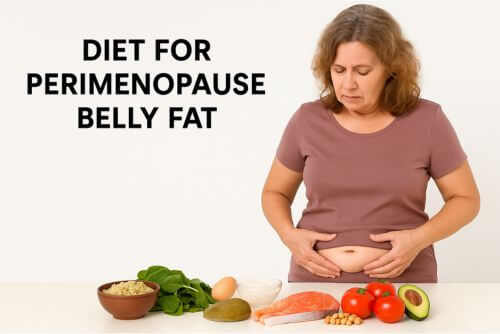
When hormones start swinging during perimenopause, food becomes more than fuel — it’s your body’s daily medicine. What you eat can either calm those hormonal shifts or make them louder. And the difference isn’t about calories — it’s about nutrients that talk to your metabolism.
The Mediterranean Advantage
One of the most promising eating styles for women in midlife is the Mediterranean diet — lots of vegetables, olive oil, fish, and whole grains. It’s not just about weight; it’s about balance.
An observational study from Nutrients followed peri- and post-menopausal women and found that sticking to a Mediterranean pattern slightly improved calcium intake and bone health — both tied to estrogen’s protective effects (Quattrini et al., 2021). Even a quick 20-minute nutrition chat helped participants make better food choices. Small shifts, big payoffs.
Why Protein and Fiber Matter More Now
During perimenopause, your body loses muscle faster — and that’s what keeps your metabolism humming. So, think of protein as non-negotiable. Eggs, tofu, chicken, lentils… pick what fits your style, but get some with every meal.
Fiber, meanwhile, keeps blood sugar steady and digestion happy — two things that help tame belly bloating and late-day cravings. Whole oats, berries, chia, and greens are easy wins.
Micronutrients That Keep Hormones Happy
Certain nutrients work behind the scenes:
- Vitamin D and calcium for bones and hormone support.
- B vitamins for energy and mood stability.
- Magnesium and omega-3s for stress and inflammation control.
These aren’t optional add-ons; they’re the building blocks your body leans on to smooth out hormonal noise.
Food Is the First Line of Defense
According to a 2023 meta-analysis in Menopause, even nutrition-based interventions — things like omega-3s or vitamin D combined with lifestyle changes — helped ease anxiety and mood symptoms in women during the menopausal transition (Grigolon et al., 2023). That means your grocery list can do more for your hormones than you might think.
Foods That Help Shrink Perimenopause Belly Fat
You don’t need a complicated plan or fancy supplements.
At this stage, your body simply wants the right kind of fuel — food that keeps hormones steady, energy up, and cravings quiet.
Let’s talk about what actually helps.
1. Lean Protein: Feed Your Muscles, Not the Fat
During perimenopause, muscle naturally starts to fade — and that’s what keeps your metabolism running fast.
So every meal is a chance to keep it strong.
Scrambled eggs for breakfast, grilled chicken or tofu for lunch, maybe fish or lentils for dinner — these aren’t “diet” foods, they’re your daily energy builders.
When you eat enough protein, you stay full longer and your body burns calories more efficiently.
2. Omega-3s: Calm the Chaos Inside
Hot flashes and stubborn belly fat often have one thing in common — inflammation.
Omega-3s help cool that down.
You’ll find them in salmon, sardines, chia seeds, and walnuts.
A Nutrients review found that omega-3s help regulate mood and metabolism in women during midlife (Erdélyi et al., 2023).
Think of them as your internal “reset” nutrient.
3. Fiber: Your Secret to Feeling Lighter
Fiber keeps digestion smooth, blood sugar steady, and that mid-afternoon crash away.
Add oats, beans, berries, or a big handful of greens — easy swaps that make a real difference.
When your gut is happy, hormones behave better too. It’s all connected.
4. Calcium and Vitamin D: For Bones — and Belly Balance
Strong bones, stable weight — both need calcium and vitamin D.
A study on the Mediterranean diet showed women who ate calcium-rich foods had stronger bones and steadier weight through menopause (Quattrini et al., 2021).
A little sunshine, yogurt, fortified plant milk, or leafy greens each day keeps that foundation solid.
5. Phytoestrogens: Nature’s Gentle Hormone Helpers
Soy, flaxseeds, and lentils contain plant compounds that act like a soft echo of estrogen.
They don’t replace your hormones — they just help smooth the edges of change.
Sprinkle flax in your oatmeal, sip a soy latte, or toss lentils into soup — easy ways to help your body find balance again.
6. Hydration: The Simplest Fat-Loss Tool You’re Forgetting
Midlife fatigue and bloating often hide behind dehydration.
Water supports metabolism and digestion — two things your body leans on now more than ever.
If plain water feels boring, go for peppermint or ginger tea. Your stomach (and skin) will thank you.
The Real Takeaway
You don’t have to eat perfectly — just consistently.
Build each meal around protein, fiber, and healthy fat, and give your body the calm, steady fuel it’s asking for.
When your hormones settle, the scale starts to follow.
Take Control of Your Menopause Journey
Struggling with weight gain, fatigue, or hormonal shifts? The 28-Day Menopause Reset Journal is your printable guide to feeling better fast—with daily wellness prompts, meal & mood tracking, and easy actions made for midlife women.
Start Your 28-Day Reset →Foods and Habits That Make Belly Fat Worse During Perimenopause
You’re not imagining it — the same foods and routines that once worked fine may now feel like they “stick” faster.
Your metabolism and hormones have changed, so the small things matter more than they used to.
Here’s what tends to quietly make that belly bloat or fat stick around.
Refined Sugars and Sweet Drinks
Those caramel lattes, pastries, and “healthy” juices hit differently now.
During perimenopause, your body becomes less sensitive to insulin — so extra sugar heads straight to storage around the belly.
You don’t have to quit everything sweet, but save it for when it’s really worth it. Think mindful treat, not daily habit.
Processed and Salty Foods
Packaged snacks, frozen meals, and deli meats often hide salt, preservatives, and trans fats that cause water retention and inflammation.
The result? You feel puffy, tired, and more bloated than you actually are.
If you crave something crunchy, try air-popped popcorn, roasted chickpeas, or a handful of nuts instead.
Alcohol and Nightly Drinks
A glass of wine after a long day feels like self-care, but alcohol slows fat burning and messes with sleep — two big reasons belly fat clings.
It also spikes cortisol, the stress hormone tied to midsection fat.
Stress and Poor Sleep
Your body can’t tell the difference between emotional stress and physical danger.
When stress stays high and sleep stays short, cortisol rises — and fat settles right where you don’t want it.
Try simple resets: evening walks, stretching before bed, or five slow breaths when things feel heavy. They really work.
Skipping Meals or Eating Too Little
Extreme dieting backfires fast.
When you skip meals or eat too little, your body slows metabolism and holds onto fat for survival — especially with low estrogen.
Instead, eat balanced meals with protein, fiber, and healthy fats every few hours.
It’s consistency, not restriction, that brings results now.
Sitting Too Much (Even if You “Stay Busy”)
Being on your feet or running errands isn’t the same as real movement.
Your muscles still need a reason to stay active — short strength sessions, walks after meals, even 10-minute resistance workouts help your body burn fat better.
Little movement moments throughout the day add up more than one big gym session a week.
The Takeaway
This stage of life isn’t about perfection.
It’s about learning what your body needs now.
A few swaps — less sugar, fewer processed foods, better sleep — and you’ll notice your energy return long before the belly starts to shrink.
How to Build a Perimenopause-Friendly Meal Plan (With a Sample Day)
Think of your meal plan as a daily rhythm — not a rigid diet.
Your goal isn’t to eat less, it’s to eat smarter for your hormones.
Here’s how to build balance into every plate.
Start Your Day With Protein and Healthy Fat
Morning blood sugar swings can make cravings hit early.
Begin with protein — eggs, Greek yogurt, or a smoothie with nut butter — plus a little healthy fat to keep you full.
That mix sets the tone for calmer hunger all day long.
Pair Protein, Fiber, and Fat in Every Meal
The trio of protein + fiber + healthy fat keeps your energy steady and your metabolism working for you.
Think: grilled salmon with quinoa and veggies, or a lentil salad with olive oil dressing.
It’s not complicated — it’s chemistry that favors balance.
Eat Often Enough (But Not Constantly)
Skipping meals might’ve worked in your twenties, but now it backfires.
Going too long without food spikes cortisol and slows metabolism.
Try three meals and one or two light snacks — steady fuel instead of feast-and-crash.
Hydrate Like It’s Your Job
Hormonal changes can make you retain water and feel dehydrated at the same time.
Drink plenty of water through the day; add lemon or mint if you need flavor.
Herbal teas like ginger or peppermint also soothe digestion and reduce bloating.
Plan Ahead So You Don’t Have to Think
Keep your fridge stocked with easy wins — pre-chopped veggies, boiled eggs, cooked grains, and a protein you can grab fast.
When healthy food is ready, you’re less likely to reach for whatever’s convenient.
Lifestyle Habits That Boost Results (Beyond the Plate)
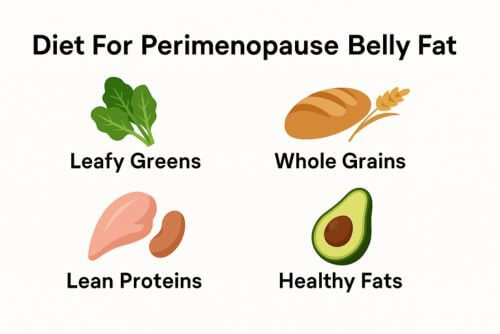
Food is your foundation — but what you do each day shapes how well your hormones respond.
When you move, rest, and handle stress differently, your body listens.
Here are the lifestyle habits that make your meal plan actually work.
Lift More, Sweat Less (But Smarter)
You don’t need hours of cardio — you need strength.
Lifting weights, using resistance bands, or even body-weight moves (like squats and push-ups) help you hold onto muscle, which keeps your metabolism alive.
Two or three short sessions a week can change everything: you’ll feel firmer, burn calories longer, and stabilize your blood sugar without punishing workouts.
Walk Off the Stress
Walking might sound simple, but it’s a hormonal reset button.
A 20-minute walk lowers cortisol, smooths blood sugar, and boosts mood.
Try walking after meals or when your mind feels heavy — it’s one of the easiest ways to keep belly fat from sticking.
Make Sleep Sacred
When you sleep poorly, hormones like leptin and ghrelin (the hunger controllers) go wild.
That’s why you crave sugar after sleepless nights.
Aim for 7–8 hours, and create a wind-down ritual: turn off screens, dim lights, maybe sip chamomile tea.
You’ll notice your cravings — and your waistline — start to calm down.
Stress Less, Breathe More
Perimenopause already brings its share of stress.
Add life, work, and family pressures — and cortisol skyrockets.
Mindfulness, journaling, yoga, or even quiet time alone can bring that stress hormone down.
The calmer you feel, the better your body burns fat and manages hunger.
Hydration and Posture Matter Too
Drinking enough water helps flush excess sodium and supports digestion, while good posture actually engages your core and helps you breathe better.
They’re small habits — but small is what works here.
Progress, Not Perfection
Don’t expect overnight changes.
Hormones shift slowly, and so will your body.
But when you move, rest, and eat in sync with what your metabolism needs now, you’ll feel lighter, clearer, and more at home in your body again.
7 Days Perimenopausal Diet Plan
Day 1
Breakfast: Scrambled eggs with spinach and avocado on whole grain toast
Snack: Greek yogurt with chia seeds and blueberries
Lunch: Grilled salmon salad with mixed greens, olive oil, and walnuts
Snack: Apple slices with almond butter
Dinner: Quinoa-stuffed bell peppers with black beans and roasted veggies
Day 2
Breakfast: Oatmeal with flaxseeds, cinnamon, and sliced banana
Snack: Hard-boiled egg and a handful of cherry tomatoes
Lunch: Turkey lettuce wraps with hummus and sliced cucumbers
Snack: A few walnuts and a piece of dark chocolate (70% or higher)
Dinner: Baked chicken breast with sweet potato and steamed broccoli
Day 3
Breakfast: Protein smoothie with almond milk, protein powder, berries, and spinach
Snack: Rice cake with natural peanut butter
Lunch: Lentil soup with a side of arugula salad and olive oil dressing
Snack: Carrot sticks with hummus
Dinner: Grilled shrimp with wild rice and roasted Brussels sprouts
Day 4
Breakfast: Cottage cheese with sliced peaches and sunflower seeds
Snack: Edamame with sea salt
Lunch: Quinoa and chickpea Buddha bowl with tahini dressing
Snack: Plain popcorn with olive oil drizzle
Dinner: Baked tofu stir-fry with broccoli, mushrooms, and brown rice
Day 5
Breakfast: Scrambled eggs with mushrooms and kale
Snack: A Handful of almonds and a small pear
Lunch: Tuna salad in lettuce cups with avocado slices
Snack: Celery sticks with sunflower seed butter
Dinner: Grilled chicken with cauliflower mash and sautéed green beans
Day 6
Breakfast: Smoothie bowl with Greek yogurt, berries, and granola
Snack: Pumpkin seeds and a clementine
Lunch: Turkey quinoa bowl with mixed veggies and olive oil drizzle
Snack: Cucumber slices with guacamole
Dinner: Baked cod with lentils and sautéed spinach
Day 7
Breakfast: Chia pudding with almond milk, berries, and cinnamon
Snack: Cottage cheese with pineapple chunks
Lunch: Mediterranean chickpea salad with feta and olive oil
Snack: Trail mix (unsweetened dried fruit + nuts)
Dinner: Zucchini noodles with turkey meatballs and marinara sauce
Take Control of Your Menopause Journey
Struggling with weight gain, fatigue, or hormonal shifts? The 28-Day Menopause Reset Journal is your printable guide to feeling better fast—with daily wellness prompts, meal & mood tracking, and easy actions made for midlife women.
Start Your 28-Day Reset →Supplements That Can Support Hormone Balance (and When to Use Them)
Let’s be honest — supplements can be confusing.
There’s always something new on the shelf promising better sleep, fewer cravings, or faster fat loss.
But here’s the truth: no capsule replaces a balanced meal or a good night’s rest.
Still, a few key nutrients can help your body handle the ups and downs of perimenopause a little more easily.
Magnesium: Your Body’s Chill Pill
If you’ve been feeling wired but tired, struggling to relax, or craving chocolate at night — that’s your body asking for magnesium.
It helps regulate cortisol (the stress hormone) and supports muscle recovery and sleep.
Try adding more spinach, almonds, or dark chocolate first, but if that’s not enough, a gentle magnesium glycinate supplement can help you unwind before bed.
Vitamin D: Sunshine in a Capsule
Low vitamin D is incredibly common after 40.
It’s linked to mood swings, fatigue, and even weight gain around the belly.
A quick blood test can tell you if you’re low, and if you are, a daily supplement — or more sunlight — can make a real difference in your energy and mood.
Omega-3s: Calm the Fire
Omega-3s from fish oil or algae do more than protect your heart — they can lift your mood and ease inflammation that worsens belly fat.
A Menopause meta-analysis found that omega-3s, especially when combined with healthy lifestyle changes, helped improve mood and anxiety during the transition (Grigolon et al., 2023).
Think of them as your body’s internal peacekeepers.
Calcium: Strong Bones, Steady Metabolism
As estrogen drops, bones lose density — but calcium helps keep them solid.
You can get it from yogurt, leafy greens, or fortified milks.
If your diet falls short, a moderate supplement can fill the gap.
Just don’t overdo it — your body absorbs calcium best in small amounts throughout the day.
Probiotics: Happy Gut, Balanced Hormones
Your gut health and hormones are best friends — when one is off, the other struggles.
Probiotics help smooth digestion, reduce bloating, and keep your metabolism steady.
You don’t have to rely on pills; fermented foods like kefir, sauerkraut, and miso work beautifully too.
When to Add Supplements (and When Not To)
If you’re already eating well, sleeping better, and staying active, supplements can be a gentle boost.
But if you’re still running on stress and skipping meals, start there first — that’s where the biggest change happens.
And of course, check with your doctor before adding anything new, especially if you take prescription meds or have thyroid issues.
Keep It Simple, Keep It Real
No supplement can “fix” perimenopause, but the right ones can help you feel steadier, sleep deeper, and stress less.
Start small, listen to your body, and focus on progress — not perfection.
Realistic Timeline: How Long It Takes to See Results
Here’s the part no one loves to hear — progress during perimenopause takes time.
Your hormones didn’t change overnight, and your results won’t either.
But if you’re consistent, small shifts start to add up faster than you think.
Weeks 1–2: Your Body Starts Adjusting
In the first couple of weeks, you may not notice big changes on the scale — and that’s okay.
Right now, your body’s learning to stabilize blood sugar, balance water retention, and lower inflammation.
You might sleep better or feel less bloated first — those are early wins that mean your system is responding.
Weeks 3–6: Energy Comes Back
Around the one-month mark, most women feel a noticeable lift.
Energy returns, mood swings settle, and digestion improves.
If you’ve been eating protein consistently, you’ll likely feel stronger and less “puffy.”
Clothes start fitting differently — not because of crash dieting, but because inflammation is calming down.
Weeks 7–10: Visible Changes Begin
By now, your metabolism is catching up to your new habits.
Belly fat may start to shrink, and you’ll notice smoother energy throughout the day.
Many women say they stop thinking about food all the time — hunger signals become steadier, and cravings fade.
That’s your hormones finding rhythm again.
After 3 Months: Long-Term Rebalancing
Real transformation — the kind that lasts — usually shows up around the 12-week point.
Your muscle tone improves, sleep deepens, and your mood feels more stable.
It’s not just about the number on the scale anymore; it’s about balance, control, and confidence coming back.
Why Patience Wins Every Time
Perimenopause isn’t a quick-fix season.
Your body’s rewriting its hormonal code, and that takes compassion and time.
If you stick to steady nutrition, movement, and rest — you will see change.
It’s not magic. It’s biology, finally working in your favor again.
Frequently Asked Questions
Can supplements help with perimenopause belly fat?
Yes, certain supplements like magnesium, vitamin D, omega-3s, and probiotics may support hormone balance and reduce inflammation, which can help with belly fat during perimenopause. Always consult a healthcare provider before starting new supplements.
How long does it take to see results from a diet during perimenopause?
Results vary, but with consistent healthy eating and lifestyle changes, many women begin to see improvements in energy, digestion, and body composition within 4 to 8 weeks.
Is intermittent fasting safe during perimenopause?
For many women, intermittent fasting can be effective, especially for reducing insulin resistance and belly fat. However, it’s important to listen to your body and avoid fasting too aggressively, as it can increase stress hormones in some cases.
Does alcohol contribute to perimenopausal belly fat?
Yes, alcohol can disrupt blood sugar levels, impair liver function, and increase abdominal fat storage, especially during hormonal fluctuations. Cutting back can significantly help.
Can strength training make a difference in belly fat?
Absolutely. Strength training builds lean muscle, boosts metabolism, and improves insulin sensitivity—all of which help reduce belly fat during perimenopause.
Is bloating the same as belly fat during perimenopause?
No, bloating is often temporary and related to digestion or hormones, while belly fat is a more persistent accumulation of visceral fat. Both can occur during perimenopause, but they have different causes and solutions.
Takeaway: Finding Balance, Not Perfection
Perimenopause doesn’t mean your body is broken — it’s just changing.
Your hormones are learning a new rhythm, and your job now is to help them find it.
The truth? You don’t need to fight your body. You just need to listen to it a little differently.
Feed Yourself, Don’t Punish Yourself
The old “eat less, move more” rule doesn’t work here.
Now it’s about eating smarter — meals with real food that keep you satisfied, not hungry.
Protein to hold muscle, healthy fats to calm hormones, and fiber to steady your mood and digestion.
These aren’t diet rules. They’re acts of care.
Progress Over Perfection
You’re going to have days when everything clicks — and days when it doesn’t.
That’s part of it.
What matters is that you show up again the next day.
A short walk, a glass of water, a full night’s sleep — those tiny choices build up faster than you think.
You’re Not Falling Behind
Every woman moves through this season at her own pace.
It’s not a race, and there’s no perfect plan.
Some weeks you’ll feel powerful; others, a little out of sync — and both are okay.
Your body still wants to work with you. You just have to give it the chance.
The Real Win
Losing belly fat is part of the goal, sure — but the bigger win is feeling like yourself again.
Waking up with more energy. Sleeping through the night. Looking in the mirror and seeing strength, not struggle.
That’s balance.
That’s what this new stage can bring when you stop chasing perfect and start building peace with your body.
References
- Dubnov, G., Brzezinski, A., & Berry, E. M. (2003). Weight control and the management of obesity after menopause: the role of physical activity. Maturitas. https://pubmed.ncbi.nlm.nih.gov/12590004/
- Simkin-Silverman, L. R., Wing, R. R., Boraz, M. A., & Kuller, L. H. (2003). Lifestyle intervention can prevent weight gain during menopause: results from a 5-year randomized clinical trial. Annals of Behavioral Medicine. https://pubmed.ncbi.nlm.nih.gov/14644697/
- Mangweth-Matzek, B., Schurr, T., Vedova, S., Dunst, V., Rupp, C. I., & Feil, K. (2025). Disordered eating and body dissatisfaction in women with non-natural menopause. Archives of Gynecology and Obstetrics. https://pubmed.ncbi.nlm.nih.gov/40261373/
- Santoro, N., Roeca, C., Peters, B. A., & Neal-Perry, G. (2020). The menopause transition: Signs, symptoms, and management options. The Journal of Clinical Endocrinology & Metabolism. https://pubmed.ncbi.nlm.nih.gov/33095879/
- Mastorakos, G., Valsamakis, G., Paltoglou, G., & Creatsas, G. (2010). Management of obesity in menopause: diet, exercise, pharmacotherapy and bariatric surgery. Maturitas. https://pubmed.ncbi.nlm.nih.gov/20044222/
- Quattrini, S., Pampaloni, B., Gronchi, G., Giusti, F., & Brandi, M. L. (2021). The Mediterranean Diet in osteoporosis prevention: An insight in a peri- and post-menopausal population. Nutrients, 13(2), 531. https://pubmed.ncbi.nlm.nih.gov/33561997/
- Erdélyi, A., Pálfi, E., Tűű, L., Nas, K., Szűcs, Z., Török, M., Jakab, A., & Várbíró, S. (2023). The importance of nutrition in menopause and perimenopause – A review. Nutrients, 16(1), 27. https://pubmed.ncbi.nlm.nih.gov/38201856/
- Lange-Collett, J. (2002). Promoting health among perimenopausal women through diet and exercise. Journal of the American Academy of Nurse Practitioners, 14(4), 172–177. https://pubmed.ncbi.nlm.nih.gov/12001748/
- Grigolon, R. B., Ceolin, G., Deng, Y., Bambokian, A., Koning, E., Fabe, J., Lima, M., Gerchman, F., Soares, C. N., Brietzke, E., & Gomes, F. A. (2023). Effects of nutritional interventions on the severity of depressive and anxiety symptoms of women in the menopausal transition and menopause: A systematic review and meta-analysis. Menopause, 30(1), 95–107. https://pubmed.ncbi.nlm.nih.gov/36576445/
- Salinero, A. E., Venkataganesh, H., Abi-Ghanem, C., Riccio, D., Kelly, R. D., Gannon, O. J., Sura, A., Brooks, H. L., Zuloaga, D. G., & Zuloaga, K. L. (2024). Effects of high-fat diet on metabolic health vary by age of menopause onset. International Journal of Obesity, 48(12), 1839–1843. https://pubmed.ncbi.nlm.nih.gov/39152337/
