
If you’re struggling with constipation, you’re not alone. That heavy, uncomfortable feeling… the bloating, the irregular bowel movements, and the constant frustration — it can quietly affect your energy, your focus, and even your confidence throughout the day.
Many people try quick fixes, but they often miss the root cause.
As a clinical nutritionist, I’ve worked with many individuals dealing with digestive issues, and one of the most common patterns I see is simple: low or poorly balanced fiber intake.
That’s why focusing on the right high fiber foods for constipation can make a real difference — not just in relieving symptoms, but in improving your digestion long-term.
Not all fiber works the same way, and choosing the right foods can sometimes lead to noticeable improvement within just a few days.
In this guide, I’ll walk you through:
- The most effective high fiber foods for relieving constipation
- A clear, easy-to-follow fiber chart
- Practical tips to support your gut naturally
Let’s help your digestive system get back on track — in a way that actually works.rks.
What Causes Constipation?
Constipation can happen for several reasons, and in many cases, it’s not just one single cause — but a combination of daily habits.
The most common cause is not getting enough fiber, which slows down bowel movement and makes stool harder to pass. But that’s not the only factor.
Other common causes include:
- Low water intake, which leads to dry, hard stools
- Lack of physical activity, slowing down gut movement
- High intake of processed or low-fiber foods
- Ignoring the urge to go, which disrupts normal bowel patterns
- Stress and routine changes, which can affect digestion
- Certain medications or medical conditions
As a clinical nutritionist, I often see people focus on quick relief instead of addressing these root causes — which is why constipation tends to come back.
👉 Liquid Diet for Constipation: Quick Relief Plan & Safe Options
Why Fiber Is Essential for Relieving Constipation
Fiber plays a key role in keeping your digestive system working smoothly.
Unlike other nutrients, fiber isn’t fully digested. Instead, it moves through your gut and helps regulate bowel movements in two important ways:
- Adds bulk to stool, making it easier to pass
- Draws water into the stool, softening it and preventing dryness
There are two main types of fiber, and both are important:
- Soluble fiber (found in oats, chia seeds, and fruits) helps soften stool
- Insoluble fiber (found in whole grains and vegetables) helps move stool through the intestines
When your diet lacks fiber, everything slows down — which often leads to bloating, discomfort, and irregular bowel movements.
From my experience working with clients, simply improving fiber intake — the right way — can make a noticeable difference in digestion within a short time.
How Much Fiber Do You Need Per Day?
Getting the right amount of fiber is key — not too little, but also not suddenly too much.
In general, recommended daily fiber intake is:
- Women: about 25 grams per day
- Men: about 30–38 grams per day
However, most people don’t even reach half of this amount, which is one of the main reasons constipation is so common.
As a clinical nutritionist, I usually advise increasing fiber gradually, especially if your current intake is low. Suddenly adding large amounts of fiber can lead to bloating or discomfort instead of relief.
A simple, realistic approach:
- Start by adding 5–10 grams per day
- Combine different fiber sources (fruits, vegetables, whole grains, seeds)
- Always increase your water intake alongside fiber
Fiber works best when it’s consistent and balanced — not when it’s rushed.
High Fiber Foods for Constipation (Quick Chart)
Before we get into the details, it helps to have a quick, practical reference you can actually use in your daily routine.
Not all high-fiber foods work the same way — some help soften stool, others add bulk, and a few (like prunes and chia seeds) can support faster relief. Knowing which foods to choose — and why — can make a real difference.
As a clinical nutritionist, I always recommend focusing on simple, effective options that you can easily add to your meals, rather than overcomplicating your diet.
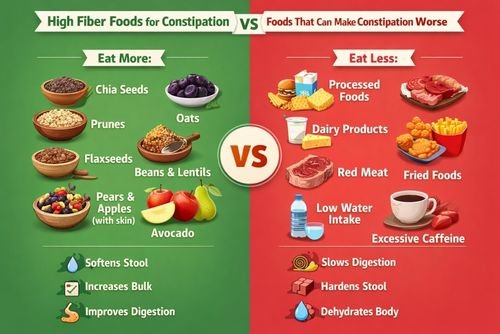
Here’s a quick chart of some of the best high fiber foods for constipation, along with how they help your digestion.
| Food | Fiber (per 100g) | How It Helps Constipation |
|---|---|---|
| Chia Seeds | 34g | Absorbs water, softens stool, promotes easy passage |
| Flaxseeds | 27g | Adds bulk and improves bowel movement |
| Lentils | 8g | Supports regularity and gut movement |
| Oats | 10g | Rich in soluble fiber, helps soften stool |
| Beans (Kidney/Black) | 15g | Adds bulk and improves stool consistency |
| Avocado | 7g | Combines fiber with healthy fats for smoother digestion |
| Apples (with skin) | 2.4g | Contains pectin, helps regulate bowel movement |
| Pears (with skin) | 3.1g | High in water + fiber, supports stool softness |
| Broccoli | 2.6g | Adds bulk and supports gut health |
| Prunes | 7g | Natural laxative effect, helps stimulate bowel movement |
💡 Tip: For best results, combine these foods with enough water — fiber without hydration can actually worsen constipation.
Best High Fiber Foods That Work Fast
When you’re constipated, you’re not just looking for “healthy” foods — you want something that actually works.
The key is choosing foods that don’t just contain fiber, but also help soften stool, stimulate bowel movement, and support gut motility. From a clinical nutrition perspective, combining different types of fiber (soluble + insoluble) is what delivers the best and fastest results.
Here are some of the most effective high fiber foods I recommend for quicker relief:
Chia Seeds
Chia seeds are extremely rich in soluble fiber, which absorbs water and forms a gel-like consistency in the gut. This helps soften stool and make it easier to pass, especially if constipation is due to dryness.
- Fiber: ~34g per 100g
- Best use: Soak 1–2 tablespoons in water, milk, or yogurt for at least 20–30 minutes
- Why they work fast: They increase stool moisture and volume at the same time
Prunes
Prunes are one of the few foods that have both fiber and a natural laxative effect due to sorbitol. They can help stimulate bowel movement rather than just improving stool consistency.
- Fiber: ~7g per 100g
- Best use: 3–5 prunes daily or as juice
- Why they work fast: They actively promote intestinal movement
Oats
Oats are rich in beta-glucan (soluble fiber), which helps draw water into the stool and improve its softness. They’re gentle and ideal for daily use without causing irritation.
- Fiber: ~10g per 100g
- Best use: Warm oatmeal with fruits or seeds
- Why they work: They regulate bowel movement gradually and consistently
Flaxseeds
Flaxseeds contain a mix of soluble and insoluble fiber, which helps with both stool bulk and smooth passage. They also support gut microbiota.
- Fiber: ~27g per 100g
- Best use: 1 tablespoon ground (not whole) added to meals
- Why they work: Dual-action effect (bulk + lubrication)
Lentils and Beans
Legumes are high in insoluble fiber, which adds bulk to stool and helps push it through the intestines more efficiently.
- Fiber: ~8–15g per 100g
- Best use: Soups, salads, or side dishes
- Why they work: Increase stool mass and trigger bowel movement
If you prefer something warm and easy to digest, you can also try these best soups for constipation to support bowel movement and improve gut comfort.
Pears and Apples (with skin)
These fruits provide fiber along with natural water content and pectin, which helps regulate digestion and soften stool.
- Fiber: ~2–3g per 100g
- Best use: Eat whole with skin
- Why they work: Combine hydration + fiber for smoother digestion
Avocado
Avocado offers a balanced mix of fiber and healthy fats, which can help reduce friction in the digestive tract and support easier stool passage.
- Fiber: ~7g per 100g
- Best use: Add to salads, toast, or meals
- Why they work: Fiber + fat combination supports gut movement
💡 Clinical Tip:
For faster results, don’t rely on just one food. Combine:
- A soluble fiber source (chia, oats)
- With an insoluble source (beans, vegetables)
- Plus adequate hydration
This combination is what typically leads to noticeable improvement within 24–72 hours for many people.
Consistency matters more than intensity — small, regular changes are what keep your digestion working smoothly.
Soluble vs Insoluble Fiber: What Works Best?
Not all fiber works the same way — and understanding the difference can help you get better, faster results when dealing with constipation.
Soluble Fiber
Soluble fiber dissolves in water and forms a gel-like substance in the gut. This helps soften stool and makes it easier to pass.
- Found in: oats, chia seeds, flaxseeds, apples, pears
- Best for: hard, dry stool and gentle relief
- Key benefit: improves stool consistency and hydration
Insoluble Fiber
Insoluble fiber does not dissolve in water. Instead, it adds bulk to the stool and helps move it through the intestines more quickly.
- Found in: whole grains, vegetables, beans, bran
- Best for: slow digestion and irregular bowel movement
- Key benefit: stimulates gut movement and regularity
So, What Works Best?
The most effective approach is not choosing one over the other — but combining both.
As a clinical nutritionist, I usually recommend:
- Soluble fiber to soften the stool
- Insoluble fiber to move it along
This combination supports both comfort and regularity, which is exactly what you need to relieve constipation effectively.
💡 Simple rule:
If your stool is hard → focus more on soluble fiber
If your digestion is slow → increase insoluble fiber
Balanced intake is what delivers the best long-term results.
How to Add More Fiber to Your Diet Safely
Increasing fiber can significantly improve constipation — but doing it too quickly can actually make symptoms worse.
As a clinical nutritionist, I always recommend a gradual and balanced approach to avoid bloating, gas, or discomfort.
Start Slowly
If your current fiber intake is low, avoid sudden changes.
- Add 5–10 grams of fiber per day
- Give your body time to adjust over a few days
Increase Water Intake
Fiber needs water to work properly. Without enough fluids, it can lead to harder stool and more discomfort.
- Aim for at least 1.5–2 liters of water daily
- Increase fluids as you increase fiber
Mix Different Fiber Sources
Don’t rely on one food only. Combine:
- Soluble fiber (oats, chia, fruits)
- Insoluble fiber (vegetables, whole grains, legumes)
This balance helps both soften and move stool effectively.
Add Fiber to Your Routine Meals
Instead of making drastic diet changes, upgrade what you already eat:
- Add chia or flaxseeds to yogurt or oatmeal
- Include vegetables in lunch and dinner
- Choose whole grains instead of refined ones
Pay Attention to Your Body
Everyone responds differently to fiber.
- If you feel bloated, slow down the increase
- Adjust types of fiber based on your symptoms
💡 Clinical Tip:
Consistency matters more than quantity. A steady, moderate increase in fiber — combined with hydration — is what leads to lasting relief from constipation.
Foods That Can Make Constipation Worse
While adding fiber is important, it’s equally important to identify foods that may be slowing down your digestion.
From a clinical nutrition perspective, many people unknowingly keep eating foods that counteract the benefits of fiber, making constipation persist.
Here are the most common ones to watch out for:
Processed and Refined Foods
Highly processed foods are typically low in fiber and high in fat or additives, which can slow digestion.
- Examples: white bread, pastries, fast food, packaged snacks
- Why they worsen constipation: they lack the bulk needed for proper bowel movement
Dairy Products (in Some People)
For some individuals, especially those sensitive to lactose, dairy can contribute to sluggish digestion.
- Examples: cheese, whole milk, ice cream
- Why they worsen constipation: may slow gut movement in sensitive individuals
Red Meat
Red meat is low in fiber and can be harder to digest, especially when consumed in large amounts.
- Why it worsens constipation: replaces fiber-rich foods and takes longer to move through the gut
Fried and High-Fat Foods
Foods high in fat can slow gastric emptying, which may delay bowel movements.
- Examples: fried foods, heavy meals, fast food
- Why they worsen constipation: slow down overall digestion
Low Water Intake
While not a food, it’s one of the biggest contributors to constipation.
- Why it matters: without enough fluids, fiber cannot soften stool properly
Excessive Caffeine (for Some People)
Although caffeine can stimulate bowel movement in some cases, too much can lead to dehydration, which worsens constipation.
💡 Clinical Tip:
You don’t need to eliminate these foods completely, but try to:
- Balance them with fiber-rich options
- Maintain adequate hydration
- Focus on overall dietary patterns rather than single foods
Small adjustments here can make a noticeable difference in how your digestive system responds.
When to See a Doctor
Occasional constipation is common and often improves with simple dietary changes. However, in some cases, it may be a sign of an underlying issue that يحتاج تقييم طبي.
As a clinical nutritionist, I always advise not to ignore symptoms that persist or worsen over time.
You should consider seeing a doctor if you experience:
- Constipation lasting more than 2–3 weeks despite dietary changes
- Severe abdominal pain or persistent bloating
- Blood in stool or black, tarry stools
- Unexplained weight loss
- A sudden change in bowel habits without a clear reason
- Feeling like you cannot completely empty your bowels
These signs may indicate conditions that go beyond simple dietary causes and require proper medical evaluation.
Important:
If constipation is frequent or recurring, it’s not just about short-term relief — it’s about identifying and addressing the underlying cause safely.
Early attention can help prevent complications and ensure your digestive health stays on track.
Frequently Asked Questions
How long does fiber take to relieve constipation?
In many cases, increasing fiber intake can start improving bowel movements within 24 to 72 hours. However, this depends on your current diet, hydration, and overall gut health.
What is the best fiber for constipation?
A combination works best.
- Soluble fiber helps soften stool (chia seeds, oats)
- Insoluble fiber helps move stool (vegetables, whole grains)
Using both together gives the most effective results.
Can too much fiber make constipation worse?
Yes. Increasing fiber too quickly without enough water can lead to bloating, gas, and even harder stool. That’s why gradual increase and hydration are essential.
Is fiber good for daily use?
Absolutely. Fiber should be part of your daily routine, not just a temporary fix. Consistent intake helps maintain regular bowel movements and overall gut health.
What should I drink with fiber?
Water is the most important. Aim for at least 1.5–2 liters daily, especially when increasing fiber intake.
Conclusion
Constipation can be uncomfortable, frustrating, and sometimes even exhausting — but in many cases, it can be improved with the right approach.
Focusing on high fiber foods, proper hydration, and balanced daily habits can make a real difference in how your digestive system functions.
As a clinical nutritionist, I’ve seen how small, consistent changes — like choosing the right types of fiber and introducing them gradually — can lead to noticeable improvements in a short time.
Start simple, stay consistent, and listen to your body. Your gut will respond better than you might expect.
