

Feeling suddenly bloated can be frustrating — especially when it happens right before a meeting, a night out, or after a quick meal you didn’t think would cause any trouble. The good news is that How to get unbloated in 5 minutes is not just a catchy promise for many people. Research and clinical sources consistently show that a large percentage of bloating episodes are caused by temporary factors like muscle tension, posture, stress, and swallowed air — not always digestion or constipation. In fact, digestive health experts note that short-term bloating can appear within minutes and ease just as quickly when the body relaxes.
This article focuses on fast, safe, body-based techniques that can help reduce abdominal pressure and discomfort in real-life situations, using approaches commonly recommended by gastrointestinal health resources and wellness clinicians. No supplements, no drastic steps — just practical methods you can use right now.
References commonly cited in digestive health guidance include peer-reviewed gastroenterology journals and guidance from the National Health Service (NHS).
Why You Can Feel Bloated So Quickly

If your stomach suddenly feels tight, swollen, or uncomfortable, you’re not imagining it — bloating can happen much faster than most people realize. In many cases, it has little to do with food moving through your system and more to do with how your body reacts in the moment. Factors like stress, posture, muscle tension, and even breathing patterns can trigger visible bloating within minutes, especially during busy or high-pressure situations.
Below are some of the most common reasons bloating can show up so quickly.
Stress Can Trigger Instant Abdominal Tightness
When you’re stressed or anxious, your body shifts into a “fight or flight” response. This often causes the muscles in your abdomen and diaphragm to tighten without you noticing. That tension can trap air and increase pressure in the belly, making it feel firm or distended very quickly.
Peer-reviewed research has shown that stress-related nervous system activity can alter gut sensation and muscle tone in a short amount of time, which explains why bloating often appears during meetings, social events, or emotional moments.
Shallow Breathing Can Trap Air in Your Abdomen
Many people breathe shallowly into their chest, especially when sitting for long periods or feeling rushed. This limits diaphragm movement and prevents the abdomen from fully relaxing.
When the diaphragm stays tight, pressure builds in the abdominal cavity. That pressure can push the belly outward, creating a bloated appearance — even if digestion itself is normal. Slow, deeper breathing can reverse this effect surprisingly fast.
Poor Posture Compresses the Abdomen
Slouching at a desk, leaning forward while scrolling on your phone, or sitting hunched after a meal can compress your abdominal organs. This compression limits space inside the abdomen and makes normal air feel uncomfortable or “stuck.”
Studies on posture and intra-abdominal pressure suggest that even short periods of slouched sitting can increase abdominal discomfort and the sensation of bloating, especially in people who sit most of the day.
Swallowing Air Happens More Than You Think
Bloating can also come from aerophagia, which is the unintentional swallowing of air. This can happen when you eat quickly, talk while eating, chew gum, drink through a straw, or even sigh frequently under stress.
That extra air doesn’t always move through the digestive tract right away. Instead, it can collect temporarily, causing sudden pressure and bloating that feels worse than it actually is.
Muscle Tension Can Make Bloating Look Worse Than It Is
Sometimes the bloated feeling isn’t about what’s inside your stomach — it’s about the muscles around it. Tight core muscles or unconsciously “holding in” your stomach can push pressure downward and outward.
Clinical observations have shown that relaxing the abdominal wall alone can reduce the appearance and discomfort of bloating, even without any change in digestion.
Can You Really Get Unbloated in 5 Minutes?
Yes — in many cases, you really can get unbloated in 5 minutes, especially when bloating is caused by temporary factors like muscle tension, posture, stress, or trapped air rather than slow digestion or constipation.
Bloating doesn’t always mean your stomach is full of food or waste. Health research and clinical observations show that a noticeable portion of bloating episodes are related to how the nervous system and abdominal muscles respond in the moment, which means relief can happen quickly when those triggers are addressed.
When Fast Unbloating Is Most Likely to Work
Quick relief is more realistic if your bloating:
- Came on suddenly
- Feels tight or pressurized rather than heavy
- Appeared during stress, sitting, or after eating quickly
- Changes when you move, stretch, or breathe deeply
In these situations, relaxing the diaphragm, improving posture, and releasing abdominal tension can reduce pressure within minutes.
When 5 Minutes May Not Be Enough
While fast techniques can help many people, they won’t work for every cause of bloating. You’re less likely to feel immediate relief if bloating is related to:
- Constipation or stool buildup
- Food intolerances or sensitivities
- Hormonal water retention
- Chronic digestive conditions
In these cases, bloating tends to improve gradually rather than instantly and often requires different strategies.
Why Quick Relief Is Possible at All
Medical literature explains that the abdomen is highly responsive to changes in muscle tone and breathing. When the body shifts out of a stress response and the abdominal wall relaxes, pressure inside the belly can decrease rapidly — sometimes within a few minutes — making the stomach feel softer and less distended.
This is why techniques that focus on relaxation and physical release, rather than digestion itself, can provide fast results for the right type of bloating.
The 5-Minute Unbloating Reset
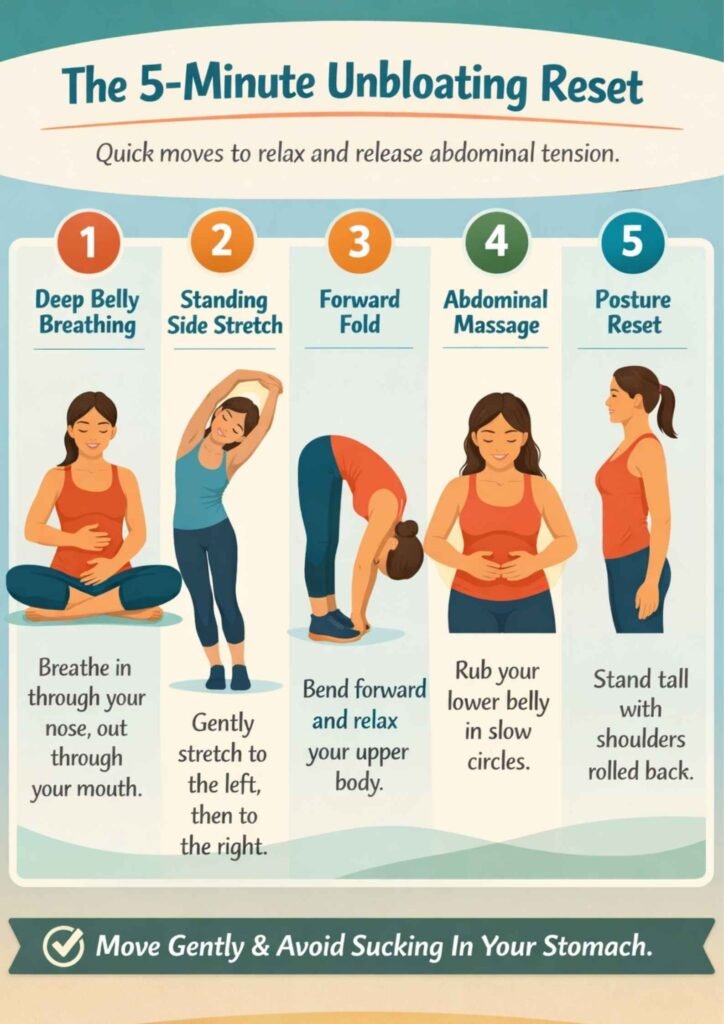
This quick reset focuses on relaxing abdominal tension, improving breathing, and reducing pressure — not digestion. Set a timer if it helps, and move gently. None of these steps should cause pain.
Minute 1: Deep Belly Breathing to Release Pressure
Sit or stand comfortably and place one hand on your belly. Breathe in slowly through your nose, letting your abdomen rise. Exhale through your mouth, allowing your stomach to soften rather than pulling it in.
Slow, diaphragmatic breathing signals the nervous system to relax, which can quickly reduce abdominal tightness and pressure linked to stress-related bloating.
Minute 2: Standing Side Stretch to Create Space
Stand tall and raise both arms overhead. Gently lean to one side while keeping your hips grounded. Hold for several breaths, then switch sides.
This movement helps open the rib cage and abdomen, creating more space inside the belly and allowing trapped air or pressure to redistribute.
Minute 3: Gentle Forward Fold for Abdominal Release
With soft knees, hinge forward from the hips and let your upper body hang comfortably. Rest your hands on your thighs or shins if needed.
This position encourages the abdominal muscles to relax instead of staying contracted, which can immediately reduce the feeling of fullness or tightness.
Minute 4: Abdominal Muscle Relaxation
Place your hands over your lower belly and gently move them in slow, comforting motions. Focus on letting the area soften rather than pressing deeply.
Many people unknowingly tense their core throughout the day. Simply releasing that tension can make bloating feel noticeably better within moments.
Minute 5: Posture Reset to Prevent Re-Bloating
Stand upright, roll your shoulders back, and imagine lifting your chest slightly while keeping your stomach relaxed. Avoid sucking in your belly.
Good posture reduces abdominal compression and helps prevent pressure from building again after you finish the reset.
What Not to Do When You Feel Bloated Right Now
When bloating hits, it’s easy to react in ways that actually make it worse. Avoiding these common habits can help your body settle faster.
Don’t Chug Water
While hydration matters overall, drinking large amounts of water all at once can increase stomach pressure when you’re already bloated. Small sips are gentler on the abdomen.
Don’t Lie Flat Immediately
Lying flat can trap pressure in the abdomen and make bloating feel more noticeable. If you need to rest, choose an upright or gently supported position instead.
Don’t Suck In Your Stomach
Pulling your stomach in tightens the abdominal wall and increases internal pressure. This often makes bloating feel worse, even if it looks flatter for a moment.
Don’t Panic or Overcorrect
Bloating can feel uncomfortable, but it’s often temporary. Stressing about it can trigger more muscle tension and prolong the discomfort.
Don’t Add More Food or Supplements Right Away
If bloating appeared suddenly, adding supplements, snacks, or “quick fixes” can overload your system. Give your body a few minutes to settle first.
Situations Where These 5-Minute Fixes Work Best
The 5-minute unbloating techniques work best when bloating is functional and temporary, rather than related to digestion or bowel movements. If you recognize yourself in any of the situations below, quick relief is much more likely.
After Eating Quickly or on the Go
When meals are rushed, it’s common to swallow extra air and tense the abdomen without realizing it. This can lead to sudden bloating even if the food itself isn’t a problem. Relaxing the diaphragm and releasing abdominal tension can ease this type of bloating within minutes.
During Stressful or High-Pressure Moments
Bloating often shows up during meetings, social events, travel, or emotionally charged situations. Stress activates the nervous system and tightens the muscles around the stomach, which can make your belly feel firm or swollen very quickly.
After Sitting for Long Periods
Long hours at a desk or in a car can compress the abdomen and limit normal breathing. Standing up, stretching, and resetting posture can reduce pressure and discomfort surprisingly fast.
Around Hormonal Shifts
Some people notice bloating around hormonal changes, such as during PMS. While fluid retention may play a role, muscle tension and posture often make bloating feel worse. Gentle movement and relaxation can provide noticeable short-term relief.
When Bloating Feels Tight, Not Heavy
If your stomach feels tight, tense, or pressurized rather than full or sluggish, these techniques are more likely to help. This type of bloating often responds well to breathing and physical release.
When These Techniques May Not Be Enough
While these 5-minute fixes are helpful in many situations, they’re not meant to solve every cause of bloating. Being clear about their limits helps you choose the right approach and prevents frustration.
Bloating Linked to Constipation
If bloating is caused by stool buildup or infrequent bowel movements, muscle relaxation alone usually won’t provide lasting relief. In those cases, digestion-focused strategies are more appropriate.
Reactions to Specific Foods
Bloating caused by food intolerances or sensitivities tends to improve gradually, not instantly. Avoiding trigger foods and supporting digestion over time is more effective than quick physical techniques.
Chronic or Persistent Digestive Conditions
Conditions like IBS, SIBO, or other gastrointestinal disorders often require personalized management. While breathing and posture may help with comfort, they won’t address the underlying cause.
Severe Pain, Swelling, or Sudden Changes
If bloating is severe, painful, or accompanied by other concerning symptoms, it’s important to seek medical advice rather than relying on quick fixes.
How to Prevent Getting Bloated Again Later in the Day
While these 5-minute fixes are helpful in many situations, they’re not meant to solve every cause of bloating. Being clear about their limits helps you choose the right approach and prevents frustration.
Bloating Linked to Constipation
If bloating is caused by stool buildup or infrequent bowel movements, muscle relaxation alone usually won’t provide lasting relief. In those cases, digestion-focused strategies are more appropriate.
Reactions to Specific Foods
Bloating caused by food intolerances or sensitivities tends to improve gradually, not instantly. Avoiding trigger foods and supporting digestion over time is more effective than quick physical techniques.
Chronic or Persistent Digestive Conditions
Conditions like IBS, SIBO, or other gastrointestinal disorders often require personalized management. While breathing and posture may help with comfort, they won’t address the underlying cause.
Severe Pain, Swelling, or Sudden Changes
If bloating is severe, painful, or accompanied by other concerning symptoms, it’s important to seek medical advice rather than relying on quick fixes.
Frequently Asked Questions About Getting Unbloated Fast
Does bloating always mean something is wrong with digestion?
No. Bloating doesn’t always come from digestion or bowel issues. Many people experience bloating due to muscle tension, posture, stress, or swallowed air, even when their digestive system is working normally. That’s why bloating can appear suddenly and fade quickly in some situations.
Why does my stomach look bloated even if I haven’t eaten much?
Your stomach can look bloated because of increased abdominal pressure, not food volume. Tight core muscles, shallow breathing, or sitting in a compressed position can push the abdomen outward, making it appear swollen even on an empty or lightly filled stomach.
Can drinking water make bloating feel worse?
Yes, in some cases. Drinking large amounts of water quickly can temporarily increase stomach pressure when you’re already bloated. Small, steady sips are usually better tolerated until the bloating settles.
Why does bloating feel worse when I’m anxious or nervous?
Anxiety activates the nervous system, which can tighten the diaphragm and abdominal muscles. This tension traps air and increases pressure inside the abdomen, making bloating feel more intense even without digestive changes.
Is it normal for bloating to change throughout the day?
Yes. Bloating often fluctuates based on activity level, posture, stress, and breathing patterns. Many people feel flatter in the morning and more bloated later in the day due to prolonged sitting or muscle tension rather than food alone.
Why does my stomach feel softer after stretching or breathing exercises?
Stretching and deep breathing help relax the abdominal wall and diaphragm. When these muscles soften, internal pressure decreases, which can make the stomach feel less tight and more comfortable almost immediately.
Can tight clothing make bloating worse?
Yes. Tight waistbands or restrictive clothing can compress the abdomen and limit natural expansion and movement. This can intensify the sensation of bloating, especially when sitting for long periods.
When should bloating be checked by a healthcare professional?
You should seek medical advice if bloating is persistent, painful, rapidly worsening, or accompanied by symptoms like unexplained weight loss, severe abdominal pain, or changes in bowel habits. These signs may indicate an underlying condition that needs evaluation.
Final Thoughts
Bloating can feel uncomfortable and inconvenient, especially when it shows up without warning. The key thing to remember is that not all bloating is caused by digestion or food. In many everyday situations, it’s the result of temporary factors like muscle tension, stress, posture, or shallow breathing — all of which can change quickly.
Understanding how to get unbloated in 5 minutes gives you practical tools you can use in real life, whether you’re at work, traveling, or getting ready for an event. While these techniques aren’t meant to replace medical care or address chronic digestive issues, they can offer fast, gentle relief when bloating is situational and short-term.
Listening to your body, staying aware of your posture and breathing, and knowing when quick fixes are appropriate can make bloating feel far more manageable. And when bloating becomes frequent or persistent, it’s always wise to explore deeper causes with the help of a healthcare professional.
References
- Functional Gastrointestinal Disorders: History, Pathophysiology, Clinical Features, and Rome IV
https://doi.org/10.1053/j.gastro.2016.02.032 - Biopsychosocial Aspects of Functional Gastrointestinal Disorders
https://doi.org/10.1053/j.gastro.2016.02.027 - The Role of Diaphragmatic Breathing in Gastrointestinal Disorders
https://doi.org/10.1097/MOG.0000000000000485 - Postural Control of the Trunk Muscles in Health and Disease
https://doi.org/10.1016/j.math.2010.12.002 - Physiologic and Pathologic Belching
https://doi.org/10.1016/j.cgh.2007.03.010 - Abdominal Bloating
https://doi.org/10.1053/j.gastro.2005.06.062 - Bloating
https://www.nhs.uk/conditions/bloating/
