
You ever wake up one day and think, wait… when did my belly change? Maybe your jeans feel tighter, or that little curve around your waist won’t go away no matter what you eat or how much you walk. That’s perimenopause creeping in — the weird middle zone before menopause actually happens.
Your hormones start doing their own thing — estrogen drops, stress goes up, and suddenly your body doesn’t play by the same rules. You’re not crazy, and you’re definitely not doing anything wrong. It’s just biology being annoying.
The thing is, you don’t have to sit back and watch it happen. Once you get what’s going on inside your body, you can tweak your food, your habits, even how you rest — and the changes do show. Belly fat doesn’t have to be your new normal.
Let’s walk through what’s really happening first — and what you can start doing to take some of that power back.
Why Belly Fat Changes During Perimenopause
Perimenopause is the period leading up to menopause when hormone levels fluctuate and eventually decline. One of the main hormones involved is estrogen. As estrogen decreases:
- Metabolism shifts – Your body becomes slightly more insulin-resistant, meaning sugar from food is more likely to be stored as fat rather than burned for energy.
- Muscle mass gradually declines – Muscle burns calories at rest. Losing muscle slows your metabolism and makes it harder to lose fat.
- Fat storage patterns change – Your body tends to store more fat around the belly, including visceral fat that surrounds your organs. This isn’t just cosmetic; visceral fat is linked to inflammation and higher risk of metabolic issues.
Other factors can compound this: stress, poor sleep, inconsistent meal timing, and sedentary lifestyle habits. Even if your diet hasn’t changed, these shifts can make your body feel heavier and harder to manage.
Understanding How Diet Affects Belly Fat
When considering the best diet for perimenopause belly fat, it’s important to know what actually drives fat accumulation:
- Insulin resistance – Less estrogen can make your body less responsive to insulin, which is the hormone that moves sugar from your blood into cells for energy. Insulin spikes tell your body to store fat, especially in the belly.
- Muscle loss – Less muscle means fewer calories burned at rest. Even the same activity level may burn fewer calories than before.
- Calorie misestimation – Many people continue eating as they did in their 30s without adjusting for lower metabolism. Over time, this small difference adds up to weight gain.
The practical takeaway: a perimenopause diet should focus on stabilizing blood sugar, preserving muscle, and reducing belly fat in a sustainable way.
Principles of a Practical Diet
You don’t need fancy powders, exotic foods, or expensive meal kits. You need a diet that:
- Supports muscle maintenance – Prioritize protein.
- Controls blood sugar – Moderate carbs, emphasize fiber-rich foods.
- Includes healthy fats – Supports hormones and satiety.
- Is realistic and sustainable – Fits your schedule, cooking skills, and budget.
Protein First
Protein is the single most important nutrient for preserving lean mass, which is crucial for keeping metabolism from slowing. You don’t need supplements or fancy powders:
- Eggs
- Chicken thighs or breasts
- Canned tuna or sardines
- Lentils, beans, chickpeas
- Greek yogurt or cottage cheese
Aim for at least 20–30 grams of protein per meal. For example, a breakfast of two eggs and a small Greek yogurt plus some nuts covers this easily.
Practical tip: Batch-cook chicken or beans once a week. That way, protein is ready to add to salads, wraps, or quick stir-fries.
Carbs Are Not the Enemy
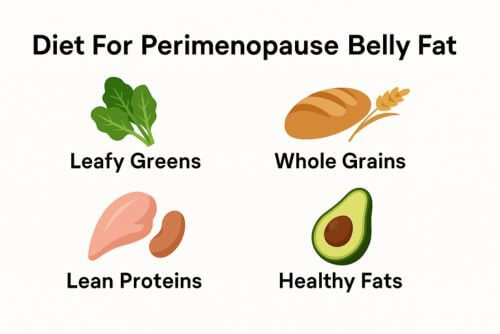
Many women think they should cut all carbs to lose belly fat. This is a mistake. What matters is type and timing:
- Favor whole grains: oats, brown rice, quinoa, barley.
- Include legumes: lentils, beans, chickpeas.
- Fill half your plate with vegetables for fiber and micronutrients.
- Avoid or minimize refined carbs: pastries, white bread, sugary drinks.
Whole carbs release sugar slowly, helping control insulin levels and preventing energy crashes.
Example: Swap white rice for a mix of brown rice and lentils. You’ll feel full, stabilize blood sugar, and save money.
Food choices can also affect how heavy, bloated, or uncomfortable your body feels, which is why this guide on foods to avoid for menopause belly fat may be helpful.
Healthy Fats Matter
Fat is often feared, but the right fats can help you feel satisfied and support hormone balance:
- Avocados
- Olive oil
- Nuts and seeds
- Fatty fish (like sardines, mackerel)
Even small amounts, such as a teaspoon of olive oil on a salad or a tablespoon of peanut butter on toast, improve satiety and help keep blood sugar steady.
If you want to build your meals around supportive everyday foods, this hormone balancing diet food list can help you choose simple ingredients more confidently.
Practical Meal Structure
Instead of tracking calories obsessively or using complicated macros, structure meals simply:
- Breakfast: protein + fiber + healthy fat
- Lunch: protein + vegetables + small portion of whole carb
- Dinner: protein + vegetables + optional healthy fat
- Snacks: protein-based, only if truly hungry
- Drink water consistently throughout the day
This approach stabilizes insulin, reduces bloating, and promotes gradual fat loss.
Sample Budget-Friendly Day
| Meal | Example |
|---|---|
| Breakfast | 2 boiled eggs, 1 slice whole-grain toast, small apple |
| Snack | Greek yogurt with a handful of seeds |
| Lunch | Grilled chicken thighs, roasted vegetables, ½ cup quinoa |
| Snack | Handful of almonds or roasted chickpeas |
| Dinner | Pan-fried tofu or canned tuna, sautéed greens, small sweet potato |
Notice how nothing is expensive or complicated, and it’s realistic for someone managing work, family, or a one-person blog.
For a simple meal structure, this 1-week beginner Galveston Diet meal plan can give you practical ideas without making the process feel complicated.
Exercise and Movement
Diet alone can help, but movement enhances results. You don’t need a gym or expensive equipment:
- Strength training 2–3x per week – Preserves muscle and metabolism. Even bodyweight exercises like squats, push-ups, and resistance-band rows are effective.
- Cardio – Brisk walking, stair climbing, short at-home workouts. Aim for consistency rather than intensity. Twenty minutes a day is manageable.
- Flexibility and mobility – Gentle stretching or yoga helps reduce stress, supports posture, and keeps you feeling energized.
Menopause-related belly fat is not only about calories; movement matters too, especially strength-based routines like this menopausal belly fat workout.
Practical tip: Schedule short, 20–30 minute sessions around your blogging or work routine. If you can’t do a full session, split it into 10-minute blocks.
Lifestyle Factors That Affect Belly Fat
Belly fat isn’t just diet and exercise. Stress and sleep play a significant role:
- Sleep: Aim for 7–8 hours. Inconsistent or poor sleep raises cortisol, which promotes belly fat.
- Stress management: Short breaks, breathing exercises, or a quick walk can reduce stress without expensive tools or programs.
- Hydration: Water supports metabolism, reduces bloating, and can help you avoid overeating.
Common Mistakes and Red Flags
Even practical diets fail when certain pitfalls aren’t avoided:
- Relying only on cardio, ignoring strength training. If you want more targeted movement ideas, this exercise for a flat tummy and hips guide can be a useful next step.
- Eliminating whole food groups, which can be unsustainable.
- Spending on miracle supplements instead of focusing on whole foods.
- Expecting overnight results—perimenopause fat loss is gradual.
- Tracking every calorie obsessively instead of building repeatable habits.
Who This Advice is For and Who Should Skip It
Who it’s for:
- Solo bloggers, tiny business owners, or anyone juggling work and life alone.
- People on a budget who can’t afford personal trainers or meal kits.
- Anyone looking for realistic, long-term strategies to manage perimenopause belly fat.
Who should skip it:
- Those with serious medical conditions affecting metabolism (diabetes, thyroid issues) without medical supervision.
- People seeking rapid, aggressive fat-loss programs.
- Anyone unwilling to prep simple meals or add practical movement—they require minimal effort but some consistency.
Realistic Next Steps
Start with one manageable change today. Here’s what I’d do if I were starting small:
- Add protein to each meal for one week. Track how you feel, hunger levels, and energy.
- Incorporate one short strength session (even 15–20 minutes) after a meal or in the evening.
- Adjust carb type: swap white carbs for whole grains and vegetables in at least one meal.
Layer changes gradually. Don’t try to overhaul everything at once—small, consistent adjustments are more sustainable and less overwhelming.
Practical Examples from Everyday Life
- Batch cooking chicken thighs and vegetables on Sunday makes lunch and dinner stress-free.
- Walking your dog or taking a 20-minute neighborhood walk counts as both cardio and stress management.
- Keeping simple snacks like boiled eggs, canned tuna, or nuts at your desk avoids impulsive, high-carb choices.
Even a small blogger managing social media, content creation, and email newsletters can implement this approach without adding complicated routines or expensive ingredients.
Budget-Friendly Tips
- Buy frozen vegetables—they are cheaper, last longer, and often more nutritious than fresh out-of-season options.
- Use canned or dried beans as a protein source—they are affordable, versatile, and shelf-stable.
- Shop for whole grains in bulk—oats, rice, and quinoa can last for weeks without spoiling.
- Prepare simple recipes in batches to save cooking time and reduce waste.
The goal is sustainable nutrition, not perfection. You don’t need organic, imported, or expensive supplements to see gradual progress. If you want to plan your meals without wasting money, check Frugal meal planning: save $50–$100 a week with smart menus and zero-waste cooking.
Avoiding Confusion and Overwhelm
Many small bloggers get overwhelmed because online advice often contradicts itself. Here’s a practical workflow:
- Pick one change at a time—protein, carb type, or strength training.
- Track results lightly—energy, hunger, and how your belly feels.
- Adjust one variable at a time rather than trying multiple trends simultaneously.
- Focus on habits you can maintain for the long term.
This approach keeps stress low, budget manageable, and progress steady.
Take Control of Your Menopause Journey
Struggling with weight gain, fatigue, or hormonal shifts? The 28-Day Menopause Reset Journal is your printable guide to feeling better fast—with daily wellness prompts, meal & mood tracking, and easy actions made for midlife women.
Start Your 28-Day Reset →Example Week Plan for Perimenopause Belly Fat
| Day | Breakfast | Lunch | Snack | Dinner | Activity |
|---|---|---|---|---|---|
| Monday | 2 eggs, 1 toast, apple | Chicken salad, quinoa | Greek yogurt | Tofu stir-fry, veggies | 20-min walk |
| Tuesday | Oatmeal, seeds, milk | Lentil soup, spinach salad | Handful of almonds | Baked fish, roasted veg | 15-min strength |
| Wednesday | 2 eggs, avocado toast | Tuna salad, brown rice | Cottage cheese | Chicken thighs, green beans | 20-min walk |
| Thursday | Greek yogurt, berries | Chickpea salad, quinoa | Hard-boiled egg | Tofu stir-fry, steamed veg | 15-min strength |
| Friday | Oatmeal, nuts, milk | Chicken, roasted vegetables | Small apple + peanut butter | Baked fish, salad | 20-min walk |
| Saturday | 2 eggs, toast, spinach | Lentil soup, veggies | Handful of seeds | Chicken stir-fry, rice | Optional walk |
| Sunday | Greek yogurt, fruit | Meal prep leftovers | Nuts or boiled egg | Simple salad + protein | Rest / Stretch |
This sample plan is practical, budget-friendly, and realistic. It emphasizes protein, fiber, healthy fats, and whole carbs. Movement is minimal but consistent.
Final Thoughts
🌸 Ready for a Day-by-Day Version of This?
This plan works — the 28-Day Menopause Reset Journal takes the same approach (protein, whole carbs, healthy fats, simple movement) and lays it out day by day, so you always know what today’s small change is.
Get the Menopause Reset Journal — $5 →Managing perimenopause belly fat doesn’t require fancy diets or expensive programs. Focus on protein, whole carbs, healthy fats, simple strength training, and consistent movement. Start small, layer changes gradually, and stick to habits you can maintain. Over time, these practical choices will help your belly fat respond, your energy improve, and your confidence rise—without breaking the bank or overwhelming your schedule.
The first actionable step: choose one change—like adding protein to every meal this week—and commit to it. Everything else builds from there.
