

If your waistline has changed even though you’re eating the way you always have, you’re not imagining it. It’s one of the most common frustrations women describe during perimenopause and menopause — “I haven’t changed anything, so why is this happening?”
Here’s the short answer: your hormones changed the rules, even though your habits didn’t.
This isn’t about cutting everything out or starting another strict diet — those rarely hold up long-term. It’s about understanding which foods are working against your body right now, and making a few realistic swaps backed by what the research actually shows.
Why Belly Fat Changes During Menopause
Before menopause, estrogen encourages your body to store fat around the hips and thighs. As estrogen drops, fat storage shifts toward the abdomen instead — a redistribution that Mayo Clinic points to as the main hormonal driver of the “menopause belly” specifically. At the same time, insulin sensitivity often declines — meaning the same slice of bread or can of soda has a bigger effect on your blood sugar than it did five years ago. This decline is confirmed by a meta-analysis from The Menopause Society covering more than 29,000 women. If you’re watching blood sugar specifically, my guide to eating for insulin resistance goes deeper on that piece.
But Mayo Clinic is also clear that hormones alone don’t fully explain menopausal weight gain. Muscle mass declines with age regardless of menopause, and less muscle means fewer calories burned at rest. Combine that with the activity levels and sleep quality that tend to shift in your 40s and 50s, and you get the average 1.5 pounds a year women gain through their 50s — not from one single cause, but several small ones stacking up.
None of that is a personal failure. It’s a predictable hormonal shift, and it responds to specific changes, not to trying harder at the same routine.
This article focuses on one piece of that puzzle: the foods most likely to work against you right now, and what to eat instead. For the fuller picture — meal structure, timing, and overall approach — see my guide to menopausal diet for weight loss. And if these patterns are showing up earlier than you expected, they may already be starting in perimenopause — I cover that stage separately in best diet for perimenopause belly fat.
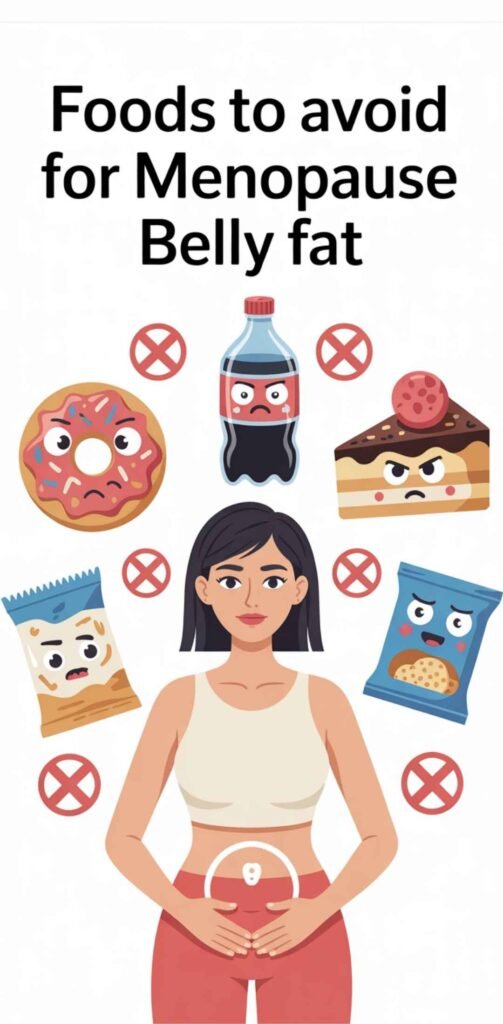
Foods to Avoid for Menopause Belly Fat
1. Added Sugars
Sweets hit differently now. Desserts, sweetened cereal, even “healthy” granola bars spike blood sugar faster than they used to, and because insulin sensitivity has dropped, your body clears that spike less efficiently — which tends to show up as more cravings a few hours later, not less.
You don’t need to eliminate sugar. What tends to work better is getting more deliberate about when you have it, which I’ll get to below.
2. Refined Carbohydrates
White bread, plain pasta, a quick sandwich — these digest fast and leave you hungry again within an hour, because they’re low in the two things that slow digestion down: protein and fiber. That fast rise-and-fall in blood sugar is what drives the “I just ate, why am I hungry again” cycle, and repeated daily, it adds up.
3. Ultra-Processed Foods
Chips, fast food, and packaged ready meals are convenient by design, but many are formulated with combinations of refined starch, seed oils, and sodium that research has linked to low-grade inflammation. During menopause — a time when inflammation markers already tend to rise — that combination can show up as bloating, low energy, or stubborn weight around the middle.
You don’t have to cut these out entirely. The goal is making sure they’re not your daily default.
4. Sugary Drinks
Soda, sweetened coffee, and flavored juice add real calories without making you feel full, since liquid sugar doesn’t trigger the same fullness signals solid food does. Switching even two or three of these a week to water or unsweetened tea is one of the highest-leverage changes available, precisely because it requires no willpower at mealtimes.
5. Excess Dairy (If It Doesn’t Suit You)
This one is individual. Some women tolerate dairy fine throughout menopause; others develop new sensitivity as estrogen drops, and notice more bloating or discomfort than before. If dairy has started to “not sit right,” that’s worth listening to — you don’t need a lab test to justify cutting back.
None of this has to happen at once. Pick the one item above that sounded most like your own week, and start there.
What to Eat Instead
Avoiding a list of foods only helps if something else fills the gap. Here’s what I’d swap in for each category above, without turning your kitchen upside down:
- Instead of sweetened cereal or a pastry: plain Greek yogurt with berries and a spoon of ground flaxseed — similar sweetness, but the protein and fiber blunt the blood sugar spike that drives cravings later.
- Instead of white bread or plain pasta: a whole-grain or legume-based version, or simply adding a protein source (eggs, chicken, beans) to the same meal — protein and fiber are what slow digestion down, not the absence of carbs.
- Instead of packaged snacks: nuts, a hard-boiled egg, or cottage cheese with fruit — all of these travel just as easily but don’t come with the same seed-oil-and-sodium combination linked to inflammation.
- Instead of soda or sweetened coffee: sparkling water with citrus, or coffee with a splash of milk instead of syrup — the goal is keeping the ritual while dropping the liquid sugar.
- Instead of regular dairy, if it’s not agreeing with you: lactose-free versions or plant-based alternatives fortified with calcium, so you’re not losing that nutrient while your gut adjusts.
Mayo Clinic’s general guidance for this stage lines up with these swaps: aim for roughly 200 fewer calories a day than you needed in your 30s and 40s, built around whole foods and reduced added sugar, rather than a dramatic overhaul.
How to Reduce Belly Fat Without Extreme Dieting
Strict diets tend to backfire during menopause specifically, because the stress and calorie restriction they involve can raise cortisol — and elevated cortisol itself promotes abdominal fat storage. I’ve written a full breakdown of that specific mechanism in cortisol belly and how to get rid of it if you want to go deeper there. For now, the short version: the goal isn’t to do more. It’s to do a few things consistently.
Consistency beats perfection. Pick one habit — protein at breakfast, one fewer sugary drink a day — and hold it for a few weeks before adding another. Small, stacked habits tend to stick far better than overhauling everything at once and quitting within a few weeks. If you want that structure laid out for you day by day, that’s exactly what my 28-Day Menopause Reset Journal is built around.
Eat regularly. Skipping meals to “save calories” almost always backfires as stronger hunger later, especially in the evening when willpower is lowest.
Move in a way you’ll actually keep up. Mayo Clinic recommends at least 150 minutes of moderate aerobic activity a week plus strength training twice a week — that combination does more for long-term results than occasional intense workouts you dread. Strength training in particular helps preserve the muscle mass that supports metabolism — muscle mass that declines faster during menopause without it.
Protect your sleep. Poor sleep raises ghrelin (the hunger hormone) and lowers leptin (the fullness hormone) — a hormonal one-two punch that makes cravings harder to manage the next day, regardless of what you ate.
Manage stress directly, rather than through stricter food rules. Slowing down meals, taking real breaks, and lowering the pressure you put on yourself all reduce cortisol more effectively than another restriction ever will.
Give it time. Hormonal weight changes respond more slowly than they used to. That’s not a sign it isn’t working — it’s the new timeline.
One more thing worth saying plainly: if belly fat gain is sudden, severe, or paired with other new symptoms, or if you’re managing a condition like diabetes or thyroid disease alongside menopause, it’s worth bringing this list to your doctor rather than troubleshooting alone. The swaps above are a reasonable starting point for most women, not a substitute for personalized medical guidance.
A Simple Daily Eating Pattern
You don’t need a rigid schedule. What helps most is a rhythm you can return to on both good and chaotic days:
- Start the day with something more substantial than coffee alone
- Build meals around a protein source plus something filling
- Keep it flexible — some days will be more balanced than others, and that’s fine
Final Thoughts
🌸 Want This Turned Into a Simple 28-Day Plan?
Knowing which foods to lean on is step one — the 28-Day Menopause Reset Journal turns it into a daily rhythm you can actually follow, built specifically around what your body needs at this stage.
Get the Menopause Reset Journal — $5 →If this stage feels unfamiliar, you’re not alone — so many women describe the same thing: what used to work just doesn’t anymore. That’s not a loss of control. It’s a different set of rules, and once you know them, they’re manageable.
Pick one habit from this article that felt realistic for your week. Start there. Be patient with your body — it’s not working against you, it just needs a different kind of support right now.
