

If you’ve recently been diagnosed with diabetes—or you’re trying to control rising blood sugar—you may be wondering what foods are actually safe to eat. Many people feel overwhelmed at this stage. One article says avoid carbs, another says fruit is healthy, and suddenly everyday meals start to feel confusing.
As a nutrition professional, I often see that the biggest challenge for people with diabetes isn’t strict dieting—it’s simply knowing which foods support stable blood sugar and which ones should be limited.
A balanced diabetic diet food list focuses on whole, nutrient-dense foods such as vegetables, lean proteins, healthy fats, and controlled portions of carbohydrates, while limiting highly processed foods and refined sugars that can cause rapid blood sugar spikes.
Once you understand what belongs on your plate, managing diabetes becomes much more practical. In this guide, you’ll find a clear diabetic diet food list of what to eat and what to avoid, along with simple tips to help you make everyday food choices that support better blood sugar control.
Contents
- 1 What Is a Diabetic Diet and Why It Matters for Blood Sugar
- 2 Diabetic Diet Food List: Foods to Eat for Better Blood Sugar Control
- 3 Foods to Avoid or Limit on a Diabetic Diet
- 4 Best Vegetables for a Diabetic Diet
- 5 Fruits Diabetics Should Eat in Moderation
- 6 Sample Daily Diabetic Meal Plan
- 7 7-Day Diabetic Meal Plan Example
- 8 Healthy Snack Ideas for People with Diabetes
- 9 Lifestyle Habits That Support Blood Sugar Control
- 10 Common Mistakes People Make When Following a Diabetic Diet
- 11 1. Completely Avoiding All Carbohydrates
- 12 2. Assuming “Sugar-Free” Means Safe
- 13 3. Ignoring Portion Sizes
- 14 4. Skipping Meals
- 15 5. Relying Too Much on Processed “Diabetic Foods”
- 16 6. Avoiding Fruit Completely
- 17 7. Not Reading Nutrition Labels
- 18 8. Forgetting About Beverages
- 19 9. Not Balancing Meals
- 20 10. Following Internet Diet Trends
- 21 Frequently Asked Questions About the Diabetic Diet Food List
- 21.1 Are carbohydrates allowed on a diabetic diet?
- 21.2 What is the best breakfast for people with diabetes?
- 21.3 Are dairy products allowed on a diabetic diet?
- 21.4 Is the diabetic diet the same as a low-carb diet?
- 21.5 Can people with diabetes eat sweets?
- 21.6 What drinks are best for people with diabetes?
- 21.7 Is a diabetic diet helpful for people without diabetes?
- 22 Final Thoughts
What Is a Diabetic Diet and Why It Matters for Blood Sugar
A diabetic diet is a way of eating designed to help keep blood sugar levels stable throughout the day. Rather than focusing on strict restrictions, the goal is to choose foods that provide steady energy and prevent sudden spikes in glucose.
In my experience, many people with diabetes feel overwhelmed because they’re unsure which foods actually affect blood sugar the most. What I often recommend is focusing on foods that digest more slowly and support better glucose balance.
A balanced diabetic diet usually includes:
- High-fiber vegetables
- Lean proteins such as fish, poultry, or legumes
- Healthy fats like olive oil, nuts, and avocado
- Whole carbohydrates in moderate portions
At the same time, I usually suggest limiting highly processed foods, sugary drinks, and refined grains since these can cause rapid increases in blood sugar.
When meals are built around the right foods, managing diabetes becomes far more practical. Stable blood sugar levels can support better daily energy, improved metabolic health, and a lower risk of long-term complications associated with diabetes.
Diabetic Diet Food List: Foods to Eat for Better Blood Sugar Control
When managing diabetes, the goal isn’t to starve yourself or remove all your favorite foods. What I usually recommend from a nutrition perspective informed by pharmaceutical science is to build meals that stabilize blood sugar while still fitting comfortably into your lifestyle.
Instead of strict restriction, the focus should be on habits you can maintain daily—choosing fiber-rich foods, balanced meals, and reasonable portions.
Here’s a practical diabetic diet food list organized by food group.
| Food Group | Examples of Diabetes-Friendly Foods | Why They Help Blood Sugar |
|---|---|---|
| Non-Starchy Vegetables | Spinach, broccoli, zucchini, cucumber, cauliflower, green beans, bell peppers | Low in carbohydrates and high in fiber, which helps slow glucose absorption |
| Lean Proteins | Chicken, turkey, fish, eggs, tofu, lean beef | Protein helps keep you full longer and reduces blood sugar spikes after meals |
| Healthy Fats | Avocado, olive oil, nuts (almonds, walnuts), seeds (chia, flax) | Do not raise blood sugar directly and help balance meals |
| Whole Grains (Moderate Portions) | Brown rice, quinoa, oats, whole-grain bread | Fiber slows carbohydrate digestion and supports steadier glucose levels |
| Low-Glycemic Fruits | Berries, apples, pears, oranges | Provide vitamins and fiber with a smaller impact on blood sugar |
| Dairy or Alternatives | Greek yogurt, unsweetened almond milk, cottage cheese | Offer protein and calcium while helping control hunger |
Focus on Sustainable Eating Habits
One thing I often emphasize when discussing diabetic nutrition is that long-term habits matter more than strict short-term diets. Rather than skipping meals or drastically cutting foods, I usually suggest:
- Building meals around vegetables, protein, and healthy fats
- Pairing carbohydrates with fiber or protein to slow glucose spikes
- Eating consistent meals throughout the day
- Choosing whole foods instead of highly processed ones
When these habits become part of your routine, managing diabetes often becomes far less stressful and much more sustainable. The goal is not perfection—it’s building a way of eating that supports stable blood sugar and fits naturally into your everyday life.
If you prefer structured meal programs, you can also explore options like Nutrisystem for diabetics meal plan, which focuses on portion-controlled meals designed to support weight management and blood sugar balance.
Foods to Avoid or Limit on a Diabetic Diet
While many foods can fit into a balanced diabetic diet, some are better limited or eaten in smaller portions because they may cause faster increases in blood sugar. As I often recommend when discussing nutrition and metabolic health, the goal is not strict elimination but understanding which foods may need moderation.
Refined Sugars and Sweetened Beverages
Foods high in added sugar—such as soda, candy, pastries, and sugary breakfast cereals—can quickly raise blood glucose levels. These foods digest rapidly and provide little fiber or protein to slow sugar absorption.
Refined Carbohydrates
White bread, white rice, and many packaged snack foods are made with refined grains that can lead to sudden spikes in blood sugar. Choosing whole grains or fiber-rich foods instead can help maintain steadier glucose levels.
Certain High-Sugar Fruits
Fruit is nutritious, but some fruits contain higher amounts of natural sugar. For example, mango is often questioned by people managing diabetes because most of its calories come from carbohydrates, which can raise blood sugar if eaten in large portions.
If you’re curious about portion sizes and how this fruit affects glucose levels, you can read more in this guide on can diabetics eat mango.
Starchy or High-Carb Vegetables
Most vegetables are excellent for diabetes, but some contain more carbohydrates and may affect blood sugar more noticeably. Starchy vegetables like potatoes, corn, and sweet potatoes can raise glucose levels if eaten in large amounts.
The key takeaway is that managing diabetes rarely requires completely removing foods. Instead, I usually encourage focusing on portion awareness, balanced meals, and consistent eating habits, which often makes blood sugar management far more sustainable in everyday life.
Best Vegetables for a Diabetic Diet
Vegetables are one of the most important foods to include when managing diabetes. In my nutrition practice, I often recommend building meals around fiber-rich, non-starchy vegetables, because they help slow digestion, support stable blood sugar levels, and add volume to meals without significantly increasing carbohydrate intake.
Some of the best vegetables to include in a diabetic diet are:
- Leafy greens: spinach, kale, arugula, lettuce
- Cruciferous vegetables: broccoli, cauliflower, Brussels sprouts
- Low-carb vegetables: zucchini, cucumbers, bell peppers
- Fiber-rich vegetables: green beans, asparagus, cabbage
These vegetables are naturally low in carbohydrates and rich in vitamins, minerals, and antioxidants that support overall metabolic health.
At the same time, it’s helpful to understand that not all vegetables affect blood sugar in the same way. Some starchy vegetables contain higher amounts of carbohydrates and may need to be eaten in smaller portions. If you want a clearer breakdown, you can read more about vegetables for diabetics to avoid and how portion size can influence blood sugar levels.
When planning your meals, I usually suggest filling at least half of your plate with non-starchy vegetables. This simple habit can make it much easier to balance carbohydrates and maintain more stable blood sugar throughout the day.
Fruits Diabetics Should Eat in Moderation
Fruit can still be part of a balanced diabetic diet, but portion size and fruit choice matter. From a nutrition perspective I often recommend choosing fruits that contain more fiber and have a lower glycemic impact, since fiber helps slow how quickly sugar enters the bloodstream.
Fruits that are generally easier to include in moderation include:
- Berries: strawberries, blueberries, raspberries
- Apples
- Pears
- Oranges and other citrus fruits
- Cherries
These fruits tend to have a lower glycemic index, meaning they raise blood sugar more gradually compared with sweeter fruits.
However, some fruits contain more natural sugars and may need extra portion control. If you want a deeper breakdown of which fruits to limit and why, see this guide on what fruits diabetics should not eat or limit.
A simple habit I usually recommend is pairing fruit with protein or healthy fat, such as berries with yogurt or an apple with nuts, which can help keep blood sugar levels more stable.
Sample Daily Diabetic Meal Plan
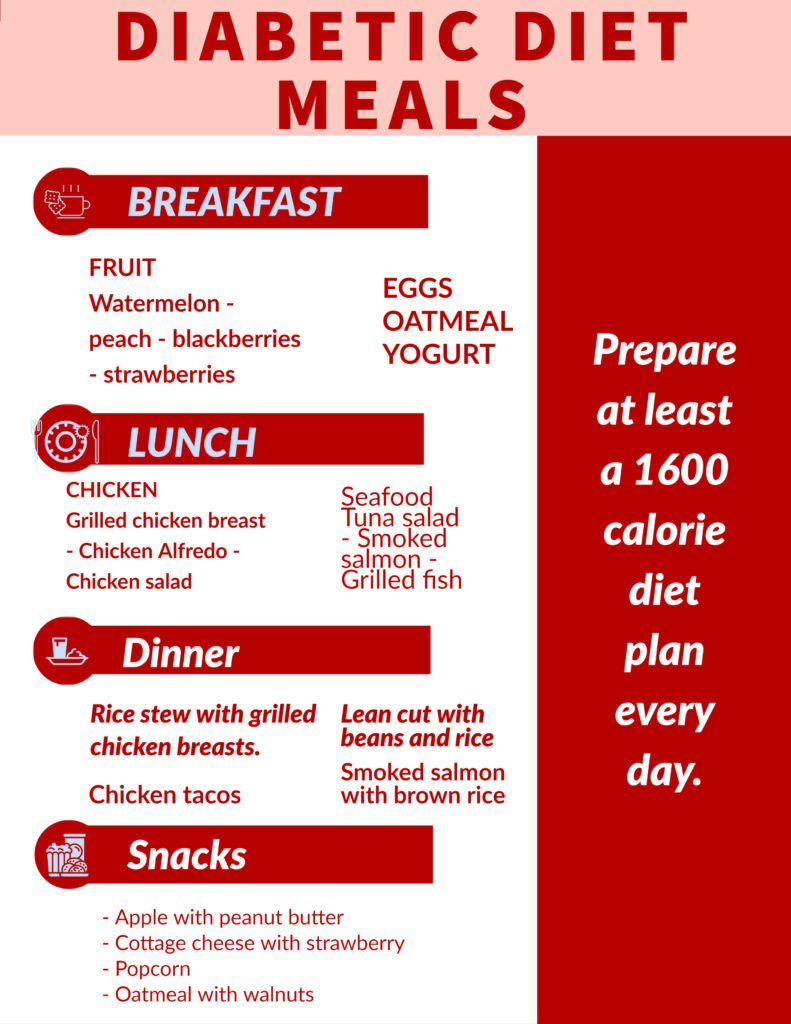
Having a simple structure for your meals can make diabetes much easier to manage. From a nutrition perspective I often recommend balanced meals that combine fiber, protein, and healthy fats, which can help slow carbohydrate digestion and support more stable blood sugar levels.
Here’s an example of what a typical diabetes-friendly day of eating might look like:
| Meal | Example |
|---|---|
| Breakfast | Scrambled eggs with spinach and whole-grain toast |
| Lunch | Grilled chicken salad with olive oil, avocado, and mixed vegetables |
| Snack | Apple slices with a handful of almonds |
| Dinner | Baked salmon with roasted broccoli and quinoa |
This type of meal structure helps balance carbohydrates with protein and fiber, which can prevent sudden blood sugar spikes and keep energy levels more stable throughout the day.
If you prefer a more structured plan with detailed daily meals, you can explore this 7-day diabetic meal plan PDF that provides a full week of diabetes-friendly meal ideas.
7-Day Diabetic Meal Plan Example
A structured weekly meal plan can make it easier to follow a balanced diabetic diet. Meals that combine fiber-rich vegetables, lean protein, healthy fats, and moderate portions of carbohydrates help support more stable blood sugar levels throughout the day.
The example below shows a simple week of diabetes-friendly meals designed to balance nutrients while keeping meals practical for everyday eating. Individual calorie and carbohydrate needs may vary depending on medications, activity level, and overall health goals.
| Day | Breakfast | Lunch | Dinner | Snack |
|---|---|---|---|---|
| Day 1 | Scrambled eggs with spinach and whole-grain toast | Grilled chicken salad with olive oil and avocado | Baked salmon with roasted broccoli and quinoa | Apple slices with almonds |
| Day 2 | Oatmeal with chia seeds and berries | Turkey and vegetable whole-grain wrap | Grilled chicken with green beans and brown rice | Greek yogurt with walnuts |
| Day 3 | Greek yogurt with flaxseeds and blueberries | Tuna salad with mixed greens and olive oil | Stir-fried tofu with vegetables and quinoa | Pear with peanut butter |
| Day 4 | Vegetable omelet with whole-grain toast | Lentil and vegetable soup with a side salad | Baked chicken with roasted zucchini and cauliflower | Cottage cheese with berries |
| Day 5 | Overnight oats with almonds and strawberries | Quinoa salad with chickpeas and cucumbers | Grilled fish with asparagus and brown rice | Handful of mixed nuts |
| Day 6 | Smoothie with spinach, yogurt, and berries | Chicken and avocado salad with olive oil dressing | Turkey meatballs with roasted vegetables | Apple with almond butter |
| Day 7 | Whole-grain toast with avocado and boiled eggs | Grilled salmon salad with leafy greens | Stir-fried chicken with broccoli and quinoa | Greek yogurt with chia seeds |
This type of meal structure balances carbohydrates with protein and fiber, which helps slow glucose absorption and reduce sudden blood sugar spikes. Meals that include vegetables, protein, and healthy fats also support satiety and more consistent energy levels throughout the day.
If you prefer a printable version, you can download the 7-day diabetic meal plan PDF for easy reference when planning your meals.
Download the 7-Day Diabetic Meal Plan PDF
You can download a printable version of this 7-day diabetic meal plan to make weekly meal planning easier. Keeping a simple plan on hand can help you organize balanced meals, control portions, and support more stable blood sugar levels throughout the week.
Healthy Snack Ideas for People with Diabetes
Snacks can be helpful for maintaining steady blood sugar levels, especially if there are long gaps between meals. In my nutrition guidance, I usually recommend snacks that combine fiber, protein, and healthy fats, since this combination helps prevent sudden blood sugar spikes and keeps you feeling satisfied longer.
Here are some simple snack ideas that fit well into a diabetes-friendly routine:
- Apple slices with almond butter
- Greek yogurt with berries
- A handful of nuts (almonds, walnuts, or pistachios)
- Carrot sticks or cucumber with hummus
- Hard-boiled eggs
- Whole-grain crackers with avocado
These snacks provide nutrients while helping slow carbohydrate absorption, which supports more stable glucose levels.
If you’re looking for more snack ideas specifically designed to support blood sugar control, you can explore these prediabetic snack ideas that help control blood sugar for additional options.
Lifestyle Habits That Support Blood Sugar Control
Food choices are important, but daily habits also play a major role in blood sugar management. In my experience guiding people on nutrition and metabolic health, the most successful strategies are usually simple lifestyle habits that can be maintained long term.
Here are some habits that can help support stable blood sugar levels:
Eat Consistent Meals
Try to eat meals at regular times during the day. Skipping meals or eating large portions after long gaps can cause blood sugar fluctuations.
Stay Physically Active
Regular physical activity helps your body use glucose more efficiently. Even 30 minutes of walking, cycling, or light exercise most days of the week can improve blood sugar control.
Manage Portion Sizes
Carbohydrates affect blood sugar the most, so paying attention to portion sizes can help prevent sudden spikes.
Prioritize Sleep
Poor sleep can interfere with insulin sensitivity and increase cravings for sugary foods. Aim for 7–8 hours of quality sleep each night.
Manage Stress Levels
Chronic stress can raise blood sugar levels through hormonal changes. Activities such as walking, meditation, or relaxation exercises may help reduce stress.
Stay Hydrated
Drinking enough water supports overall metabolism and may help your body regulate blood sugar more effectively.
The key is focusing on sustainable habits rather than strict rules. Small changes practiced consistently—like balanced meals, regular movement, and better sleep—can make a meaningful difference in long-term blood sugar control.
Common Mistakes People Make When Following a Diabetic Diet
1. Completely Avoiding All Carbohydrates
Many people believe they must eliminate carbs entirely. In reality, carbohydrates are still necessary for energy. The key is choosing complex carbohydrates such as:
- Whole grains
- Legumes
- Vegetables
- Fruits with fiber
The focus should be on portion control and carbohydrate quality, not total elimination.
2. Assuming “Sugar-Free” Means Safe
Foods labeled “sugar-free” or “diabetic-friendly” can still raise blood glucose levels. These products may contain:
- Refined starches
- Sugar alcohols
- High calorie content
People with diabetes should still check total carbohydrates on the nutrition label.
3. Ignoring Portion Sizes
Even healthy foods can raise blood glucose when eaten in large amounts. Common portion mistakes include:
- Too much rice or pasta
- Large fruit servings
- Overeating nuts or healthy fats
Portion control is one of the most important aspects of blood sugar management.
4. Skipping Meals
Some people skip meals thinking it will help control blood sugar. This can actually lead to:
- Blood sugar fluctuations
- Overeating later
- Increased risk of hypoglycemia (especially with medications)
Regular, balanced meals help maintain stable glucose levels.
But don’t mix skipping meals with intermittent fasting, as the later has its own rules for diabetics.
5. Relying Too Much on Processed “Diabetic Foods”
Many packaged diabetic snacks are highly processed and may contain:
- Artificial sweeteners
- Refined ingredients
- High fat content
A better approach is focusing on whole foods like vegetables, lean proteins, and whole grains.
6. Avoiding Fruit Completely
Fruit contains natural sugar, but it also provides:
- Fiber
- Vitamins
- Antioxidants
Most people with diabetes can safely include fruit when portion sizes are controlled and paired with protein or healthy fat.
7. Not Reading Nutrition Labels
People often focus only on sugar content, but total carbohydrates matter more for blood glucose. Important label components include:
- Total carbohydrates
- Fiber
- Added sugars
- Serving size
8. Forgetting About Beverages
Drinks can significantly affect blood sugar. Common mistakes include:
- Drinking fruit juice
- Sweetened coffee drinks
- Sugary sodas or energy drinks
Water, unsweetened tea, or black coffee are better choices.
9. Not Balancing Meals
Meals that contain only carbohydrates can cause rapid blood sugar spikes. A balanced plate should include:
- Fiber-rich carbohydrates
- Lean protein
- Healthy fats
This combination slows glucose absorption.
10. Following Internet Diet Trends
Many people with diabetes try extreme diets such as:
- Very low-carb fad diets
- Detox diets
- Unproven supplements
These approaches may be unsustainable or nutritionally inadequate. Evidence-based dietary patterns like the Mediterranean diet, DASH diet, or balanced carbohydrate diets are better supported by research.
Frequently Asked Questions About the Diabetic Diet Food List
Are carbohydrates allowed on a diabetic diet?
Yes. Carbohydrates are an important source of energy. The focus should be on high-fiber, complex carbohydrates such as:
- Whole grains
- Beans and legumes
- Vegetables
- Fruits
These foods digest more slowly and help prevent rapid increases in blood sugar.
What is the best breakfast for people with diabetes?
A balanced breakfast should include protein, fiber, and healthy fats. Examples include:
- Oatmeal with nuts and berries
- Greek yogurt with chia seeds
- Eggs with whole-grain toast and avocado
- Smoothies with vegetables, protein, and healthy fats
Balanced meals help maintain stable glucose levels throughout the morning.
Are dairy products allowed on a diabetic diet?
Yes, low-fat or unsweetened dairy products can be included, such as:
- Plain yogurt
- Milk
- Cottage cheese
- Cheese (in moderation)
Avoid sweetened yogurts and flavored dairy products that contain added sugars.
Is the diabetic diet the same as a low-carb diet?
Not necessarily. Some people with diabetes follow a moderate or low-carbohydrate diet, but a diabetic diet mainly focuses on:
- Balanced meals
- Portion control
- High-fiber foods
- Limiting added sugars
Different carbohydrate levels may be recommended depending on individual health needs and medications.
Can people with diabetes eat sweets?
Occasional sweets can be included in small portions as part of a balanced meal plan. The key is to:
- Limit frequency
- Control portion sizes
- Monitor blood glucose response
Replacing sugary desserts with healthier options like fruit or yogurt is often recommended.
What drinks are best for people with diabetes?
The best beverages for blood sugar control include:
- Water
- Sparkling water
- Unsweetened tea
- Black coffee
Sugary drinks such as soda, sweetened coffee beverages, and energy drinks should be limited.
Is a diabetic diet helpful for people without diabetes?
Yes. A diabetic diet focuses on whole, nutrient-dense foods and balanced meals, which can benefit anyone trying to improve metabolic health, maintain weight, or reduce the risk of chronic diseases.
Final Thoughts
Following a diabetic diet does not have to be complicated or overly restrictive. The main goal is to focus on balanced meals, nutrient-dense foods, and consistent eating habits that help maintain stable blood sugar levels. Choosing whole foods such as vegetables, lean proteins, whole grains, healthy fats, and fiber-rich fruits can support both blood glucose control and overall health.
It is also important to remember that portion control and meal balance often matter more than completely eliminating specific foods. Many people with diabetes can still enjoy a wide variety of foods when they pay attention to carbohydrate intake, read nutrition labels, and avoid highly processed or sugary products.
Since nutritional needs can vary from person to person, individuals with diabetes may benefit from working with a healthcare professional or registered dietitian to create a personalized meal plan that fits their lifestyle, medications, and health goals.
Ultimately, a sustainable diabetic diet is not about perfection—it is about making consistent, informed choices that support long-term health and well-being.
