
Search “moringa sexually” and you will find a hundred articles promising it works like a natural version of a prescription drug. Here is what actually happens when you check the claim against the evidence: there is genuine, if early, science behind moringa and sexual function — but it comes entirely from stressed male rats, not from a single human trial. That gap matters, and I want to walk you through exactly what is proven, what is plausible, and what is simply repeated because it sells capsules.
My background is in medicine and I hold a certification in Nutrition Science from Zewail International Academy. Every claim below is checked against a primary source, linked at the bottom, so you can read the actual research instead of taking my word for it.

Does Moringa Help Sexually? What the Evidence Actually Shows
The honest answer is: possibly, in animals, at specific doses, under specific conditions — and nobody has tested it in people yet. A 2015 study in the Journal of Zhejiang University-SCIENCE B gave male Wistar rats a hydroethanolic extract of moringa leaves at three doses (10, 50 and 250 mg per kilogram of body weight) while exposing them to daily immobilization stress for a week. At the lowest dose, stressed rats showed shorter time to mounting and better erectile capacity during mating; the medium dose sped up mounting after a single dose; the high dose increased mounting frequency after a week. The researchers’ conclusion was that moringa extract acted as a potential aphrodisiac for stress-induced sexual dysfunction — in rats.
That is a real finding, and it is also the entire human-relevant evidence base for the “moringa helps sexually” claim. No dose has been tested in men or women, no clinical trial has measured libido or sexual function in humans taking moringa, and the rat doses do not translate directly to a human capsule count. If a product tells you a specific number of capsules will produce this effect in a person, that number was not tested — it was estimated.
What is more defensible is the indirect mechanism: moringa is a genuinely nutrient-dense plant, and stress, poor circulation and nutrient deficiency are all things that can suppress sexual function in real people. Improving those factors generally is plausible. Marketing a specific “boosts your libido” effect from a rat study is not.
What’s Actually in Moringa
Moringa leaf is a genuinely dense source of nutrients, which is why it gets called a superfood rather than why it treats disease. Here is what the research supports:
- Vitamins A, C and E — supporting immune function and skin health.
- Calcium, iron and potassium — relevant to bone health and normal electrolyte balance.
- All nine essential amino acids — moringa is one of the few plant foods that qualifies as a complete protein source.
- Quercetin and chlorogenic acid — antioxidant compounds that have shown activity against oxidative stress in laboratory studies.
Antioxidant activity in a test tube is a real, measurable thing. It is not the same as a clinical outcome in a person, and the gap between the two is where a lot of supplement marketing lives.
What Human Trials Actually Found
This is the part most moringa articles skip, and it is the part with real numbers behind it. Human research on moringa has focused almost entirely on metabolic health, not sexual function, and the results are genuinely interesting in their own right:
- Blood sugar: in people with type 2 diabetes taking 8 g of powdered moringa leaf daily, fasting and post-meal blood glucose dropped by 28% and 26% respectively after 40 days. In a separate 12-week prediabetes trial, 58% of the moringa group saw meaningful HbA1c improvement versus 38% on placebo.
- Blood pressure: a small open-label study of 41 people found a drop in systolic and diastolic blood pressure two hours after a meal that included 120 g of sautéed moringa leaves.
- Cholesterol: in people with high cholesterol taking 4.6 g daily for 50 days, total cholesterol fell 1.6% and HDL (“good”) cholesterol rose 6.3%.
Every one of those trials used doses between 2.4 and 8 grams a day for up to 12 weeks — nowhere near the doses some supplement blends use, and none of them measured anything related to sex. If you are drawn to moringa for blood sugar or cardiovascular support, that is the evidence to look at. If you are here for sexual function specifically, the honest picture is one rat study and a plausible mechanism, not a proven human effect.
Moringa’s biggest, best-supported use case is actually metabolic. If steady blood sugar and weight management are your real goal, that is worth building a plan around rather than a single ingredient — my 4-Week Weight Loss Planner gives you the calorie target and daily structure that moringa alone cannot.
The Claims I Had to Cut — And Why
The previous version of this article claimed moringa treats edema, prevents and treats cancer, protects against liver damage from anti-tubercular drugs, and heals ulcerative colitis. None of that survives a check against the sourcing standard I hold every article on this site to.
Here is the more careful version. Laboratory and animal studies have found moringa compounds show antioxidant, anti-inflammatory and antimicrobial activity, and some cell-culture research has looked at effects on cancer cell growth. That is preliminary science — it does not mean moringa treats or prevents cancer, protects your liver from medication, or cures a bowel condition in a human being, and I am not going to tell you it does. No food or supplement should ever be marketed as curing, treating or preventing a disease, and where the previous version implied that, I have removed it rather than water it down into something vague.
Safety: What You Actually Need to Know
This is the section that gets left out of almost every moringa article, and it is the most important one.
- Pregnancy: avoid moringa if you are pregnant or breastfeeding. Safety and efficacy data for this population are lacking, and animal studies have documented abortifacient effects with orally administered leaf extract.
- Root and bark, not leaf: the toxicity concerns you may have read about are almost entirely about moringa root extract, which has been linked to blood, kidney and liver harm in research, not the leaf powder or leaf extract most supplements use. If you buy moringa, check that it is leaf-based.
- Rare but real reactions: case reports describe serious skin and airway reactions, including Stevens-Johnson syndrome and tongue swelling with breathing difficulty, following moringa powder consumption. Rare does not mean impossible.
- Medication interactions: no formal human interaction studies exist, but laboratory research suggests moringa may affect liver enzymes that process many common drugs, and animal data hint at an interaction with thyroid medication (levothyroxine). If you take any prescription medication regularly, talk to your doctor or pharmacist before adding moringa.
If you are managing diabetes with medication, the blood-sugar-lowering effect that makes moringa interesting is also the reason to be careful — stacking it with existing glucose-lowering drugs can push blood sugar too low. This is exactly the kind of change to run past your doctor first, not after.
Moringa Actives
Moringa Actives is a weight-loss supplement built around moringa leaf extract, aimed at people who want to maintain a healthy body weight, manage hunger, and support their metabolism.
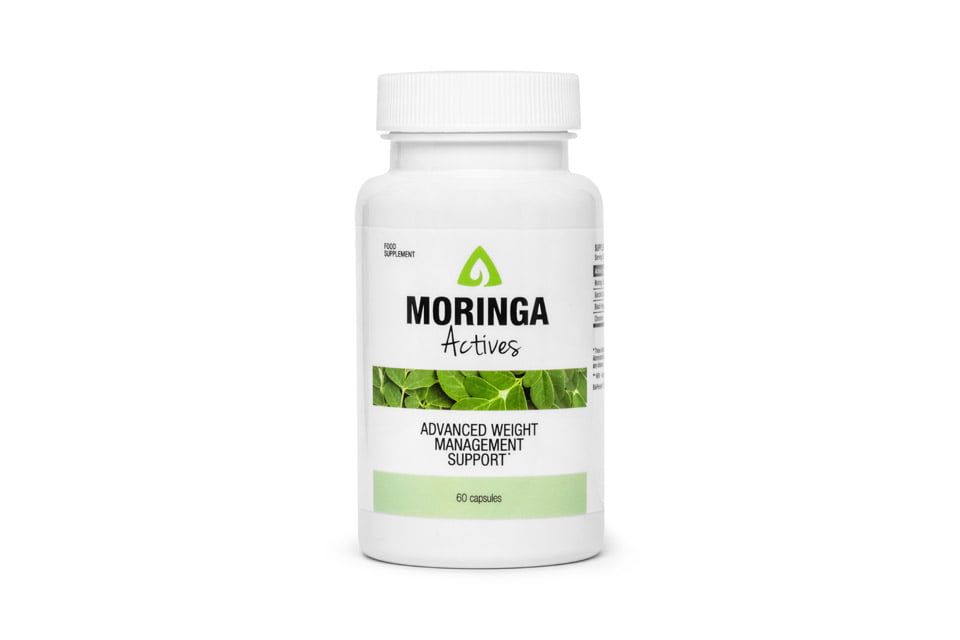
The product’s main active ingredient is an extract from moringa oleifera leaves, alongside chromium, black pepper fruit extract and Malabar tamarind extract, combined to support the areas above.
I have not personally tested this specific product, so I cannot vouch for it beyond what its own listed ingredients are individually supported to do. If your actual goal is steady, sustainable weight loss rather than a single supplement, my own 4-Week Weight Loss Planner gives you a full structure — calorie target, meal plan and tracking — built from the ground up rather than one ingredient doing the work alone.
How to Actually Use Moringa
If you want to try moringa for its better-supported uses — blood sugar, cholesterol, or as a dense source of nutrients — here is what the research doses translate to practically:
- Powdered leaf: studies used 2.4 to 8 g daily, roughly half a teaspoon to a heaped teaspoon, stirred into water, a smoothie, or food.
- Fresh or cooked leaves: the blood-pressure study used 120 g — about two cups — of sautéed leaves with a meal.
- Start low. Begin at the bottom of that range for a week before increasing, and watch for any digestive upset.
- Give it time. The trials that showed results ran 40 days to 12 weeks. A single dose is not a fair test of anything.
If low energy or reduced desire is genuinely affecting your life, moringa is not where I would start. A conversation with your doctor rules out the more common and more treatable causes — thyroid issues, low iron, poor sleep, medication side effects, relationship or stress factors — before you spend money on a supplement whose direct human evidence for this specific use does not yet exist.
Frequently Asked Questions
Is there human research on moringa and libido?
Not yet. The aphrodisiac research is a single 2015 rat study. Human trials on moringa exist, but they measured blood sugar, blood pressure and cholesterol — not sexual function.
Is moringa safe to take every day?
Leaf powder or leaf extract at the studied doses (2.4–8 g daily) has a reasonable safety record in short trials up to 12 weeks. Avoid it in pregnancy, avoid root-based products entirely, and check with your doctor first if you take regular medication, especially for diabetes or thyroid conditions.
Can moringa cure erectile dysfunction?
No, and no food or supplement should be marketed that way. Erectile dysfunction has many causes — vascular, hormonal, psychological, medication-related — and it deserves an actual diagnosis from a doctor, not a self-treated supplement regimen.
What’s the difference between moringa leaf and moringa root?
The leaf is the nutrient-dense, generally well-tolerated part used in food and most supplements. The root has been linked to blood, kidney and liver harm in research and is not something to consume as a supplement. Always check the label says leaf.
The Bottom Line
Moringa is a genuinely nutrient-dense leaf with real, human-trial-backed support for blood sugar, blood pressure and cholesterol at doses of 2.4 to 8 grams daily. The sexual-function claim you searched for is built on one rat study, not human data — a real finding, but not proof it will do the same for you. Skip products that promise cancer prevention, organ healing or guaranteed libido effects; that is marketing sitting on top of preliminary science, not the science itself.
This is general nutrition information, not medical advice. If you are pregnant, managing diabetes or thyroid disease, taking any regular medication, or dealing with a persistent change in sexual function, talk to your doctor before adding moringa or any supplement.
References
- Journal of Zhejiang University-SCIENCE B — Moringa oleifera extract enhances sexual performance in stressed rats (2015)
- Drugs.com — Moringa: clinical evidence, dosing and safety review (human trial data on glucose, blood pressure and lipids; root toxicity; pregnancy warning)
