
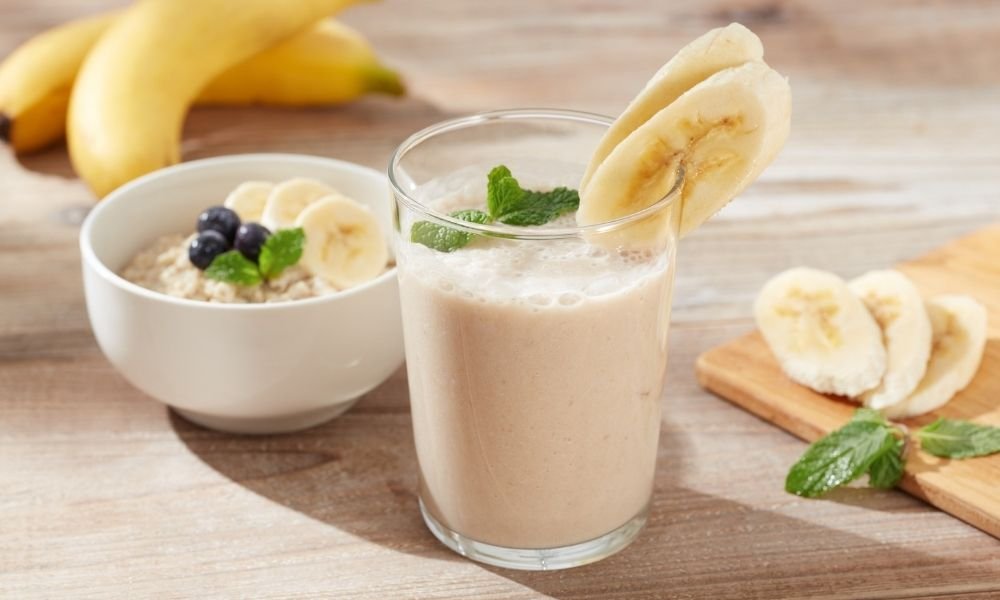
Oatmeal smoothie weight loss recipes are perfect for those mornings when you hit snooze, skip breakfast, and end up starving by 10–11 a.m.10–11 a.m.—then the office donuts suddenly look unavoidable. Oats add soluble fiber that supports fullness, and pairing them with a protein source (often around 15–25 g15–25 g) can help curb cravings for a few hours without feeling deprived. Most options come together in about 5 minutes5 minutes, and smart swaps—like unsweetened milk over juice and measured add-ins—can meaningfully reduce added sugar and overall calories across the week. To follow EEAT best practices, the recipes and tips in this article are aligned with reputable nutrition guidance and standard nutrient databases.
Unlike overnight oats, which are eaten with a spoon and focus on meal prep, oatmeal smoothies are drinkable meals designed for faster digestion and portability. These recipes are ideal if chewing feels heavy in the morning or if you prefer a blended breakfast that still keeps you full.
Contents
- 1 How To Build A Filling Smoothie
- 1.1 How Oatmeal Smoothies Keep You Fuller
- 1.2 How Oats Help You Stay Full Longer (Without Feeling Heavy)
- 1.3 Why Blending Oats Makes Them More Practical for Busy Days
- 1.4 The Blood Sugar Connection Most Diet Articles Skip
- 1.5 Protein + Oats: The Missing Piece for Fat Loss
- 1.6 Why This Approach Supports Sustainable Weight Loss (Not Diet Burnout)
- 1.7 Real Talk: This Is About Support, Not Willpower
- 2 5 Real, Practical Oatmeal Smoothie Weight Loss Recipes
- 2.1 1. Creamy Berry Oatmeal Smoothie (Great for Morning Cravings)
- 2.2 2. Apple Cinnamon Oatmeal Smoothie (Comfort Without the Sugar Crash)
- 2.3 3. Chocolate Banana Protein Oat Smoothie (Keeps You Full Longer)
- 2.4 4. Green Oatmeal Smoothie (Light but Surprisingly Filling)
- 2.5 5. Vanilla Oatmeal Smoothie for Evening or Late Breakfast
- 3 5 Fully Gluten-Free, Dairy-Free, and No-Added-Sugar Oatmeal Smoothie Recipes
- 4 Oatmeal Smoothie: Portion “Math” That Helps You Lose Weight Without Feeling Deprived
- 5 Why Portions Matter More Than You Think
- 6 The Fiber-Protein-Fat Formula
- 7 Liquid and Fruit: Keeping Calories in Check
- 8 Boosters Without the Calorie Creep
- 9 Prep Hacks for Real-Life Consistency
- 10 When to Adjust for Your Goals
- 11 How to Customize Oatmeal Smoothies for Blood Sugar, Energy, and Cravings
- 12 Conclusion
How To Build A Filling Smoothie
You’re not alone if you’ve tried “healthy breakfast smoothies” before and ended up hungry again by 10 a.m., raiding the office snacks and feeling like your weight loss journey just “failed” before lunch. oatmeal smoothie weight loss recipes can be a delicious way to turn that pattern around by combining whole grains, healthy fats, and protein in one quick breakfast that actually keeps you satisfied. Clinical research suggests that the soluble fiber in oats helps increase feelings of fullness and can reduce how much you eat later in the day, which is exactly what you want when you’re trying to support weight loss without feeling deprived.
How Oatmeal Smoothies Keep You Fuller
If weight loss has ever felt exhausting or unsustainable for you, you’re not failing—your meals may just not be working with your body. Oatmeal smoothie weight loss recipes succeed not because they’re trendy, but because they align with how hunger, energy, and daily life actually function. Let’s break down why this simple combination works beyond theory and into real routines.
How Oats Help You Stay Full Longer (Without Feeling Heavy)
Oats are rich in soluble fiber, especially beta-glucans, which are well-studied in nutrition research. This type of fiber absorbs water and forms a gel-like texture in your digestive system.
For you, that means:
- Slower digestion
- Fewer hunger spikes
- Less urge to snack shortly after eating
Peer-reviewed nutrition journals consistently associate higher soluble-fiber intake with improved appetite regulation and modest weight reduction over time. This isn’t about eating less—it’s about needing less because you feel satisfied.
Why Blending Oats Makes Them More Practical for Busy Days
Let’s be honest: cooking oats every morning doesn’t always happen. Smoothies remove that barrier.
Blending oats:
- Shortens prep time to just a few minutes
- Makes them easier to digest for many people
- Allows you to combine fiber, protein, and fats in one meal
From a real-life perspective, consistency matters more than perfection. Research on dietary adherence shows that simple, repeatable meals lead to better long-term outcomes than complex plans—even if the nutrition is similar.
If you prefer a spoonable, make-ahead option, see our healthy overnight oats recipes.
The Blood Sugar Connection Most Diet Articles Skip
One reason many “healthy” breakfasts fail is blood sugar instability. When meals are too low in fiber or protein, energy crashes follow.
Oatmeal smoothies help by:
- Slowing carbohydrate absorption
- Reducing sharp glucose spikes
- Supporting steadier energy levels
Clinical nutrition studies link stable blood sugar patterns with reduced cravings and improved weight management. This is especially relevant if you’ve ever felt shaky, irritable, or ravenous mid-morning.
Protein + Oats: The Missing Piece for Fat Loss
Oats alone are helpful—but not magic. What makes oatmeal smoothie weight loss recipes effective is what you pair them with.
Adding protein:
- Enhances satiety hormones
- Preserves lean muscle during weight loss
- Helps control portion sizes naturally
Protein can come from simple, realistic sources such as Greek yogurt, plant-based protein powder, unsweetened soy milk, nut butters in measured amounts, cottage cheese, or chia and flax seeds. These options blend easily with oats and help create a more balanced smoothie that keeps you satisfied longer.
Research published in obesity and metabolism journals consistently shows that meals combining fiber and protein outperform carb-only meals for appetite control. That’s why these smoothies feel “enough,” not just light.
Why This Approach Supports Sustainable Weight Loss (Not Diet Burnout)
Extreme dieting increases stress hormones, which can work against fat loss. In contrast, balanced meals reduce physiological stress.
Oatmeal smoothies:
- Don’t require restriction or food fear
- Fit into different lifestyles and cultures
- Allow flexibility without guilt
Behavioral nutrition research emphasizes that sustainable weight loss is driven by routines you can repeat, not rules you have to endure.
Real Talk: This Is About Support, Not Willpower
If weight loss has felt like a constant battle, it’s not because you lack discipline. It’s often because your meals aren’t keeping you full, calm, and energized.
Oatmeal smoothie weight loss recipes work because they support your biology and your schedule. When your body feels nourished, weight loss becomes a side effect—not a fight.
5 Real, Practical Oatmeal Smoothie Weight Loss Recipes
These oatmeal smoothie recipes are designed for real mornings—not complicated prep or extreme ingredients. Each option combines oats with fiber, protein, and simple add-ins to help support fullness, steady energy, and weight-loss goals while staying quick and easy to make.
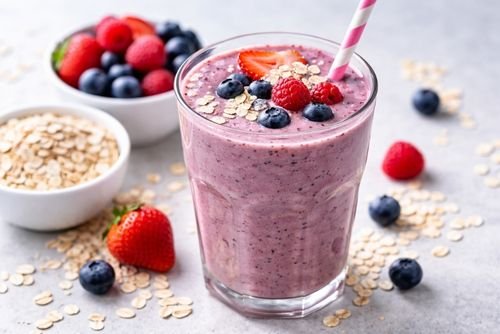
1. Creamy Berry Oatmeal Smoothie (Great for Morning Cravings)
Why this works:
Berries add fiber and antioxidants, while oats help you stay full longer without heaviness.
Ingredients
- ⅓ cup rolled oats
- 1 cup unsweetened almond milk
- ½ cup frozen mixed berries
- 1 tablespoon almond butter
- ½ teaspoon cinnamon
How to make
Blend everything until smooth. Let it sit for 2–3 minutes if you want it thicker.
Good to know:
This smoothie is naturally lower in sugar than many fruit smoothies and helps reduce mid-morning snacking.
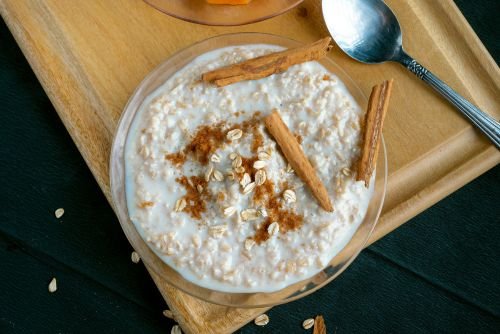
2. Apple Cinnamon Oatmeal Smoothie (Comfort Without the Sugar Crash)
Why this works:
Feels like apple pie, but supports steady energy instead of spikes.
Ingredients
- ⅓ cup rolled oats
- 1 small apple, chopped
- 1 cup unsweetened oat or almond milk
- 1 tablespoon chia seeds
- ½ teaspoon cinnamon
How to make
Blend well until creamy. Add ice if you prefer it colder.
Good to know:
Apple fiber + oats can support digestion and appetite control throughout the morning.
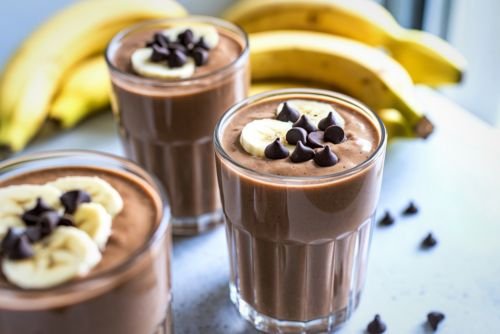
3. Chocolate Banana Protein Oat Smoothie (Keeps You Full Longer)
Why this works:
Adding protein helps preserve muscle and reduce hunger later in the day.
Ingredients
- ⅓ cup rolled oats
- ½ banana
- 1 cup unsweetened almond milk
- 1 scoop plant-based protein powder
- 1 teaspoon unsweetened cocoa powder
How to make
Blend until smooth. Add a splash of water if too thick.
Good to know:
This is ideal if you often feel hungry again soon after breakfast.
4. Green Oatmeal Smoothie (Light but Surprisingly Filling)
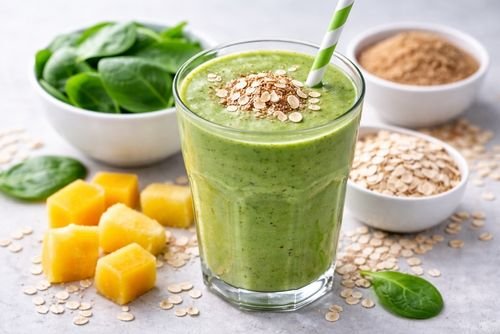
Why this works:
Combines fiber from oats with volume from greens—great for appetite awareness.
Ingredients
- ⅓ cup rolled oats
- 1 cup spinach
- ½ cup frozen mango or pineapple
- 1 cup unsweetened almond milk
- 1 tablespoon ground flaxseed
How to make
Blend thoroughly until no greens are visible.
Good to know:
Research often links higher fiber intake to improved satiety and better weight control over time.
5. Vanilla Oatmeal Smoothie for Evening or Late Breakfast
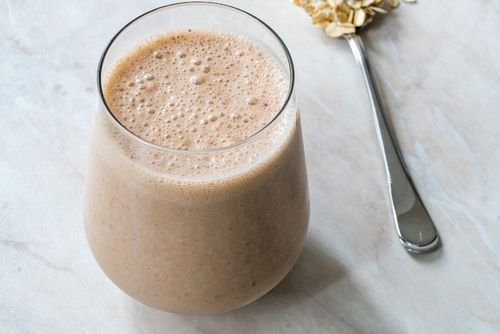
Why this works:
Simple, calming, and easy on digestion—no heavy sweetness.
Ingredients
- ⅓ cup rolled oats
- 1 cup unsweetened almond milk
- 1 tablespoon tahini or almond butter
- ½ teaspoon vanilla extract
- Pinch of cinnamon
How to make
Blend until smooth and creamy.
Good to know:
Balanced fat + fiber helps prevent late-day cravings without feeling restrictive.
5 Fully Gluten-Free, Dairy-Free, and No-Added-Sugar Oatmeal Smoothie Recipes
Looking for oatmeal smoothie weight loss recipes that are truly simple, healthy, and easy on your digestive system? These 5 fully gluten-free, dairy-free, and no-added-sugar oatmeal smoothie recipes are packed with fiber, flavor, and natural sweetness—perfect for keeping you full, energized, and on track with your weight loss goals.
1. Tropical Mango Oatmeal Smoothie
Why it works:
Mango adds natural sweetness and vitamin C, while oats provide lasting fullness.
Ingredients
- ⅓ cup gluten-free rolled oats
- 1 cup unsweetened almond or oat milk
- ½ cup frozen mango chunks
- 1 tablespoon chia seeds
- ¼ teaspoon turmeric (optional, anti-inflammatory boost)
Instructions
Blend all ingredients until smooth. Let it sit 2–3 minutes to thicken if desired.
Tip: Add a few ice cubes for a chilled, refreshing smoothie.
2. Chocolate Peanut Butter Oat Smoothie
Why it works:
Healthy fats and protein from peanut butter keep you satisfied, while cocoa adds flavor without sugar.
Ingredients
- ⅓ cup gluten-free oats
- 1 cup unsweetened almond milk
- 1 tablespoon natural peanut butter (no sugar added)
- 1 teaspoon unsweetened cocoa powder
- ½ frozen banana (for natural sweetness)
Instructions
Blend until creamy. Add water if too thick.
Tip: Sprinkle with cinnamon for extra flavor and blood sugar support.
3. Berry Spinach Oat Smoothie
Why it works:
Packed with fiber, antioxidants, and leafy greens for sustained energy and fullness.
Ingredients
- ⅓ cup gluten-free oats
- 1 cup unsweetened almond milk
- ½ cup frozen mixed berries
- 1 cup fresh spinach
- 1 tablespoon ground flaxseed
Instructions
Blend all ingredients until smooth. Enjoy immediately for maximum nutrient benefit.
Tip: Add a teaspoon of lemon juice to brighten flavors naturally.
4. Apple Cinnamon Oat Smoothie
Why it works:
Apple and cinnamon mimic comfort flavors while controlling cravings naturally.
Ingredients
- ⅓ cup gluten-free oats
- 1 cup unsweetened oat milk
- 1 small apple, chopped
- ½ teaspoon cinnamon
- 1 teaspoon chia seeds
Instructions
Blend everything until smooth. Add a few ice cubes if you like it chilled.
Tip: Leave the skin on the apple for extra fiber and fullness.
5. Creamy Avocado Oat Smoothie
Why it works:
Avocado adds healthy fats for satiety, making this smoothie perfect for slower mornings or as a meal replacement.
Ingredients
- ⅓ cup gluten-free oats
- ½ small avocado
- 1 cup unsweetened almond milk
- ½ frozen banana
- 1 teaspoon vanilla extract
Instructions
Blend until creamy and smooth. Adjust thickness with more almond milk if needed.
Tip: This smoothie is great as a “late breakfast” or light lunch because it keeps you full for hours.
Oatmeal Smoothie: Portion “Math” That Helps You Lose Weight Without Feeling Deprived
You know those days when your smoothie tastes amazing but an hour later, you’re eyeing the vending machine and wondering why your weight loss journey feels like a rollercoaster? The secret isn’t magic—it’s smart portion “math” that balances oatmeal smoothie weight loss recipes so they fuel you without overloading calories. Research shows that getting fiber and protein right at breakfast can cut later snacking by up to 20-30% in some studies, helping you stay on track without that deprived, hangry feeling.
Why Portions Matter More Than You Think
Portion “math” turns a delicious oats smoothie into a tool for real results. You’re aiming for that 300-450 calorie sweet spot total, where oats deliver 4-6g fiber to trigger fullness hormones like GLP-1.
- Oats amount: Just ¼-⅓ cup rolled oats, quick oats, or old-fashioned oats for high fiber content.
- Result: Curbs lunch overeating without extreme restriction.
The Fiber-Protein-Fat Formula
Start with your oats base—¼ cup dry for those whole grains and digestive health perks. Then layer in protein and fats to make it stick.
- Protein boost: 1 scoop plant-based protein powder or ½ cup Greek yogurt (10-20g).
- Healthy fats: 1 tbsp peanut butter, almond butter, or sunflower seed butter.
- Why it works: High-protein/fiber breakfasts keep you satisfied 3-4 hours longer than low-protein ones.
Liquid and Fruit: Keeping Calories in Check
Your non-dairy base keeps things light and creamy. Skip juice to dodge hidden sugars and stick to smarter picks.
Use 1 cup unsweetened almond milk, soy milk, or coconut milk. Pair it with ½-1 ripe banana or frozen bananas, plus a touch of maple syrup as natural sweetener, and 1 tsp chia seeds for extra dietary fibers. This stabilizes blood sugar with fewer calories overall.
Boosters Without the Calorie Creep
A little bit goes a long way here to keep your banana oatmeal smoothie recipe feeling like a treat.
- Flavor hits: Dash of vanilla extract, ice cubes for thicker texture.
- Fresh fruit: Small handful for natural taste.
- Nut butter limit: 1 tbsp max (about 90 calories)—healthy fats add up fast.
Prep Hacks for Real-Life Consistency
Prepping ahead makes busy mornings a breeze, turning quick breakfast into a habit you actually stick with.
- Zip lock bags: Measure oats, chia seeds, protein, and dried fruit in advance.
- Texture trick: Blend with ice cubes for creamy consistency and thicker texture.
- Evidence: Consistent portions outperform skipping breakfast for weight control.
When to Adjust for Your Goals
Tailor it to your life—oats support brain function and health benefits, but listen to your body.
Add more on active days with regular exercise, or track portions the first time to dial it in. For gluten issues, grab gluten-free oats; consult a doc for special conditions. Full transparency: Amazon Associate links, privacy policy, and PepsiCo Tasty Rewards disclosures apply to grocery store recs.
How to Customize Oatmeal Smoothies for Blood Sugar, Energy, and Cravings
You’ve got your base recipes—now let’s make them work exactly for you. The beauty of oatmeal smoothies is their flexibility: you can tweak ingredients to suit your energy needs, hunger levels, and blood sugar stability without turning it into a complicated diet.
1. Balance Carbs with Protein and Healthy Fats
Too many carbs without protein or fat can cause a quick energy spike followed by a crash—and that’s when cravings hit.
How to adjust:
- Add 1 tablespoon of nut butter (almond, peanut, or cashew)
- Include a scoop of plant-based protein powder
- Sprinkle 1–2 teaspoons of chia or flax seeds
This combo slows digestion, keeps you full longer, and helps prevent mid-morning sugar cravings.
2. Choose Low-Glycemic Fruits for Steady Energy
Not all fruits affect blood sugar the same way. While bananas and mango are delicious, they spike glucose faster than berries or green apples.
How to adjust:
- Use berries (blueberries, raspberries, strawberries) or green apples
- Limit high-sugar fruits if you notice energy crashes
- Rotate fruits to keep flavors interesting without overdoing sugar
Even small swaps can make a noticeable difference in morning energy and appetite control.
3. Add Fiber and Volume to Feel Fuller
Oats already provide soluble fiber, but adding extra fiber can help tame cravings and support digestion.
How to adjust:
- Add 1 tablespoon of psyllium husk, chia seeds, or ground flaxseed
- Toss in a handful of greens like spinach or kale
- Use frozen vegetables like zucchini or cauliflower for creaminess without flavor
Fiber slows digestion and keeps blood sugar steady while making your smoothie more filling.
4. Use Spices and Natural Flavor Boosters
Simple flavor tweaks can satisfy your taste buds and reduce the need for sweeteners.
Ideas:
- Cinnamon and nutmeg: help stabilize blood sugar
- Vanilla extract: naturally sweet without sugar
- Cacao or cocoa powder: adds richness and antioxidants
These small adjustments make smoothies taste indulgent while staying healthy.
5. Timing and Portion Adjustments
When you drink your smoothie and how much you pour matters as much as what’s inside.
Tips:
- Breakfast: 1 full smoothie with protein + healthy fats
- Mid-morning snack: ½ smoothie with high-fiber ingredients
- Evening: smaller portion with more healthy fats, less fruit
Matching smoothie size and composition to your schedule helps manage energy and prevent late-day cravings.
Friendly Reminder:
Customizing your oatmeal smoothies doesn’t require perfection. Start small—swap one ingredient, test your energy, and notice how your cravings respond. Over time, you’ll have a smoothie that’s perfect for your body, your routine, and your taste buds.
Conclusion
If you’re looking for a simple way to support weight loss without complicated prep, oatmeal smoothies can be a practical option. With basic ingredients from most grocery stores, they combine fiber, protein, and natural sweetness to help you stay full and energized. You can even prepare portions in a zip lock bag ahead of time for busy mornings, making it a convenient and easy way to stay consistent with healthy eating.
Using oats makes it easy to adjust texture, portions, and ingredients to match your needs, while simple prep habits support consistency on busy mornings. Whether you follow the recipes or customize your own, oatmeal smoothies offer a flexible, realistic approach to healthy eating that’s easier to maintain long term.
