
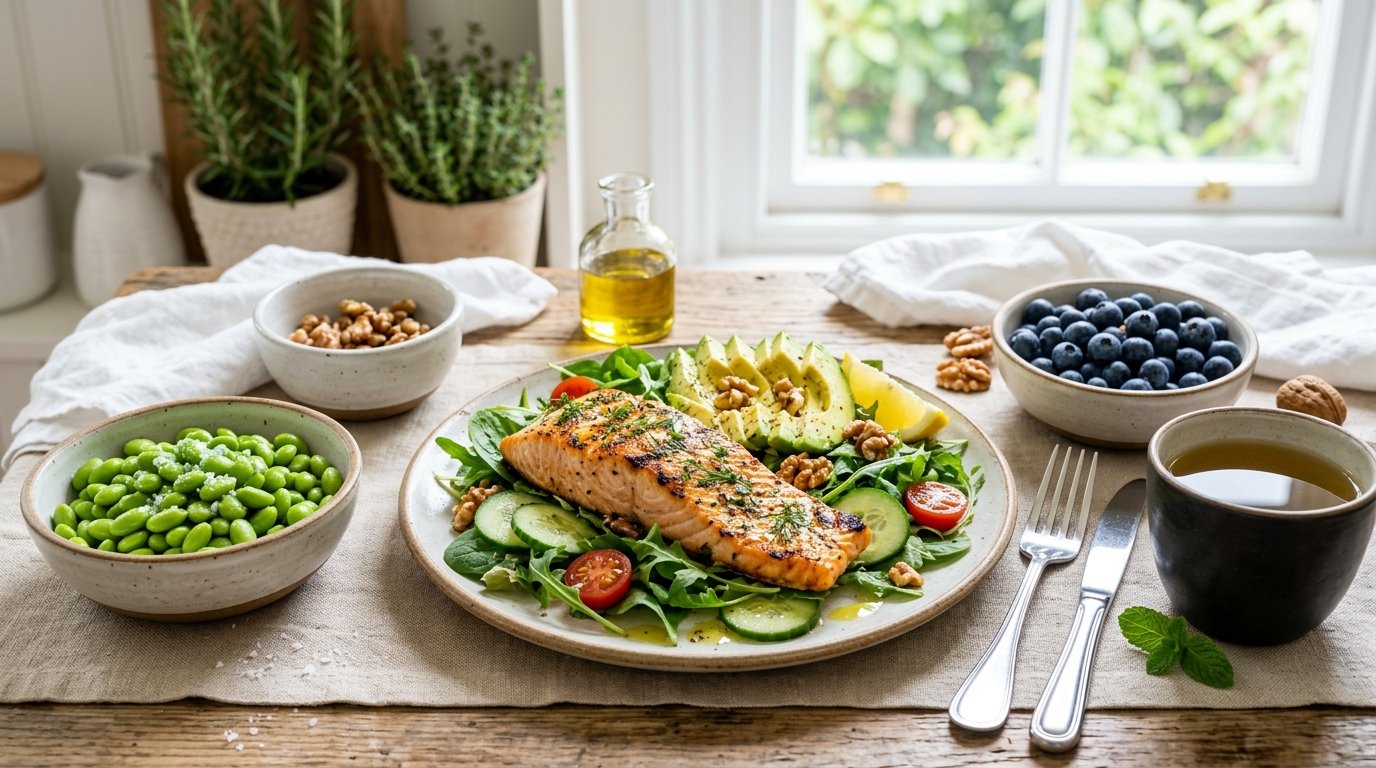
Quick answer: A good menopause meal plan puts protein at every meal (to protect muscle), includes calcium- and vitamin D-rich foods (for bones), plenty of fiber from vegetables, beans and whole grains (for blood sugar, cholesterol and fullness), and a daily serving of soy foods, which a 2023 clinical trial linked to far fewer hot flashes. Below is a 7-day plan you can print, plus a grocery list and swaps.
Educational content only. If you have a medical condition or take medication, check with your doctor before making big diet changes.
If you’re in perimenopause or menopause, you’ve probably noticed that the eating habits that worked for you at 35 don’t work the same way anymore. The weight settles around your middle, energy dips mid-afternoon, sleep gets patchy, and hot flashes can show up at the worst possible moment. It’s frustrating, and it isn’t in your head: falling estrogen changes where your body stores fat, how you handle blood sugar, and how quickly you lose muscle and bone.
Food can’t switch menopause off, but it can make a real difference to how you feel through it. This printable menopause meal plan gives you seven days of simple, realistic meals, the reasoning behind every choice, a grocery list, and easy swaps. Print it, stick it on the fridge, and adjust it to your own tastes.
To print: use your browser’s print option (Ctrl+P on Windows, Cmd+P on Mac, or Share then Print on your phone). The meal plan and grocery list are laid out in tables that fit neatly on a page.
What Your Body Needs During Menopause
Before the meals, here’s what the plan is built around, so you can adapt it with confidence.
Protein to protect muscle
Muscle naturally declines with age, and the drop in estrogen speeds it up. Less muscle means a lower calorie burn and weaker blood sugar control, which is part of why midlife weight gain feels so stubborn. Many experts on healthy aging suggest older adults aim for around 1.0 to 1.2 g of protein per kg of body weight a day, more if you’re active or losing weight. Spreading it across meals (about 25 to 30 g each) works better than loading it all into dinner. You can estimate your own target with the protein calculator.
Calcium and vitamin D for bones
Bone loss speeds up in the years around menopause. The U.S. National Institutes of Health recommends 1,200 mg of calcium a day for women over 50, and 600 IU of vitamin D daily up to age 70 (800 IU after that). Dairy, fortified soy milk, tofu made with calcium, canned sardines or salmon with bones, and leafy greens all help.
Fiber for blood sugar, cholesterol and fullness
LDL cholesterol tends to rise after menopause, and insulin sensitivity can drop. Fiber from oats, beans, lentils, vegetables, fruit and whole grains helps with both, and keeps you full on fewer calories. Most women over 50 need roughly 21 to 22 g a day, and many get far less.
Soy foods for hot flashes
This is the most interesting finding of recent years. In the WAVS trial, published in the journal Menopause, postmenopausal women who followed a low-fat, plant-based diet with half a cup of cooked soybeans a day saw moderate-to-severe hot flashes fall by 88% over 12 weeks, and lost about 8 pounds on average. It was a small study of 84 women, so it’s not the final word, but soy is a nutritious, low-risk addition. This plan includes a daily soy food: edamame, tofu, soy milk or roasted soybeans.
Healthy fats and omega-3s
Heart disease risk climbs after menopause. Oily fish, olive oil, nuts and seeds support heart health, which is why this plan leans Mediterranean in style.
Perimenopause vs Menopause: Does the Plan Change?
The same foundations apply to both stages, but the emphasis shifts a little. In perimenopause, hormones swing up and down rather than falling steadily, so cycles, cravings, mood and sleep can change from month to month. Regular meals with protein and fiber help smooth out those swings, and this is the ideal time to build strength training into your week before bone and muscle loss speed up. After menopause, when estrogen stays low, bone and heart health move to the front: calcium, vitamin D, omega-3 fats and fiber become even more important, and hot flashes are often the main day-to-day complaint, which is where the daily soy food comes in.
What a Balanced Menopause Plate Looks Like
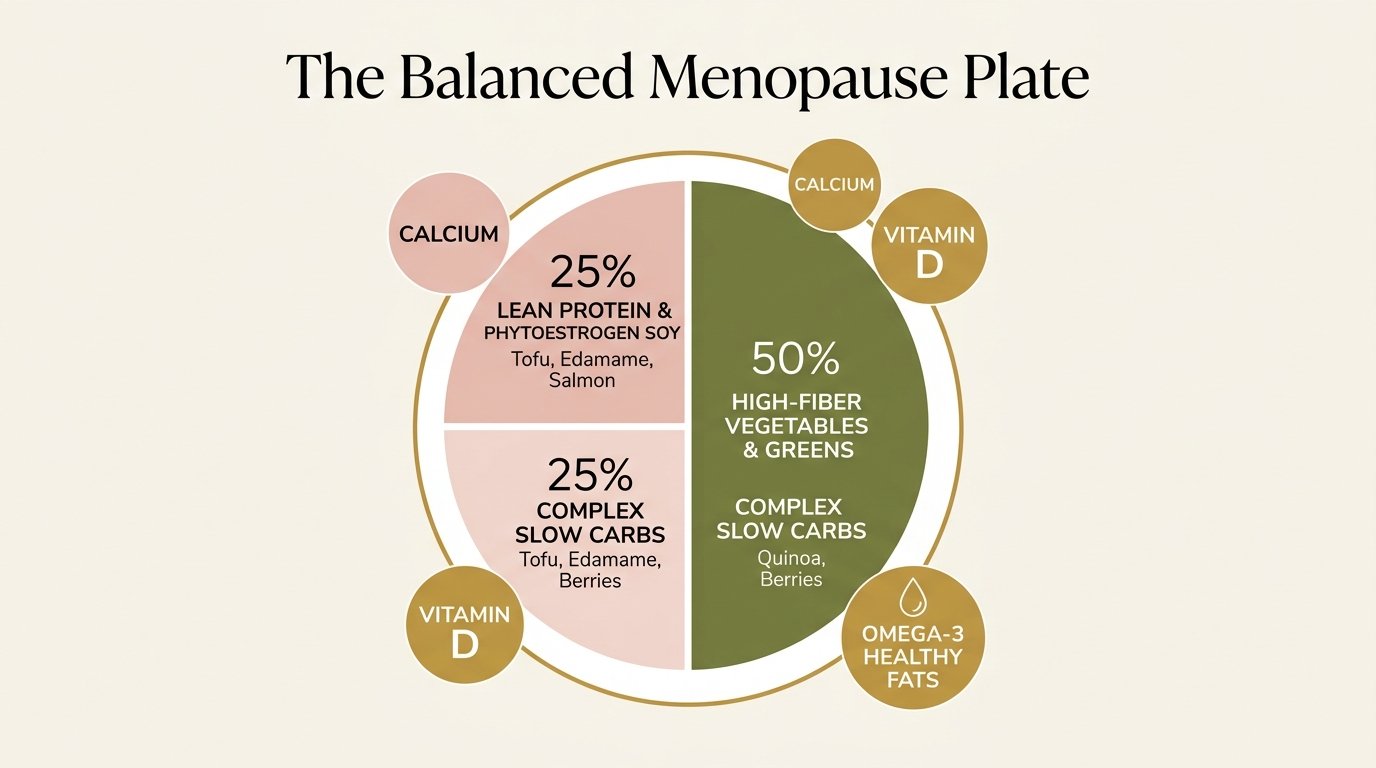
You don’t need to count every gram to follow this plan. Use this simple plate guide at lunch and dinner:
- A quarter of the plate protein: fish, chicken, eggs, tofu, lentils or beans, roughly the size and thickness of your palm or a bit more.
- Half the plate vegetables: a mix of colors, cooked or raw, including leafy greens several times a week for calcium, folate and fiber.
- A quarter of the plate fiber-rich carbs: brown rice, quinoa, potatoes, whole-grain bread or pasta, or more beans.
- A thumb of healthy fat: olive oil, avocado, nuts or seeds.
At breakfast, the same idea applies in a smaller form: a protein base (yogurt, eggs, cottage cheese, soy milk), a fiber source (oats, berries, flax, chia) and a little healthy fat.
Your 7-Day Printable Menopause Meal Plan
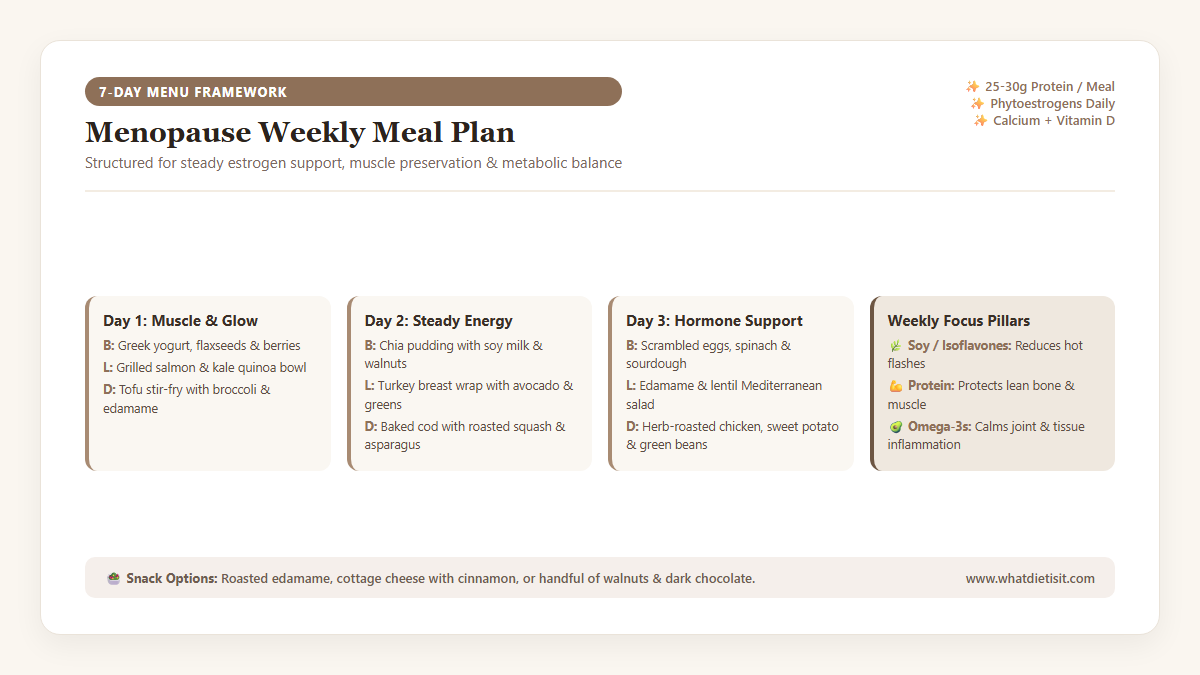
Each day includes protein at every meal, at least one calcium-rich food, a soy food, and plenty of fiber. Portions are moderate; adjust them to your hunger, size and activity.
| Day | Breakfast | Lunch | Snack | Dinner |
|---|---|---|---|---|
| 1 | Greek yogurt, berries, ground flaxseed, a few walnuts | Lentil and vegetable soup, whole-grain roll, side salad | Edamame with sea salt | Baked salmon, roasted broccoli and sweet potato |
| 2 | Oats cooked in fortified soy milk, cinnamon, sliced pear | Chickpea, cucumber, tomato and feta salad with olive oil | Apple with almond butter | Chicken and vegetable stir-fry with tofu cubes over brown rice |
| 3 | 2 eggs with spinach and mushrooms, whole-grain toast | Leftover stir-fry | Plain yogurt with pumpkin seeds | Turkey chili with kidney beans, topped with a spoon of yogurt |
| 4 | Smoothie: soy milk, frozen berries, spinach, 1 tbsp chia, protein powder | Tuna and white bean wrap with leafy greens | Roasted soybeans (small handful) | Baked cod, quinoa, green beans with lemon and garlic |
| 5 | Cottage cheese with peaches and ground flaxseed | Leftover turkey chili | Carrot sticks and hummus | Tofu and vegetable curry (made with light coconut milk) with brown rice |
| 6 | Whole-grain toast with avocado and 2 poached eggs | Canned sardines or salmon on salad with potatoes and olives | Orange and a handful of almonds | Grilled chicken, Mediterranean vegetable tray bake, small portion of bulgur |
| 7 | Overnight oats with yogurt, soy milk, chia and berries | Edamame, quinoa and vegetable bowl with sesame dressing | Cheese stick and a few grapes | Lean beef or lentil meatballs in tomato sauce with whole-wheat pasta and salad |
Drinks: water throughout the day, plus herbal tea, milk or fortified soy milk. If caffeine seems to trigger your hot flashes or disturb your sleep, keep coffee to the morning.
Want 4 Weeks, Not Just 7 Days?
The 28-Day Menopause Reset Journal gives you four full weeks of daily meal plans built around phytoestrogen-rich, nutrient-dense foods, weekly grocery lists you can print and shop from, and daily trackers to log your meals and see what helps. Designed for perimenopause, menopause and beyond.
Get the Reset Journal: $5Printable Grocery List
| Category | Items |
|---|---|
| Protein | Salmon, cod, canned tuna, canned sardines or salmon, chicken breast, lean ground turkey or beef, eggs |
| Soy foods | Frozen edamame, firm tofu (calcium-set if possible), fortified soy milk, roasted soybeans |
| Dairy | Plain Greek yogurt, cottage cheese, feta, cheese sticks |
| Beans and grains | Lentils, chickpeas, kidney beans, white beans, rolled oats, brown rice, quinoa, bulgur, whole-grain bread, whole-wheat wraps and pasta |
| Vegetables | Spinach, broccoli, mushrooms, green beans, peppers, zucchini, carrots, cucumbers, tomatoes, sweet potatoes, potatoes, salad greens |
| Fruit | Berries (fresh or frozen), apples, pears, peaches, oranges, grapes |
| Fats, nuts and seeds | Olive oil, avocado, walnuts, almonds, almond butter, pumpkin seeds, chia, ground flaxseed |
| Extras | Hummus, canned tomatoes, light coconut milk, curry paste, herbs, spices, lemons, garlic |
Shopping tip: frozen and canned foods count. Frozen berries, spinach, edamame and mixed vegetables are picked at peak ripeness, cost less and won’t go off before you use them. Canned beans, lentils, tuna and salmon save you cooking time; just rinse beans to cut the salt. Buying this way makes it much easier to stick with the plan on weeks when life gets busy, which is exactly when most healthy eating plans fall apart.
How to Turn This Into a 4-Week Habit
One good week is a great start, but menopause symptoms and weight respond to what you do most of the time over months. Here is a simple way to keep going:
- Week 1: follow the plan as written and note how your energy, sleep and hot flashes feel.
- Week 2: repeat the meals you liked, swap the ones you did not, and add one strength session.
- Week 3: try two or three new recipes using the same plate structure, and add a second strength session.
- Week 4: look back at your notes. Which foods and habits made you feel best? Keep those as your personal default week.
Foods That Can Make Menopause Symptoms Worse
You don’t need a strict “never” list, but it helps to notice your own triggers. The most common ones are:
- Spicy foods and very hot drinks, which some women find trigger or intensify hot flashes.
- Caffeine late in the day, which can worsen sleep and, for some, hot flashes.
- Sugary snacks and refined carbs, which cause blood sugar swings that can leave you tired and hungry again quickly.
- Highly processed, salty foods, which can add to bloating and aren’t great for blood pressure.
A simple way to find your personal triggers is to jot down hot flashes and what you ate or drank beforehand for two weeks. Patterns often jump out. For more detail, see these foods to avoid for menopause belly fat.
How This Plan Helps With Menopause Belly Fat
Midlife weight gain is driven by a mix of hormones, muscle loss, poorer sleep and stress, not just calories. This plan tackles the parts you can control: protein and strength protect muscle, fiber and whole foods steady blood sugar, and regular meals prevent the energy crashes that lead to evening grazing. If your weight has crept up specifically around your middle, the best diet for perimenopause belly fat goes deeper, and stress-related weight is covered in this guide to cortisol belly.
Food works best alongside movement. Two or three strength sessions a week are the single most useful habit for protecting muscle and bone at this stage. These gentle menopause workouts are a good place to start.
Easy Swaps to Make the Plan Your Own
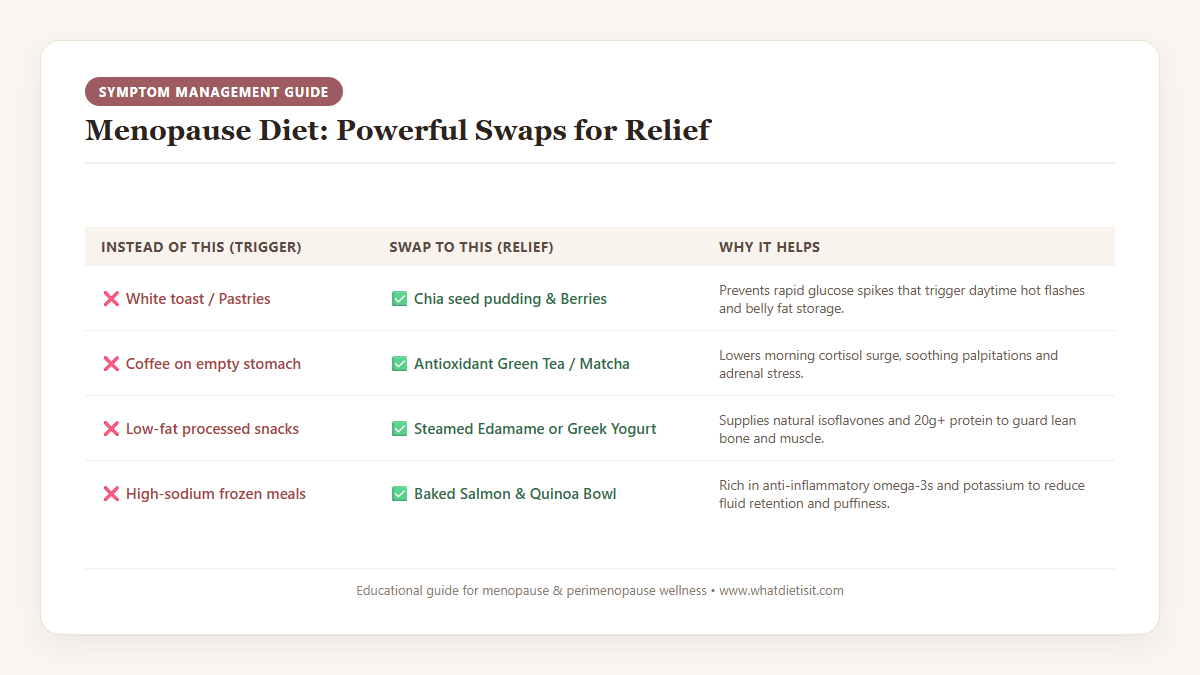
| If you… | Try this swap |
|---|---|
| Don’t eat fish | Use chicken, tofu or lentils, and get omega-3s from walnuts, chia and ground flaxseed |
| Are vegetarian | Replace meat and fish with tofu, tempeh, edamame, beans and eggs |
| Don’t tolerate dairy | Use fortified soy milk and soy yogurt, calcium-set tofu and canned fish with bones |
| Avoid gluten | Swap bread, pasta and bulgur for rice, quinoa, potatoes and certified gluten-free oats |
| Are short on time | Cook double dinners and eat leftovers for lunch, as the plan already does on days 3 and 5 |
| Want to lose weight | Keep protein portions the same, reduce grains and added fats slightly, and add more vegetables |
Meal Prep Tips for Busy Weeks
- Cook grains in bulk on Sunday: a pot of brown rice and one of quinoa covers most of the week.
- Roast two trays at once: one of vegetables, one of chicken or tofu.
- Batch a soup or chili and freeze half in single portions.
- Prep breakfast jars: overnight oats or yogurt with berries and seeds, ready to grab.
- Keep frozen edamame and berries on hand. They’re nutritious, cheap and never go off.
Sleep, Stress and Menopause Eating
Poor sleep and stress both push appetite up and make sugary, high-fat foods harder to resist, and menopause tends to bring more of both. A few habits help: eat dinner at least two to three hours before bed, keep evening meals lighter, keep your bedroom cool, and try a regular wind-down routine. If stress feels like it’s driving your eating, a low-cortisol meal plan offers practical ideas.
Frequently Asked Questions
What is the best diet for menopause?
There isn’t one perfect diet, but the strongest evidence supports a Mediterranean-style pattern: plenty of vegetables, fruit, whole grains, beans, fish, olive oil and nuts, with enough protein at every meal. Adding soy foods may help with hot flashes.
How many calories should I eat during menopause?
It depends on your height, weight, age and activity. Energy needs usually fall a little with age and muscle loss. Rather than slashing calories, focus on protein, fiber and strength training, which help you stay full and protect your metabolism.
Is soy safe during menopause?
For most women, whole soy foods like edamame, tofu and soy milk are a safe and nutritious part of the diet. If you have a history of hormone-sensitive cancer, talk to your oncologist about what’s right for you.
Can diet stop hot flashes?
Diet may reduce them for some women. The WAVS trial found a large drop in moderate-to-severe hot flashes with a low-fat, plant-based diet plus daily soybeans. For severe symptoms, talk to your doctor about treatments, including hormone therapy and non-hormonal options.
Should I take supplements during menopause?
Food should come first, but some women benefit from calcium or vitamin D supplements, especially if they don’t eat dairy or get little sun. Ask your doctor to check your levels and advise you rather than guessing.
Do I need to cut carbs in menopause?
No. Very low-carb diets are not necessary, and cutting out whole grains, beans and fruit means losing valuable fiber. What helps most is choosing fiber-rich carbs in sensible portions, pairing them with protein, and cutting back on sugary drinks, sweets and refined snacks.
Is intermittent fasting good during menopause?
Some women find a shorter eating window helps them stop evening snacking, and others find it makes them hungrier and more tired. If you try it, make sure you still get enough protein across your meals, because a shorter window can make that harder. There is no need to fast to follow this plan.
The Bottom Line
You don’t need a complicated diet to feel better through menopause. Put protein on every plate, cover your calcium and vitamin D, eat plenty of fiber, add a daily soy food, and pair it with strength training and good sleep. Print this week’s plan, see how you feel, and if you want the next month mapped out with grocery lists and trackers, the 28-Day Menopause Reset Journal picks up right where this plan ends. For the bigger picture, read this realistic guide to a menopausal diet for weight loss.
References
- Barnard ND, et al. The Women’s Study for the Alleviation of Vasomotor Symptoms (WAVS). Menopause, 2023.
- National Institutes of Health, Office of Dietary Supplements. Calcium fact sheet.
- National Institutes of Health, Office of Dietary Supplements. Vitamin D fact sheet.
