
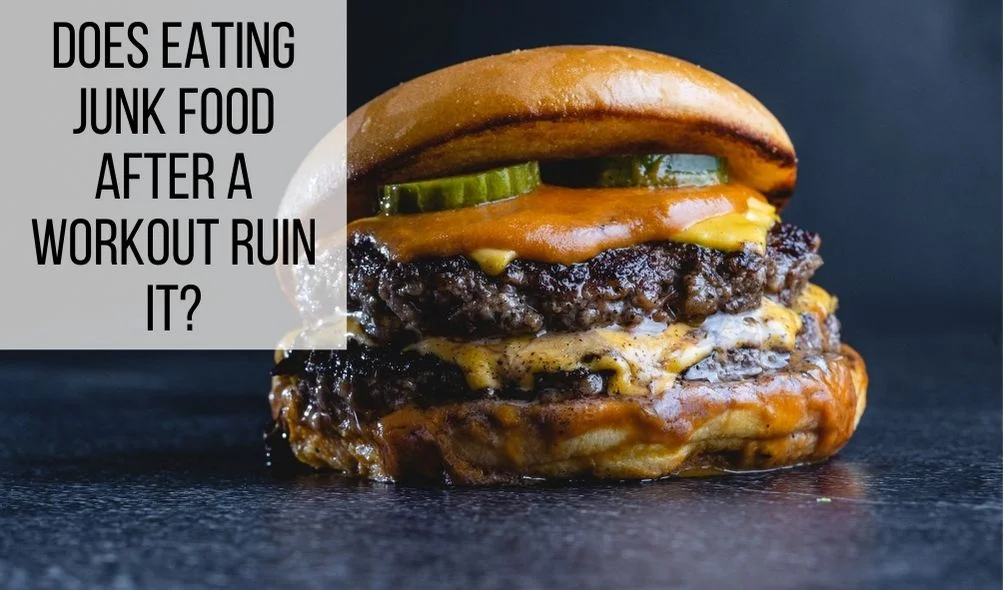
You just finished a hard leg day, and there’s a slice of cake staring at you from the kitchen counter. Does eating it undo the last 45 minutes of work? I get asked some version of this question more than almost any other, and the honest answer is more interesting than a flat yes or no.
One dessert is not going to erase a workout. Your body doesn’t keep a scoreboard that resets to zero the moment you eat something imperfect. What actually matters is the pattern you keep up over weeks and months, plus a few specific things about timing and portion size that most people get backwards. Let’s go through what’s real, what’s myth, and what to do the next time you’re standing in front of that cake.
Does what you eat after a workout actually matter?
Yes, but probably not for the reason you think. A single slice of cake runs somewhere around 300-400 calories. A 45-minute strength session or moderate cardio workout typically burns 250-500 calories, depending on your weight and effort. So on a strict calorie basis, that one treat can roughly cancel out the session, or it might not, depending on how hard you pushed. That’s the math people fixate on, and it’s the least useful part of the story.
The part that actually shapes your results is what you eat on the other six meals that day, and the other twenty or so meals that week. One dessert inside an otherwise solid week of eating has close to zero measurable effect on your progress. The same dessert, repeated as a daily post-workout habit for three months, is a different story entirely, not because of any single day but because of the pattern it becomes.
How much your workout changes the equation
The intensity and length of your session matters more than most people assume. If you did 45 minutes of squats and lat pulldowns, being a bit more deliberate about your next meal makes sense. If you managed a full 90-minute session, you’ve earned more room to be relaxed about it. If you want a rough sense of how many calories your specific session actually burned before you start doing food math in your head, my steps and calories burned calculator gives you a real number instead of a guess.
Timing plays a role too, though less than the fitness industry used to claim. Eating within roughly 15 minutes to an hour after training, followed by a full balanced meal a few hours later, is a reasonable approach according to Cleveland Clinic’s guidance on pre- and post-workout eating. But the old idea of a tiny 30-minute “anabolic window” that you have to hit or lose your gains has not held up well under closer research, which I get into below.
A short, easy walk on the treadmill won’t be affected much by what you eat afterward. A long, heavy session with squats and deadlifts is a better moment to lean toward something more nutrient-dense, simply because your body is more primed to use it well.
What about eating junk food before a workout?
This is where a lot of advice gets it wrong, including older versions of this article. Eating before you train is not something to avoid, and for most people it actually helps. Cleveland Clinic recommends a balanced meal with carbs and lean protein three to four hours before exercising, or a light snack like fruit or a granola bar 30 to 60 minutes beforehand if you’re training first thing in the morning.
Where junk food specifically becomes a problem pre-workout is the fat and fiber content, not the fact that it’s a treat. A greasy, heavy meal sits in your stomach and can cause cramping, sluggishness, or nausea once you start moving. A small amount of sugar and simple carbs before a workout, on the other hand, is often genuinely useful, since it’s exactly the kind of quick fuel your muscles want to burn.
What’s worth skipping right after a hard session
Right after a tough workout isn’t the ideal moment for anything heavy and greasy, like a large pizza, a double burger, or a basket of fries. These foods are slow to digest and high in fat, which can leave you feeling sluggish exactly when your body is trying to shuttle nutrients into your muscles for recovery. That doesn’t make them forbidden. It just makes them a better fit for later in the day, once your body isn’t mid-recovery.
If you notice you’re constantly hungry after training, that’s usually a sign you’re under-eating overall, not a sign you need to reach for something ultra-processed. A protein-forward snack, even a small one, tends to satisfy that post-workout hunger far better than chips or cookies do, and it’s fine to genuinely enjoy a treat as long as your overall choices are healthy ones, like these healthy snack ideas that work just as well post-workout as they do for a school break.
The “anabolic window” you’ve heard about is mostly a myth
For years, the fitness industry pushed the idea that you had a razor-thin 30-minute window after training to get protein in, or you’d lose most of the muscle-building benefit of your workout. A widely cited meta-analysis published in the Journal of the International Society of Sports Nutrition found that once you account for total daily protein intake, the specific timing of when you eat it has a much smaller effect on muscle growth than people assumed. Later research has generally confirmed that the real window is closer to several hours, not minutes, and that what you eat across the whole day matters far more than what you eat in the ten minutes after your last rep.
Practically, that means the cake, the chips, or the takeout you’re stressing over is almost never the deciding factor. What decides your results is whether your average day, averaged over weeks, gives your body enough protein, enough total calories in the right direction for your goal, and enough recovery. If you want a clearer read on where your own numbers actually stand instead of guessing, I built the 4-Week Weight Loss Planner to make that math simple to track without turning every meal into a math test.
What to actually eat after a workout
Cleveland Clinic’s general guidance is 20 to 30 grams of protein post-workout for strength training, paired with carbohydrates at roughly a 2:1 carb-to-protein ratio. You don’t need to hit that exactly, but it’s a useful ballpark.
Lean proteins
Chicken, eggs, Greek yogurt, tofu, or a protein shake all work well here. Protein is the raw material your muscles use to repair the microscopic damage from training, and getting enough of it across the day, not just post-workout, is what actually drives the rebuilding process.
Complex carbohydrates
Brown rice, whole-wheat pasta, oats, or a sweet potato replenish the glycogen your muscles burned through during the session. If you trained hard, this isn’t optional padding, it’s fuel your body is actively asking for.
Fruit and vegetables
A banana or a handful of berries gives you fast-digesting carbs without the fat load of junk food, plus fiber and micronutrients that support digestion. Fruit isn’t a protein source, so pair it with something else if you’re trying to hit a protein target.
Aim to eat every three to four hours rather than skipping long stretches and then overcorrecting with a large meal. Consistent, moderate portions tend to keep energy and hunger steadier than the feast-or-restrict pattern a lot of people fall into around workouts.
Ultra-processed food is the bigger pattern to watch, not any single treat
Here’s what’s actually changed in the nutrition conversation over the last couple of years, and it’s more useful than any single “can I eat this” question. A 2024 BMJ review covering nearly 10 million people, summarized by Stanford Medicine, found convincing evidence linking regular ultra-processed food intake to a roughly 50% higher risk of cardiovascular death and highly suggestive evidence linking it to higher rates of obesity and type 2 diabetes. Ultra-processed foods now make up close to 60% of the calories the average American adult eats.
What makes these foods different from, say, a homemade dessert isn’t just sugar or fat content, it’s that they’re engineered to hit what food scientists call a “bliss point,” a precise combination of sugar, salt, and fat designed to make you want more than you’d naturally eat. They’re also typically stripped of the fiber and micronutrients that slow digestion and help you feel full. That’s the pattern worth watching, not any individual slice of cake after leg day. A homemade treat once in a while looks nothing like a daily pattern of packaged, engineered food, even if the calorie counts look similar on paper.
If I eat poorly but still exercise, will I lose weight?
You can lose weight in the short term on a poor diet if you’re still in a calorie deficit, weight loss is fundamentally about energy balance. But doing it that way tends to raise your risk of heart disease, elevated cholesterol, and blood sugar problems along the way, and it usually makes the weight harder to keep off, since you’re not building the habits that sustain it. If you already manage a condition like diabetes or high cholesterol, it’s worth talking to your doctor about how your post-workout food choices fit into your specific plan, since individual guidance varies more than a general article like this one can cover.
The healthier route isn’t more complicated, it’s just less dramatic: eat foods that leave you satisfied on fewer calories, keep protein adequate, and let your workouts do their job without treating every meal as a referendum on your willpower.
Regular movement lowers your risk for a long list of problems, including heart disease and type 2 diabetes, independent of diet. If you can only change one thing, showing up for your workouts consistently matters more than any single meal decision around them.
Three mistakes people make with post-workout eating
- Under-eating all day, then crashing at dinner. Skipping meals to “save up” for a treat later usually backfires into overeating something ultra-processed out of genuine hunger, not craving.
- Treating one indulgent meal as a reason to give up for the week. The all-or-nothing mindset does more damage than the meal itself ever could.
- Ignoring hydration. Mild dehydration can feel a lot like hunger and cravings. Water or an electrolyte drink after a sweaty session sometimes solves what looks like a food problem.
Quick answers to common questions
Can I eat rice after a workout?
Yes. Rice is a straightforward carbohydrate source that helps refuel muscle glycogen, and it’s naturally gluten-free. I’ve written a full breakdown of how rice fits into a post-workout meal if your goal is weight loss.
Can I eat chips after a workout?
Occasionally, yes, and low-sodium or whole-grain versions are the better pick, since sodium in large amounts can contribute to fluid retention and bloating. They’re not a great primary recovery food since they’re low in protein, but they’re not going to derail anything as an occasional side.
What about diet soda after a workout?
Water is still the better default for rehydrating. If you’re curious whether artificial sweeteners themselves work against weight loss goals, I’ve looked at what the research actually shows on artificial sweeteners and weight loss in more detail.
How much protein do I actually need after a workout?
Roughly 20-30 grams is a solid post-workout target for most people doing strength training, though your total daily intake matters more than this one meal. Use my protein calculator to find a daily number that fits your weight and goals, and my macronutrient calculator if you want to plan carbs and fat around it too.
I keep craving junk food after every workout. What’s going on?
That’s usually either under-fueling before or during training, or a habit loop that’s built up around “earning” a reward after exercise. I go through practical, non-restrictive ways to break that cycle in how to control junk food cravings. If bloating shows up after you give in, this piece on how to debloat after binge eating covers what actually helps.
If you’re managing insulin resistance specifically, my shopping list for an insulin resistance diet is a good next stop, and if you suspect gluten is sneaking into your post-workout snacks, here’s where gluten hides in everyday foods.
One dessert after leg day was never the real question. The pattern you build over weeks is. Get that right most of the time, and the occasional slice of cake stops being something to feel guilty about.
