

If you have PCOS, chances are you’ve stood in the grocery aisle staring at milk, wondering if it’s helping you, or silently making your symptoms worse. Bloating, stubborn weight gain, acne, irregular periods, or trouble getting pregnant can make every food choice feel stressful, and dairy often ends up at the center of the debate.
So, is dairy bad for PCOS?
The short answer: it depends on the individual.
PCOS affects an estimated 1 in 10 women of reproductive age, and many of them also struggle with insulin resistance, inflammation, or hormone imbalances. Some studies suggest that certain dairy proteins may influence insulin and androgen levels, which can worsen symptoms in sensitive women. At the same time, other research shows that fermented or full-fat dairy may support fertility and provide essential nutrients like calcium and vitamin D—nutrients many women with PCOS already lack.
This conflicting advice leaves many women confused: should you cut out milk completely, switch to plant-based alternatives, or keep dairy in moderation?
In this article, we break down what science actually says about dairy and PCOS, who may benefit from limiting it, who may not need to avoid it at all, and how to make smart, evidence-based choices that support your hormones, metabolism, and long-term health.
This content is based on current nutrition and endocrine research and is intended for educational purposes. Dietary changes for PCOS should always be personalized and discussed with a qualified healthcare provider.
Contents
- 1 What Is PCOS and Why Diet Matters So Much
- 2 Why Dairy Gets Blamed in PCOS Diets
- 3 Why Some Women With PCOS Feel Better After Cutting Out Dairy
- 4 When Dairy May Be Safe — or Even Helpful — for PCOS
- 5 Full-Fat vs Low-Fat Dairy: Does the Type Matter?
- 6 The Role of Inflammation and Dairy Sensitivity
- 7 Do You Really Need to Avoid Dairy on a PCOS Diet?
- 8 Best Dairy-Free Milk Alternatives for PCOS
- 9 Can You Still Get Enough Calcium and Vitamin D Without Dairy?
- 10 How to Know If Dairy Is a Problem for Your PCOS
- 11 Simple Tips for Testing Dairy Without Harming Your Nutrition
- 12 Key Takeaways: Making Dairy Choices That Support PCOS
- 13 References
What Is PCOS and Why Diet Matters So Much
If you’re living with PCOS, you’ve likely noticed that symptoms don’t stop at irregular periods. Changes in weight, energy levels, skin, and fertility can all be part of the picture. That’s because PCOS is closely tied to hormones and metabolism—and both are strongly influenced by what you eat.
Understanding this connection helps explain why diet matters so much for managing PCOS symptoms.
What PCOS Is Doing in the Body
Polycystic Ovary Syndrome (PCOS) is a hormonal condition that affects how the ovaries function. Many women with PCOS produce higher levels of androgens, which can disrupt ovulation and lead to symptoms like acne, excess hair growth, and irregular cycles.
PCOS doesn’t have a single cause. Research shows it develops from a mix of genetic, hormonal, and metabolic factors, which is why symptoms vary widely from person to person.
The Role of Insulin Resistance in PCOS
A large number of women with PCOS also have insulin resistance, meaning the body struggles to use insulin efficiently. When insulin levels stay high, the ovaries may produce more androgens, worsening hormonal imbalance.
Because insulin response is directly affected by food—especially carbohydrates—diet plays a key role in symptom management, even for women who are not overweight.
Why Food Choices Can Change PCOS Symptoms
What you eat can influence blood sugar stability, inflammation, and hormone signaling. Diets that support balanced blood sugar and reduce inflammation have been linked to improvements in cycle regularity and metabolic health in women with PCOS.
This is also why certain foods, like dairy, are often questioned. They may affect insulin or inflammation in some women, while having little or no impact in others.
Why There’s No One-Size-Fits-All PCOS Diet
PCOS affects everyone differently. Food tolerance, insulin sensitivity, and inflammation levels all vary, which means a food that helps one woman may not work for another.
The goal isn’t strict elimination, but learning how your body responds—so you can build a PCOS diet that supports your hormones and long-term health.
Why Dairy Gets Blamed in PCOS Diets
If you’ve searched for PCOS diet advice online, you’ve probably seen dairy listed as a food to avoid. Milk, cheese, and yogurt often get blamed for worsening symptoms like acne, weight gain, and hormone imbalance. But why does dairy have this reputation in the first place?
Dairy, Insulin, and Hormone Signals
One reason dairy is questioned in PCOS diets is its effect on insulin. Some studies suggest that certain dairy products can stimulate insulin release more than expected, even when they don’t contain large amounts of sugar. For women with PCOS—many of whom already struggle with insulin resistance—this extra insulin response may contribute to higher androgen levels.
This doesn’t mean dairy causes PCOS, but it may influence symptoms in women who are already insulin-sensitive.
The Role of Dairy Proteins
Dairy contains proteins such as casein and whey, which can affect growth-related hormones in the body. Research has explored how these proteins may influence insulin-like growth factor (IGF-1), a hormone linked to acne and androgen activity. Higher IGF-1 levels have been observed in some women with PCOS, which helps explain why dairy is often associated with skin and hormone concerns.
Inflammation and Dairy Sensitivity
Another reason dairy gets blamed is inflammation. Some women experience digestive discomfort, bloating, or inflammatory reactions after consuming dairy—especially if they have lactose intolerance or sensitivity to milk proteins. Chronic low-grade inflammation is common in PCOS, so foods that trigger inflammation in sensitive individuals may worsen how they feel overall.
Why the Evidence Isn’t One-Sided
It’s important to note that not all research shows negative effects. Some studies have found neutral or even beneficial effects of certain dairy products, especially fermented or full-fat options. This mixed evidence is why experts no longer recommend cutting out dairy across the board for all women with PCOS.
What This Means for You
Dairy is blamed in PCOS diets because of its potential effects on insulin, hormones, and inflammation—but those effects are not universal. How your body responds matters more than general rules. For some women, limiting dairy improves symptoms. For others, it makes little difference.
Understanding this helps you make informed choices rather than eliminating foods out of fear.
Why Some Women With PCOS Feel Better After Cutting Out Dairy
If you’ve tried removing dairy and noticed less bloating, clearer skin, or more stable energy, you’re not imagining it. For some women with PCOS, cutting out dairy can reduce symptom flare-ups—but the reasons are individual, not universal.
Reduced Insulin Spikes
For women who are insulin-resistant, removing dairy may help lower overall insulin stimulation. With fewer insulin spikes, the ovaries may produce fewer androgens, which can improve symptoms like acne or irregular cycles over time.
Less Inflammation and Digestive Stress
Many adults have some degree of lactose intolerance or sensitivity to dairy proteins without realizing it. When dairy triggers digestive discomfort or low-grade inflammation, removing it can lead to noticeable improvements in how the body feels and functions—especially in a condition like PCOS, where inflammation is already common.
Fewer Skin and Hormonal Triggers
Some women notice improvements in acne after eliminating dairy. This may be related to changes in IGF-1 activity or inflammation, both of which have been linked to skin health in women with PCOS.
When Dairy May Be Safe — or Even Helpful — for PCOS
Despite its reputation, dairy isn’t automatically harmful for everyone with PCOS. In fact, some women tolerate it well and may even benefit from including certain types.
Dairy Can Support Nutrient Intake
Dairy products provide protein, calcium, and vitamin D—nutrients that are commonly low in women with PCOS. Adequate intake supports bone health, muscle function, and overall metabolic health.
Some Dairy Types May Be Better Tolerated
Fermented dairy, such as yogurt, may have a gentler effect on insulin response and digestion compared to milk. Full-fat dairy may also behave differently than low-fat versions, which are often more processed or sweetened.
Fertility and Dairy Intake
Some research has observed associations between certain dairy patterns and improved fertility outcomes. While this doesn’t prove cause and effect, it highlights that dairy is not universally harmful and may play a neutral or supportive role for some women.
The Most Important Factor: Your Individual Response
The key question isn’t whether dairy is “good” or “bad,” but how your body responds to it. Monitoring symptoms, choosing minimally processed options, and avoiding added sugars can help you decide whether dairy belongs in your PCOS diet.
Full-Fat vs Low-Fat Dairy: Does the Type Matter?
If you do include dairy in your PCOS diet, the type you choose may matter more than you think. Not all dairy products affect hormones and metabolism in the same way.
How Fat Content Can Influence Insulin Response
Low-fat dairy is often more processed and may contain added sugars or flavorings, which can lead to faster insulin spikes. For women with PCOS, frequent insulin surges can contribute to hormonal imbalance.
Full-fat dairy, on the other hand, tends to slow digestion. This may lead to a steadier blood sugar response for some women, although tolerance varies from person to person.
Full-Fat Dairy and Fertility Signals
Some research has observed that women who consume full-fat dairy products may have better ovulatory function compared to those who rely mainly on low-fat options. While this doesn’t mean full-fat dairy improves fertility for everyone, it suggests that fat content plays a role in how dairy interacts with reproductive hormones.
Quality and Processing Matter
Regardless of fat content, highly processed dairy products—especially sweetened yogurts, flavored milk, and desserts—are more likely to worsen PCOS symptoms. Choosing minimally processed options is often more important than focusing on fat percentage alone.
The Role of Inflammation and Dairy Sensitivity

Inflammation is a common underlying feature of PCOS, and for some women, dairy can contribute to it—especially if there’s an underlying sensitivity.
Lactose Intolerance and Digestive Stress
Many adults have difficulty digesting lactose, even without obvious symptoms. When lactose isn’t properly broken down, it can cause bloating, discomfort, and low-grade inflammation. Over time, this may worsen fatigue and metabolic stress in women with PCOS.
Sensitivity to Dairy Proteins
Some women react not to lactose, but to dairy proteins like casein or whey. These sensitivities can trigger inflammatory responses that affect the gut, skin, or overall well-being. In women with PCOS, this added inflammation may intensify symptoms.
Why Symptoms Improve After Removing Dairy
If dairy is contributing to inflammation or digestive strain, removing it can reduce stress on the body. This may explain why some women notice improvements in bloating, acne, or energy levels after cutting back—even if dairy wasn’t the primary cause of their PCOS.
Listening to Your Body Matters Most
Inflammation and sensitivity are highly individual. If dairy leaves you feeling uncomfortable or triggers symptoms, that information is valuable. Adjusting your intake based on how you feel—rather than strict rules—leads to more sustainable PCOS management.
Do You Really Need to Avoid Dairy on a PCOS Diet?
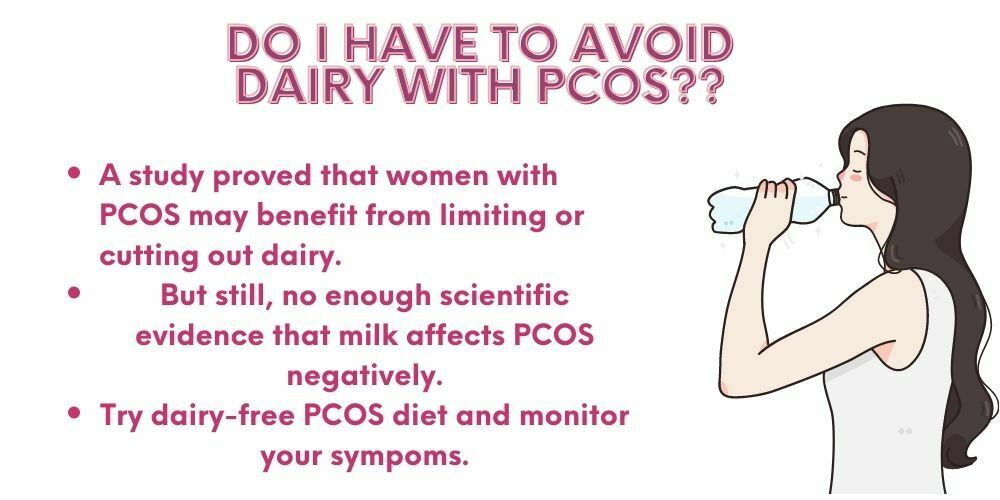
Short answer: not necessarily.
There’s no strong scientific evidence showing that all women with PCOS must avoid dairy. PCOS is a highly individual condition, and how your body responds to dairy depends on factors like insulin sensitivity, inflammation levels, digestion, and overall diet quality.
When Avoiding Dairy May Help
You might benefit from limiting or avoiding dairy if you notice that it:
- Worsens acne or skin inflammation
- Causes bloating, digestive discomfort, or fatigue
- Makes blood sugar harder to control
In these cases, dairy may be adding stress to an already sensitive metabolic or hormonal system.
When You Don’t Need to Cut It Out
If you tolerate dairy well and don’t experience symptom flare-ups, there’s no clear reason to remove it. Dairy can provide protein, calcium, and vitamin D—nutrients that support bone health, muscle function, and metabolic health in women with PCOS.
The key is awareness, not restriction. Paying attention to your symptoms after consuming dairy is more useful than following strict rules.
A Practical Approach
Many women find it helpful to try a short dairy-free period, then slowly reintroduce certain products to see how their body responds. This allows you to make informed choices without risking nutrient gaps.
Best Dairy-Free Milk Alternatives for PCOS
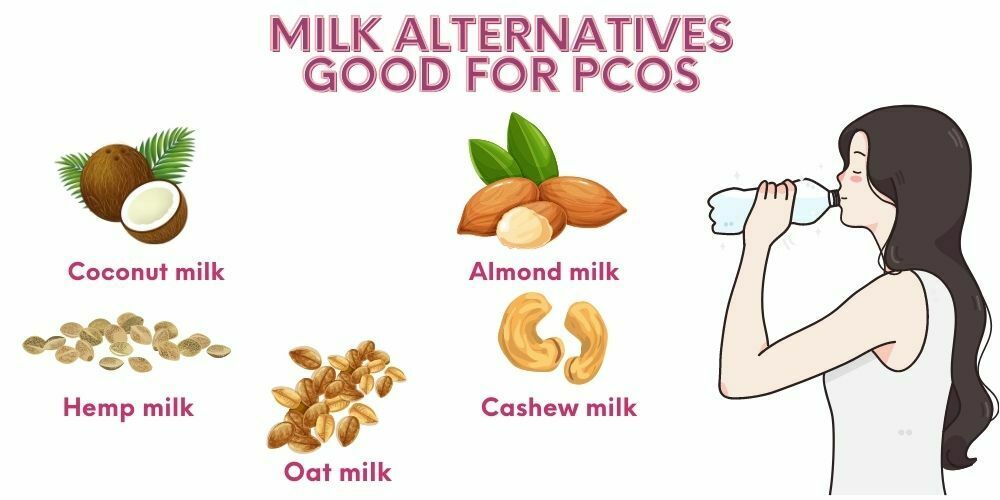
If you decide to reduce or avoid dairy, choosing the right alternatives matters. Not all plant-based milks are created equal, especially for blood sugar and hormone health.
Almond Milk
Almond milk is low in carbohydrates and naturally free of lactose. It’s often well tolerated by women with PCOS, especially when unsweetened. It also provides vitamin E, which supports skin and metabolic health.
Coconut Milk
Coconut milk is low in carbs and contains medium-chain fats that may support energy metabolism. However, it’s high in saturated fat and low in protein, so it’s best used in moderation rather than as a primary milk replacement.
Cashew Milk
Cashew milk has a creamy texture and provides healthy unsaturated fats and minerals like magnesium. It works well in smoothies and coffee but can be higher in calories, especially in sweetened versions.
Oat Milk
Oat milk is fiber-rich and gentle on digestion, but it’s higher in carbohydrates. For women with insulin resistance, it’s best to choose unsweetened versions and monitor blood sugar response.
What to Look for on Labels
When choosing any dairy-free milk, look for:
- Unsweetened varieties
- Minimal ingredients
- No added oils or sugars
Fortified options with calcium and vitamin D can help prevent nutrient deficiencies when dairy is removed.
Can You Still Get Enough Calcium and Vitamin D Without Dairy?
Yes—you can still meet your calcium and vitamin D needs without dairy, but it does require some planning.
Calcium is essential for bone health, muscle function, and nerve signaling, while vitamin D plays a key role in hormone regulation, insulin sensitivity, and immune health. Many women with PCOS already have low vitamin D levels, which makes intake even more important.
Getting Calcium Without Dairy
You can obtain calcium from a variety of non-dairy foods, including:
- Leafy greens like kale and bok choy
- Almonds and sesame seeds
- Beans and lentils
- Calcium-fortified plant-based milks
Spacing calcium intake throughout the day helps improve absorption.
Getting Enough Vitamin D
Vitamin D is harder to get from food alone. Fatty fish, eggs, and fortified foods can help, but sunlight exposure remains an important source. Because deficiency is common in women with PCOS, many benefit from having their levels checked and discussing supplementation with a healthcare provider.
Avoiding dairy doesn’t automatically lead to deficiencies—but ignoring nutrient balance can.
How to Know If Dairy Is a Problem for Your PCOS
There’s no test that can instantly tell you whether dairy affects your PCOS symptoms. The most reliable tool is paying attention to how your body responds.
Signs Dairy May Be Affecting You
You may want to experiment with limiting dairy if you notice:
- Acne flare-ups after consuming milk or cheese
- Bloating, gas, or digestive discomfort
- Increased fatigue or inflammation
These reactions can be linked to insulin response, lactose intolerance, or sensitivity to dairy proteins.
A Simple Self-Test Approach
Many experts recommend removing dairy for a short period, then slowly reintroducing it one type at a time. This can help you identify whether specific products trigger symptoms.
Focus on Patterns, Not Perfection
One meal won’t make or break your PCOS management. What matters is consistent patterns over time. If dairy doesn’t cause noticeable issues, there’s no strong reason to avoid it. If it does, reducing or replacing it can be a helpful step.
Listening to your body—while keeping nutrition balanced—is the most sustainable way to manage PCOS through diet.
Simple Tips for Testing Dairy Without Harming Your Nutrition
If you’re curious whether dairy affects your PCOS symptoms, testing it the right way matters. The goal isn’t extreme restriction, but learning how your body responds while still meeting your nutritional needs.
Try a Short, Structured Trial
Instead of cutting out dairy indefinitely, remove it for a short period—long enough to notice changes in digestion, skin, energy, or cycle-related symptoms. Keep the rest of your diet consistent so results are easier to interpret.
Reintroduce One Type at a Time
When you bring dairy back, do it slowly. Start with one product, such as yogurt or milk, and give your body time to respond before adding another. This helps you identify whether specific types are more problematic than others.
Replace Nutrients, Not Just Foods
If you remove dairy, make sure you replace the nutrients it provides. Choose calcium- and vitamin D–fortified plant milks, include protein-rich foods, and keep your overall diet balanced. This prevents unintentional deficiencies.
Pay Attention to Patterns, Not Single Meals
Focus on how you feel over several days, not just after one serving. PCOS symptoms often reflect cumulative effects rather than immediate reactions.
Get Support When Needed
If you’re unsure how to adjust your diet safely, working with a registered dietitian or healthcare provider can help you personalize your approach without compromising nutrition.
Key Takeaways: Making Dairy Choices That Support PCOS
- PCOS affects women differently, and there is no universal rule about dairy.
- Some women feel better after reducing or removing dairy, while others tolerate it well.
- Dairy may influence insulin, hormones, or inflammation in sensitive individuals—but this isn’t true for everyone.
- The type of dairy, level of processing, and added sugars matter as much as dairy itself.
- A short elimination and reintroduction approach can help you decide what works for your body.
- Maintaining adequate calcium, vitamin D, and protein intake is essential if dairy is limited.
- Long-term PCOS management works best when dietary choices are evidence-based, flexible, and personalized.
Making dairy choices that support PCOS isn’t about following trends—it’s about understanding your body, responding to symptoms, and building a diet that supports your health now and in the future.
References
- Teede HJ, et al.
Recommendations from the international evidence-based guideline for the assessment and management of polycystic ovary syndrome.
Human Reproduction, Oxford University Press. - Azziz R, et al.
Polycystic ovary syndrome.
Nature Reviews Disease Primers, Nature Publishing Group. - Nestler JE.
Insulin resistance and the polycystic ovary syndrome: mechanism and implications for pathogenesis.
Endocrine Reviews, The Endocrine Society. - Diamanti-Kandarakis E, et al.
Inflammation and oxidative stress in polycystic ovary syndrome.
Endocrine Reviews, The Endocrine Society. - Melnik BC.
Milk consumption, insulin-like growth factor-1, and acne vulgaris.
Clinical Nutrition, Elsevier. - Chavarro JE, et al.
Dairy food intake and ovulatory infertility.
Human Reproduction, Oxford University Press. - Krul-Poel YHM, et al.
Vitamin D deficiency in women with polycystic ovary syndrome: prevalence and relationship with metabolic parameters.
European Journal of Endocrinology, European Society of Endocrinology.
