
You made it through Attack phase, the scale finally moved, and now you’re staring at “Cruise phase” wondering what actually changes. Is it just Attack phase with vegetables bolted on? How long are you supposed to stay here? And is alternating between protein-only days and protein-plus-vegetable days actually sustainable, or just a more elaborate way to get bored of chicken breast?
Here’s what the Cruise phase actually involves, how long it realistically takes, what you can eat, and where the diet’s own creator ran into serious trouble — which is worth knowing before you commit to it long-term.
Check out: Dukan diet true weight calculator
What the Cruise Phase Actually Is
Cruise is the second of the Dukan Diet’s four stages, sitting between the strict, protein-only Attack phase and the more relaxed Consolidation phase. It works by alternating “pure protein” days — identical to Attack phase — with “protein plus vegetable” days, where roughly 30 non-starchy vegetables get added back into the mix. That alternation is the entire mechanism: protein keeps you full and preserves muscle while you’re in a calorie deficit, and the vegetable days add fiber, volume, and a break from an all-meat menu.
Check out: the 4 Dukan diet phases
Why Protein Days Alternate With Vegetable Days
The pure-protein days are the part carried straight over from Attack phase, and they’re what keeps the deficit tight and hunger relatively low, since protein is the most satiating macronutrient gram for gram. The protein-and-vegetable days exist mainly for two practical reasons: fiber and water from vegetables help offset the constipation that an all-protein diet can cause, and psychologically, most people can’t sustain zero vegetables for months without giving up. Two tablespoons of oat bran a day is also part of the standard protocol through this phase — it’s one of the few carbohydrate sources allowed throughout, included specifically for its fiber content rather than as a treat.
How Long Does the Cruise Phase Actually Last?
There’s no fixed end date. The Dukan Diet’s own guidance is roughly three days of Cruise phase for every pound you still want to lose, which is also why the phase can run anywhere from a few weeks to close to a year depending on your starting point. If you’re aiming to lose 20 pounds, that’s about 60 days; aiming for 60 pounds puts you closer to six months. The daily walking requirement also increases here, to 30 minutes, on top of whatever alternating-day protocol you’re following.
Check out: why some people don’t lose weight on the Dukan attack phase — the same stalling causes (hidden carbs, inconsistent protein-only days, underestimating portions) carry straight into Cruise phase.
What You Can Actually Eat in Cruise Phase

Between the original protein list and the vegetables added here, you’re working with close to 100 allowed foods:
- Proteins: lean beef and veal, skinless poultry, fish and seafood (fresh or canned in water, not oil), eggs and egg whites, and low-fat dairy like yogurt, milk, and cottage cheese. If you want more variety than meat alone, it’s worth looking at plant-based protein sources you can rotate in on protein days.
- Vegetables (protein-and-vegetable days only): broccoli, cauliflower, spinach, lettuce, tomatoes, cucumbers, peppers, asparagus, zucchini, and mushrooms.
- Very limited fruit: a small handful of berries or citrus, occasionally, not as a daily staple.
- Condiments and seasonings: herbs and spices, vinegar (except balsamic), mustard, sugar-free pickles, and low-sodium soy sauce, all in reasonable amounts.
- Drinks: water, unsweetened herbal tea, and coffee in moderation.
Before You Commit: What’s Actually Backed Up Here (and What Isn’t)
I think it’s worth being straight about this rather than just handing you a meal plan and wishing you luck. Two things are worth knowing before you spend months on Cruise phase.
First, the evidence behind the Dukan Diet specifically is thin. There’s no large, independent clinical trial showing it outperforms other high-protein or calorie-controlled approaches over the long term, and Mayo Clinic is clear that while high-protein diets “aren’t known to cause medical problems in healthy people,” they can “worsen how well a kidney works in people with kidney disease” and Mayo specifically recommends talking to your healthcare provider before starting a weight-loss diet if you have kidney disease, diabetes, or another long-lasting health condition. If any of that applies to you, this isn’t a diet to start without a conversation with your doctor first.
Second, the diet’s creator, Dr. Pierre Dukan, was struck off France’s medical register in 2014 after the country’s medical authority ruled he had breached ethics rules by commercializing his own name and practice into a diet brand. That doesn’t automatically invalidate the diet itself, but it’s a fact worth knowing when you’re deciding how much authority to put behind the name on the cover.
If the idea of tracking pure-protein days versus protein-and-vegetable days for months feels like more structure than you want to maintain, a simpler flexible-calorie approach can get you to the same place without memorizing a food list — that’s exactly the gap my 4-Week Weight Loss Planner is built to fill.
📋 Want a Simpler Structure Than Counting Protein Days?
The 4-Week Weight Loss Planner gives you a day-by-day framework for calories, meals, and progress tracking — no alternating food lists to memorize, just a plan you can actually stick to.
Get the 4-Week Weight Loss Planner — $5 →Dukan Cruise Phase Meal Plan: A Sample 7 Days
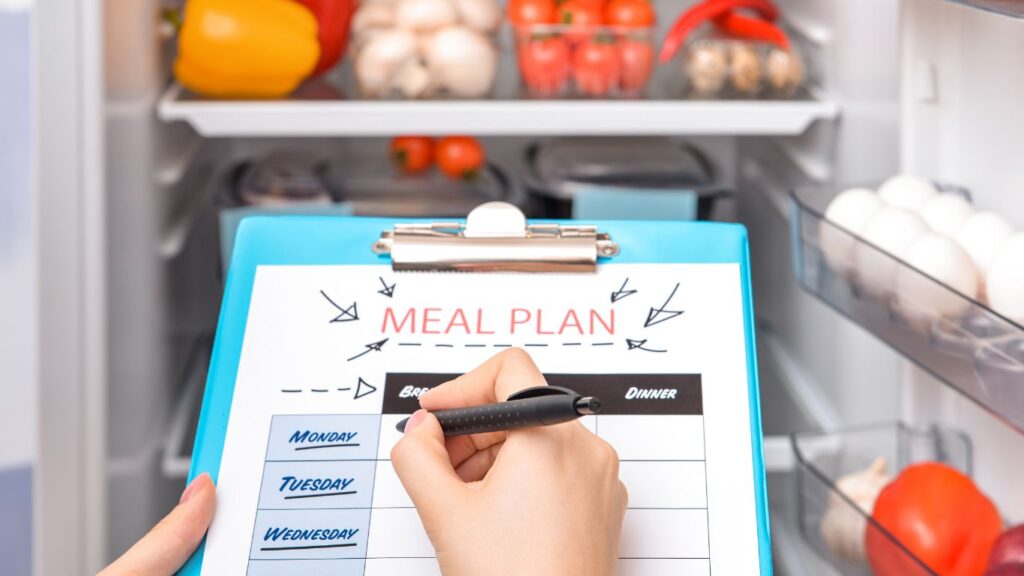
Here’s a sample week that alternates pure-protein and protein-and-vegetable days the way Cruise phase is designed to work. Adjust portions to your own calorie needs, and remember this is a template, not a prescription.
Day 1: Pure Protein Day
- Breakfast: Scrambled eggs with smoked salmon
- Lunch: Grilled chicken breast with a side of mixed greens
- Dinner: Baked fish (like cod or salmon) with a squeeze of lemon
- Snacks: Low-fat yogurt
Day 2: Protein and Vegetable Day
- Breakfast: Greek yogurt with a few berries
- Lunch: Stir-fried tofu with broccoli, mushrooms, and bell peppers
- Dinner: Grilled shrimp with a side salad (lettuce, tomatoes, cucumbers)
- Snacks: Sliced cucumbers with a spoonful of plain yogurt dip
Day 3: Pure Protein Day
- Breakfast: Omelet with a little spinach and feta cheese
- Lunch: Sliced turkey breast with cottage cheese and cherry tomatoes
- Dinner: Baked chicken with lemon and herbs
- Snacks: Low-fat yogurt
Day 4: Protein and Vegetable Day
- Breakfast: Cottage cheese with a few slices of peach
- Lunch: Grilled fish with lettuce wraps, salsa, and a little avocado
- Dinner: Stir-fried beef strips with bell peppers and snow peas
- Snacks: Celery sticks with mustard
Day 5: Pure Protein Day
- Breakfast: Poached eggs with smoked salmon
- Lunch: Turkey burger patties, no bun, with a side of steamed vegetables (protein day, so keep this light or swap for extra protein)
- Dinner: Baked halibut
- Snacks: Low-fat yogurt
Day 6: Protein and Vegetable Day
- Breakfast: Greek yogurt with sliced strawberries
- Lunch: Shrimp stir-fry with broccoli, carrots, and snap peas
- Dinner: Grilled chicken skewers with a side salad (lettuce, tomatoes, cucumbers)
- Snacks: Sliced bell peppers
Day 7: Pure Protein Day
- Breakfast: Scrambled eggs with mushrooms and a little cheese
- Lunch: Tuna salad with a lemon vinaigrette (skip the mayo on protein days)
- Dinner: Grilled steak with grilled zucchini (steak on a protein day, kept lean)
- Snacks: Low-fat yogurt
Drink water throughout the day, and adjust portions to your own calorie needs and weight-loss goals rather than following this to the gram. If you’re tracking macros more precisely, a plain macro calculator alongside this can help you spot when portions have crept up.
Making Cruise Phase Actually Work
Most of the plateaus people hit in Cruise phase trace back to the same handful of causes, and they’re worth checking before you assume the diet has stopped working:
- Eating more of the “free” vegetables than realized. Non-starchy doesn’t mean zero calories, especially with oil or dressing added.
- Letting the daily walk slide. It’s easy to keep up in week one and quietly drop by week four once the novelty wears off.
- Sauces and condiments creeping back in. A splash of regular dressing or a cooking oil that isn’t accounted for adds up fast over weeks of daily use.
- Not drinking enough water. A high-protein diet increases how much your kidneys need to process, and adequate water intake is part of how the diet is meant to be followed safely.
- Expecting Attack-phase speed to continue. A chunk of early Attack-phase loss is water weight from the sudden carb cut, so Cruise phase naturally looks slower even when fat loss is still happening consistently.
None of these are dramatic failures — they’re the kind of small drift that happens on any diet with this many rules to track for months at a time. If you’re finding the rules themselves are the hard part rather than the results, that’s worth listening to; a diet you can’t sustain for the number of months your goal requires isn’t actually working, even while the scale is moving.
Talk to your doctor before starting Cruise phase if you have kidney disease, diabetes, gout, or are pregnant or breastfeeding — a sustained high-protein, low-carb pattern isn’t the right fit for all of those, regardless of how well it’s marketed.
Cruise Phase vs. Just Tracking Calories
It’s worth asking honestly whether the specific rules of Cruise phase are doing something a plain calorie deficit couldn’t. The protein-heavy structure does help with satiety and muscle retention, which is real and useful. But the strict alternating pattern, the banned-food list, and the months-long timeline are more about adherence psychology — giving you rules to follow so you don’t have to make dozens of small decisions every day — than about some unique metabolic effect. If that kind of structure keeps you consistent, it’s doing its job. If you find yourself constantly checking whether today is a protein day or a vegetable day and what that means for lunch, a simpler framework built around your daily calorie target (TDEE) might get you the same result with less mental overhead.
Check out our latest posts:
- E2M Fitness 8-Week Challenge: Transform Your Body and Life
- How Do Meso Endomorphs Lose Weight Effectively
- Meso-endomorphs; 12 Unique Signs You’re One
- Noom Yellow Foods; Why Are They Crucial On Your Noom Diet?
Quick Answers
Can I eat as many vegetables as I want on protein-and-vegetable days?
Within the approved list, yes, but “unlimited” doesn’t mean calorie-free in large quantities, and starchy vegetables like potatoes and corn aren’t on the list at all. Stick to the non-starchy vegetables named above.
What happens if I skip the daily walk?
You’ll likely still lose weight from the calorie deficit alone, but the walk is part of the original protocol for a reason — it supports the pace of loss and offsets some of the muscle-preserving benefit that’s harder to get from diet alone.
Is it normal to lose weight more slowly in Cruise phase than in Attack phase?
Yes. Attack phase loss is partly water weight from the sudden carb cut, so Cruise phase almost always feels slower by comparison, even when fat loss is happening consistently.
Do I need a doctor’s clearance to do the Dukan Diet?
If you have kidney disease, diabetes, gout, are pregnant or breastfeeding, or have any ongoing health condition, yes — talk to your doctor before starting any sustained high-protein, low-carb diet.
Cruise phase is really just a structured way to keep losing weight without staying on an all-protein diet indefinitely — vegetables come back, the rules stay strict, and the timeline is set by how much you actually want to lose, not a fixed calendar. Whether it’s the right structure for you long-term depends more on whether you can sustain it for months than on how fast it works in the first few weeks.
