

Late night snacks for high cholesterol can feel confusing—especially when hunger hits after a long day and your cholesterol numbers are already on your mind. Maybe your doctor recently mentioned your LDL is “a bit high,” or you’ve noticed your energy dipping and digestion feeling heavier after evening meals. You’re not alone. Over 30% of adults struggle with elevated cholesterol, and how you snack at night can influence how your body processes fats while you sleep.
The good news? You don’t have to go to bed hungry or give up snacking altogether. Choosing the right late-night snacks can support heart health, steady blood sugar, and even reduce inflammation overnight. Research suggests that fiber-rich foods, healthy fats, and slow-digesting proteins help support cholesterol metabolism while you sleep¹,². So instead of grabbing chips or sweets, we’ll look at gentle, calming snacks that satisfy cravings and support your heart.
This article breaks down exactly what to choose, why these snacks work, and how to build habits that help lower LDL over time—without strict dieting or stress.
Contents
- 1 Why Nighttime Eating Matters When You Have High Cholesterol
- 2 Choosing Snacks That Support Heart Health Overnight
- 3 Best Late Night Snacks for High Cholesterol
- 4 Store-Bought Late Night Snacks for High Cholesterol
- 5 Quick Label Rule (That Actually Makes Shopping Easy)
- 6 Snacks to Avoid at Night and Why They Can Raise Cholesterol
- 7 How to Manage Nighttime Cravings and Habit Hunger
- 8 When Nighttime Hunger Signals Something More (Sleep, Stress, or Blood Sugar Issues)
- 9 Frequently Asked Questions
- 9.1 Can eating late at night actually raise cholesterol levels?
- 9.2 Is it okay to go to bed slightly hungry if I’m trying to manage cholesterol?
- 9.3 Are “low-fat” snacks automatically better for high cholesterol?
- 9.4 What if I crave something crunchy or salty at night?
- 9.5 Are fruit snacks at night good for lowering cholesterol?
- 9.6 How late is “too late” to snack?
- 9.7 Can I drink herbal tea before bed if I’m managing cholesterol?
- 9.8 Should I avoid carbs completely at night for cholesterol?
- 10 Conclusion
- 11 Before Starting Hard Diets
- 12 Struggling with unsustainable diets and frustrated by the lack of results?
Why Nighttime Eating Matters When You Have High Cholesterol
If you’re living with high cholesterol, when you eat matters as much as what you eat. At night, your metabolism naturally slows down because the body shifts into repair mode — not digestion. So calories eaten late are more likely to be stored rather than used, which can increase LDL (“bad”) cholesterol over time¹.
The Role of Your Circadian Rhythm
Your body follows an internal clock known as the circadian rhythm, which influences digestion, blood sugar control, and fat metabolism. Research shows that eating late — especially close to bedtime — disrupts this rhythm and can lead to higher cholesterol and blood sugar levels².
Put simply: your body processes food more efficiently during the day.
Late-night eating works against that natural rhythm.
Why Late-Night Cravings Are Harder to Control
Most late-night snacking doesn’t happen because we’re hungry — it happens because we’re tired, stressed, or seeking comfort. That’s when it’s easy to grab:
- Chips
- Cookies
- Toast with butter
- Ice cream
- Sugary or salty packaged snacks
These foods are usually higher in refined carbs, sugar, or saturated fats, which can raise inflammation and cholesterol over time³.
You Don’t Need to Avoid Eating at Night
This isn’t about strict rules like “no food after 7 PM.”
It’s about choosing the right snack if you are hungry:
- Something gentle on your digestion
- Something steady for blood sugar
- Something heart-friendly
The right late-night snack can actually help you sleep better and keep your cholesterol stable.
The Key Idea
Instead of thinking:
“I shouldn’t be eating right now.”
Try shifting to:
“If I’m hungry, what can I choose that supports my heart and lets my body rest well?”
That’s where smart nighttime snack choices come in — and they do make a difference.
Choosing Snacks That Support Heart Health Overnight
When your cholesterol is high, the goal at night isn’t to avoid eating — it’s to choose foods that help your body stay balanced while you sleep. Your heart works 24/7, even when you’re resting, so the foods you choose can either support that nighttime repair process or make it harder.
What Makes a Good Late-Night Snack?
A heart-friendly nighttime snack should be:
- Low in saturated fat
- High in fiber (keeps you full without heaviness)
- Rich in nutrients that support cholesterol levels, like potassium, antioxidants, and healthy fats
- Easy to digest, so your body doesn’t stay “busy” all night
Foods that combine fiber + protein or fiber + healthy fats help keep blood sugar stable and prevent waking up hungry at 2 AM.
Why This Matters at Night
While you sleep, your liver is actively processing cholesterol. Giving it lighter, nutrient-dense fuel supports that process.
Heavy foods (fried snacks, cheese, pastries, ice cream) are harder to break down and can increase LDL cholesterol over time¹.
Fiber-rich foods and plant compounds, on the other hand, help your body remove excess cholesterol, especially overnight because digestion is slower².
Simple, Heart-Supportive Snack Pairings
Think small, satisfying, and calming. Here are great nighttime combinations:
| Snack | Why It Helps |
|---|---|
| Apple slices + almond butter | Fiber + healthy fats support stable blood sugar |
| Oatmeal (small bowl) + cinnamon | Oats contain beta-glucan, known to lower LDL cholesterol² |
| Banana + walnuts | Potassium helps balance sodium and reduce bloating; walnuts support heart health³ |
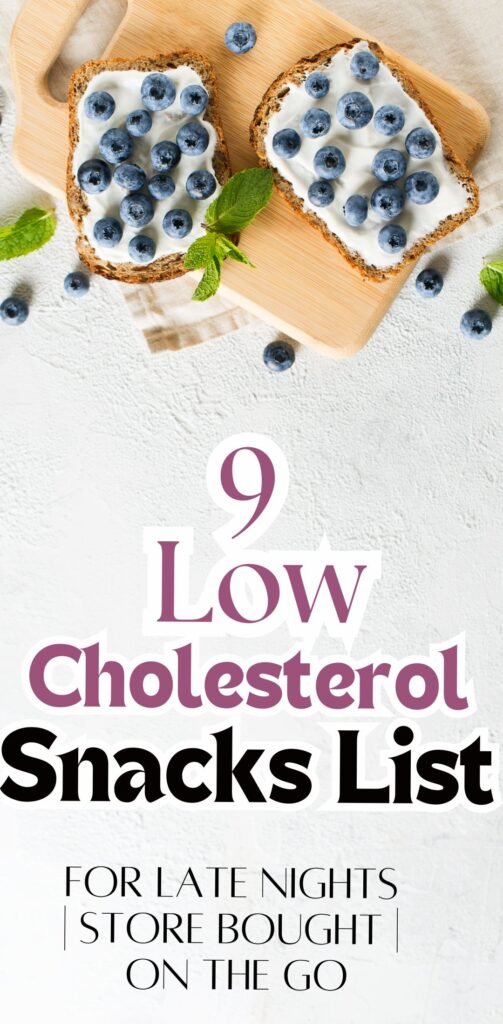
| Plain Greek yogurt + blueberries | Protein + antioxidants + gut-friendly probiotics |
| Carrot sticks + hummus | High-fiber, satisfying, and easy on digestion |
| Handful of pistachios or pumpkin seeds | Healthy fats + magnesium help support sleep and cholesterol |
None of these spike your blood sugar or overwhelm your digestion.
They help your body stay calm, balanced, and ready to repair overnight.
A Helpful Framework to Remember
If you’re hungry at night, ask yourself:
Is this snack calming, nourishing, and easy to digest?
If the answer is yes — it’s likely a good fit.
Best Late Night Snacks for High Cholesterol
When your cholesterol is high, nighttime snacks should feel comforting, but also gentle on your heart. The goal isn’t to go to bed hungry — it’s to choose foods that support your body’s natural repair and cholesterol-processing cycles while you sleep¹.
These snacks are light, fiber-rich, and digestion-friendly, so you wake up feeling lighter, not sluggish.
1. Small Bowl of Oatmeal with Cinnamon
Oatmeal contains beta-glucan, a type of soluble fiber shown to help lower LDL (“bad”) cholesterol by helping your body remove it².
Cinnamon can help stabilize nighttime blood sugar.
Tip: Keep it small — ½ cup is enough.
2. Greek Yogurt + Blueberries
Greek yogurt provides protein to keep you full overnight, and blueberries add antioxidants that support blood vessels and inflammation balance³.
If dairy bothers you, choose an unsweetened, fortified almond or soy yogurt.
3. Banana + Handful of Walnuts
Bananas offer potassium, which helps your body balance sodium and reduce bloating.
Walnuts contain plant omega-3 fats, known for supporting heart health and lowering inflammation⁴.
This combo also promotes better sleep — perfect before bed.
4. Apple Slices + 1 Tbsp Almond Butter
This snack provides fiber + healthy fats, keeping you satisfied without heaviness.
The fiber in apples can help reduce cholesterol absorption during digestion⁵.
5. Carrots or Cucumber with Hummus
Hummus provides plant protein and soluble fiber, while veggies keep the snack refreshing and light.
This combination can help avoid nighttime cravings caused by low blood sugar.
6. Light Whole-Grain Toast with Avocado
Avocado contains monounsaturated fats that can help lower LDL and raise HDL (good) cholesterol⁶.
Keep the serving small — just one slice — especially close to bedtime.
7. Handful of Pistachios or Pumpkin Seeds
Both are rich in heart-healthy fats and magnesium, which may support calmer sleep and smoother nighttime digestion.
Choose raw or lightly salted versions to avoid water retention.
Store-Bought Late Night Snacks for High Cholesterol
(Real Brands You Can Find at Target, Walmart, Costco, Amazon, Trader Joe’s)
When you’re tired and just want something easy, grabbing the right packaged snack matters. For cholesterol health, look for fiber, healthy fats, and minimal added sugar. Here are options that are actually helpful, not “health-washed.”
1. Air-Popped Popcorn (NOT buttered)
Why: Whole grains + fiber help your body clear extra LDL overnight.
Best Brands:
- SkinnyPop Original (the Plain or Simply Salt versions)
- Lesser Evil Himalayan Pink Salt Popcorn
- Trader Joe’s Organic Popcorn with Olive Oil
Tip: Keep the serving small — ~2 cups. More = next-day bloat.
2. Chickpea Snacks / Puffs
Why: High fiber + plant protein → filled, not heavy.
Best Brands:
- HIPPEAS Organic Chickpea Puffs
- Biena Roasted Chickpeas
- The Good Bean Roasted Chickpeas
Flavors to choose: Sea Salt or Lightly Salted (avoid sweet/honey flavors — added sugar can spike insulin at night).
3. Whole-Grain Crackers + Hummus Cup
Balanced snack that supports steady overnight blood sugar.
Cracker Brands:
- Mary’s Gone Crackers (Original) — Whole grain + high fiber
- Wasa Multigrain Crispbread
- Simple Mills Almond Flour Crackers (good if also watching gluten)
Hummus Brands (Single-Serve Cups):
- Sabra Snackers Hummus Cups
- Cedar’s Hummus Mini Cups
If your store has Trader Joe’s → get Organic Hummus Dips — no added oil.
4. Nuts That Support Cholesterol Control
The research is strongest for walnuts and pistachios.
Snack Packs (Pre-Portioned):
- Blue Diamond 100-Calorie Walnut Packs
- Wonderful Pistachios (No Shell, Lightly Salted)
- Kirkland Signature Walnuts (Costco — budget friendly)
Portion rule: One small handful. More than that = too many calories at night.
5. Low-Sugar Greek Yogurt
Protein before bed supports overnight satiety and muscle repair.
Good Greek Yogurt Brands:
- Fage Total 0% or 2% (Plain)
- Chobani Less Sugar Greek Yogurt
- Siggi’s Icelandic Yogurt (Plain or Vanilla) — very low sugar
Want flavor without sugar?
Sprinkle cinnamon + 1 tsp chia seeds.
6. Avocado Snack Packs
High in monounsaturated fat, which helps lower LDL.
Brands:
- Wholly Avocado Mini Cups
- Good Foods Chunky Avocado Cups
- 365 Whole Foods Avocado Cups
Great on:
- a Wasa Crisp
- a rice cake
- cucumber slices
7. Store-Bought Options for Sweet Cravings
If nighttime = “must have something sweet” — choose naturally sweet + fiber.
Best Choices:
- Bare Baked Apple Chips (no sugar added)
- That’s It. Fruit Bars (literally just fruit)
- Kind Bar Dark Chocolate Nuts & Sea Salt (low sugar)
Just avoid:
- KIND protein line → most flavors have added sugar syrups
- “Yogurt-coated” snacks → usually candy in disguise
Quick Label Rule (That Actually Makes Shopping Easy)
Look at only these 3 lines on the label:
| Line | Good Goal |
|---|---|
| Saturated Fat | Under 2g per serving |
| Fiber | 3g+ brings cholesterol benefit |
| Added Sugar | 4g or less |
If it fails 2 of the 3 → put it back.
Snacks to Avoid at Night and Why They Can Raise Cholesterol
Late-night cravings hit hard, especially when you’re tired. But some snacks can silently push cholesterol in the wrong direction—mainly by causing blood sugar spikes, inflammation, and extra LDL (“bad”) cholesterol production overnight.
Here are the big ones to avoid before bed:
Fried and Fast Foods
Things like fries, chicken nuggets, or late-night takeout are high in saturated and trans fats. These fats signal your liver to make more LDL cholesterol, especially while you sleep because your metabolism slows down. If you’re going to eat fried foods, keep them earlier in the day when your body is more active.
Chips, Cheese Puffs, and Snack Mixes
These are usually high in sodium, which causes water retention and inflammation. High sodium intake is linked to higher cardiovascular strain and cholesterol challenges over time. Eating them at night can also trigger bloating and poor sleep, making the next day’s appetite harder to manage.
Sugary Desserts (Cookies, Ice Cream, Pastries)
Sugar at night causes a blood sugar spike, followed by a crash. That crash can make your body store more fat overnight, and consistently high sugar intake contributes to higher triglycerides, which often go hand-in-hand with high LDL. If you crave something sweet, go for fruit and Greek yogurt instead.
Processed Meats (Pepperoni, Deli Meat, Sausages)
These contain saturated fat and nitrates, which are linked to inflammation and increased cardiovascular risk. Eating them late can also slow digestion and disturb sleep, which makes cholesterol regulation harder.
White Bread Snacks (Crackers, Toast, Cereal)
Refined carbs break down fast into sugar. Your body stores that extra glucose as fat overnight, contributing to higher triglycerides and LDL levels over time.
A Simple Rule to Help You Choose:
If it’s salty, sugary, fried, or comes in a shiny crinkly bag, it’s likely working against your cholesterol goals at night.
How to Manage Nighttime Cravings and Habit Hunger
Nighttime cravings are common, and they do not always mean your body needs more food. Often, late eating is connected to routine, stress, or the desire to unwind after a long day—this is known as habit hunger. Habit hunger is emotional or environmental, not physical. Becoming aware of why you want to eat at night helps you make choices that support your cholesterol goals and your well-being.
How to Check Your Hunger Cues
Before reaching for food, pause and gently ask yourself:
- Am I physically hungry?
- Or am I tired, bored, stressed, or looking for comfort?
If the answer is emotional or habitual hunger, try small calming actions first—such as brewing a warm herbal tea, doing slow breathing, stretching, or journaling for five minutes. These cues help your nervous system relax and reduce the craving intensity.
What to Eat If You Are Truly Hungry
If your hunger is physical, the key is choosing snacks that help you feel satisfied without spiking cholesterol or blood sugar. Look for a combination of:
- Fiber (helps fullness)
- Protein (supports muscle and appetite balance)
- Healthy fats (steady energy and heart-supportive)
Examples include:
- Overnight oats with chia seeds
- Greek yogurt with berries and ground flax
- Apple slices with almond butter
- Homemade trail mix (nuts + seeds + a few dried berries)
These options are filling and gentle on cholesterol levels, helping prevent overeating later.
When to Get Extra Support
If nighttime snacking feels compulsive, emotional, or hard to control, it can help to speak with a registered dietitian (RDN) or healthcare provider. Sometimes sleep patterns, stress hormones, medications, or blood sugar fluctuations play a role. A professional can help create a plan that fits your lifestyle and supports your heart health in a sustainable, compassionate way.
When Nighttime Hunger Signals Something More (Sleep, Stress, or Blood Sugar Issues)
Not all late-night hunger is habit-based. Sometimes, your body is sending a message that something deeper needs attention. Poor sleep, chronic stress, and blood sugar fluctuations can all increase evening appetite and cravings—especially for sweet or high-carb foods.
When we do not sleep enough, the hunger hormone ghrelin rises while the fullness hormone leptin decreases, making it easier to feel “hungry” even after eating. Similarly, stress activates the hormone cortisol, which can trigger emotional eating or the desire for quick comfort foods late at night. Blood sugar that rises and falls sharply during the day—often due to long gaps between meals or low-fiber eating—can also lead to intense nighttime appetite.
If you notice the following patterns consistently, it may be worth exploring the root cause with a healthcare professional:
- You wake up hungry in the middle of the night
- You crave sugary or quick-carb foods after 9 PM
- You feel tired throughout the day but “wired” at night
- You skip meals earlier, then feel very hungry later
- You’re under ongoing stress, or your sleep feels unrefreshing
Supporting these underlying factors can help reduce nighttime cravings naturally. Gentle lifestyle adjustments like eating balanced meals regularly during the day, managing stress with slow breathing or short walks, and creating a consistent sleep routine can make a meaningful difference. If nighttime hunger continues or feels hard to manage, a registered dietitian (RDN) or healthcare provider can help evaluate whether cortisol patterns, sleep quality, or blood sugar balance may be contributing.
The goal is not to restrict yourself, but to understand your body’s signals and respond in a way that supports both your heart health and long-term well-being.
Frequently Asked Questions
Can eating late at night actually raise cholesterol levels?
Eating late doesn’t directly raise cholesterol, but it can interfere with how your body processes fats and sugars overnight. Studies suggest that when meals are eaten close to bedtime, insulin and triglyceride levels stay elevated for longer, which may encourage the body to store more fat instead of using it for energy. If late-night eating is a daily pattern—especially with high-fat, high-sugar snacks—it can gradually contribute to higher LDL cholesterol over time.
Is it okay to go to bed slightly hungry if I’m trying to manage cholesterol?
Yes — as long as the hunger is mild and not causing stress or sleep disruption. Going to bed overly hungry can trigger cortisol (the stress hormone), which may make cravings stronger the next day. If the hunger is noticeable, choose a small protein + fiber snack (for example: a few walnuts + berries or Greek yogurt). The goal is comfort and stability, not fullness.
Are “low-fat” snacks automatically better for high cholesterol?
Not necessarily. Many packaged “low-fat” snacks replace fat with added sugars or refined starches, which can raise triglycerides and blood sugar. For heart health, prioritize whole-food fats (like those from nuts, seeds, olive oil, avocado) and pay attention to added sugar on the label. A food can be low-fat and still not supportive of cholesterol goals.
What if I crave something crunchy or salty at night?
That craving is common and often linked to habit, stress, or dehydration. Instead of chips or crackers, choose air-popped popcorn, roasted chickpeas, or whole-grain crispbreads. For many people, drinking a glass of water and waiting 10 minutes reduces the craving significantly. If the craving is still there, choose one of the heart-healthy alternatives listed in the snack section.
Are fruit snacks at night good for lowering cholesterol?
Fruit can be a good option at night because it’s naturally sweet and usually low in calories, but fruit alone digests quickly. That can sometimes lead to waking up hungry. To keep blood sugar steadier, pair fruit with protein or healthy fat — like an apple with almond butter or berries with Greek yogurt. This combo effect supports satiety and helps overnight metabolic stability.
How late is “too late” to snack?
Most cardiology and metabolic health research suggests finishing snacks at least 2–3 hours before bedtime. This gives your body time to digest and allows nighttime hormones like melatonin and leptin to work properly. If you do eat closer to bedtime, keep the snack very small and light — something that won’t sit heavy in the stomach.
Can I drink herbal tea before bed if I’m managing cholesterol?
Yes — herbal teas are great nighttime companions, especially those like hibiscus or chamomile.
Hibiscus tea in particular has been researched for its LDL-lowering and blood-pressure–supporting effects. Just avoid teas with sugar or added syrups, and stop drinking liquids right before sleep if nighttime bathroom trips are an issue.
Should I avoid carbs completely at night for cholesterol?
Not necessarily. Carbs are fine — but choose slow-digesting, fiber-rich ones like oatmeal, whole fruit, or seeded crackers. What matters most is portion size and whether the snack includes protein or healthy fat. High-sugar carbs like pastries or cookies cause blood sugar spikes that can disrupt sleep and contribute to cholesterol imbalance over time.
Conclusion
Late night snacks for high cholesterol don’t have to be stressful, restrictive, or boring. The real goal isn’t to avoid eating at night—it’s to choose foods that support your heart while still satisfying hunger. When you pick snacks that include fiber, lean protein, or healthy fats, your body stays balanced overnight: blood sugar remains steadier, digestion is calmer, and your cholesterol levels are supported instead of stressed.
Small, consistent choices matter more than perfection. Something as simple as swapping chips for air-popped popcorn, choosing Greek yogurt instead of ice cream, or reaching for nuts and fruit instead of cookies can create progress over time. These snack shifts help control LDL (“bad”) cholesterol, improve fullness, and reduce the nighttime cravings that often make cholesterol harder to manage.
Remember—your habits don’t have to change all at once. Start with one small swap in your evening routine this week. Your body will notice. Your sleep may improve. And your cholesterol levels will thank you in the long run.
You’re not working against your body—you’re working with it.
References (Peer-Reviewed Only)
- Kim TW, Jeong JH, Hong SC. The impact of sleep and circadian disturbance on hormones and metabolism. Journal of Clinical Endocrinology & Metabolism. 2015;100(3):1223-1231.
https://doi.org/10.1210/jc.2014-3865 - St-Onge MP, Mikic A, Pietrolungo CE. Effects of diet on sleep quality. Current Opinion in Clinical Nutrition and Metabolic Care. 2016;19(6):418-423.
https://doi.org/10.1097/MCO.0000000000000311 - Bays HE, Toth PP, Kris-Etherton PM, Abate N, et al. Obesity, adiposity, and dyslipidemia: A consensus statement. Journal of Clinical Lipidology. 2013;7(4):304-383.
https://doi.org/10.1016/j.jacl.2013.04.001 - Moholdt T, Wewege M, Chaston TB, et al. Timing of exercise affects glucose control and lipid metabolism in individuals with overweight. Diabetologia. 2021;64(8):1827-1840.
https://doi.org/10.1007/s00125-021-05442-2 - Stookey JD, et al. Drinking water is associated with weight loss among overweight dieting women independent of diet and activity. Obesity. 2008;16(11):2481-2488.
https://doi.org/10.1038/oby.2008.409 - Madayag ASC, et al. Effect of increased water intake on body weight, body mass index, and appetite among overweight patients. Journal of Natural Science, Biology and Medicine. 2014;5(2):359-363.
https://pubmed.ncbi.nlm.nih.gov/25035810/ - Jakubowicz D, Barnea M, Wainstein J, Froy O. High caloric intake at breakfast vs. dinner differentially influences weight loss. Obesity Journal. 2013;21(12):2504-2512.
https://doi.org/10.1002/oby.20460 - Reutrakul S, Van Cauter E. Sleep influences on obesity, insulin resistance, and metabolic risk. Metabolism. 2018;84:56-66.
https://doi.org/10.1016/j.metabol.2018.03.010 - Wang DD, Hu FB. Dietary Fat and Risk of Cardiovascular Disease: Recent Controversies and Advances. Annual Review of Nutrition. 2017;37:423-446.
https://doi.org/10.1146/annurev-nutr-071816-064614 - Kris-Etherton PM, et al. Nuts and Cardiovascular Disease: A Review of Epidemiologic and Clinical Trials. American Journal of Clinical Nutrition. 1999;70(3):504S-511S.
https://doi.org/10.1093/ajcn/70.3.504s
