
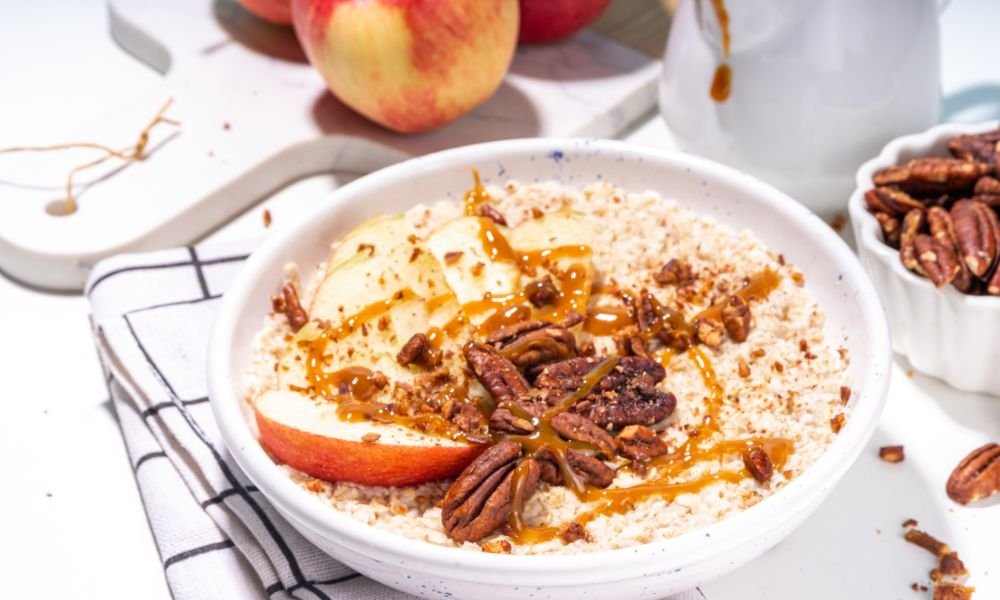
If you have PCOS, you’ve probably seen mixed advice about oatmeal. Some sources recommend it as a healthy, filling breakfast, while others suggest avoiding it because of carbohydrates. This can make it hard to know whether oatmeal actually fits into a PCOS-friendly diet.
The truth is, oatmeal isn’t automatically good or bad for PCOS. Its effects depend on the type of oats you choose, how you prepare them, and what you eat them with. For some people, oatmeal can support better blood sugar control and satiety, while for others it may cause energy crashes if not balanced properly.
This article looks at oatmeal through an evidence-based lens. You’ll learn how oatmeal may affect insulin resistance and blood sugar levels in PCOS, which types of oats tend to be better choices, and how to include oatmeal in a way that supports — rather than works against — your overall PCOS management.
Rather than promoting quick fixes or strict rules, the goal is to help you make informed choices that fit your body, preferences, and long-term health.
Contents
- 1 How Oatmeal Fits Into a PCOS-Friendly Diet
- 2 Can Oatmeal Be Helpful for PCOS?
- 3 Oatmeal, Insulin Resistance, and Blood Sugar Control
- 4 Download Free PDF
- 5 Benefits of Oats for Women with PCOS
- 6 Which Type of Oats Is Best for PCOS?
- 7 Types of Oats to Limit or Be Cautious With
- 8 How to Eat Oatmeal with PCOS (Portions and Pairings)
- 9 Can Oatmeal Support Weight Management with PCOS?
- 10 Common Mistakes When Eating Oatmeal with PCOS
- 11 Frequently Asked Questions About Oatmeal and PCOS
- 11.1 Is oatmeal good for PCOS?
- 11.2 Which type of oatmeal is best for PCOS?
- 11.3 Can I eat oatmeal every day if I have PCOS?
- 11.4 Does oatmeal worsen insulin resistance?
- 11.5 Can oatmeal help with weight management in PCOS?
- 11.6 Is oatmeal better than other breakfast options for PCOS?
- 11.7 Can I sweeten oatmeal if I have PCOS?
- 11.8 What if oatmeal doesn’t work well for me?
- 12 Final Thoughts
- 13 References
How Oatmeal Fits Into a PCOS-Friendly Diet
If you have PCOS, oatmeal can feel confusing. It’s often recommended as a healthy breakfast, yet it’s also a carbohydrate — and carbs are frequently blamed for worsening PCOS symptoms. The reality sits somewhere in the middle.
Oatmeal can fit into a PCOS-friendly diet when it’s chosen and eaten thoughtfully. It’s not a solution on its own, but it can be part of a balanced approach that supports steady energy levels and blood sugar control.
Oatmeal as a Source of Complex Carbohydrates
Oats are a whole grain and a source of complex carbohydrates. Unlike refined carbs, complex carbs digest more slowly, especially when they contain fiber.
For some people with PCOS, this slower digestion can help:
- reduce sharp blood sugar spikes
- improve satiety after meals
- support more consistent energy levels
However, not everyone with PCOS responds the same way to carbohydrates, which is why portion size and preparation matter.
The Role of Fiber in Oatmeal
One reason oatmeal is often discussed in PCOS nutrition is its fiber content, particularly soluble fiber such as beta-glucan. Fiber helps slow the absorption of carbohydrates and can contribute to better blood sugar regulation.
In a PCOS-friendly diet, fiber also supports:
- digestive health
- appetite regulation
- overall metabolic health
Oatmeal tends to work best when it’s part of a meal that includes other sources of fiber, rather than eaten on its own.
Why Balance Matters More Than the Food Itself
Oatmeal on its own is unlikely to meet all your nutritional needs for a meal. When eaten without protein or fat, it may digest too quickly and leave you hungry soon after — especially if you’re insulin-resistant.
That’s why oatmeal fits best into a PCOS diet when it’s paired with:
- a protein source (such as yogurt, eggs, or protein powder)
- healthy fats (like nuts, seeds, or nut butter)
This combination can help slow digestion and support steadier blood sugar levels.
A Flexible, Not Mandatory Choice
It’s also important to say this clearly: you don’t need to eat oatmeal to manage PCOS. Some people feel great including it regularly, while others prefer different breakfasts that suit their body better.
Oatmeal is best viewed as:
- an optional, flexible food
- one of many possible carbohydrate choices
- something to test and adjust based on how you feel
Listening to your body’s response matters more than following a one-size-fits-all rule.
Can Oatmeal Be Helpful for PCOS?
Oatmeal can be helpful for some people with PCOS, but it’s not a universal solution. Its potential benefits come from its fiber content, low level of processing (in certain forms), and ability to support balanced meals — not from any special hormone-fixing effect.
Whether oatmeal works well for you depends on how your body responds to carbohydrates, how you prepare it, and what you eat it with.
Potential Benefits of Oatmeal for PCOS
When included as part of a balanced diet, oatmeal may offer a few advantages for PCOS management:
- It provides soluble fiber, which can help slow digestion
- It may support steadier blood sugar levels when eaten in appropriate portions
- It can help you feel fuller for longer, especially when paired with protein
For people who struggle with energy crashes or intense hunger between meals, oatmeal can sometimes be a more satisfying option than refined breakfast foods.
Oatmeal and Insulin Resistance
Many people with PCOS have some degree of insulin resistance, which affects how the body handles carbohydrates. Because oats are a whole grain and contain fiber, they generally have a gentler effect on blood sugar than refined grains.
That said, oatmeal is still a carbohydrate. Eating large portions, choosing highly processed oats, or skipping protein and fat can lead to blood sugar spikes — which may worsen symptoms for some people.
This is why how you eat oatmeal matters more than whether you eat it at all.
Not Everyone Responds the Same Way
PCOS is highly individual. Some people feel energized and satisfied after eating oatmeal, while others notice increased hunger or fatigue shortly afterward.
If you’re unsure how oatmeal affects you, it can help to:
- try smaller portions
- eat it alongside protein and healthy fats
- notice how you feel for a few hours afterward
Your personal response is a better guide than generalized advice.
A Helpful Option, Not a Requirement
Oatmeal can be a helpful food within a PCOS-friendly diet, but it’s not essential. You won’t harm your progress by including it thoughtfully, and you won’t miss out if you choose other whole-food breakfasts instead.
The most helpful approach is one that supports stable energy, manageable hunger, and consistency over time.
Oatmeal, Insulin Resistance, and Blood Sugar Control
Insulin resistance is one of the most common metabolic features of PCOS, which is why carbohydrates often feel confusing or frustrating. Since oatmeal is a carb, it’s reasonable to wonder how it affects blood sugar and whether it makes insulin resistance better or worse.
The answer depends less on oatmeal itself and more on the type you choose, the portion you eat, and how you build the rest of the meal.
How Oatmeal Affects Blood Sugar
Oats contain soluble fiber, particularly beta-glucan, which slows digestion and the absorption of carbohydrates. This can lead to a more gradual rise in blood sugar compared to refined grains.
For some people with PCOS, this slower digestion may help:
- reduce sharp blood sugar spikes
- prevent energy crashes
- improve how full they feel after eating
However, these effects are most noticeable when oatmeal is eaten in reasonable portions and not overly processed.
Why Some Oatmeals Work Better Than Others
Not all oatmeal affects blood sugar the same way. More processed oats tend to digest faster, which can lead to quicker rises in blood sugar — something that may be harder to manage with insulin resistance.
Less processed oats generally:
- contain more intact fiber
- take longer to digest
- have a gentler effect on blood sugar
This is why many PCOS-friendly recommendations favor less processed oat varieties.
The Importance of Pairing Oatmeal Properly
Even the best type of oats can cause blood sugar swings if eaten alone. Adding protein and healthy fats helps slow digestion further and improves blood sugar stability.
Oatmeal tends to work better when paired with:
- yogurt, eggs, or protein powder
- nuts, seeds, or nut butter
- fiber-rich fruits like berries
This combination supports a more balanced blood sugar response than oatmeal on its own.
Portion Size Still Matters
Oatmeal may be a whole grain, but large portions can still overwhelm your body’s ability to manage glucose — especially if you’re insulin resistant.
Starting with a moderate portion and adjusting based on how you feel can be more helpful than following rigid serving rules.
Listening to Your Body’s Signals
Some people with PCOS feel satisfied and energized after oatmeal, while others notice increased hunger or fatigue. Both responses are valid.
Pay attention to:
- how long you stay full
- your energy levels afterward
- any cravings that follow
These cues can help you decide whether oatmeal is a good fit for you — and how to eat it in a way that supports your blood sugar.
Benefits of Oats for Women with PCOS
Oats don’t work as a treatment for PCOS, but they can offer nutritional benefits that support common PCOS-related concerns when included thoughtfully in your diet. Their value comes from their overall nutrient profile, not from any single “special” effect.
Below are the main reasons oats are often discussed in PCOS nutrition.
Supports Steadier Energy and Satiety
One of the most noticeable benefits of oats is how filling they can be. Thanks to their fiber content, oats digest more slowly than refined grains, which may help you feel satisfied for longer after a meal.
For women with PCOS, this can be helpful if you experience:
- frequent hunger between meals
- energy dips after breakfast
- strong cravings later in the day
Feeling fuller for longer can make it easier to maintain regular eating patterns.
Provides Soluble Fiber for Metabolic Health
Oats are rich in soluble fiber, particularly beta-glucan. Soluble fiber slows digestion and can help moderate how quickly carbohydrates enter the bloodstream.
In the context of PCOS, this may:
- support better blood sugar regulation
- reduce large swings in insulin levels
- complement other fiber-rich foods in your diet
These effects tend to be more noticeable with less processed oats and balanced meals.
Contributes to Heart-Health Nutrients
Women with PCOS have a higher risk of metabolic concerns over time, including unfavorable cholesterol patterns. Oats contain nutrients that are commonly associated with heart health, including soluble fiber and minerals like magnesium.
While oats alone won’t manage cholesterol levels, they can be part of a diet that supports long-term cardiovascular health.
Offers B Vitamins and Minerals
Oats naturally contain several B vitamins and minerals that support energy metabolism and overall nutrition. While they’re not a complete solution for nutrient needs, they can contribute to:
- daily fiber intake
- magnesium intake
- overall dietary variety
For vegetarians with PCOS, foods that provide multiple nutrients at once can be especially helpful.
Easy to Adapt to PCOS-Friendly Meals
Another practical benefit of oats is their flexibility. They can be prepared in ways that fit different preferences and blood sugar needs.
Oats work best when:
- paired with protein and healthy fats
- eaten in moderate portions
- part of a balanced meal rather than eaten alone
This adaptability makes oats easier to include consistently — which matters more than perfection.
A Supportive Option, Not a Requirement
It’s worth repeating: you don’t need oats to manage PCOS. Some women feel great including them regularly, while others prefer different carbohydrate sources.
Oats are best viewed as:
- a supportive, optional food
- one of many whole-grain choices
- something to include based on your individual response
Listening to how your body reacts will always matter more than following a general rule.
Which Type of Oats Is Best for PCOS?
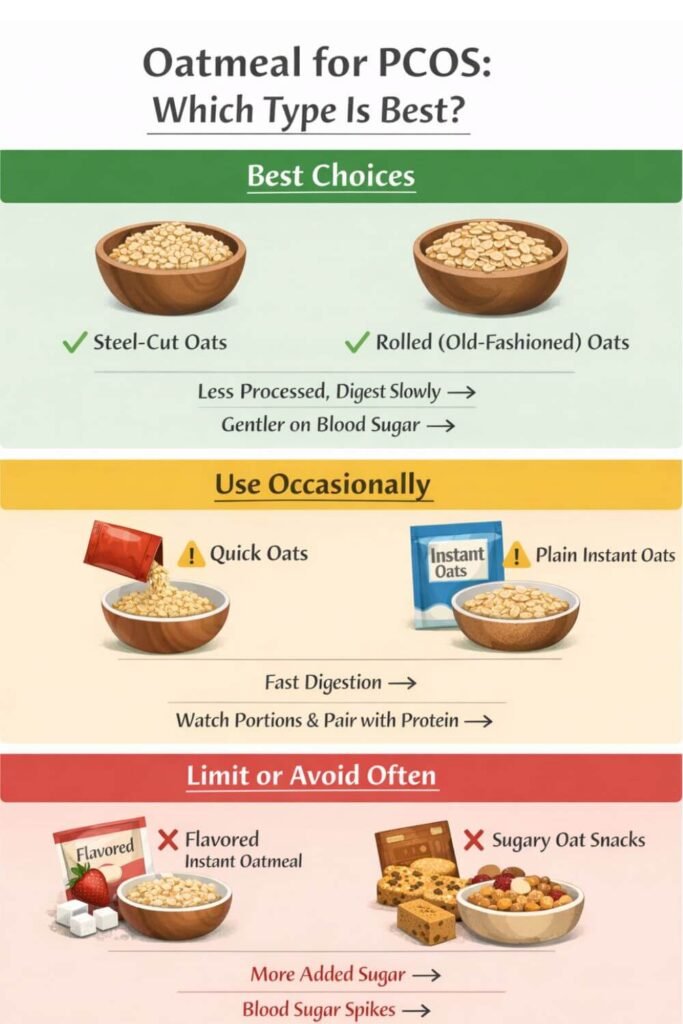
When it comes to PCOS, the type of oats you choose matters more than whether you eat oats at all. Different oat varieties are processed differently, which affects how quickly they digest and how they impact blood sugar.
In general, less processed oats tend to be the better choice for most people with PCOS.
Steel-Cut Oats
Steel-cut oats are the least processed form of oats. They’re made by chopping whole oat groats into pieces, which keeps the fiber structure more intact.
Because of this, steel-cut oats:
- digest more slowly
- tend to have a lower glycemic impact
- may support steadier blood sugar levels
They also take longer to cook and have a chewier texture, which some people find more satisfying.
For many women with PCOS, steel-cut oats are often the most well-tolerated option.
Rolled Oats (Old-Fashioned Oats)
Rolled oats are steamed and flattened, which makes them quicker to cook while still retaining much of their fiber.
They can be a good option for PCOS when:
- portions are moderate
- they’re paired with protein and healthy fats
- they’re minimally sweetened
Rolled oats are more convenient than steel-cut oats and still fit well into a PCOS-friendly diet for many people.
Instant Oats (Use with Caution)
Instant oats are the most processed type. They’re partially cooked and rolled very thin, which allows them to digest quickly.
Because of this, instant oats:
- may raise blood sugar more rapidly
- may lead to quicker hunger afterward
If you use instant oats occasionally, pairing them with protein and fat can help reduce their impact. However, for regular use, less processed oats are usually a better choice for PCOS.
Oat-Based Products and Flavored Oatmeals
Packaged flavored oatmeal products often contain added sugars and refined ingredients that can outweigh the benefits of the oats themselves.
If you choose packaged oats:
- check ingredient lists
- avoid products with added sugars as the first ingredients
- keep portions realistic
Plain oats you sweeten yourself tend to be the more PCOS-friendly option.
The Best Choice Is the One You Can Use Consistently
While steel-cut oats are often recommended, the “best” oats for PCOS are ultimately the ones you can prepare consistently and tolerate well.
If rolled oats help you feel satisfied and energized, they can still be a good choice. If oats consistently leave you hungry or sluggish, it’s okay to choose other whole-grain or protein-based breakfasts instead.
The goal isn’t perfection — it’s finding what works for your body.
Types of Oats to Limit or Be Cautious With
Oats can be part of a PCOS-friendly diet, but not all oat products affect the body in the same way. Some types are more processed or contain added ingredients that may make blood sugar control harder — especially if you’re dealing with insulin resistance.
This doesn’t mean you need to avoid these oats completely, but it’s helpful to be more mindful about how often and how you eat them.
Instant Oats and Quick Oats
Instant and quick oats are heavily processed to cook faster. Because they’re rolled thinner and sometimes pre-cooked, they digest more quickly.
For some people with PCOS, this may lead to:
- faster blood sugar spikes
- feeling hungry again soon after eating
- energy crashes later in the morning
If you do use instant oats, pairing them with protein and healthy fats can help reduce their impact. For regular use, less processed oats are usually a better option.
Flavored and Sweetened Oatmeal Packets
Many packaged oatmeal products contain added sugars, flavorings, or syrups that can outweigh the natural benefits of oats.
Common issues with these products include:
- high added sugar content
- low protein
- smaller fiber benefit compared to plain oats
Reading ingredient labels and choosing plain oats that you flavor yourself gives you much more control.
Oat-Based Breakfast Products and Snacks
Granola bars, baked oat snacks, and oat-based cereals are often marketed as “healthy,” but many are highly processed and contain added sugars or refined oils.
These foods can be easy to overeat and may not provide the same blood sugar support as whole oats prepared at home.
Occasional use is fine, but they’re best not relied on as daily staples.
Very Large Portions of Any Oats
Even the best type of oats can be problematic if portions are consistently too large. Oats are still a carbohydrate, and eating them in excess may overwhelm your body’s ability to manage glucose — particularly if insulin resistance is present.
Starting with a moderate portion and adjusting based on how you feel afterward is often more helpful than following strict rules.
Focus on Patterns, Not Perfection
Rather than labeling certain oats as “bad,” it’s more useful to look at:
- how often you eat them
- what you pair them with
- how your body responds afterward
If a particular oat product leaves you tired or hungry, that’s useful feedback — not a failure.
Being cautious doesn’t mean cutting foods out completely. It simply means choosing options that support steady energy and long-term consistency.
How to Eat Oatmeal with PCOS (Portions and Pairings)
When it comes to PCOS, oatmeal works best when it’s balanced and intentional, not eaten on its own or in oversized portions. Small adjustments in how you prepare and pair oatmeal can make a noticeable difference in how you feel afterward.
This section focuses on simple guidelines rather than strict rules.
Start with a Moderate Portion
Oatmeal is nutritious, but portion size still matters — especially if you have insulin resistance.
A moderate serving is often a better starting point than a large bowl. From there, you can adjust based on:
- how long you stay full
- your energy levels
- whether you experience cravings afterward
Eating more doesn’t always lead to better results.
Always Add a Protein Source
Protein is one of the most important additions to oatmeal for PCOS. It helps slow digestion and supports steadier blood sugar levels.
Good protein pairings include:
- Greek yogurt or plant-based yogurt
- eggs on the side
- protein powder
- cottage cheese
Without protein, oatmeal may digest too quickly and leave you hungry soon after.
Include Healthy Fats
Healthy fats further slow digestion and help keep you satisfied. Even a small amount can improve how oatmeal affects your blood sugar.
Easy options include:
- nuts or nut butter
- seeds such as chia or flax
- a drizzle of olive oil in savory oatmeal
Fats also help with nutrient absorption and overall meal balance.
Choose Fiber-Rich Toppings
Oatmeal already contains fiber, but adding fiber-rich toppings can make it even more supportive.
Consider:
- berries or sliced apples
- ground flaxseed
- chia seeds
These additions can improve fullness without adding excess sugar.
Be Mindful of Sweeteners
Sweetened oatmeal can quickly turn into a high-sugar meal. If you like a touch of sweetness, use small amounts and rely more on natural flavors.
Better options include:
- fruit
- cinnamon or vanilla
- a small drizzle of honey if needed
The goal is flavor without large sugar spikes.
Notice How Your Body Responds
The most important step is paying attention to how oatmeal makes you feel. If you feel energized and satisfied, it’s likely working well for you. If you notice fatigue or strong cravings soon after, try adjusting portion size, pairings, or oat type.
Your body’s response is the best guide.
Can Oatmeal Support Weight Management with PCOS?
If you’re trying to manage your weight with PCOS, you may be wondering whether oatmeal helps or makes things harder. The honest answer is: oatmeal can support weight management for some people with PCOS, but it’s not a shortcut or a guaranteed solution.
What oatmeal can do is support habits that make weight management feel more manageable over time — especially when appetite, cravings, and blood sugar feel unpredictable.
How Oatmeal Might Help You
If oatmeal keeps you feeling full and satisfied after breakfast, that’s a big win. Its fiber content can slow digestion and help reduce the urge to snack constantly or overeat later in the day.
You may notice benefits like:
- feeling full for longer
- fewer mid-morning cravings
- more stable energy levels
These effects are more likely when you eat oatmeal with protein and healthy fats, rather than on its own.
Why Blood Sugar Matters More Than Calories
With PCOS, weight changes are often influenced by how your body handles insulin — not just how many calories you eat. Foods that cause quick blood sugar spikes can increase hunger and make weight management more frustrating.
Oatmeal can work for you when you:
- keep portions reasonable
- choose less processed oats
- pair them with protein and fats
When blood sugar feels more stable, managing weight often feels less like a constant battle.
When Oatmeal Might Work Against You
If oatmeal leaves you hungry again an hour later, tired, or craving sugar, it may not be helping you — at least not in its current form.
This can happen if:
- portions are too large
- it’s heavily sweetened
- it’s eaten without protein or fat
That doesn’t mean oatmeal is “bad.” It just means it may need adjusting — or it may not be the right choice for you right now.
Weight Management with PCOS Is Not Linear
If you’ve ever felt discouraged because the scale doesn’t move the way you expect, you’re not alone. PCOS-related weight changes often happen slowly, and progress isn’t always visible week to week.
Instead of focusing only on weight, it can be more helpful to notice:
- how your hunger feels
- whether you have steady energy
- how easy it is to stick to meals you enjoy
Oatmeal can support weight management if it helps with those things.
Focus on What Works for Your Body
No single food determines your weight outcomes. If oatmeal helps you feel satisfied, balanced, and consistent with meals, it can be part of your routine. If it doesn’t, choosing something else is completely okay.
Your experience matters more than general advice — and building habits you can maintain will always matter more than forcing yourself to eat a “healthy” food that doesn’t work for you.
Common Mistakes When Eating Oatmeal with PCOS
Oatmeal can be a helpful food with PCOS, but small choices around how you eat it can make a big difference in how your body responds. If oatmeal has ever left you feeling hungry, tired, or frustrated, one of these common mistakes may be the reason.
The good news is that most of them are easy to fix.
Eating Oatmeal on Its Own
If your oatmeal is just oats and water (or milk), it may digest too quickly and leave you hungry soon after — especially if you have insulin resistance.
Oatmeal tends to work better for PCOS when you add:
- a protein source
- healthy fats
Without them, blood sugar can rise and fall faster, which may trigger cravings later in the day.
Choosing Highly Processed or Sweetened Oats
Instant oats and flavored oatmeal packets are convenient, but they often contain added sugars and digest more quickly than less processed oats.
If you notice energy crashes or increased hunger after eating oatmeal, it may help to:
- switch to steel-cut or rolled oats
- choose plain oats and sweeten them yourself
- check ingredient labels carefully
Small changes here can have a noticeable impact.
Oversized Portions
Oatmeal is nutritious, but bigger isn’t always better. Large portions can overwhelm your body’s ability to manage glucose, especially if you’re insulin resistant.
If oatmeal isn’t working well for you, try:
- starting with a smaller portion
- focusing more on balance than volume
- adjusting based on how you feel afterward
Listening to your body is more helpful than following a fixed serving size.
Relying on Sugar for Flavor
It’s easy for oatmeal to turn into a sugar-heavy meal when sweeteners are added generously. This can cancel out many of the benefits oats offer.
Instead of relying on sugar, try:
- fruit for natural sweetness
- cinnamon, vanilla, or nutmeg
- nuts or nut butter for richness
Flavor doesn’t have to come from sugar alone.
Expecting Oatmeal to “Fix” PCOS Symptoms
Oatmeal is just one food — not a treatment. If you expect it to dramatically improve hormones, weight, or symptoms on its own, it can lead to disappointment.
Oatmeal works best as:
- part of a balanced diet
- combined with supportive lifestyle habits
- tailored to your individual response
Progress with PCOS is usually about patterns, not single foods.
Ignoring Your Own Response
Finally, one of the biggest mistakes is ignoring how you feel after eating oatmeal. If you consistently feel tired, bloated, or extra hungry afterward, that’s useful information — not something to push through.
You’re allowed to:
- adjust how you prepare it
- eat it less often
- choose a different breakfast altogether
What works for your body matters more than general advice.
Frequently Asked Questions About Oatmeal and PCOS
Is oatmeal good for PCOS?
Oatmeal can be a good option for some people with PCOS, especially when it’s made from less processed oats and eaten as part of a balanced meal. It’s not universally helpful for everyone, but when paired with protein and healthy fats, oatmeal may support steadier energy levels and appetite control.
Which type of oatmeal is best for PCOS?
Steel-cut oats are often the best choice because they’re the least processed and digest more slowly. Rolled (old-fashioned) oats can also work well for many people. Instant oats are more processed and may raise blood sugar more quickly, so they’re usually better eaten less often or with extra protein and fat.
Can I eat oatmeal every day if I have PCOS?
Some people with PCOS tolerate oatmeal well daily, while others do better eating it a few times a week. Pay attention to how you feel after eating it — your energy, hunger, and cravings are good indicators of whether it’s working well for you.
Does oatmeal worsen insulin resistance?
Oatmeal doesn’t automatically worsen insulin resistance, but portion size, oat type, and meal balance matter. Less processed oats eaten with protein and fats tend to have a gentler effect on blood sugar than sweetened or instant varieties eaten alone.
Can oatmeal help with weight management in PCOS?
Oatmeal may support weight management if it helps you feel full, reduces cravings, and supports consistent meals. It’s not a weight-loss food by itself, and it may not help everyone — especially if it leads to blood sugar spikes or increased hunger.
Is oatmeal better than other breakfast options for PCOS?
There’s no single “best” breakfast for PCOS. Oatmeal is just one option. Some people feel better with eggs, yogurt, smoothies, or savory breakfasts. The best choice is one that keeps your energy stable and fits your lifestyle.
Can I sweeten oatmeal if I have PCOS?
Yes, but it’s best to do so mindfully. Using fruit, spices like cinnamon or vanilla, or small amounts of sweetener is usually more PCOS-friendly than heavily sweetened oatmeal products.
What if oatmeal doesn’t work well for me?
That’s completely okay. PCOS affects everyone differently, and no single food works for all bodies. If oatmeal consistently leaves you tired, hungry, or uncomfortable, choosing a different breakfast may be a better option for you.
Final Thoughts
If you have PCOS, oatmeal doesn’t have to be an all-or-nothing food. It can be a helpful part of your diet, or it can be something you eat occasionally — both approaches are valid. What matters most is how your body responds to it and whether it supports steady energy, manageable hunger, and consistency over time.
Oatmeal works best for PCOS when it’s less processed, eaten in balanced portions, and paired with protein and healthy fats. For some people, it supports blood sugar control and satiety. For others, different breakfasts may feel better — and that’s completely okay.
Rather than following strict rules, focus on patterns you can maintain and meals that leave you feeling nourished rather than restricted. PCOS management is rarely about one food; it’s about building habits that support your health in a realistic, sustainable way.
If you’re unsure how oatmeal fits into your routine or have specific health concerns, working with a qualified healthcare professional can help you personalize your approach. Listening to your body, staying flexible, and prioritizing long-term well-being will always matter more than any single dietary choice.
References
- Azziz, R., Carmina, E., Chen, Z., Dunaif, A., Laven, J. S. E., Legro, R. S., & Lizneva, D. (2016). Polycystic ovary syndrome. Nature Reviews Disease Primers, 2, 16057.
- Marsh, K. A., Steinbeck, K. S., Atkinson, F. S., Petocz, P., & Brand-Miller, J. C. (2010). Effect of a low glycemic index compared with a conventional healthy diet on polycystic ovary syndrome. The American Journal of Clinical Nutrition, 92(1), 83–92.
- Moran, L. J., Ko, H., Misso, M., Marsh, K., Noakes, M., Talbot, M., … Teede, H. J. (2013). Dietary composition in the treatment of polycystic ovary syndrome: A systematic review to inform evidence-based guidelines. Journal of the Academy of Nutrition and Dietetics, 113(4), 520–545.
- Gower, B. A., & Chandler-Laney, P. C. (2016). Dietary carbohydrates and insulin resistance in polycystic ovary syndrome. Current Opinion in Endocrinology, Diabetes and Obesity, 23(4), 283–288.
- Hoeger, K. M., & Oberfield, S. E. (2012). Do women with polycystic ovary syndrome have a unique predisposition to obesity? Fertility and Sterility, 97(1), 13–17.
