
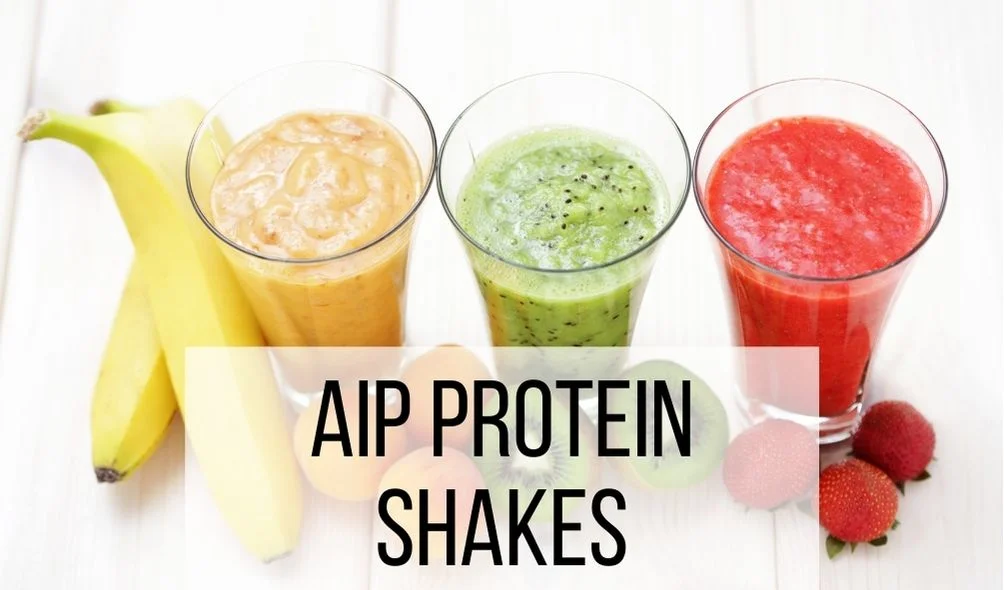
Every “AIP protein shake” recipe I kept finding online called for whey protein, almond milk, or a scoop of erythritol-sweetened powder — and none of those three things belong on the autoimmune protocol. If you’re in the elimination phase and trying to hit a decent protein number without a blender full of ingredients that are secretly off-limits, you’re not missing something obvious. Most of the recipes out there are just wrong.
I have a background in medicine and studied nutrition science at Zewail International Academy, and the AIP food lists haven’t changed much in the years I’ve been reading them: no dairy, no nuts, no seeds, no legumes, no nightshades, no eggs, no gluten, no alcohol, no refined sugar. That rules out whey (dairy), almond milk (tree nut), soy protein (legume), and most “natural” sweeteners that aren’t just fruit. What’s left still makes a genuinely good shake — you just have to know which three or four ingredients are doing the work.
What actually counts as an AIP protein shake
An AIP-compliant shake has three parts: a compliant liquid base, a compliant protein source, and something for texture and sweetness that isn’t a sugar alcohol. That’s it. The autoimmune protocol is the strict elimination phase of the paleo diet, built to pull out foods that are thought to irritate the gut lining or provoke an immune response — the American College of Rheumatology’s patient education page lists grains, legumes, nuts, seeds, nightshades (tomatoes, white potatoes, eggplant, peppers), eggs, dairy, alcohol, coffee, and refined sugar as the foods removed during elimination.
That list is why so many “protein shake” recipes fail the diet before you even blend them. Whey and casein are dairy. Almond, cashew, and peanut butter are all nuts, seeds, or legumes. Soy protein isolate is a legume. Pea protein is also a legume, which surprises people who assume “plant-based” automatically means AIP-friendly. And eggs — often recommended elsewhere as an easy protein boost — are eliminated too.
The two protein sources that actually work
Once you take dairy, eggs, soy, and nuts off the table, you’re down to two realistic options: collagen or gelatin peptides (made from cattle or fish, not a seed or legume), and a meat-based protein isolate, usually beef or bone broth protein powder. Both are unflavored, both dissolve into a cold shake without turning it gritty, and both skip the emulsifiers and gums that sneak into a lot of commercial “paleo” protein blends.
- Collagen or gelatin peptides: most unflavored brands pack around 18 grams of protein into a 20-gram (two-scoop) serving. It’s nearly flavorless, so it won’t fight with whatever fruit you’re using.
- Beef or bone broth protein isolate: a slightly heavier, more savory option that works best paired with cocoa (if you tolerate it in reintroduction) or a strong fruit flavor like mango or berries to mask the meatiness.
Collagen is technically short on tryptophan and a couple of other amino acids compared to a complete protein, so I don’t rely on it as someone’s only protein source for the day — it’s a shake booster, not a meat replacement. For that reason, the rest of your protein on AIP should still come from actual meat, poultry, and fish at meals; the shake is a convenient top-up, not the main event.
Compliant milk bases (and the ones that aren’t)
During the elimination phase, your milk options are narrower than most people expect, because almond, cashew, oat, soy, and rice milk are all excluded — nuts, a grain, or a legume, depending on the carton. Two bases actually work:
1. Coconut milk
Unsweetened coconut milk is the default AIP milk because it’s naturally dairy-free, nut-free (coconut is a drupe, not a tree nut, and most AIP lists treat it as compliant), and rich enough to make a shake feel indulgent instead of watery. Check the carton for added gums like carrageenan or guar gum if you’re being strict — the canned, additive-free version is the safest bet.
2. Tigernut milk
Despite the name, tigernuts are tubers, not nuts, which is exactly why AIP lists allow them. Tigernut milk is naturally sweet and a little starchy, which gives a shake body without any added sweetener. It works especially well in a shake that’s already fruit-forward, since it won’t fight for attention.
3. Homemade coconut milk
Blend shredded unsweetened coconut with water and strain it through a nut-milk bag (same tool, different job — no actual nuts involved). You lose the thickness of canned coconut milk but gain full control over what’s in it, which matters if you’re reacting to something and trying to isolate the cause.
Why I stopped using erythritol in AIP recipes
A lot of “AIP-friendly” shake recipes lean on erythritol or other sugar alcohols for sweetness, and I understand the appeal — they don’t spike blood sugar. But most AIP food lists don’t actually include sugar alcohols as compliant, since the protocol’s goal is whole, minimally processed foods, and a manufactured sugar substitute doesn’t fit that bar even if it’s technically low-carb. I sweeten AIP shakes with what the diet already allows: a ripe banana, a couple of soft dates blended in, or a spoonful of raw honey once you’re far enough past the strictest elimination window to reintroduce it. It’s a small swap, but it’s the difference between a shake that’s actually compliant and one that just looks like it is.
5 AIP protein shake recipes that actually hold up
1. Coconut collagen banana shake
1 cup canned coconut milk, 1 frozen ripe banana, 2 scoops unflavored collagen peptides, a pinch of cinnamon, ice. This is the shake I default to when I want something that tastes like dessert but is just banana, coconut, and collagen — about 18-20 grams of protein per serving depending on your collagen brand.
2. Mango tigernut protein smoothie
1 cup tigernut milk, 1 cup frozen mango chunks, 2 scoops collagen or gelatin peptides, a squeeze of lime. The tigernut milk’s natural sweetness means you don’t need any added sugar here at all.
3. Berry avocado recovery shake
1 cup coconut milk, 1/2 cup frozen mixed berries, 1/4 avocado, 1 scoop beef or bone broth protein isolate. The avocado replaces the creaminess nuts would normally add, and the berries are strong enough to cover the slightly savory edge of a meat-based protein powder.
4. Pineapple-ginger green shake
1 cup coconut water, 1/2 cup frozen pineapple, a handful of spinach, a thin slice of fresh ginger, 2 scoops collagen peptides. Pineapple is one of the few fruits that can mask collagen’s faint gelatin taste almost completely.
5. Date and coconut butter shake
1 cup coconut milk, 2 soft dates (pitted), 1 tablespoon coconut butter, 2 scoops collagen peptides, ice. This is the closest thing to a milkshake you’ll get on strict AIP — the dates and coconut butter do all the work sugar and chocolate would normally do.
When nuts, seeds, and dairy come back
Nuts, seeds, and dairy aren’t gone forever — they’re just off the table during the strict elimination phase. Most practitioners suggest holding elimination for at least a month, often 60 to 90 days, before starting reintroduction, and the ACR’s own guidance notes some people notice a symptom shift within four to eight weeks on the diet. After that, foods go back in one at a time, waiting roughly five to seven days between each one to see whether symptoms return before testing the next. If almond milk or a dairy-based protein doesn’t bring symptoms back, there’s no reason to keep avoiding it — the elimination phase is a diagnostic tool, not a permanent rulebook. I’ve written a full walkthrough of how to reintroduce foods safely, step-by-step, if you’re getting close to that stage.
Worth knowing going in: a lot of people feel worse before they feel better in the first week or two of elimination, often from caffeine withdrawal or a change in fiber intake rather than the diet “not working.” I go through the common causes in why some people feel worse at first on AIP.
Does the research actually back AIP up?
Honestly, not much yet — and I’d rather tell you that than oversell it. A small 2024 pilot study out of Auckland University of Technology followed 11 adults with rheumatoid arthritis through 4 weeks of eating normally and 8 weeks on AIP. Two participants dropped out, and only four completed the full 12 weeks; of those four, three reported less pain, better sleep, and less fatigue during the AIP phase than during their usual diet. That’s a genuinely small, preliminary result with no separate control group, not proof the diet works for autoimmune disease broadly. The ACR itself describes the evidence behind AIP as “currently limited,” and frames the diet as something to try alongside your existing treatment, not instead of it.
If you have an autoimmune condition and you’re thinking about trying AIP, loop in your doctor or rheumatologist first, especially if you’re on medication or have other health conditions — an elimination diet this strict can interact with how some medications are absorbed, and it’s not a substitute for treatment.
One more thing worth sitting with: if you’re cutting out gluten for good rather than just through an elimination window, staying gluten-free without constantly replanning your kitchen takes its own set of habits. I put together a Gluten-Free Lifestyle E-Book that covers exactly that — not because it replaces AIP, but because a lot of people who finish reintroduction decide gluten is one of the things they keep avoiding anyway.
Common mistakes that quietly break a shake’s AIP status
- Pea or soy protein powder. Both are legumes. “Plant-based” doesn’t mean AIP-compliant.
- Almond, cashew, or oat milk. A nut, a nut, and a grain, in that order.
- Stevia or erythritol-sweetened protein blends. Most AIP lists treat sugar alcohols and processed sweeteners as excluded, even when they’re technically low-carb.
- “Natural flavor” and gums on the label. Carrageenan, xanthan gum, and sunflower lecithin are common additions to commercial protein powders and milks, and they’re not on most compliant-food lists.
Frequently asked questions
Can I have smoothies on AIP?
Yes — as long as every ingredient is compliant. A smoothie isn’t a shortcut around the food list; it’s just a delivery method. Stick to compliant fruit, a compliant milk, and a compliant protein, and there’s nothing about the blender that changes the rules.
Can you have fruit on AIP?
Yes. Fruit is allowed throughout AIP, though many people cap it at one or two servings a day to keep sugar intake in check and leave room for vegetables.
Are nuts and seeds allowed on AIP?
Not during the strict elimination phase. Almonds, walnuts, cashews, pecans, peanuts (technically a legume), chia, flax, pumpkin, and sunflower seeds are all removed early on because they contain lectins and phytic acid that may irritate the gut or stimulate the immune system. They’re candidates for reintroduction later, one at a time.
Is whey protein ever okay on AIP?
Not during elimination — whey is a dairy product, and dairy is one of the core exclusions. Whether it’s worth reintroducing later depends entirely on how you react when you test it, the same as any other reintroduced food.
What milk can I drink on the AIP diet?
Unsweetened coconut milk and tigernut milk are the two standard options during elimination. Almond, soy, oat, rice, and cashew milk are all excluded because they come from a nut, legume, or grain.
If you’re looking for more AIP-compliant ideas beyond shakes, I’ve also written about the best AIP snacks to grab at Whole Foods, a full AIP food list for the elimination and reintroduction phases, and the most common reasons AIP stops working for people once they’ve been on it a while.
