

Polycystic Ovary Syndrome (PCOS) isn’t just a hormone condition—it affects your energy, metabolism, cravings, mood, and long-term health. And while many women are told to follow strict meal plans or cut calories drastically, that approach often leads to frustration rather than real progress.
As a nutrition professional, I’ve seen that managing PCOS isn’t about following a rigid diet for a few weeks. It’s about building sustainable food habits that support insulin balance, reduce inflammation, and stabilize hormones over time.
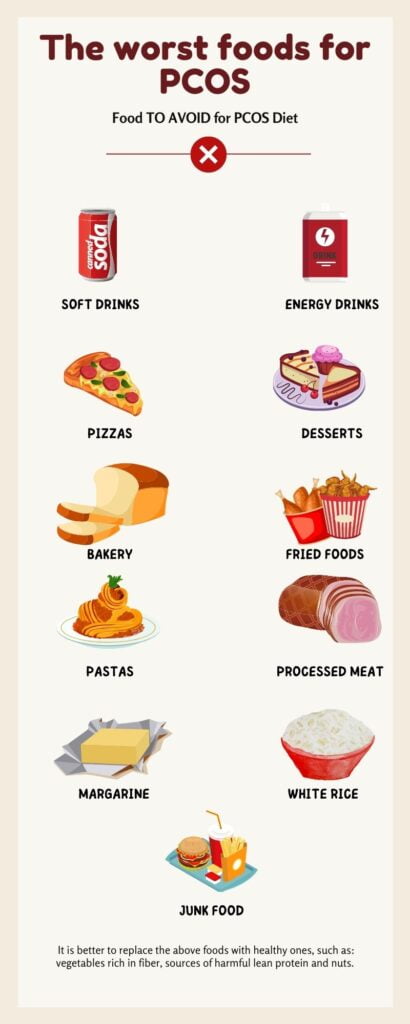
Certain foods can make symptoms worse—especially those that spike blood sugar, increase inflammation, or disrupt hormonal balance. When eaten regularly, they can contribute to insulin resistance, weight gain, acne, irregular cycles, and fatigue.
In this guide, I’ll walk you through the worst foods for PCOS and, more importantly, what to eat instead. The goal isn’t restriction. It’s helping you make practical, realistic swaps that support your metabolism and help you feel more in control of your body without counting every calorie or following extreme rules.
Contents
- 1 Refined Carbohydrates: A Trigger for Insulin Resistance
- 2 Sugary Foods and Their Impact on Hormonal Imbalance
- 3 Processed and Fried Foods: Inflammation and PCOS
- 4 Dairy Products: How They May Affect Androgen Levels
- 5 Red and Processed Meats: A Risk for Inflammation
- 6 Artificial Sweeteners: Disrupting Gut Health and Metabolism
- 7 High-Sodium & Packaged Snacks → Swap with Whole Foods
- 8 Tips for Implementing These Food Swaps in Your Daily Diet
- 9 Effect of diet foods on PCOS
Refined Carbohydrates: A Trigger for Insulin Resistance
As a nutritionist, I don’t recommend including refined carbohydrates no matter which diet you are following, as they are known to cause rapid spikes in blood sugar, which can worsen insulin resistance—a common symptom of PCOS. Here’s how they impact your condition:
- Stripped of Fiber and Nutrients: Refined carbs, like white bread and sugary cereals, lack the fiber and nutrients found in whole grains, leading to faster absorption of sugar.
- Blood Sugar Spikes: These foods cause rapid increases in blood sugar levels, forcing the body to produce more insulin to manage the spike.
- Worsens Insulin Resistance: Increased insulin levels can worsen insulin resistance, which is already a challenge for many women with PCOS.
- Leads to Weight Gain: The insulin spikes caused by refined carbs may also contribute to weight gain, further complicating PCOS management.
- Hormonal Imbalance: Elevated insulin levels can disrupt hormonal balance, potentially exacerbating other PCOS symptoms like acne or irregular periods.
But let’s be honest, there is no way these days to skip them totally. As much as you can, opt for whole grains and fiber-rich foods instead to help stabilize blood sugar levels.
Here are Better Alternatives to add on your plan: Opt for whole grains such as:
- Oats
- Quinoa
- Brown rice
- Whole wheat bread or pasta
- Barley and millet
Whole grains are rich in fiber, which helps slow sugar absorption, support gut health, and promote satiety—making it easier to manage weight.
I know refined carbs are the easiest thing you can grab before going to work, but think of it as upgrading your habits not a strict diet plan you will follow.
Sugary Foods and Their Impact on Hormonal Imbalance
Sugary foods are often tempting but can have a significant effect on hormone regulation in women with PCOS. Here’s how they contribute to hormonal imbalance:
- Increased Insulin Production: High sugar intake leads to a surge in blood sugar levels, causing the body to produce more insulin, which can trigger hormonal imbalances.
- Elevated Androgen Levels: Excess insulin can stimulate the ovaries to produce more androgens (male hormones), leading to symptoms like acne, excess hair growth, and irregular menstrual cycles.
- Worsening of Insulin Resistance: Frequent consumption of sugary foods can worsen insulin resistance, making it harder to manage blood sugar levels and contributing to a vicious cycle of hormonal disruption.
- Inflammation and Hormones: Sugar can increase inflammation in the body, further disrupting hormone regulation and exacerbating PCOS symptoms.
- Weight Gain and Hormonal Imbalance: Sugary foods are calorie-dense and can lead to weight gain, which negatively impacts hormonal balance and worsens PCOS symptoms.
Alternative: Use natural sweeteners and whole foods to satisfy your sweet tooth:
- Stevia
- Monk fruit
- Fresh fruits like berries or apples
- Dates in moderation
By choosing natural options, you can reduce insulin stress, minimize inflammation, and support stable energy levels, which are essential
Processed and Fried Foods: Inflammation and PCOS
Processed and fried foods are highly inflammatory, which can worsen PCOS symptoms. Here’s how they contribute to inflammation and other PCOS-related issues:
- High in Trans Fats: Processed and fried foods often contain unhealthy trans fats that increase inflammation, which is already a concern for women with PCOS.
- Disrupts Hormonal Balance: Inflammation from these foods can interfere with hormone regulation, worsening symptoms like irregular periods, acne, and weight gain.
- Promotes Insulin Resistance: Consuming processed and fried foods can lead to insulin resistance, making it more difficult to manage blood sugar levels and increasing the risk of type 2 diabetes.
- Encourages Weight Gain: These foods are calorie-dense and nutrient-poor, contributing to weight gain, which can aggravate insulin resistance and inflammation.
- Increased Risk of Cardiovascular Issues: Processed foods are often high in sodium and unhealthy fats, leading to a higher risk of cardiovascular problems—another concern for those with PCOS.
Avoiding processed and fried foods in favor of whole, nutrient-rich options can help reduce inflammation and improve overall PCOS management.
Dairy Products: How They May Affect Androgen Levels
Dairy products can have a surprising impact on androgen levels, potentially worsening symptoms of PCOS. Here’s how:
- Insulin-Like Growth Factor (IGF-1): Dairy products contain IGF-1, a hormone that can stimulate the production of androgens, leading to increased levels of male hormones like testosterone.
- Elevated Androgens: Higher androgen levels can cause PCOS symptoms such as acne, unwanted hair growth (hirsutism), and irregular menstrual cycles.
- Disruption of Hormonal Balance: Dairy can interfere with the delicate hormonal balance in women with PCOS, possibly leading to a worsening of symptoms.
- Potential Impact on Insulin Sensitivity: Dairy has been linked to insulin resistance in some women, which can also increase androgen levels and make PCOS symptoms harder to manage.
- Inflammatory Response: For some women, dairy can trigger inflammation, further contributing to hormonal imbalances and worsening PCOS symptoms.
etter Alternative: Opt for plant-based or low-fat dairy options, such as:
- Almond milk
- Oat milk
- Soy milk
- Low-fat yogurt or kefir (unsweetened)
Choosing these alternatives can help reduce hormonal imbalance, support insulin sensitivity, and provide essential nutrients without exacerbating PCOS symptoms.
Red and Processed Meats: A Risk for Inflammation
Red and processed meats are known to contribute to inflammation, which can worsen PCOS symptoms. Here’s how they affect inflammation and overall health:
- High-Saturated Fat Content: Red and processed meats are rich in saturated fats, which can trigger inflammation, exacerbating PCOS symptoms such as acne, weight gain, and insulin resistance.
- Increased Risk of Insulin Resistance: The high-fat content in these meats can lead to insulin resistance, making it more difficult to manage blood sugar levels, a common challenge for women with PCOS.
- Promotion of Chronic Inflammation: Processed meats often contain preservatives and additives that can promote chronic inflammation, worsening PCOS-related issues like fatigue, weight gain, and hormonal imbalance.
- Higher Risk of Cardiovascular Diseases: Consuming red and processed meats regularly can increase the risk of heart disease, a concern for those with PCOS due to the condition’s link to metabolic issues.
- Poor Nutritional Profile: Processed meats are often low in essential nutrients and high in sodium, which can lead to water retention and further aggravate inflammation.
Alternative: Choose lean protein sources such as:
- Chicken or turkey breast
- Fish (salmon, mackerel, sardines)
- Plant-based proteins (lentils, chickpeas, tofu, tempeh)
- Eggs (preferably boiled or poached)
Switching to these protein sources can help reduce inflammation, support weight management, and improve hormonal balance in women
Artificial Sweeteners: Disrupting Gut Health and Metabolism
Artificial sweeteners, often marketed as a healthier alternative to sugar, can negatively affect women with PCOS. Here’s how they impact gut health and metabolism:
- Disruption of Gut Microbiome: Artificial sweeteners can alter the balance of gut bacteria, which is crucial for maintaining a healthy metabolism. An imbalanced gut microbiome can worsen PCOS symptoms.
- Insulin Response: Some studies suggest that artificial sweeteners may still trigger an insulin response, despite being low or zero-calorie, potentially disrupting blood sugar levels and increasing insulin resistance.
- Slowed Metabolism: The negative impact on gut health can lead to a slower metabolism, making it harder to lose weight— one of the key challenges in managing PCOS.
- Increased Cravings: Artificial sweeteners may increase cravings for sugary foods, leading to overeating and weight gain, which can further worsen hormonal imbalances.
- Potential Impact on Hormonal Balance: By disrupting gut health and affecting insulin sensitivity, artificial sweeteners can indirectly contribute to hormonal imbalances, exacerbating PCOS symptoms like irregular periods and acne.
Alternative:
- Stevia
- Monk fruit
- Small amounts of honey or maple syrup (if tolerated)
Using natural sweeteners in moderation helps maintain gut health, supports stable blood sugar levels, and reduces the risk of hormonal fluctuations common in PCOS.
High-Sodium & Packaged Snacks → Swap with Whole Foods
Packaged snacks and highly processed foods often contain excess sodium, unhealthy fats, and hidden sugars, which can contribute to water retention, inflammation, and insulin resistance in women with PCOS. Frequent consumption may also trigger cravings and lead to overeating.
Better Alternative:
- Raw nuts (almonds, walnuts, cashews)
- Fresh fruits and vegetables
- Air-popped popcorn
- Homemade trail mixes
Choosing whole, minimally processed foods helps stabilize blood sugar, reduce inflammation, and support hormone balance, making it easier to manage PCOS symptoms.
Tips for Implementing These Food Swaps in Your Daily Diet
Making dietary changes can feel overwhelming, but small, consistent swaps can improve PCOS management over time. Here are practical tips to help you:
- Plan Ahead – Prepare a weekly shopping list focused on whole foods, lean proteins, and low-GI carbs.
- Start Small – Swap one refined carb or processed snack per day with a healthier option until it becomes routine.
- Batch Cook and Prep – Make meals and snacks in advance to avoid grabbing unhealthy options when busy.
- Read Labels Carefully – Watch out for hidden sugars, trans fats, and artificial ingredients in packaged foods.
- Hydrate Smartly – Replace sugary drinks and sodas with water, sparkling water, or herbal teas.
- Experiment with Flavors – Use herbs, spices, and natural sweeteners to make healthy foods more appealing.
- Track Your Progress – Keep a food journal to notice which swaps improve your energy, digestion, or PCOS symptoms.
Implementing these swaps gradually supports better blood sugar control, reduces inflammation, and promotes hormone balance, making it easier to manage PCOS effectively.
Effect of diet foods on PCOS
Diet affects PCOS patients by controlling body weight, insulin production level, and resistance, as many women with PCOS have insulin resistance, which leads to an increase in blood sugar and therefore a high level of insulin responsible for converting glucose into energy.
A higher-than-normal level of insulin leads to an increase in the production of testosterone by the ovaries. In addition, an increased insulin level leads to difficulties in losing weight. So you may end up asking questions like why do I keep gaining weight even though I don’t eat much?
Thus, a diet that suits your daily nutritional needs while maintaining a healthy weight can significantly contribute to maintaining a normal insulin level, which improves PCOS symptoms.
According to nutritionists, there is no diet specifically designed for women with PCOS. However, a diet with:
- A lot of lean protein.
- Fiber-rich foods.
Is one of the best things you can do to lose weight that prevents insulin resistance and reduces the severity of symptoms.
Instead of filling your plate with the worst foods for PCOS we mentioned above, try to include fish and lean meat, broccoli, spinach, and kale.
Lean protein and fiber can help you achieve a feeling of fullness faster and keep that feeling longer. This makes you less likely to overeat and promotes weight loss.
