
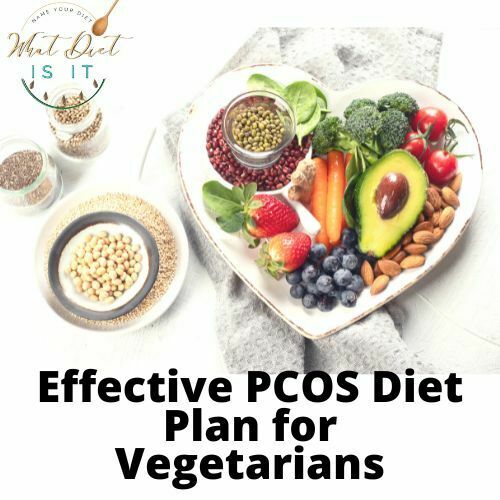
Being diagnosed with PCOS can make food choices feel confusing — especially if you follow a vegetarian lifestyle. You may come across conflicting advice, extreme diet rules, or plans that don’t account for plant-based nutrition. This PCOS vegetarian diet plan PDF is designed to simplify things by offering a practical, balanced approach that supports PCOS management while respecting your vegetarian preferences.
Rather than promising quick fixes or cures, this guide focuses on nutritionally sound meal planning, emphasizing whole foods, adequate protein, fiber-rich carbohydrates, and healthy fats. The goal is to help you build meals that support blood sugar balance, hormonal health, and overall well-being in a way that’s realistic and sustainable.
Inside this PCOS vegetarian diet plan PDF, you’ll find clear food guidance, a sample meal plan, and lifestyle tips that can be adapted to your individual needs. Whether you’re newly diagnosed or looking to refine your eating habits, this resource is meant to support informed choices — not replace personalized medical or nutrition advice.
Contents
- 1 How Diet Affects PCOS Symptoms in Vegetarians
- 2 Can a Vegetarian Diet Support PCOS Management?
- 3 Key Nutrition Principles for a Vegetarian PCOS Diet
- 4 Sample PCOS Diet Plan for Vegetarians (7-Day Example) Free PDF Download
- 5 Best Foods to Eat on a Vegetarian PCOS Diet
- 6 Foods Vegetarians May Need to Limit When Managing PCOS
- 7 Common Mistakes Vegetarians Make When Managing PCOS
- 8 Lifestyle Habits That Work Alongside a Vegetarian PCOS Diet
- 9 Frequently Asked Questions About PCOS and Vegetarian Diets
- 10 Final Thoughts on Following a PCOS Diet as a Vegetarian
- 11 References
How Diet Affects PCOS Symptoms in Vegetarians
If you have PCOS and follow a vegetarian diet, you may wonder how much your food choices actually affect your symptoms. PCOS is closely linked to insulin resistance, hormonal imbalance, and metabolic health, which means diet can play a supportive role in symptom management over time.
For vegetarians, the focus isn’t on restriction, but on food quality, balance, and consistency. A well-planned vegetarian diet can support PCOS management when it emphasizes whole foods and avoids excessive refined carbohydrates.
Insulin Sensitivity and Blood Sugar Control
Insulin resistance is common in PCOS and can contribute to irregular cycles, weight changes, and elevated androgen levels. Research suggests that diets higher in fiber and lower in refined carbohydrates may help support better blood sugar control.
For vegetarians, this often means choosing:
- legumes such as lentils and chickpeas
- vegetables, especially non-starchy types
- whole grains in moderate portions
Limiting added sugars and refined grains may be just as important as what you include.
Fiber and Digestive Health
Fiber is naturally abundant in vegetarian diets and plays a key role in PCOS management. It helps slow digestion, reduce blood sugar spikes, and support gut health.
Higher fiber intake has been associated with improved insulin response in women with PCOS. Good sources include vegetables, fruits, legumes, and seeds, introduced gradually to avoid discomfort.
Protein Intake on a Vegetarian Diet
Adequate protein supports appetite regulation and blood sugar stability. Vegetarians can meet their needs through foods such as beans, tofu, eggs, dairy, nuts, and seeds.
Distributing protein evenly across meals may help reduce hunger and energy dips throughout the day.
Inflammation and Food Quality
Low-grade inflammation is often observed in PCOS. Diets rich in whole, minimally processed plant foods are associated with anti-inflammatory effects, while diets high in ultra-processed vegetarian foods may offer fewer benefits.
Focusing on vegetables, fruits, healthy fats, and minimally processed staples can support overall health.
Nutrient Adequacy and Hormonal Support
Certain nutrients — including iron, vitamin B12, zinc, iodine, and omega-3s — deserve attention in vegetarian diets. Inadequate intake may contribute to fatigue or menstrual irregularities.
Planning balanced meals and seeking professional guidance when needed can help address potential gaps.
A Sustainable Approach
PCOS management works best with realistic, long-term habits. Highly restrictive diets can increase stress, which may worsen symptoms.
A flexible vegetarian diet centered on whole foods, balanced meals, and consistency is more likely to support PCOS management than short-term fixes.
Note: This section is informed by findings from peer-reviewed research and reputable medical organizations. Full references should be listed at the end of the article.
Can a Vegetarian Diet Support PCOS Management?
If you’re vegetarian and living with PCOS, you might wonder whether your way of eating is helping, hurting, or making no real difference at all. The short answer is: yes, a vegetarian diet can support PCOS management — but how you eat matters more than the label “vegetarian.”
PCOS responds less to strict rules and more to overall dietary patterns. A thoughtfully planned vegetarian diet can support metabolic health, which plays a key role in managing PCOS symptoms.
How a Vegetarian Diet May Help
When your vegetarian diet is built around whole, minimally processed foods, it can offer several advantages for PCOS:
- Higher fiber intake, which helps keep blood sugar levels more stable
- Plenty of antioxidants from vegetables and fruits
- Lower intake of saturated fat compared to some meat-heavy diets
Together, these factors may support insulin sensitivity and help reduce low-grade inflammation — two common concerns with PCOS.
Where Some Vegetarian Diets Fall Short
Not all vegetarian diets are automatically PCOS-friendly. If most of your meals rely on refined carbs, sugary snacks, or highly processed foods, you may still struggle with blood sugar swings and energy crashes.
For PCOS, it helps to focus on:
- vegetables and whole fruits
- legumes, tofu, eggs, or dairy for protein
- healthy fats from nuts, seeds, and olive oil
- whole grains in balanced portions
Think less about what you’re “cutting out” and more about what you’re regularly including.
Listening to Your Body Matters
PCOS doesn’t affect everyone the same way, and your response to food may be different from someone else’s. Some people feel best with moderate carbohydrates, while others notice improvements when they pay closer attention to portions and timing.
It’s also important to be mindful of nutrients that can be harder to get on a vegetarian diet, such as vitamin B12, iron, iodine, and omega-3s. If you often feel fatigued or notice changes in your cycle, it may be worth reviewing your intake with a qualified professional.
Focus on What You Can Sustain
A vegetarian diet isn’t a cure for PCOS, but it can be a helpful tool when it fits your lifestyle and supports your overall health. The most effective approach is one you can maintain without constant stress or restriction.
If your meals feel nourishing, balanced, and realistic for the long term, you’re far more likely to see positive changes than by following rigid or extreme plans.
Key Nutrition Principles for a Vegetarian PCOS Diet
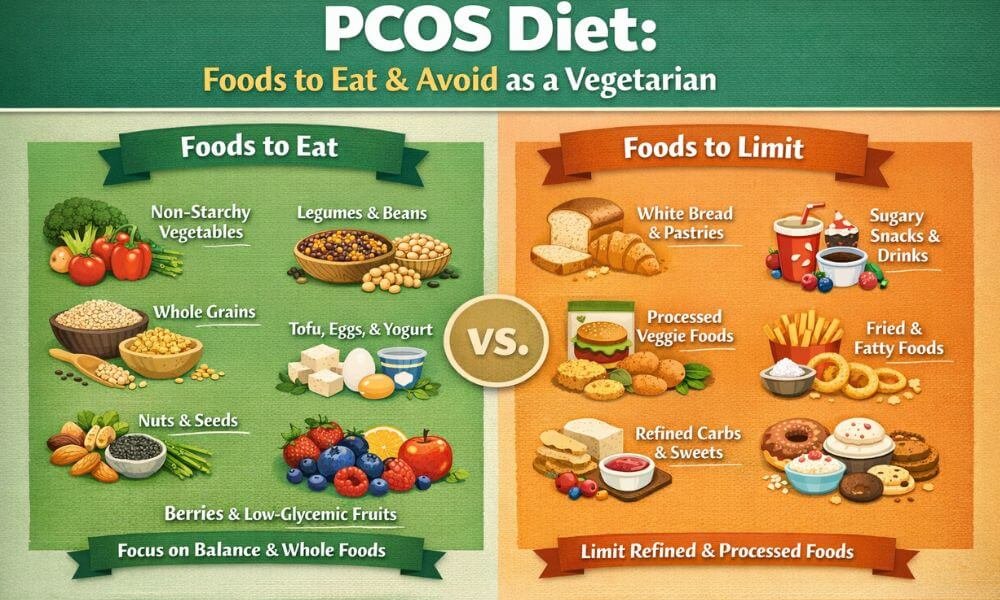
When it comes to PCOS, there’s no single “perfect” diet — but there are nutrition principles that tend to work well for many vegetarians. These principles focus on supporting blood sugar balance, hormone regulation, and overall nourishment, rather than restriction or extremes.
Think of this section as a framework you can adapt to your own preferences and lifestyle.
Prioritize Balanced Meals (Not Just Calories)
If you have PCOS, what you eat at each meal matters just as much as how much you eat. Meals that are heavy in refined carbs and low in protein or fat can lead to energy crashes and increased cravings.
Aim to build meals that include:
- a source of protein
- fiber-rich carbohydrates
- healthy fats
This combination helps slow digestion, keeps you fuller for longer, and supports more stable blood sugar levels throughout the day.
Choose Carbohydrates with a Low Glycemic Impact
Carbohydrates don’t need to be eliminated for PCOS, but their quality and portion size make a difference. Diets emphasizing low–glycemic index foods are often better tolerated by women with PCOS.
As a vegetarian, you may want to focus on:
- legumes such as lentils, beans, and chickpeas
- whole grains like oats, quinoa, and brown rice
- non-starchy vegetables
Limiting refined grains and added sugars can help reduce blood sugar spikes, even if the rest of your diet is plant-based.
Get Enough Protein from Vegetarian Sources
Protein plays an important role in appetite control, muscle health, and blood sugar regulation. Some vegetarians with PCOS unintentionally fall short, especially if meals are mostly grain-based.
Try to include a protein source at each meal, such as:
- lentils, beans, or peas
- tofu or tempeh
- eggs or dairy (if included)
- nuts and seeds
Spreading protein intake across the day is often more helpful than consuming most of it at one meal.
Include Healthy Fats Regularly
Healthy fats support hormone production, nutrient absorption, and satiety. Very low-fat diets can sometimes backfire, especially for hormonal conditions like PCOS.
Vegetarian-friendly sources include:
- olive oil
- avocados
- nuts and seeds
- flaxseed or chia seeds
Including small amounts of fat with meals can help slow digestion and keep blood sugar more stable.
Pay Attention to Key Micronutrients
Certain nutrients deserve extra attention on a vegetarian PCOS diet. Low intake of these nutrients may contribute to fatigue, low energy, or menstrual changes.
Common ones to monitor include:
- iron
- vitamin B12
- iodine
- zinc
- omega-3 fatty acids
You don’t need to supplement automatically, but being aware of these nutrients — and checking levels when needed — can be helpful.
Avoid Over-Restriction
It’s tempting to follow very strict rules when managing PCOS, but overly restrictive diets can increase stress and make symptoms harder to manage.
Instead of focusing on perfection, aim for:
- consistency over time
- mostly whole foods
- flexibility for real life
A vegetarian PCOS diet works best when it supports both your physical health and your mental well-being.
Sample PCOS Diet Plan for Vegetarians (7-Day Example) Free PDF Download
If you’re wondering how all of this looks in real life, this 7-day vegetarian PCOS meal plan is meant to give you ideas — not strict rules. Everyone with PCOS has different needs, so think of this as a flexible starting point you can adjust based on your preferences, appetite, and tolerance.
The meals focus on:
- balanced protein, carbs, and fats
- fiber-rich, low–glycemic index foods
- simple, familiar ingredients
7-Day Vegetarian PCOS Meal Plan (Example)
| Day | Breakfast | Lunch | Snack | Dinner |
|---|---|---|---|---|
| Monday | Vegetable omelette or tofu scramble | Lentils, brown rice & mixed salad | Fruit + nuts | Chickpea & vegetable stir-fry |
| Tuesday | Greek yogurt or plant yogurt with seeds | Quinoa with roasted vegetables | Hummus + veggies | Paneer or tofu curry with vegetables |
| Wednesday | Oats with nut butter & berries | Chickpea salad with olive oil | Yogurt or fruit | Stuffed bell peppers with beans |
| Thursday | Smoothie with protein source | Vegetable & bean soup | Roasted seeds | Stir-fried tofu with greens |
| Friday | Eggs with whole-grain toast | Lentil dal with vegetables | Fruit + nuts | Vegetable quinoa bowl |
| Saturday | Cottage cheese or tofu with fruit | Brown rice & mixed legumes | Yogurt | Vegetable curry with salad |
| Sunday | Chia pudding or oats | Leftover grain bowl | Nuts or seeds | Simple vegetable stir-fry |
How to Use This Plan
You don’t need to follow this plan exactly for it to be helpful. Instead:
- swap meals based on what you enjoy
- repeat days that work well for you
- adjust portions based on hunger and energy levels
The goal is consistent, balanced meals, not perfection.
Helpful Tips for PCOS-Friendly Meal Planning
- Try to include protein at every meal
- Build meals around vegetables and legumes
- Keep refined carbs and added sugars minimal
- Eat regularly to avoid long gaps that may increase cravings
If you have specific health concerns, food intolerances, or difficulty gaining or losing weight, a registered dietitian can help personalize this plan further.
Note: This meal plan is an example for educational purposes only and is not intended as medical or dietary advice. Individual needs vary.
Best Foods to Eat on a Vegetarian PCOS Diet
When managing PCOS as a vegetarian, there isn’t a single “superfood” you need to rely on. What matters more is regularly choosing foods that support stable blood sugar, provide enough protein, and reduce inflammation.
The foods below are commonly recommended because they fit well within those goals and are easy to include in everyday meals.
Vegetables (Especially Non-Starchy)
Vegetables form the foundation of a PCOS-friendly vegetarian diet. They’re rich in fiber, antioxidants, and micronutrients, while being low in calories and gentle on blood sugar.
Try to include:
- leafy greens (spinach, kale, arugula)
- broccoli, cauliflower, cabbage
- zucchini, peppers, tomatoes
- carrots and beets in moderate portions
Aim to fill at least half your plate with vegetables at most meals.
Legumes and Pulses
Legumes are one of the most valuable foods for vegetarians with PCOS. They provide both protein and fiber, which helps slow digestion and support insulin sensitivity.
Good options include:
- lentils
- chickpeas
- black beans, kidney beans, and other beans
- split peas
They work well in salads, soups, curries, and grain bowls.
High-Quality Protein Sources
Getting enough protein can make a noticeable difference in appetite control and energy levels with PCOS.
Vegetarian protein options include:
- tofu and tempeh
- eggs (if included)
- Greek yogurt or plain yogurt
- cottage cheese or paneer
- nuts and seeds
Including a protein source at every meal can help you feel more satisfied and reduce cravings.
Whole Grains in Balanced Portions
Whole grains can be part of a PCOS diet when chosen mindfully and eaten in appropriate portions. They provide fiber and nutrients that refined grains lack.
Better choices include:
- oats
- quinoa
- brown rice
- barley
Pair whole grains with protein and healthy fats to reduce blood sugar spikes.
Healthy Fats
Healthy fats support hormone production, nutrient absorption, and satiety. Very low-fat diets are often difficult to maintain and may not support hormonal health.
Vegetarian sources include:
- olive oil
- avocados
- nuts and seeds
- chia and flaxseeds
Small amounts added to meals can go a long way.
Low-Glycemic Fruits
Fruit doesn’t need to be avoided with PCOS, but choosing lower-glycemic options and eating them in moderation is often helpful.
Examples include:
- berries
- apples
- pears
- citrus fruits
Eating fruit with a meal or paired with protein can help minimize blood sugar spikes.
A Simple Way to Think About It
If you’re ever unsure whether a food fits into a vegetarian PCOS diet, ask yourself:
- Does it provide fiber, protein, or healthy fats?
- Is it minimally processed?
- Does it help me feel satisfied rather than sluggish?
Focusing on these questions can be more useful than following rigid food lists.
Foods Vegetarians May Need to Limit When Managing PCOS
Managing PCOS doesn’t mean you need to avoid certain foods forever. However, some foods — even vegetarian ones — may make symptoms harder to manage when eaten frequently or in large amounts. The key is awareness and moderation, not perfection.
Below are food categories many vegetarians with PCOS find helpful to limit.
Refined Carbohydrates
Refined carbs are quickly digested and can cause sharp rises in blood sugar, which may worsen insulin resistance — a common concern in PCOS.
Examples to watch out for include:
- white bread and white rice
- refined pasta and pastries
- baked goods made with white flour
These foods aren’t “bad,” but relying on them often may contribute to energy crashes and increased cravings.
Added Sugars and Sweetened Foods
Even on a vegetarian diet, added sugars can sneak in easily. Frequent intake may worsen blood sugar regulation and inflammation.
Common sources include:
- sweetened beverages and fruit juices
- flavored yogurts
- desserts and sweets
- packaged snacks with added sugar
Reading ingredient labels can help you spot hidden sugars and make more informed choices.
Ultra-Processed Vegetarian Foods
Some meat substitutes and packaged vegetarian foods are highly processed and low in fiber, despite being labeled as “plant-based.”
These may include:
- processed veggie burgers
- packaged frozen meals
- highly refined snack foods
Occasional use is fine, but whole foods tend to offer more nutritional value and better blood sugar support.
Excessively Large Portions of High-GI Foods
Foods like white potatoes, white rice, or large portions of refined grains can affect blood sugar more strongly when eaten alone or in excess.
Pairing higher-GI foods with:
- protein
- fiber-rich vegetables
- healthy fats
can help reduce their impact.
Highly Restrictive or Trend-Based Diet Foods
Extreme restriction — such as cutting out entire food groups — can increase stress and make PCOS harder to manage long term.
If a food plan feels exhausting or anxiety-provoking, it may not be sustainable or supportive of hormonal health.
A Balanced Perspective
Rather than asking “What should I never eat?”, it’s often more helpful to ask:
- How often do I eat this?
- How does it make me feel afterward?
- Am I balancing it with nourishing foods?
PCOS management works best when food choices feel realistic and flexible, not rigid or guilt-driven.
Common Mistakes Vegetarians Make When Managing PCOS
Following a vegetarian diet can be a great foundation for managing PCOS, but certain patterns can unintentionally make symptoms harder to manage. These mistakes are common — and often easy to fix once you’re aware of them.
Relying Too Heavily on Carbohydrates
Many vegetarian meals end up being grain-based, with limited protein or fat. While carbohydrates aren’t the enemy, meals that are mostly carbs can lead to blood sugar swings and increased hunger.
If you often feel tired or hungry soon after eating, it may help to:
- add a clear protein source
- include healthy fats
- balance carbs with vegetables
Not Getting Enough Protein
Protein needs are sometimes underestimated on vegetarian diets. Inadequate protein can affect satiety, muscle health, and blood sugar stability.
Signs you may need more protein include:
- frequent cravings
- difficulty staying full
- low energy between meals
Including protein at every meal and snack can make a noticeable difference.
Over-Relying on Processed Vegetarian Foods
Packaged vegetarian foods can be convenient, but many are low in fiber and high in refined ingredients.
If most of your meals come from:
- packaged meat substitutes
- frozen vegetarian meals
- processed snack foods
you may be missing out on the benefits of whole plant foods that better support PCOS.
Cutting Fat Too Low
Some vegetarians try to keep fat intake very low, thinking it will help with weight management. However, healthy fats are important for hormone production and nutrient absorption.
Very low-fat diets may leave you feeling unsatisfied and low in energy.
Ignoring Key Nutrients
Certain nutrients require extra attention on a vegetarian PCOS diet. Low intake of vitamin B12, iron, iodine, zinc, or omega-3s may contribute to fatigue or other symptoms.
Regularly including nutrient-dense foods — and checking levels when needed — can help prevent this.
Expecting Diet Alone to Fix Everything
Diet plays an important role in PCOS management, but it’s only one part of the picture. Stress, sleep, and physical activity also influence symptoms.
If progress feels slow, it doesn’t mean you’re doing something wrong — PCOS management often takes time and a combined approach.
A More Helpful Mindset
Instead of aiming for perfection, focus on:
- small, consistent improvements
- meals that feel nourishing
- habits you can maintain long term
Managing PCOS is about supporting your body, not punishing it.
Lifestyle Habits That Work Alongside a Vegetarian PCOS Diet
Diet plays an important role in managing PCOS, but it works best when supported by everyday lifestyle habits. Small, consistent changes in how you move, sleep, and manage stress can make your vegetarian diet more effective and easier to maintain.
You don’t need to overhaul your entire routine — focusing on a few key habits can go a long way.
Regular Movement That Feels Sustainable
Physical activity helps support insulin sensitivity and overall metabolic health, both of which are commonly affected by PCOS.
This doesn’t mean intense workouts are required. Activities such as:
- walking
- yoga or Pilates
- light strength training
- cycling or swimming
Can be effective when done consistently. The best exercise is one you can stick with, not the most intense option.
Managing Stress Levels
Chronic stress can influence hormone balance and worsen PCOS symptoms for some people. When stress levels are high, it can also make cravings and emotional eating more difficult to manage.
Simple stress-reducing habits include:
- regular breaks during the day
- breathing exercises or meditation
- spending time outdoors
- gentle movement like stretching or yoga
Even small moments of calm can be beneficial.
Prioritizing Sleep
Sleep is often overlooked, but it plays a role in hormone regulation, appetite control, and energy levels.
If your sleep is inconsistent or poor, you may notice:
- increased cravings
- lower energy
- difficulty managing weight
Aim for a regular sleep schedule and a calming bedtime routine whenever possible.
Eating Regularly and Mindfully
Skipping meals or eating erratically can contribute to blood sugar swings and increased cravings, especially with PCOS.
Try to:
- eat balanced meals at regular intervals
- avoid long gaps between meals
- pay attention to hunger and fullness cues
This supports both metabolic health and a healthier relationship with food.
Seeking Support When Needed
Managing PCOS can feel overwhelming at times, and you don’t have to do it alone. Working with a registered dietitian or healthcare provider can help you personalize your approach and address specific challenges.
Support can make your efforts feel more manageable and sustainable.
Bringing It All Together
A vegetarian PCOS diet works best as part of a broader lifestyle approach. When nutrition, movement, sleep, and stress management support each other, changes are more likely to feel balanced and realistic.
Progress doesn’t have to be fast to be meaningful — consistency matters more than perfection.
Frequently Asked Questions About PCOS and Vegetarian Diets
Is a vegetarian diet good for PCOS?
A vegetarian diet can support PCOS management when it’s well planned and balanced. Diets rich in whole plant foods, fiber, and adequate protein may help support blood sugar control and overall metabolic health, which are important for PCOS. Simply avoiding meat isn’t enough — food quality and balance matter most.
Do I need to go low-carb if I have PCOS?
Not necessarily. Many people with PCOS do better with moderate, well-chosen carbohydrates rather than very low-carb diets. Focusing on low–glycemic index carbs like legumes, vegetables, and whole grains — and pairing them with protein and healthy fats — is often more sustainable than strict carb restriction.
Can vegetarians manage insulin resistance with diet?
Yes. Vegetarian diets that emphasize fiber-rich foods, adequate protein, and minimal added sugars may help support insulin sensitivity. Regular meals, balanced portions, and limiting refined carbs can make a meaningful difference over time.
Is a ketogenic diet necessary for PCOS?
No. While some people try ketogenic diets, they are not required for PCOS management and may be difficult to sustain, especially for vegetarians. Many women manage PCOS successfully with balanced, plant-forward diets that are less restrictive.
Can I eat fruit if I have PCOS?
Yes, fruit can be part of a PCOS-friendly vegetarian diet. Choosing whole fruits rather than juices and pairing fruit with protein or healthy fats may help reduce blood sugar spikes. Lower-glycemic fruits like berries, apples, and citrus are often easier to tolerate.
Final Thoughts on Following a PCOS Diet as a Vegetarian
Managing PCOS as a vegetarian doesn’t require extreme rules or perfect eating. What matters most is building consistent, balanced habits that support your body over time. A vegetarian diet can be a helpful foundation when it prioritizes whole foods, adequate protein, stable blood sugar, and key nutrients.
It’s also important to remember that PCOS looks different for everyone. What works well for one person may not work the same way for another, and progress is often gradual. Small changes — such as balancing meals, eating regularly, and choosing less processed foods — can be more effective and sustainable than dramatic overhauls.
Diet is just one piece of PCOS management. When combined with supportive lifestyle habits like regular movement, stress management, and good sleep, a vegetarian approach can feel both nourishing and realistic. If you ever feel stuck or unsure, seeking guidance from a qualified healthcare professional can help you tailor your approach and avoid unnecessary frustration.
Above all, aim for an approach that supports both your physical health and your relationship with food. Consistency, flexibility, and self-compassion go much further than perfection.
References
- Shang, Y., Zhou, H., He, R., & Lu, W. (2020). Effect of diet on insulin resistance in polycystic ovary syndrome: A systematic review and meta-analysis. The Journal of Clinical Endocrinology & Metabolism, 105(10), 3346–3360. https://doi.org/10.1210/clinem/dgaa425
- Moslehi, N., Zeraattalab-Motlagh, S., Rahimi Sakak, F., Shab-Bidar, S., Ramezani Tehrani, F., & Mirmiran, P. (2022). Effects of nutrition on metabolic and endocrine outcomes in women with polycystic ovary syndrome: An umbrella review of meta-analyses of randomized controlled trials. Nutrition Reviews, 81(5), 555–577. https://doi.org/10.1093/nutrit/nuac075
- Ryan, A. S., & Dietz, W. H. (2024). The influence of dietary patterns on polycystic ovary syndrome: Randomized controlled trials on diet and metabolic outcomes. Nutrients, 17(4), 674. https://doi.org/10.3390/nu17040674
- Shang, Y., Zhou, H., He, R., & Lu, W. (2021). Dietary modification for reproductive health in women with polycystic ovary syndrome: A systematic review and meta-analysis. Frontiers in Endocrinology, 12, 735954. https://doi.org/10.3389/fendo.2021.735954
