

If you are searching for menopausal symptoms relief, you are probably not looking for a complicated biology lesson. You are probably looking for a way to feel more like yourself again.
Maybe you are waking up tired after another night of sweating. Maybe you feel suddenly hot in the middle of work, then embarrassed because everyone else seems comfortable. Maybe your mood changes faster than before, your patience feels thinner, or your body feels unpredictable in a way that makes you wonder, “Is this normal?”
This article is for the woman who is still doing her normal daily responsibilities, but inside she feels different. You may be working, caring for your family, managing the house, trying to stay healthy, and still wondering why your sleep, energy, mood, appetite, or body shape suddenly feels harder to control.
As a pharmacist and nutrition-focused health writer, I understand how confusing hormone-related symptoms can feel. Menopause is a natural life stage, but that does not mean you have to ignore symptoms or “just tolerate it.” The goal here is not to promise a magic cure. The goal is to help you understand what may be happening, what you can adjust in daily life, and when it is worth asking for medical support.
If you want more food ideas that support hormonal health alongside the lifestyle tips in this article, this hormone balancing diet food list can give you simple options to use in everyday meals.
Why Menopause Symptoms Can Feel So Disruptive
Menopause symptoms can feel frustrating because they often show up in ordinary moments. You may be getting ready for the day and suddenly feel exhausted before you even start. You may be sitting with your family and feel irritated by small things that never used to bother you. You may open your closet and feel uncomfortable because your clothes fit differently around your waist.
These changes make you feel emotional because they affect your sense of control. Many women are not only dealing with hot flashes or night sweats; they are dealing with the feeling that their body has changed the rules without warning.
Hormonal shifts during perimenopause and menopause can affect temperature regulation, sleep, mood, vaginal comfort, digestion, energy, appetite, and body composition. At the same time, many women are also dealing with stress, busy schedules, poor sleep, family demands, and less time for self-care.
That is why menopausal symptoms relief should not be reduced to one tip like “eat less” or “exercise more.” Most women need a more realistic approach: understand the symptom, notice the trigger, support the body, and get medical help when symptoms are affecting daily life.
Common Menopause Symptoms Women Want Relief From
Menopause does not look the same for everyone. Some women mainly struggle with hot flashes. Others feel the biggest change in sleep, mood, weight, or brain fog. You may have several symptoms at once, or symptoms that come and go.
- Hot flashes or sudden waves of heat
- Night sweats that wake you from sleep
- Difficulty falling asleep or staying asleep
- Fatigue even after resting
- Mood swings, irritability, or emotional sensitivity
- Anxiety or feeling easily overwhelmed
- Brain fog or poor concentration
- Weight gain or menopausal belly fat changes
- Joint aches or body stiffness
- Vaginal dryness or discomfort
- Lower libido
- Bloating, constipation, or digestive changes
- Sugar cravings or stronger appetite swings
If you are experiencing these symptoms, it does not mean you are failing. It means your body may need different support than it needed before.
What Women Searching for Menopausal Symptoms Relief Usually Need
The real need behind this topic is not only information. It is reassurance, clarity, and practical relief.
You want to know if what you feel is normal
Many women worry because symptoms can feel sudden. A woman who used to sleep well may suddenly wake at 3 a.m. feeling hot and restless. Another woman may feel unusually anxious before a meeting, even though she has handled work stress for years.
It helps to know that many symptoms are common during the menopause transition. But common does not mean you should ignore severe or persistent symptoms.
You want to stop blaming yourself
Menopause symptoms can make women feel guilty. You may think you are not disciplined enough, calm enough, active enough, or strong enough. But symptoms like hot flashes, night sweats, mood changes, and weight shifts are not character flaws. They are connected to real body changes.
You want simple actions that fit real life
You may not have time for a perfect routine. You need things that can work around work, family, cooking, errands, and tired days. Relief often starts with small adjustments that reduce symptom triggers and support your nervous system.
You want to know when lifestyle is not enough
This is important. Lifestyle habits can support your body, but some women need medical treatment, hormone therapy, non-hormonal medications, vaginal treatments, or investigations. Asking for help is not a failure.
Hot Flashes: What May Help You Feel More in Control
Hot flashes can feel embarrassing because they arrive suddenly. You may be talking to someone, shopping, cooking, or trying to sleep, then suddenly feel heat rising through your chest, neck, and face.
The first step is to stop treating hot flashes as random punishment and start treating them as signals. Many women have triggers, even if they are not obvious at first.
Track the pattern for one week
Write down when hot flashes happen and what came before them. Notice caffeine, spicy meals, alcohol, stress, hot rooms, poor sleep, heavy meals, or rushing around. You are not doing this to restrict your life. You are doing it to understand your body.
Cool your environment before you are desperate
Use layers, breathable fabrics, a fan, light bedding, and cool drinks if they help. If you often get hot at night, prepare your sleep environment before bedtime instead of waiting until you wake up uncomfortable.
Use a calming response instead of panic
When a hot flash starts, it is easy to feel anxious, which may make the moment feel worse. Try slow breathing, loosening tight clothing, sipping water, or stepping into cooler air. The goal is not to stop every hot flash instantly; it is to feel less trapped by it.
If stress seems to make your hot flashes, cravings, or sleep problems worse, this low cortisol diet meal plan may help you build calmer, more blood-sugar-friendly meals.
Night Sweats and Poor Sleep: Relief Starts Before Bedtime
Night sweats can be one of the most exhausting menopause symptoms because they steal recovery. You may fall asleep normally, then wake soaked, uncomfortable, and frustrated. By morning, you feel like you never truly rested.
Sleep support during menopause is not only about what you do at night. It is also about how your body is fueled, stressed, and stimulated during the day.
Reduce evening overheating
If you are prone to night sweats, avoid creating extra heat before bed. Heavy late meals, alcohol, warm rooms, thick bedding, and intense late-night stress may make sleep feel more difficult for some women.
Create a cooling bedtime routine
Keep the bedroom cool, choose breathable sleepwear, and use lighter covers. Some women also keep water nearby or use layered bedding so they can adjust quickly during the night.
Protect your sleep rhythm
Try to wake and sleep at similar times when possible. Get morning light exposure. Move caffeine earlier in the day if it affects your sleep. These small rhythm cues can help your body feel more settled.
If you wake up hungry, shaky, or crave sugar at night, these bedtime snack ideas to lower blood sugar in the morning may help you choose a more balanced evening snack.
If night sweats are severe, frequent, or strongly affecting your daily function, it is worth speaking with your healthcare provider. You may have options beyond lifestyle changes.
Mood Swings and Irritability: You Are Not “Just Being Difficult”
One of the hardest parts of menopause is feeling emotionally unlike yourself. You may cry more easily, snap faster, or feel anxious over things you usually handle well. This can be upsetting because it affects relationships, work, and how you see yourself.
Mood changes can be influenced by hormone fluctuations, poor sleep, stress, blood sugar swings, and emotional overload. That means relief usually needs more than telling yourself to “calm down.”
Pause before judging yourself
When you feel reactive, ask: Did I sleep badly? Did I skip a meal? Am I overstimulated? Am I carrying too many responsibilities today? Sometimes your emotions are giving you information, not proving that something is wrong with you.
Use food structure to reduce emotional crashes
You do not need a full diet plan in this article, but regular meals matter. Long gaps without food can make irritability, cravings, and anxiety feel worse for some women. A protein-containing breakfast or balanced lunch can make the afternoon feel more stable.
For busy afternoons when stress cravings hit, these low cortisol snacks can give you easier options than reaching for sugar or caffeine.
If your main struggle is weight gain during midlife, this menopausal diet for weight loss guide can help you build a more realistic food strategy without extreme restriction.
Lower the pressure on high-symptom days
Some days will feel harder. On those days, simplify. Choose easier meals, reduce unnecessary tasks, take a short walk, or give yourself a few minutes of quiet before responding to people. Relief sometimes starts by making the day less demanding.
Brain Fog and Fatigue: How to Support Your Focus
Brain fog can feel scary because it affects confidence. You may forget words, lose focus while reading, walk into a room and forget why, or feel mentally slower than usual.
Fatigue can also feel different during menopause. It is not always regular tiredness. It may feel like your energy battery drains faster, especially after poor sleep or emotional stress.
Check the basics first
Before assuming something is seriously wrong, look at sleep, hydration, meals, stress, and movement. These basics are not “too simple.” They are often the foundation of better focus.
Use short focus blocks
If your concentration is poor, try working in shorter blocks instead of forcing long sessions. A 25-minute focused task followed by a short break may feel more realistic than expecting your brain to perform perfectly for hours.
Do not ignore persistent fatigue
Severe or persistent fatigue deserves medical attention, especially if it is new, worsening, or affecting daily life. Thyroid issues, anemia, vitamin deficiencies, sleep disorders, depression, and other medical conditions can overlap with menopause symptoms.
Because thyroid symptoms can overlap with menopause fatigue, this article on what to eat when you have hypothyroidism fatigue may be helpful if your tiredness feels persistent or unusual.
Weight Gain and Belly Fat: A Different Angle
Many women searching for menopausal symptoms relief are also worried about belly fat. But if you already have separate articles about menopause diet, foods to avoid, and workouts, this section does not need to repeat everything.
The key point here is emotional and practical: menopause belly fat can feel distressing because it changes how you feel in your clothes and how familiar your body feels to you.
Instead of jumping into strict dieting, start by asking what is driving the change. Is your sleep worse? Are you more stressed? Are you moving less because you are tired? Are cravings stronger because meals are irregular? Are you losing muscle with age?
If weight gain is your main struggle during midlife, this menopausal diet for weight loss guide can help you build a more realistic food strategy without extreme restriction.
If belly fat is one of the most frustrating changes you’ve noticed, these foods to avoid for menopause belly fat can help you understand common triggers without turning your diet into fear or punishment.
For gentle movement support, this menopausal belly fat workout can help you choose exercises that support strength, metabolism, and confidence during menopause.
Vaginal Dryness, Low Libido, and Intimacy Changes
Some menopause symptoms are less openly discussed, but they matter. Vaginal dryness, discomfort during intimacy, urinary symptoms, or lower libido can affect confidence, relationships, and quality of life.
Many women silently tolerate these symptoms because they feel embarrassed or assume nothing can be done. But support is available. Vaginal moisturizers, lubricants, local vaginal treatments, hormone therapy options, or other medical treatments may help depending on your situation.
If dryness, pain, urinary discomfort, or intimacy changes are affecting your life, speak with a healthcare provider. You deserve care for these symptoms just as much as you deserve care for hot flashes or sleep problems.
Digestive Changes, Bloating, and Food Sensitivity During Menopause
Some women notice that digestion feels different during the menopause transition. You may feel more bloated after meals, more constipated than usual, or more sensitive to foods you used to tolerate easily.
Digestive changes can be influenced by hormone shifts, stress, slower routines, reduced movement, poor sleep, and changes in eating patterns. This does not mean every symptom is caused by menopause, but it does mean your digestion may need more gentle support.
If bloating is one of the symptoms making you feel uncomfortable, this guide on how to make your food digest faster after eating shares simple digestion-supportive habits.
If gluten seems to worsen bloating, fatigue, or brain fog, this gluten intolerance symptoms checklist can help you notice whether your symptoms may be food-related.
Daily Habits That Can Support Menopausal Symptoms Relief
You do not need to rebuild your whole life. Start with habits that reduce stress on your body and make symptoms easier to manage.
Keep meals steady
Try not to run on coffee until noon, then snack all afternoon because your body is exhausted. Regular meals can support mood, cravings, and energy.
If you struggle with hunger or low energy, these high protein bowl recipes for weight loss can help you build filling meals without making menopause eating feel complicated.
Hydrate earlier in the day
Many women forget water until they feel tired or headachy. Keep water visible and drink gradually during the day. If you wake often at night, avoid forcing large amounts right before bed.
Move in a way your body can recover from
You do not need to over-exercise for relief. Walking, stretching, mobility, and strength training can all support menopause health. The right level should leave you feeling supported, not punished.
Build small pauses into stressful days
A two-minute breathing pause, a short walk, or stepping away from noise can help your nervous system. These small resets may reduce the feeling of being constantly on edge.
Prepare for symptom moments
Keep practical tools nearby: layered clothes, water, light snacks, a fan, breathable sleepwear, or a simple note on your phone tracking triggers. Feeling prepared can reduce anxiety around symptoms.
When to Talk to a Doctor About Menopause Symptoms
Lifestyle support can help many women, but it is not always enough. You should not have to suffer through severe symptoms without support.
Speak with a healthcare provider if you experience:
- Very heavy bleeding
- Bleeding after menopause
- Hot flashes or night sweats that seriously affect sleep or daily life
- Severe anxiety, depression, or mood changes
- Chest pain
- Unexplained weight loss
- Severe or persistent fatigue
- Persistent pain
- New or unusual symptoms
- Vaginal dryness, pain, or urinary symptoms that affect quality of life
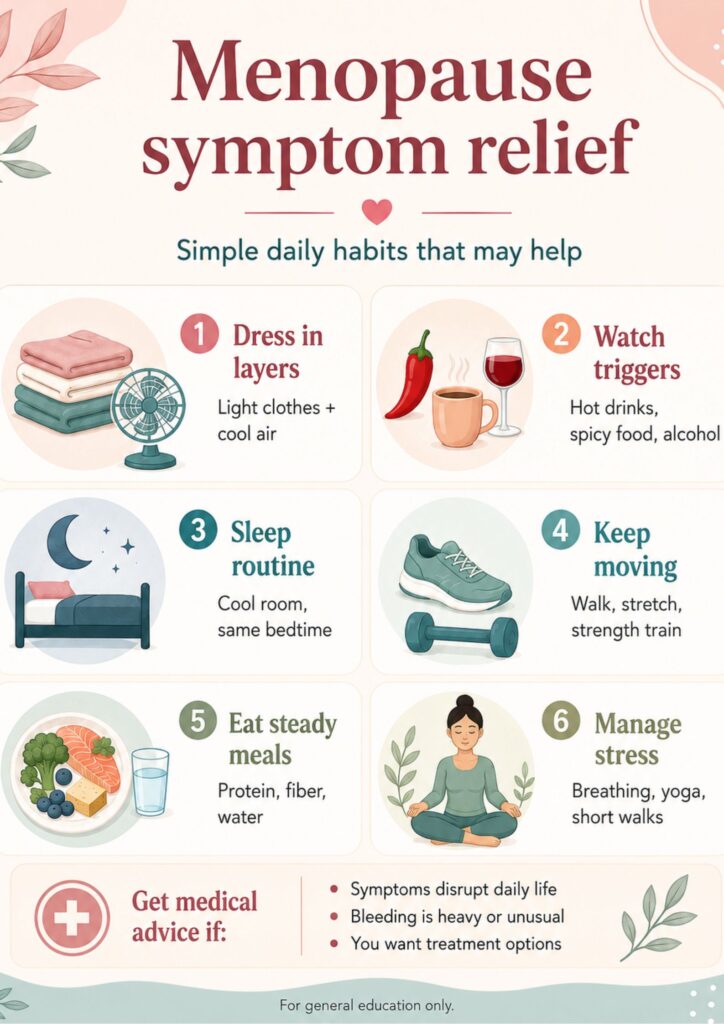
Hormone therapy, non-hormonal medications, vaginal treatments, counseling, blood tests, or other medical options may be appropriate for some women. The right choice depends on your medical history, age, symptoms, family history, and personal preferences.
A Gentle Daily Routine for Menopausal Symptoms Relief
Here is a simple daily rhythm that supports symptoms without becoming another stressful plan.
Morning
Drink water, get a little light, and eat a breakfast that includes protein. This can help your energy feel more stable before the day becomes busy.
Midday
Eat a balanced lunch and take a short walk if possible. If work is stressful, pause for a few slow breaths before moving into the next task.
Afternoon
If cravings or irritability appear, check whether you are hungry, thirsty, tired, or overstimulated. Choose a supportive snack instead of waiting until you feel out of control.
Evening
Choose gentle movement or stretching if your body feels tense. Keep dinner satisfying but not too heavy if night sweats or reflux are an issue.
If you’re curious about fasting during hormonal changes, this guide on intermittent fasting for perimenopausal women explains safer, more realistic ways to approach meal timing.
Before bed
Cool the room, reduce stimulation, and give yourself a calmer transition into sleep. The goal is not a perfect routine. The goal is to make your body feel safer and less rushed.
Frequently Asked Questions About Menopausal Symptoms Relief
What is the best natural relief for menopause symptoms?
The best natural support usually includes identifying your triggers, improving sleep habits, eating steady meals, staying hydrated, managing stress, and moving regularly. The best approach depends on your main symptoms and daily routine.
How can I reduce hot flashes naturally?
Track possible triggers such as caffeine, alcohol, spicy foods, stress, hot rooms, or poor sleep. Dress in layers, keep your room cool, sip water, and use slow breathing during a hot flash. If hot flashes disrupt sleep or daily life, speak with a healthcare provider.
Why do menopause symptoms feel worse at night?
Night symptoms may feel worse because the body is trying to regulate temperature during sleep. Warm rooms, heavy bedding, alcohol, late meals, stress, and hormonal changes may all contribute to night sweats or waking.
Can menopause cause anxiety or mood swings?
Yes, hormone changes, poor sleep, stress, and blood sugar swings can all contribute to anxiety, irritability, or mood changes during menopause. Severe or persistent mood symptoms should be discussed with a healthcare professional.
Can menopause symptoms cause weight gain?
Menopause can contribute to changes in body composition, appetite, sleep, stress response, and belly fat storage. Weight gain is usually influenced by several factors, not hormones alone.
When should I see a doctor for menopause symptoms?
See a doctor if symptoms are severe, disrupt sleep or daily life, or include heavy bleeding, bleeding after menopause, chest pain, severe fatigue, unexplained weight loss, severe mood changes, persistent pain, or new unusual symptoms.
Can menopause symptoms improve over time?
Yes, some symptoms improve over time, especially hot flashes and night sweats for many women. However, every woman is different, and support may still be needed if symptoms are affecting quality of life.
Final Thoughts on Menopausal Symptoms Relief
Menopause symptoms can affect your body, emotions, sleep, confidence, and daily comfort. But they are not a sign that you are failing. They are signs that your body is moving through a real transition and may need more support than before.
Relief often starts with understanding your symptoms instead of fighting them blindly. Track your triggers, steady your meals, protect your sleep, move gently, reduce unnecessary stress where possible, and ask for medical help when symptoms are affecting your quality of life.
If weight loss feels confusing during menopause, this TDEE calculator can help you estimate your daily calorie needs before making changes.
You do not need to fix everything in one week. Start with one symptom, one pattern, and one supportive change. Small steps can still help you feel more calm, capable, and connected to your body again.
